

Peschanaya Bay, known locally as Peschanka, is one of Lake Baikal‘s most celebrated natural sites. Situated in the southwestern part of the lake, roughly 75 kilometres northeast of Listvyanka, this sandy beach and surrounding landscape offer something rare in Siberia: a genuinely warm, sun-drenched setting that locals call the Siberian Riviera.
The bay sits within Pribaikalsky National Park, an area designated to preserve its distinctive ecology and visual character. Unlike most Baikal shores—dominated by rocks and pebbles—Peschanaya presents a dramatic contrast: a pristine crescent of white sand bookended by two prominent rocky capes called the Big and Small Belltowers.
Quick Facts
| Russian name | Песчаная (бухта, Байкал) |
|---|---|
| Address | Google MapsApple MapsYandex Maps2GIS |
| District | Irkutsk Oblast |
| Admission | Free; national park permission required for camping |
| Best time to visit | Summer (July–August) is peak season. Water temperatures reach 22–23°C, the beach is dry and accessible, and day length maximizes hiking time. July offers the warmest water for swimming; August is still warm but slightly less crowded.June and September are excellent alternatives: fewer tourists, stable weather, and the beach is equally accessible. Morning light is softer in September, ideal for photography.Winter (February–March) offers a completely different experience: ice hovercraft tours, frozen lake landscapes, and absolute solitude. However, hovercraft tours are weather-dependent and require booking through specialized operators in advance.Avoid May and October when boat schedules are irregular due to ice break-up and formation. November–January is inaccessible due to unstable ice conditions. |
What Is (and Isn't) Part of a Visit to Peschanaya Bay, Lake Baikal?
| Part | Status | Notes |
|---|---|---|
| Peschanaya Bay beach and immediate shoreline | Included in the standard ticket | Free access; no tickets required. The sandy beach and adjacent water are accessible to all visitors who arrive by boat. |
| Walking trails to Observation Cliff and viewpoints | Included in the standard ticket | Free. Maintained informal trails lead inland; hikers navigate without guides or permits. |
| Stilt trees and rock formations | Included in the standard ticket | Free to view and photograph. The natural features are visible from the beach and adjacent slopes. |
| Camping and overnight stays | Separate ticket or institution | Camping requires prior permission from Pribaikalsky National Park authorities. The resort 'Baikal Dunes' offers paid accommodation; booking is separate. |
| Boat transport to the bay | Separate ticket or institution | Access is by water only; all boat tickets and hovercraft fares are purchased separately from any bay visit. |
| Nearby Babushka Bay and Zavernyaikha Bay | Included in the standard ticket | Free to visit; accessible via shoreline walk from Peschanaya Beach. |
Why Visit Peschanaya Bay, Lake Baikal?
The primary draw is the beach itself. The semicircular strip of clean sand stretches 750 metres and reaches 15–20 metres wide—substantial by Baikal standards. The surrounding taiga slopes tumble down to the waterline, and the microclimate here is measurably milder than elsewhere on the lake. Summer water temperatures reach 22–23°C in July and August (still cool but swimmable for the hardy), and the bay records as many sunny days annually as Black Sea resorts.
The ‘stilt trees’ are the bay’s signature feature: hardy pines and larches whose roots stand exposed above the sand, lifted by constant erosion from wind and water action. The rock formations, dramatic cliff viewpoints, and the opportunity to hike along taiga forest paths complete the appeal. This is primarily a place for outdoor enthusiasts, photographers, and visitors seeking solitude in pristine wilderness.
Highlights of Peschanaya Bay, Lake Baikal
The Sandy Beach
The semicircular sandy beach stretches for 750 metres with a width varying from 15–20 metres. The sand here is notably clean and fine-grained compared to other Baikal beaches. The crescent shape creates natural sheltered areas. Look for the beach's sharp endpoints where it meets the rocky capes. Morning light reveals the different sand tones, from pale to amber-hued. The beach is the focal point for swimming, sunbathing, and photography.
Tip: Arrive early to find your own stretch of beach; summer day-trippers can make it crowded. The eastern end near the Small Belltower offers quieter vantage points.
Stilt Trees (Walking Trees)
Trees grow here while wind and water constantly blow and wash away the sand from under their roots, creating the distinctive appearance of trees standing on stilts. These hardy pines and larches are visible along the beach's northern edge and near the Big Belltower rock. The exposed root systems can rise higher than a human head. This phenomenon is unique to Peschanaya and occurs because sand dunes are inherently unstable—erosion continues faster than the trees can establish deeper anchor points.
Tip: Photograph the stilt trees from beach level to emphasize the exposed root structure. Visit in late afternoon when low light creates dramatic shadows beneath the roots.
Big Belltower (Bolshaya Kolokolnya)
The sandy beach of the bay is surrounded with the pyramidal rocks of Bolshaya Kolokolnya. The height of the cliffs reaches about 80 metres above sea level. This distinctive rock formation marks the southeastern boundary of Peschanaya Bay. The Big Belfry Rock used to have the first lighthouse on Baikal Lake, which was lighted manually. The rock's pyramidal shape and pale stone make it visible from the entire beach.
Tip: The hike from the beach to the summit takes roughly 1–1.5 hours and rewards you with panoramic views of the bay, neighbouring Babushka Bay, and the surrounding mountains. Watch for loose scree on the descent.
Small Belltower (Malaya Kolokolnya)
This smaller rock formation marks the northwestern boundary of Peschanaya Bay, creating the visual bookend to the Big Belltower. The formation is less prominent but equally photogenic, especially when the late sun strikes the pale rock face. The narrow channel between the two capes frames views of Baikal to the north and is a classic photographic vantage point from the beach.
Observation Cliff Viewpoint
To the Rock of Observation (2–2.5 hours) offers a magnificent panorama of Lake Baikal – Peschanaya Bay, the sandy beach, Babushka (Grandmother) Bay, Cape Ded (Grandfather), Vnuchka (Granddaughter) Bay. This elevated vantage point lies inland from the beach and requires a moderate hillside hike through forest. The view encompasses three distinct sandy bays and the surrounding Primorsky Range. This is the highest and most comprehensive overlook in the area.
Tip: Start early if you plan to reach the viewpoint and return the same day; the hike is roughly 4–5 hours round-trip with time for photos. Wear sturdy footwear; the trail crosses rocky terrain and forest undergrowth.
Babushka Bay
This sandy bay lies immediately adjacent to Peschanaya, separated by the Big Belltower cape. The name means Grandmother Bay in Russian. Babushka offers a quieter, alternative strip of sand and is similarly sheltered. Cape Bolshoi Kolokolny separates Peschanka from Babushka Bay, which can rival Peschanaya with the beauty of its sandy beach. Visitors can walk along the shore between the two bays at water's edge.
Tip: If Peschanaya is crowded, Babushka Bay often has fewer visitors. A 1–1.5 hour beach walk connects the two bays and passes the stilt trees en route.
Atmosphere
Peschanaya Bay feels isolated and peaceful, despite being the most visited spot on Baikal’s western shore. The sound environment is defined by water lap, wind through taiga, and seasonal seabird calls—rarely human noise. Summer mornings are cool and misty; afternoons turn warm and sunny. The light is luminous, reflected off white sand and dark water. Visitors here are typically outdoor enthusiasts and photographers rather than casual tourists; the effort required to reach the bay ensures a more contemplative crowd.
The dominant visual impression is of deep natural layers: pale sand, dark water, dark green forest, and grey-white rock faces. Scale shifts dramatically—the beach seems intimate at eye level but becomes diminished when viewed from the clifftops. The taiga is dense and untamed, with fallen timber adding texture to paths. In summer, the air carries the scent of pine resin and cool water.
Tickets and Booking for Peschanaya Bay, Lake Baikal
Entry to Peschanaya Bay itself is free. However, reaching it requires booking a boat or hovercraft, which is a separate purchase. In summer, tourist boats depart from Listvyanka (a town 60 kilometres from Irkutsk); a high-speed boat takes 2–2.5 hours each way, while slower vessels take 6–7 hours. Day trips are common, or visitors may stay several days at an onsite holiday resort or in permitted campsites.
In winter (February–March), hovercraft (‘Khivus’) operate on the frozen lake from Bolshoye Goloustnoye, a settlement 120 kilometres northeast of Irkutsk by road. Full-day ice hovercraft tours typically travel over 200 kilometres, reaching the bay in around 4–5 hours. When ice reaches maximum thickness, an ice road may form, allowing road-based access in roughly 40–50 minutes from Bolshoye Goloustnoye.
To camp overnight, you must apply to Pribaikalsky National Park for permission in advance. Accommodation is available at the ‘Baikal Dunes’ resort on-site. Check with local tour operators in Irkutsk or Listvyanka for current boat schedules, prices, and booking procedures.
Plan and Book
Suggested itineraries Peschanaya Bay, Lake Baikal
2–3 hours
Beach exploration and stilt trees. Arrive by boat, spend 1.5–2 hours on the sandy beach photographing the rock formations and stilt trees. Walk along the shoreline towards Babushka Bay (no more than 30 minutes) and return. This suits day-trippers on standard boat tours from Listvyanka.
4–5 hours
Beach and Observation Cliff hike. Morning: beach and stilt trees (1–1.5 hours). Afternoon: hiking trail to the Observation Cliff viewpoint (2–2.5 hours round-trip). Return to beach by late afternoon. This plan requires more fitness and sturdy footwear but rewards you with panoramic valley views.
Half day or longer
Multi-bay exploration. Spend 1–2 hours at Peschanaya Beach. Walk the shoreline to adjacent Babushka Bay (1–1.5 hours round-trip). Return via the clifftop path if time permits. Alternatively, camp overnight and hike to multiple viewpoints on day two.
Winter day-trip via hovercraft
Depart Bolshoye Goloustnoye early morning on ice hovercraft. Journey reaches Peschanaya Bay after 4–5 hours, with stops at scenic points (Bolshiye Koty, other capes). Spend 1–2 hours at the bay. Return journey (4–5 hours). Full day door-to-door, 10–12 hours. Available February–March.
How to Get to Peschanaya Bay, Lake Baikal
Summer access (May–October): All routes begin with a boat journey on Baikal. The nearest town is Listvyanka, located roughly 60 kilometres from Irkutsk by road (bus or taxi, 1 hour). From Listvyanka, book a boat tour or private vessel. High-speed tourist boats take 2–2.5 hours; slower public boats take 6–7 hours. Multiple tour operators in Listvyanka and Irkutsk offer day trips and multi-day cruises that include Peschanaya Bay.
Winter access (February–March, ice only): Depart from Bolshoye Goloustnoye, a settlement 120 kilometres northeast of Irkutsk by car (2–2.5 hours by road). Hovercraft tours (‘Khivus’) depart early morning and take 4–5 hours to reach Peschanaya Bay. When ice thickness peaks, an ice road may operate, reducing travel to 40–50 minutes by car.
Trekking route: A challenging 37-kilometre hiking route connects Bolshoye Goloustnoye to Peschanaya Bay, following spurs of the Primorsky mountain range. This is for experienced hikers and typically takes 3–4 days.
Accessibility
Peschanaya Bay is not wheelchair accessible. Access requires arrival by boat or hovercraft and then walking on sand, uneven terrain, and forest paths. The beach itself is flat and sandy, but reaching it from the water's edge involves ascending a short bank. Hiking trails to viewpoints are steep and rocky, unsuitable for mobility devices or those with limited mobility.There are no facilities (restrooms, shelters, aid stations) at the bay. Visitors must be self-sufficient and capable of moderate physical activity. The bay is remote; emergency services are distant.
Food Nearby
There are no restaurants or shops at Peschanaya Bay. Visitors must bring all food, water, and supplies. Day-trippers should pack picnic meals, snacks, and drinking water sufficient for the hours spent on-site. Multi-day visitors staying at Baikal Dunes resort have on-site dining. Camping visitors typically cook in portable camps or bring pre-prepared meals.Listvyanka, the departure point, has restaurants, cafes, and shops where you can purchase supplies before boarding boats.
What to Bring
Essentials: sturdy hiking boots, hat, sunscreen, insect repellent (summer only), and a windproof jacket. The microclimate is mild but wind is constant. Bring more fresh water than you expect to need; the bay has no reliable water sources.For photography: tripod is useful for long exposures of water and sunset light. For hiking: trekking poles help on rocky descents. In summer, bring a wetsuit or swimsuit if you intend to enter the water (water temperature is cold even at peak summer).Bags are not searched, but pack light; you will carry everything from the boat to the beach on foot.
Best Views and Photo Spots of Peschanaya Bay, Lake Baikal
Beach center, facing the Big Belltower
The sandy beach of the bay is surrounded with the pyramidal rocks of Bolshaya Kolokolnya. This vantage captures the rock formation framed by sand and water, with the stilt trees in the foreground. Symmetrical composition emphasizes the bay's crescent shape.
Best time: Late morning (10:00–12:00) or late afternoon (16:00–18:00) when sun angle creates shadow detail on the rock face.
Among the stilt trees, looking toward the water
Low-angle perspective emphasizing the exposed root structure against sky. The trees frame the bay and create natural compositional leading lines toward Baikal.
Best time: Golden hour (one hour before sunset, 20:00–21:00 in July) creates warm rim-lighting on the tree trunks and roots.
Observation Cliff viewpoint (inland)
Offers a magnificent panorama of Lake Baikal – Peschanaya Bay, the sandy beach, Babushka (Grandmother) Bay, Cape Ded (Grandfather), Vnuchka (Granddaughter) Bay. Wide angle captures three distinct bays and mountain ranges.
Best time: Midday (12:00–14:00) produces crisp, clear air and uniform blue water. Early morning produces atmospheric haze and contrast.
Small Belltower cape (northwestern end of beach)
Narrow framing of the Small Belltower rock flanked by both sides of the beach creates depth and isolates the rock formation as a focal point.
Best time: Afternoon (14:00–16:00) when the sun illuminates the rock's western face, revealing texture and colour variation.
Beach at water level, facing inland toward the taiga
Reverse perspective: water and sand in foreground, dense dark forest rising steeply toward the mountain ridge. Emphasizes the dramatic layering of landscape and scale.
Best time: Morning (08:00–10:00) when mist may linger over the forest, creating atmospheric depth and mystery.
Photography Rules
Photography is free and unrestricted. No drones are permitted; the bay is within a protected national park. Tripods are allowed. The clearest light occurs between 10:00 and 16:00 in summer. Sunset (21:00–23:00 in July–August) turns the rocks golden. Early morning (04:30–06:30) produces misty, atmospheric conditions. Avoid using flash on the water; the reflection obscures detail.
Family Suitability
Peschanaya Bay suits families with school-age children (ages 8 and up) who enjoy outdoor activity and can walk uneven terrain. The sandy beach is safe for paddling in summer; water is cold but not dangerous for brief immersion. Toddlers are challenging: the remote location, lack of facilities, and long boat journey make it unsuitable for very young children.The walk to Babushka Bay (1.5 hours round-trip) is moderate and family-friendly. The hike to the Observation Cliff (2–2.5 hours) is steeper and suited to children ages 10+ or younger children with hiking experience. Overnight camping or resort stays require advance planning and self-sufficiency. Strollers are impractical due to sand and forest paths.
Russia Vibes Tips
- Book boat tours in advance. Summer schedules fill quickly, especially in July and August. Tour operators in Irkutsk and Listvyanka typically allow booking 2–4 weeks ahead. Day-trip boats often depart in the morning (08:00–10:00) and return by evening.
- Bring more water than seems necessary. The sandy shore has no fresh-water sources, and the hike to the Observation Cliff is uphill in sun. One-two litres of water per person is a minimum; three litres is safer.
- Stilt trees are fragile and eroding naturally—do not climb on them or disturb roots. Photograph from the side or from below to avoid accelerating erosion. The trees will not last forever; their transformation is part of the ongoing landscape change.
- The shoreline walk to Babushka Bay crosses water-polished rocks and can be slippery, especially after rain or near the waterline. Wear footwear with strong grip, not sandals or smooth-soled shoes.
- Swimming in Baikal is possible but brief. In July–August, the clear water of the bay warms up to 22–23°C. The Baikal is always cool, but here in summer you can swim, and then lie down and get a first-class tan on the sandy beach. Even at peak warmth, immersion is invigorating, not comfortable. Suits or wetsuits are advisable.
- Winter hovercraft tours are spectacular but require weather cooperation. Tours may be cancelled or rescheduled due to wind or ice conditions. Book flexible dates if possible and allow extra travel time.
Explore Nearby Peschanaya Bay, Lake Baikal
Sights near Peschanaya Bay, Lake Baikal
 Shamanka Rock, Lake Baikal – about 152.1 km away · typical visit: 30–45 minutesOpen 24 hours
Main image: AI-generated illustration. It may not show the place exactly as it looks.
 Listvyanka, Lake Baikalabout 72.8 km away · typical visit: 2–3 days
Main image: AI-generated illustration. It may not show the place exactly as it looks.
 Olkhon Island, Lake Baikalabout 149.8 km away · typical visit: 2–3 days
Main image: AI-generated illustration. It may not show the place exactly as it looks.
Related guides
 Lake Baikal: Where to Go, What to See and How to Visit
Main image: AI-generated illustration. It may not show the place exactly as it looks.
 Best Viewpoints and Photography Spots, Lake Baikal: 11 Essential Locations
Main image: AI-generated illustration. It may not show the place exactly as it looks.
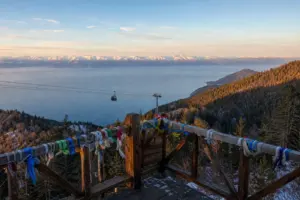 Chersky Stone: Panoramic Viewpoint Over Lake Baikal
Main image: AI-generated illustration. It may not show the place exactly as it looks.
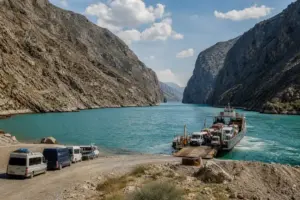 Olkhon Island Ferry Terminal: Hours, Queues and What to Expect
Main image: AI-generated illustration. It may not show the place exactly as it looks.
 Maloye More, Lake Baikal: Swimming, Fishing, and Winter Ice Roads
Main image: AI-generated illustration. It may not show the place exactly as it looks.
Browse more: More in Irkutsk Oblast · All Lake Baikal · All Sightseeing · All Sightseeing in Lake Baikal · All Viewpoints
FAQ: Peschanaya Bay, Lake Baikal
Can I swim in Peschanaya Bay?
In July–August, the clear water of the bay warms up to 22–23°C. The Baikal is always cool, but here in summer you can swim. However, the water is noticeably cold; swimming duration is typically brief. The bay remains the warmest spot on Baikal. Outside July–August, swimming is extremely challenging.
Is Peschanaya Bay included in boat tours from Listvyanka?
Many (but not all) tours from Listvyanka include Peschanaya Bay. Check the itinerary when booking. Day-trip boats often visit; longer cruises definitely include it. Some tours visit only the water-level view; stopping ashore for 2–4 hours is common on full-day and multi-day tours.
What are the 'stilt trees' and why are they unique?
Trees grow here while wind and water constantly blow and wash away the sand from under their roots, causing the roots to remain exposed as the sand erodes below them. This phenomenon is unique to Peschanaya because the sandbar erosion here is particularly intense. The trees are hardy pines and larches adapted to unstable terrain.
Can I visit Peschanaya Bay in winter?
Yes. From February to March, hovercraft tours depart from Bolshoye Goloustnoye and reach Peschanaya Bay on the frozen ice. In peak winter (February–March), an ice road may exist, allowing car access. Winter tours require advance booking through specialized tour operators; they are weather-dependent and not daily scheduled like summer boats.
Do I need a guide to visit Peschanaya Bay?
No guide is required to walk the beach or nearby areas. The shoreline and stilt trees are self-evident. Hiking to the Observation Cliff is possible without a guide, but the trail is not formally marked. A local guide is helpful if you want to understand the ecology, geology, or cultural history in detail.
What is the nearest accommodation to Peschanaya Bay?
The only on-site accommodation is the 'Baikal Dunes' holiday resort, which accepts reservations and offers rooms and meals. Camping is available with prior permission from Pribaikalsky National Park. The nearest town, Listvyanka (60 km away), has hotels and guesthouses; most visitors stay there and take day tours to the bay.
Is Peschanaya Bay within Pribaikalsky National Park?
This is the territory of the Pribaikalsky National Park. Entry to the bay is free, but if you camp overnight, you must obtain permission from the park authorities. Commercial accommodation (Baikal Dunes) operates under a concession agreement with the park.
How does the climate at Peschanaya differ from other Baikal locations?
The bay climate is mild with a large number of sunny days a year. This is the only place in Eastern Siberia where the average annual air temperature is positive (+0.4°C). The bay is notably warmer and sunnier than surrounding areas, which is why it is nicknamed the Siberian Riviera.
Russia Vibes is a one-person project. A coffee keeps it going
How we research and update our guides
About this guide: AI assistance and accuracy
This guide is created with the help of AI and is based on official sources where available. Mistakes can still happen. Opening hours, prices, rules and other details are given to the best of our knowledge as of the date shown and can change without notice. It offers general recommendations only, not professional, legal or travel advice. Please confirm important details with the official source before you travel; you are responsible for your own plans and decisions.
Packing for this trip
* Affiliate link: as an Amazon Associate we earn from qualifying purchases at no extra cost to you.

Take this guide with you
Get a free PDF of this guide to print or read offline: key facts, tips and a map link on a few clean pages.
Report an issue on this page
Paying for your trip: please read
International sanctions affect payments between Russia and many other countries. In practice, cards issued in the EU, the UK, the US and several other countries often do not work in Russia, Russian cards usually do not work abroad, and some booking platforms, airlines and payment providers limit or suspend their services for Russia. The situation changes frequently.
We do not give legal or financial advice, and this site does not encourage anyone to break or circumvent sanctions. Whatever you plan, you are responsible for following the laws and regulations that apply to you, including those of your country of residence and citizenship.
Many travelers still organise their stay lawfully. It is worth asking your bank or payment provider what is currently permitted, contacting hotels, tour operators and carriers directly about the payment methods they accept, and checking which services are open to customers from your country. Clarify payment, cancellation and refund terms before you commit to a booking, and keep your plans flexible.
Partner links on this site may not be available in every country, and prices, availability and rules in our guides can differ from what you see when you book.