
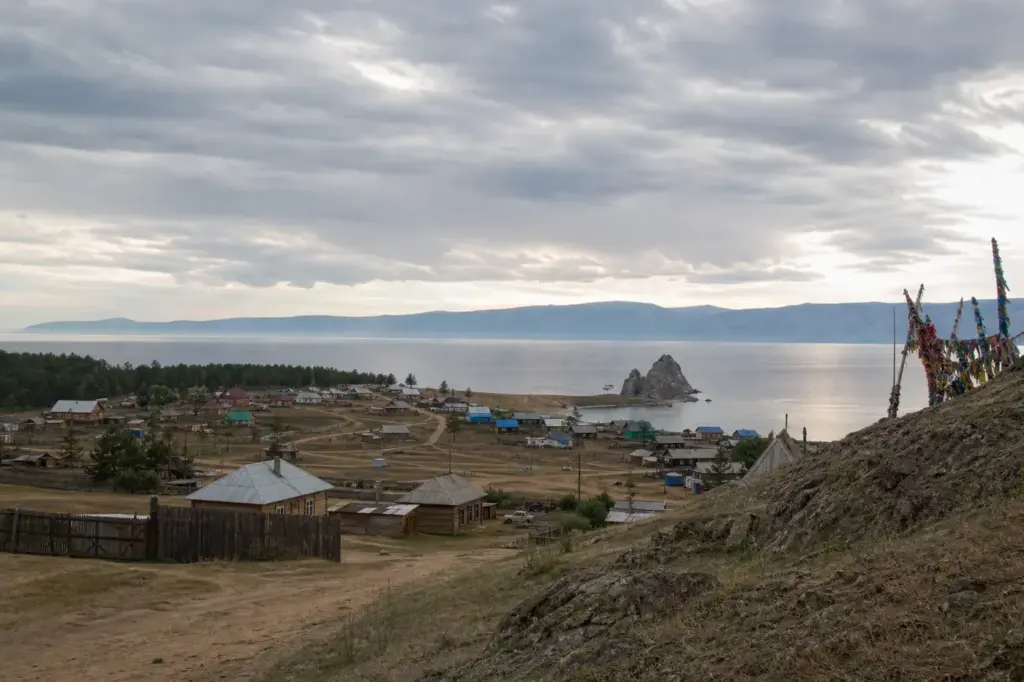
Khuzhir, Lake Baikal is the largest inhabited village on Olkhon Island, the fourth-largest lake island in the world. Located on the island’s western shore, it functions as the main base for visitors exploring one of Siberia’s most distinctive landscapes. With a population of approximately 1,200 people, mostly of Buryat descent, Khuzhir developed rapidly as a tourism hub after receiving electricity in 2005.
The village sits around 250 km north of the ferry terminal that connects Olkhon to the mainland. It remains small and walkable, with most amenities concentrated near the central square, yet its remote location and traditional character make it a compelling gateway to Lake Baikal’s sacred and natural sites.
Quick Facts
| Russian name | Хужир |
|---|---|
| Built / opened | 1938 |
| Address | Google MapsApple MapsYandex Maps2GIS |
| District | Olkhonsky |
| Admission | free |
| Best time to visit | Summer (July–August): Warmest and most visited season. Daytime temperatures range from 20–30°C. The ferry runs regularly, all facilities are open, and landscapes are fully accessible. Crowds are heaviest; book guesthouses weeks ahead. Midnight sun light extends the day for photography.Shoulder seasons (May–June and September–October): Fewer tourists, pleasant weather, and fewer clouds. Ferry continues to operate. Summer activities are still possible, though some specialized tours may not run. May can be cool; September and October see increasing cold and shorter daylight.Winter (December–March): A completely transformed landscape as the lake freezes solid. Ice-road tours become possible; February and March offer the most stable ice and stable weather. Daylight is limited (3–5 hours in December). Extreme cold (down to –30°C or lower) requires specialized gear. Fewer tourists, and an almost surreal serenity defines the experience. Guesthouses remain open but some tours may be restricted by ice conditions.Avoid: November and April, when the lake is neither fully frozen nor open, making ferry service sporadic and ice tours impossible. |
| Recommended duration | 2–3 days |
What Is (and Isn't) Part of a Visit to Khuzhir, Lake Baikal?
| Part | Status | Notes |
|---|---|---|
| Khuzhir village (Khuzhir itself) | Included in the standard ticket | Free to enter and walk; no village-wide entrance fee. Small shops, restaurants, and guesthouses operate independently. |
| Shamanka Rock (Cape Burkhan) | Included in the standard ticket | Free access; located a 10-minute walk from the village center near the ferry dock. Sacred site; respect local customs and do not disturb offerings. |
| Khuzhir Museum of Local Lore | Separate ticket or institution | Separate admission; located in the village center. Small museum documenting Olkhon's history and Buryat culture. |
| Sunday market | Included in the standard ticket | Free to browse and walk through; vendors sell items and food. Occurs most Sundays year-round on the main square. |
| Northern Olkhon attractions (Cape Khoboy, Sagaan-Khushun, caves) | Separate ticket or institution | Require organized tour or private vehicle rental; arranged through guesthouses or tour operators. Can include park entrance fees for protected areas. |
| Winter ice road crossing | Separate ticket or institution | Seasonal activity (December–March); organized through tour operators. Tours cost money and require advance booking. |
| Olkhon Island as a whole | Separate ticket or institution | Ferry crossing from mainland costs money; Khuzhir itself is just one village within the larger island. |
| Pribaikalsky National Park (portions of Olkhon) | Outside / not part of it | Protected areas on the island may require separate permits or park entrance fees; verify with your tour operator. |
Why Visit Khuzhir, Lake Baikal?
Khuzhir serves as the essential base for exploring Olkhon Island and its most important attractions, including Shamanka Rock (Cape Burkhan), one of Asia’s nine most sacred sites. The village is your launch point for day trips north to dramatic cliff formations like Cape Khoboy and south along sandy beaches and caves. In winter, the frozen lake transforms the area into an ice adventure destination where travellers can traverse the lake by hovercraft or on foot.
Beyond organized tours, Khuzhir itself offers a glimpse of Siberian settlement life: a market on the main square most Sundays selling local crafts and fresh food, a small museum documenting island history, and a peaceful rhythm interrupted mainly by the arrival and departure of tour groups. Bicycles and other sports equipment are available for rent, allowing independent exploration of the island’s network of unsealed roads.
Highlights of Khuzhir, Lake Baikal
Shamanka Rock (Cape Burkhan)
This distinctive rock formation stands at the edge of the western coast, easily visible from Khuzhir village and accessible by a short walk. Locals call it Shamanka or Shaman's Rock; it has served as a sacred site in Buryat and broader Central Asian shamanism for centuries. Wooden prayer flags on poles dot the nearby shore. The site is free to visit and draws photographers especially at sunset when the light catches the rock's craggy surface. Most visitors spend 30 minutes here, though the spiritual atmosphere often encourages lingering.
Tip: Go in late afternoon for the best light, but arrive early enough to secure a spot if you want to photograph sunset. The path from the village center is well-trodden and takes about 10 minutes.
Khuzhir Museum of Local Lore
Located in the village center, this small museum documents Olkhon Island's history and the material culture of its Buryat inhabitants. Displays include archaeological finds such as stone arrowheads and Mongolian-era artifacts, traditional household objects, and items related to shamanic practices. The museum provides context for understanding the island's settlement patterns and the lives of fishermen, farmers and herders who have lived here. Hours and admission prices are modest; ask locally for current details.
Tip: The museum staff usually speak only Russian; hiring a local guide through your guesthouse can enrich the visit significantly.
Baikal Ice Road (winter)
From December through March, when the lake's surface freezes solid, Khuzhir becomes the hub for one of Siberia's most dramatic seasonal experiences: driving or riding across the ice to the mainland or exploring remote northern reaches of the lake. Tours typically use UAZ-452 vans or hovercraft, depending on ice conditions. The 'Small Sea' strait between Olkhon and the mainland offers stunning icy vistas, frozen waterfalls, and ice formations along the cliffs. Ice roads are only passable during winter; February and March offer the most stable conditions.
Tip: Book winter tours well in advance through your guesthouse or an Irkutsk tour operator. Bring warm clothing in layers; the wind on the ice makes the air feel much colder than the thermometer reading.
Sunday Market
Most Sundays, locals gather on the main square to sell handmade goods, fresh vegetables from home gardens, smoked fish (especially Arctic cisco, a local delicacy), and locally produced items. The market reflects the village's subsistence traditions and gives visitors a chance to interact with residents and purchase genuine local products. Vendors and shoppers arrive mid-morning and disperse by early afternoon. The size and offerings vary seasonally, with summer bringing more produce and activity.
Tip: Arrive by 10:00 am to see the best selection. Speaking a few Russian phrases or traveling with a Russian-speaking companion opens conversations with vendors.
Cape Khoboy (day trip)
The dramatic northern tip of Olkhon Island lies about 40 km from Khuzhir and is reached by vehicle tour or mountain bike. Cape Khoboy rises over 650 feet above the water, with sheer white cliffs that glow in certain light. The site marks the northernmost point where the island meets Lake Baikal's waters in a spectacular collision of land and water. In winter, ice formations cling to the cliff face. Tours typically combine Khoboy with other northern attractions like Sagaan-Khushun Cape and coastal caves.
Tip: North tours are usually full-day affairs departing early morning. Bring a waterproof layer and sun protection, as wind and reflection off the ice intensify exposure.
Village Walk and Sandy Beaches
The village itself, small enough to walk in less than an hour, offers a tangible sense of Siberian settlement life. Unpaved streets loop past simple houses, the central square with its memorial, shops, and guesthouses, and lead to sandy beaches along the western shore. The quiet and open space contrast sharply with busier parts of Russia. In summer, the local Orthodox church and a small art gallery add cultural stops. Few restaurants exist, but several guesthouses serve home-cooked meals.
Tip: Walk the village in the early morning or late afternoon when fewer tour groups are active and the light is softer. Locals are friendly but speak limited English; a translation app helps break the ice.
Atmosphere
Khuzhir has the quiet, unhurried character of a remote Siberian village, though one increasingly accustomed to international visitors. Unpaved streets are lined with low wooden houses, many painted in soft colors. In summer, the village fills with young travellers from across Europe, creating an informal backpacker atmosphere, especially in guesthouses in the evenings. By day, many are out on tours, so the village can feel surprisingly empty during peak afternoon hours.
Winter brings a completely different mood: fewer tourists, deeper cold, and brilliant light reflecting off ice and snow. The Buryat heritage remains visible in local names, the Orthodox church, prayer flags, and food traditions. The sound of wind, birdsong, and the absence of traffic distinguish the acoustic landscape. Sunset casts the landscape in purple and gold, drawing photographers to the shore. Most visitors feel a sense of remoteness mixed with frontier comfort—authentic settlement life, yet with enough guesthouses, cafes, and shops to be manageable.
History of Khuzhir, Lake Baikal
Khuzhir was formally established in 1938 as an administrative settlement on Olkhon Island, though the western shore of the island has been inhabited for centuries. Buryat fishermen, herders, and farmers made up the majority population long before modern settlement. The shamanic traditions and spiritual significance of the landscape predate written Russian presence on the island by centuries.
In the Soviet era, Khuzhir became the de facto administrative center of Olkhon, though infrastructure remained sparse. The settlement grew slowly based on subsistence fishing and herding, and later as a minor fish-processing location, but remained isolated and little-known outside the region. The island’s population remained under 2,000 people across all settlements.
A watershed moment came in 2005, when electricity reached Khuzhir for the first time. This single infrastructure development triggered rapid tourism growth. Within a few years, the village filled with guesthouses, restaurants, and small shops catering to international travellers. By the early 2010s, foreign visitors—particularly French, German, and English speakers—became as visible as Russian tourists. Local people began renting rooms and bicycles as supplementary income sources. The shift from isolated fishing village to tourism hub occurred remarkably quickly, yet Khuzhir has largely retained its unpaved streets and modest scale.
Today, Khuzhir remains administratively central to Olkhonsky District and is the only inhabited settlement on the island with regular services for tourists. The tension between its identity as a living Buryat community and its role as a tourism destination shapes daily life, especially during the short summer high season and the winter ice-travel season.
Legends and Myths about Khuzhir, Lake Baikal
Shamanka Rock as the Gate to the Spirit World
Legend – historically unreliable. Local shamanic tradition holds that Shamanka Rock (Cape Burkhan) serves as a portal between the physical world and the spirit realm. Shamans historically conducted rituals at the site, and locals still leave offerings of milk, vodka, and sacred stones as acts of respect toward the spirits believed to inhabit the rock and surrounding water. The rock's distinctive shape and isolated position at the lake's edge have invited spiritual interpretation across cultures, and annual shamanic gatherings still occur on the island during summer.
The Thirteenth Gateway to Shamanism
Disputed by historians. Shamanka Rock is often cited in New Age and spiritual tourism literature as one of Asia's nine or thirteen most sacred places, though the claim lacks rigorous historical documentation. Travel guides and spiritual practitioners have popularized this ranking, and it now appears in most major descriptions of Olkhon Island. The designation contributes to the site's magnetism for international visitors seeking spiritual experiences.
Olkhon as an Island of Shamans
Legend – historically unreliable. Regional tradition holds that Olkhon Island has been a stronghold of shamanic practice longer than most Siberian regions, and that shamans from across Central Asia historically traveled to Olkhon to strengthen their spiritual powers. The island's isolation, dramatic landscape, and deep history of Buryat settlement supported this reputation. Modern shamanic practitioners and spiritual seekers continue to visit, particularly for summer ceremonies.
Tickets and Booking for Khuzhir, Lake Baikal
Khuzhir village itself has no entrance fee and is free to explore independently. To reach the village, visitors must first book transport from Irkutsk or another mainland location. From mid-May through mid-December, a free public ferry connects the island; regular buses from Irkutsk’s central bus station take approximately 5–6 hours, including ferry crossing. During summer, private cars wait in queues while buses receive priority, potentially adding hours to travel time. Book bus tickets in advance through local travel agents or directly at the terminal.
Once in Khuzhir, guesthouses (ranging from budget to moderate) can arrange day tours to northern attractions, ice crossings, and equipment rentals. Tours should be booked a day or two in advance during peak summer and well ahead in winter. For the museum, ask staff at your guesthouse for hours and admission costs. Most guesthouses also serve meals for guests and non-guests. Independent exploration of beaches and the village center is free but unguided.
Plan and Book
Suggested itineraries Khuzhir, Lake Baikal
2 hours
Village walk and Shamanka Rock. Begin at the central square, walk to the harbor, and head north along the shore to Cape Burkhan and Shamanka Rock (10 minutes). Spend time photographing and observing the sacred site. Return via the beach or main path. Stop for tea or a meal at a village cafe.
Half day (4–5 hours)
Morning: Walk the village, visit the museum if open, buy crafts or food. Afternoon: Visit Shamanka Rock and nearby beaches. Late afternoon: Browse the main square and rest before evening. This plan allows for meals and leisurely exploration without a guided tour.
Full day
Morning: Breakfast and guesthouse-arranged full-day north tour (Cape Khoboy, Sagaan-Khushun, coastal caves). Return by mid-afternoon. Evening: Walk the village, dinner, and sunset views from beaches. This pace captures the island's northern drama in one outing.
2–3 days
Day 1: Arrive mid-morning, walk village, visit Shamanka Rock and beach. Day 2: Full north tour or independent bike exploration of southern routes. Day 3: Morning walk or museum visit; depart afternoon. Allows acclimatization to the remote setting and time for multiple sites without rushing.
How to Get to Khuzhir, Lake Baikal
By bus from Irkutsk: Depart from Irkutsk’s central bus station (or book online through travel agents) on a direct route toward Khuzhir. Travel time is approximately 5–6 hours, including the ferry crossing at the island’s entry point. Buses usually depart morning and early afternoon, returning the same day or allowing overnight stays. Tickets can be purchased 1–2 weeks in advance but same-day purchase is often possible outside peak season.
Ferry crossing: From mid-May through mid-December, a free public ferry connects the mainland to Olkhon Island. Private cars are charged for ferry passage and may face long queues in summer; buses receive priority. Crossing takes 20–30 minutes. In winter, an ice road replaces the ferry, and specialized transport is required.
Village layout: From the ferry dock, buses continue north approximately 25 km to Khuzhir village center. The village is compact and walkable; guesthouses are concentrated around the main unpaved square. Most shops, cafes, and the museum are within a 10-minute walk of the square. Beach access is immediate from most locations.
Taxi and private drivers: Private vehicles are possible but should be booked in advance through Irkutsk hotels or operators; expect delays at the ferry and higher costs than bus travel.
Accessibility
Khuzhir is a village with unpaved roads and basic infrastructure. Wheelchair access is extremely limited; most buildings have steps, unpaved terrain is uneven, and paths are narrow. The village center and some guesthouses may accommodate mobility challenges, but this should be confirmed directly with your accommodations well ahead of booking.There are no formal accessible restrooms or facilities. The walk to Shamanka Rock from the village is mostly flat but covers unpaved terrain. If mobility is a concern, hire a local driver for short journeys rather than attempting to walk. Some tour operators may offer assistance, but capacity is limited.Stairs, uneven surfaces, and long distances between facilities make the island generally challenging for visitors with mobility or accessibility needs. Communication with your guesthouse before arrival is essential.
Food Nearby
Khuzhir has several small cafes and guesthouses serving meals. Most specialize in simple home-cooked fare: soups, rice dishes, bread, and traditional Russian and Buryat cuisine. Fresh fish (especially smoked Arctic cisco from local sources) is a local specialty and appears on many menus. Vegetables are seasonal; local markets offer fresh produce in summer. Imported goods and packaged food are available at small shops but are limited and more expensive than on the mainland.A larger supermarket (Khoroshiy) operates in the village center. Most guesthouses include meals for residents or can prepare food for non-guests on request; ask when booking. Tea and coffee are readily available. Dining options are casual; formal restaurants do not exist. Plan meals around guesthouse schedules or the limited cafe hours.
What to Bring
Summer (May–October): Layers for variable temperatures, rain gear, sturdy hiking boots or shoes for unpaved roads, sun protection (hat, sunscreen), insect repellent (mosquitoes in July–August can be intense). Swimwear if you plan to wade in the lake (shallow nearshore areas are accessible).Winter (December–March): Extreme cold-weather gear (down jacket, thermal underwear, insulated boots rated to at least –30°C), a thick hat covering ears, face mask or balaclava, thick gloves, and hand warmers. Wind chill is severe on the ice; layers are essential. Sunglasses to reduce snow glare.Year-round: Binoculars for wildlife viewing, a good camera or smartphone for photography, a translation app or phrasebook, toiletries (pharmacies carry basics but selections are limited), any prescription medications, and cash (rubles). Electrical outlets may be limited; bring a power bank. ATMs exist but are not guaranteed to work for all cards.Bags are checked at some guesthouses; carry valuables with you.
Best Views and Photo Spots of Khuzhir, Lake Baikal
Cape Burkhan (Shamanka Rock) at sunset
The rock formation frames the setting sun across the lake with prayer flags and wooden poles in the foreground. The golden hour light catches the rock's craggy surface and reflects off the water, creating rich colors and strong contrast. The beach and nearby hills frame the scene.
Best time: Late afternoon in summer (8:00–10:00 pm sunset); 5:00–7:00 pm in shoulder seasons. Visit 30–60 minutes before sunset for optimal light.
Village square from the memorial
An elevated view across the unpaved central square shows the village's modest wooden buildings, the church in the distance, and low vegetation. The panoramic vista captures the scale and character of a remote Siberian settlement.
Best time: Morning light (7:00–10:00 am) offers soft, even illumination and minimal crowds. Avoid midday harsh shadows.
Frozen lake shore (winter)
Sheets of white ice form dramatic patterns near the shore. In late February and March, sun and wind create sculptural ice formations along the cliffs and rocky outcrops. The smooth ice contrasts with darker water leads and distant mountains.
Best time: Clear days in February and March when sun angle is low (10:00 am–3:00 pm). Overcast days are less photogenic. Bring polarizing filter to reduce glare.
Beach near the village
Sandy beaches and rocky outcrops meet clear water with island mountains in the distance. Driftwood and boulders create foreground interest. Summer light is soft and diffuse due to high latitude and water reflection.
Best time: Golden hour in summer (late evening); shoulder season early morning. Calm weather reveals the water's clarity.
Village street at dusk
Wooden houses lit by low sunlight cast long shadows across the unpaved street. The minimal artificial light and sparse activity create an atmospheric, quiet scene of settlement life.
Best time: 30–60 minutes before sunset in summer or early shoulder season. Low sun angle creates maximum drama.
Photography Rules
Photography is permitted throughout Khuzhir and at Shamanka Rock. No restrictions on personal cameras or smartphones for non-commercial use. Drones are not permitted; check with your guesthouse operator. Tripods are acceptable for landscape work, but do not obstruct pathways or other visitors. Flash photography is not required indoors (no museums enforce this strictly). The best light for photography occurs early morning and late afternoon; winter and shoulder seasons offer dramatic skies and lower sun angles. Respect visitors' privacy and do not photograph people without permission.
Family Suitability
Khuzhir is suitable for families with older children (10+) who are comfortable with travel to remote areas and unpaved infrastructure. Young children may find the isolation and slow pace challenging. Walking distances from the village to Shamanka Rock are manageable for most kids (under 15 minutes each way on a well-used path).Strollers are impractical due to unpaved terrain and will not work on the main roads or paths. Families with very small children should plan frequent rests. Guesthouses vary in how family-friendly they are; ask in advance about children's meals, heating, and safe play areas. There is no medical facility beyond first aid; serious illness or injury requires evacuation to Irkutsk.Summer offers the most straightforward family visit: warm weather, reliable transport, and multiple activities. Winter ice roads are thrilling but extremely cold and demand specialized transport and gear; consider this only for older children with cold-weather experience. The village itself is safe for children to walk unattended during daylight, though the lack of guardrails near the water warrants supervision.
Russia Vibes Tips
- Book guesthouses weeks in advance for July–August, especially if you want a specific location or need family rooms. Even in shoulder season, the best places fill. Last-minute arrivals may find only the most expensive or basic options.
- Hire a guide or book a tour even for familiar activities like the Shamanka Rock walk. Local guides offer historical and cultural context that dramatically enrich the experience, and they navigate local customs around sacred sites respectfully. Most guesthouses arrange guides for modest daily rates.
- North tours (Cape Khoboy, Sagaan-Khushun) are full-day outings departing early morning and returning mid-afternoon. Pack snacks, water, and layers, as wind on the boat or in the van is intense. Tours fill quickly in high season; book the day before or immediately upon arrival.
- Do not miss the Sunday market even if it is not a massive event. It is an authentic interaction with locals, authentic goods, and a window into village life. Arrive by 10:00 am when the best items are still available.
- Winter travel (ice roads) must be booked through an Irkutsk-based tour operator or well in advance through your guesthouse. Do not attempt to organize it independently. Ice conditions change rapidly; operators know current safety and schedule accordingly. Expect possible delays or cancellations due to weather.
- Rent a bicycle for 1–2 days and explore southern routes on your own if you are comfortable with unpaved roads and limited signage. The island has few cars; biking is safe and offers solitude and varied landscape. Ask your guesthouse for a route map or tips on where locals ride.
Explore Nearby Khuzhir, Lake Baikal
Related guides
 Lake Baikal: Where to Go, What to See and How to Visit
Main image: AI-generated illustration. It may not show the place exactly as it looks.
 Listvyanka Day Trip, Irkutsk: Getting to Lake Baikal and Back
Main image: AI-generated illustration. It may not show the place exactly as it looks.
Browse more: More in Olkhonsky · All Lake Baikal · All Landmarks · All Sightseeing · All Sightseeing in Lake Baikal
FAQ: Khuzhir, Lake Baikal
Do I need a ticket to enter Khuzhir village?
No. Khuzhir village itself is free to enter and walk around. There is no entrance fee or ticket required. Individual sites like the museum require separate admission, and organized tours cost money, but simply being in the village costs nothing.
How do I get from Irkutsk to Khuzhir?
Take a bus from Irkutsk's central bus station to Khuzhir (5–6 hours total, including ferry crossing). The ferry is free for passengers on public buses. Book tickets 1–2 weeks ahead in summer, or check same-day availability. Private cars can be hired but pay ferry fees and may face long waits. In winter, the ice road replaces the ferry; specialized transport is required.
Is Shamanka Rock part of the village, or do I need a separate ticket?
Shamanka Rock (Cape Burkhan) is a natural site free to visit. It lies about 10 minutes' walk from the village center near the ferry dock. No ticket is required. Treat it as a sacred site: do not disturb offerings, be respectful, and follow local customs.
When is the best time to visit?
July–August offers the warmest weather and most facilities, but also the most crowds. May–June and September–October are quieter with pleasant conditions. Winter (February–March) brings dramatic frozen landscapes and ice-road tours, but extreme cold. Avoid November and April when ferry service is unpredictable.
How long should I stay?
2–3 days is ideal. One day allows you to see the village and Shamanka Rock. Two days adds a full north tour (Cape Khoboy) or independent exploration. Three days lets you experience the place more slowly and perhaps explore both north and south routes.
Are organized tours necessary, or can I explore independently?
You can walk the village and visit Shamanka Rock independently. However, northern attractions like Cape Khoboy require a vehicle or guide. Renting a bike gives some independence. Hiring a local guide enriches the cultural and historical experience significantly and is worth the cost.
What is there to eat in Khuzhir?
Small cafes and guesthouses serve home-cooked Russian and Buryat meals: soups, rice, bread, and fresh or smoked fish. A market and small supermarket stock basics. Most guesthouses include meals for guests; non-guests can usually arrange meals on request. Dining is casual and options are limited compared to Irkutsk.
Is English spoken?
Limited English is spoken, mainly in tourist guesthouses. Cafe and shop staff rarely speak English. Bring a translation app or phrasebook. Hiring a local guide is helpful for deeper conversation. Young travellers often gather at popular guesthouses and may help translate.
Russia Vibes is a one-person project. A coffee keeps it going
How we research and update our guides
About this guide: AI assistance and accuracy
This guide is created with the help of AI and is based on official sources where available. Mistakes can still happen. Opening hours, prices, rules and other details are given to the best of our knowledge as of the date shown and can change without notice. It offers general recommendations only, not professional, legal or travel advice. Please confirm important details with the official source before you travel; you are responsible for your own plans and decisions.
Packing for this trip
* Affiliate link: as an Amazon Associate we earn from qualifying purchases at no extra cost to you.

Take this guide with you
Get a free PDF of this guide to print or read offline: key facts, tips and a map link on a few clean pages.
Report an issue on this page
Paying for your trip: please read
International sanctions affect payments between Russia and many other countries. In practice, cards issued in the EU, the UK, the US and several other countries often do not work in Russia, Russian cards usually do not work abroad, and some booking platforms, airlines and payment providers limit or suspend their services for Russia. The situation changes frequently.
We do not give legal or financial advice, and this site does not encourage anyone to break or circumvent sanctions. Whatever you plan, you are responsible for following the laws and regulations that apply to you, including those of your country of residence and citizenship.
Many travelers still organise their stay lawfully. It is worth asking your bank or payment provider what is currently permitted, contacting hotels, tour operators and carriers directly about the payment methods they accept, and checking which services are open to customers from your country. Clarify payment, cancellation and refund terms before you commit to a booking, and keep your plans flexible.
Partner links on this site may not be available in every country, and prices, availability and rules in our guides can differ from what you see when you book.