
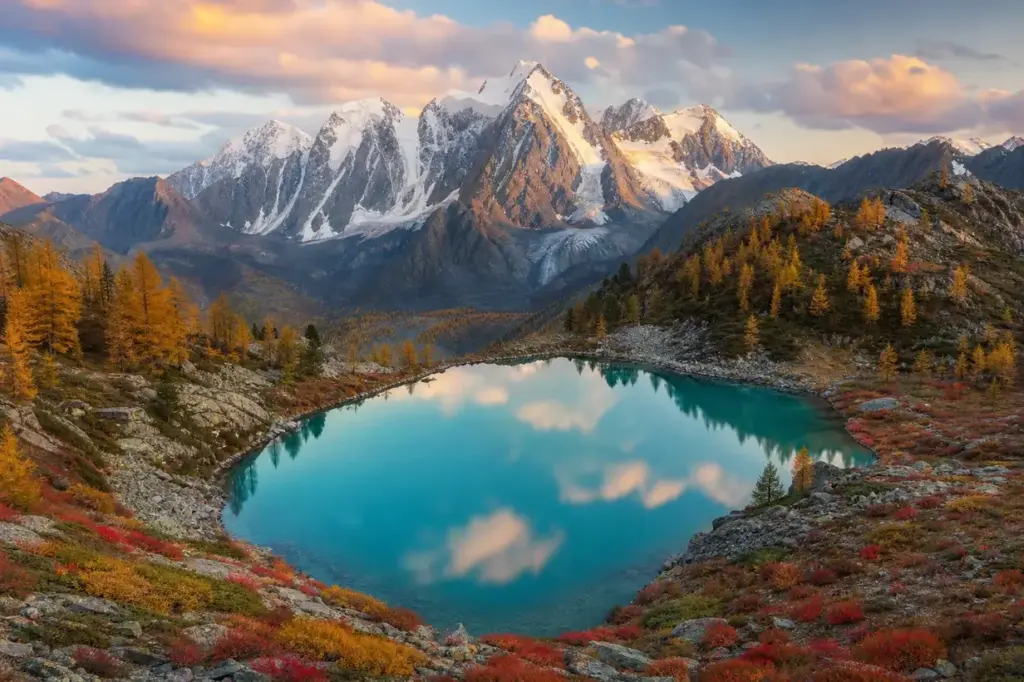
This guide covers the most rewarding viewpoints and photography spots in the Altai Mountains for visitors who want to capture the region’s dramatic scenery. Whether you prefer accessible roadside vistas, multi-day treks, or high-altitude lookout points, these locations offer excellent light, composition and variety.
The selection includes 10 must-see photography destinations verified as currently accessible, ranging from technical mountain passes and glacier-fed lakes to expansive steppe panoramas and river valleys. Autumn (September–October) is considered the best season for light and color contrast, though summer and winter each offer distinct photographic opportunities.
At a Glance
| # | Place | Best for | Good to know |
|---|---|---|---|
| 1 | Mount Belukha | Highest peak, multi-day trek | Altai Mountains; multi-day trek from Tyungur village; permit required via official channels |
| 2 | Katu-Yaryk Pass | Dramatic mountain pass, accessible by car | Altai Mountains; accessible by reliable vehicle; on the main route between Chuysky Trakt and Chulyshman Valley |
| 3 | Aktru Glacier and Kurai Steppe | Glacier viewpoint, northern Altai | Northern Altai Mountains, near Kosh-Agach village; 50 km from Kosh-Agach; requires mountaineering experience or guided tour for high-altitude routes |
| 4 | Lake Teletskoye | Largest alpine lake, accessible shoreline | Altai Mountains, Artybash village on northern shore; shoreline accessible by hiking trail or boat tour |
| 5 | Chuysky Trakt Scenic Road Stops | Highway viewpoints, multiple locations | Altai Mountains; accessible by vehicle on Chuysky Trakt highway; multiple stopping points between Gorno-Altaysk and Mongolia border |
| 6 | Aktash and Kyzyl Chin River (Altai Mars) | Colorful rock formations, unusual geology | Southern Altai Mountains, near Aktash village; day trip accessible; no permit required for viewing from accessible areas |
| 7 | Jangyzkyol Lake (Blue Lake) | High-altitude turquoise lake, alpine backdrop | Altai Mountains, high altitude; accessible by guided tour or multi-day trek; check permit requirements with Altai tourism authority |
| 8 | Ukok Plateau | Remote plateau, cultural and natural heritage | Southern Altai Mountains, Ukok Plateau; remote location; permits required; accessible by guide or expedition |
| 9 | Chulyshman Valley and Waterfalls | Multi-day valley trek, river scenery | Altai Mountains, between Katu-Yaryk Pass and Lake Teletskoye; accessible by boat and hiking; day and multi-day options available |
| 10 | Multinsky Lakes (Multinskie Lakes) | Turquoise lake chain, alpine meadows | Altai Mountains, accessible by multi-day hiking; starting point near Chemal area |
| 11 | Karaturek Pass and South Chuya Range | High pass viewpoint, mountain panorama | Altai Mountains, high altitude; accessible by trekking; part of Mount Belukha approach route |
How We Chose
These viewpoints were selected based on the following criteria:
- Verified accessibility and current operating status
- Suitability for landscape and mountain photography
- Mix of accessible roadside stops and destinations requiring hiking or trekking
- Geographic spread across the Altai Mountains region (northern glaciers, central valleys, southern plateau)
- Significant visual impact: distinctive geological features, color contrasts, or scale
- Reliability of light and weather conditions during peak seasons
Information sourced from official tourism guides, photography tour operators, and verified geographic records. Specific timing, permits and road conditions should be confirmed with local authorities before visiting.
1. Mount Belukha – Highest peak, multi-day trek
The highest mountain in Siberia and the Altai Mountains at 4,509 m, Mount Belukha straddles the Russia-Kazakhstan border in the Katun Ridge. Photographers can approach viewpoints from the Akkem valley and mountain shelters along the trekking route, where the peak emerges against surrounding ridges. The best photography occurs from mid-summer through early autumn. The Seven Lakes Valley near the mountain provides one of the most photogenic vantage points in the region.
Good to know: Altai Mountains; multi-day trek from Tyungur village; permit required via official channels
Tip: High-altitude routes mean early morning light is crucial; start your hike the day before to position yourself for sunrise photography at key viewpoints such as the Ak-Kem mountain shelter.
2. Katu-Yaryk Pass – Dramatic mountain pass, accessible by car
Located at 1,188 m elevation on the border between two valleys, Katu-Yaryk Pass offers sweeping views down the serpentine road and across the Chulyshman Valley to distant peaks. The pass is notorious for its narrow, gravel terrain without barriers, but the panoramic views reward careful drivers. The vistas extend far enough to photograph the road snaking through the valley below, creating striking compositional depth.
Good to know: Altai Mountains; accessible by reliable vehicle; on the main route between Chuysky Trakt and Chulyshman Valley
Tip: Avoid midday light; shoot early morning or late afternoon when the valley floor is in shadow and distant peaks stand out against the sky.
3. Aktru Glacier and Kurai Steppe – Glacier viewpoint, northern Altai
Aktru Gorge in northern Altai features visible glaciers, temporary ice caves with translucent blue walls, and panoramic views from Karatash Peak. On clear days, the peak offers sight lines to four countries across the high steppe. The surrounding Kurai Steppe stretches as a semi-desert plain with a chain of mountains rising abruptly, making it one of the most dramatic wide-angle photography locations in the region.
Good to know: Northern Altai Mountains, near Kosh-Agach village; 50 km from Kosh-Agach; requires mountaineering experience or guided tour for high-altitude routes
Tip: The Kurai Steppe viewpoint is best visited at sunrise when the steppe is golden and the mountains behind are lit from the side.
4. Lake Teletskoye – Largest alpine lake, accessible shoreline
The largest lake in the Altai at 78 km long and surrounded by steep forested mountains, Lake Teletskoye (also called Golden Lake) offers multiple shoreline viewpoints and boat-accessible vistas. Early morning mist rising from the water creates atmospheric conditions. The deepest lake in Altai and a UNESCO World Heritage site, its crystalline water reflects surrounding peaks. Sunset light across the water provides golden hour photography opportunities.
Good to know: Altai Mountains, Artybash village on northern shore; shoreline accessible by hiking trail or boat tour
Tip: From the northern shore near Artybash, walk away from the main boardwalk to find less crowded viewpoints among the forest edge for clearer reflections and mist effects.
5. Chuysky Trakt Scenic Road Stops – Highway viewpoints, multiple locations
The Chuysky Trakt (Chuysky Trakt highway) passes through multiple high-altitude viewpoints across the North Chuya and Kurai ridges. Designated panoramic platforms along the route offer stunning vistas of the Chuya Highway itself snaking through mountain passes, with snow-capped peaks in the background. The contrast between the semi-desert valleys below and alpine ridges above creates strong compositional opportunities.
Good to know: Altai Mountains; accessible by vehicle on Chuysky Trakt highway; multiple stopping points between Gorno-Altaysk and Mongolia border
Tip: Plan an early morning drive to catch sunrise light on the ridges; the road itself can be photographed as a leading line element in landscape compositions.
6. Aktash and Kyzyl Chin River (Altai Mars) – Colorful rock formations, unusual geology
The Kyzyl Chin River valley displays striking rock formations in bright reds and oranges, earning the nickname 'Altai Mars' for its alien landscape. The unusual color contrasts come from oxidized minerals in the exposed strata. The formations are accessible from the village of Aktash and provide dramatic wide-angle photography opportunities with the river and sky as additional compositional elements.
Good to know: Southern Altai Mountains, near Aktash village; day trip accessible; no permit required for viewing from accessible areas
Tip: Visit in clear conditions for maximum color saturation; the formations photograph best in afternoon or evening light when the sun is lower and shadows enhance the rock texture.
7. Jangyzkyol Lake (Blue Lake) – High-altitude turquoise lake, alpine backdrop
Located at high altitude and backed by the snowy North Chuysky Range, Jangyzkyol Lake is renowned for its vivid turquoise water contrasting against white-capped peaks. The lake sits in dramatic isolation, accessible only by hiking or guided tour. The clear alpine water and surrounding rocky terrain create strong color contrasts ideal for landscape photography.
Good to know: Altai Mountains, high altitude; accessible by guided tour or multi-day trek; check permit requirements with Altai tourism authority
Tip: Plan a sunset photography session at the lake's edge; the long rays illuminate the peaks while the foreground water remains in deep turquoise shadow.
8. Ukok Plateau – Remote plateau, cultural and natural heritage
The Ukok Plateau in southern Altai stretches as semi-isolated high-altitude terrain near borders with Kazakhstan, China and Mongolia. The landscape offers vast open vistas, rare waterfowl (birdwatching opportunity), and archaeological sites. The isolation creates pristine natural light without atmospheric haze. Crystal-clear mountain lakes such as Kindyktykul Lake reflect surrounding snow-capped peaks.
Good to know: Southern Altai Mountains, Ukok Plateau; remote location; permits required; accessible by guide or expedition
Tip: The lack of light pollution makes early dawn and dusk light exceptionally clear; bring extra batteries as the remote location offers no services.
9. Chulyshman Valley and Waterfalls – Multi-day valley trek, river scenery
The Chulyshman Valley runs between steep cliffs and feeds Lake Teletskoye, offering dramatic valley photography with river, forest and mountain backdrop. The valley includes accessible waterfalls (Korbu Waterfall and Kamyshlinsky Waterfall) that cascade directly into the lake or river. The valley's proportions create impressive compositional depth, with foreground river, middle-distance forest and distant peak ridges.
Good to know: Altai Mountains, between Katu-Yaryk Pass and Lake Teletskoye; accessible by boat and hiking; day and multi-day options available
Tip: Photograph the waterfalls from multiple angles: shoot from water level looking upstream for scale, and from elevated viewpoints for the full valley context.
10. Multinsky Lakes (Multinskie Lakes) – Turquoise lake chain, alpine meadows
A series of interconnected alpine lakes featuring vibrant turquoise water, surrounded by meadows and glacier-fed streams. The chain offers multiple photographic compositions as you move between lakes. The color contrast between the water and surrounding rock and vegetation is particularly striking in clear conditions. Summer wildflowers add foreground interest to landscape shots.
Good to know: Altai Mountains, accessible by multi-day hiking; starting point near Chemal area
Tip: Carry a polarizing filter to manage the intense reflection off the turquoise water; it will deepen the blue and reveal underwater details.
11. Karaturek Pass and South Chuya Range – High pass viewpoint, mountain panorama
Karaturek Pass at 3,060 m elevation provides panoramic views of the South Chuya Range and surrounding ridges. The pass is a key photography location for sunrise and sunset light across distant peaks. The high altitude and exposed terrain mean dramatic skies and crisp visibility. The pass is often used as an approach point to Mount Belukha trekking routes.
Good to know: Altai Mountains, high altitude; accessible by trekking; part of Mount Belukha approach route
Tip: Arrive well before sunset to scout compositions and set up; the light changes rapidly at high altitude, so plan multiple shots during the final hour before darkness.
Russia Vibes Tips
- Autumn (September–October) offers the best light and color contrast for landscape photography: golden larch trees, red canyons, white glaciers, and amber grasslands all visible simultaneously. However, plan for sudden weather changes and unpredictable passes.
- Summer (June–August) provides longer daylight hours, accessible trails, and warmer conditions but can bring afternoon thunderstorms and haze. Early mornings are essential for clear visibility on high passes.
- Confirm that the pass you're planning to photograph is open before driving. Katu-Yaryk and some northern routes can close suddenly due to snow or rockfall; check with local tourism offices or your accommodation.
- High altitude means rapid light changes and unpredictable weather. Bring weather protection for your camera (lens caps, rain sleeve) and extra batteries, as cold reduces battery life by 30–50%.
- If you're traveling independently by car, do not underestimate mountain road conditions. Gravel surfaces, lack of barriers, and hairpin turns require slow driving and careful attention; do not prioritize shots over safety.
- Many premium viewpoints (Belukha, Ukok Plateau, protected reserves) require permits or guide services. Research and arrange these weeks in advance; some operate under quota systems during peak seasons.
Explore Nearby Best Viewpoints and Photography Spots, Altai Mountains
Sights near Best Viewpoints and Photography Spots, Altai Mountains
 Mount Belukha, Altai Mountains · typical visit: 10–14 days
Main image: AI-generated illustration. It may not show the place exactly as it looks.
 Korbu Waterfall, Altai Mountains · typical visit: 3–4 hours
Main image: AI-generated illustration. It may not show the place exactly as it looks.
Related guides
 Two Days at Lake Teletskoye: Boat Tours, Waterfalls and Mountain Views
Main image: AI-generated illustration. It may not show the place exactly as it looks.
 Chuysky Trakt Scenic Road Trip: Mountain Passes and Altai Landscapes
Main image: AI-generated illustration. It may not show the place exactly as it looks.
 Chulyshman Valley and Katu-Yaryk Pass Route: A 5-Day Mountain Adventure
Main image: AI-generated illustration. It may not show the place exactly as it looks.
 Aktash and Altai Mars Day Trip: Colored Mountains and Thermal Springs
Main image: AI-generated illustration. It may not show the place exactly as it looks.
Browse more: All Altai Mountains · All Guides · All Guides in Altai Mountains · All Viewpoints and Photo Spots
FAQ
What is the best season for photography in the Altai Mountains?
Autumn (September–October) is widely considered the best season for landscape photography due to golden light, clear skies, and dramatic color contrasts: golden larch forests, white glaciers, red rock formations, and turquoise lakes visible together. Each season offers distinct opportunities—summer for wildflowers and long light, winter for snow and ice formations.
Do I need a permit to visit the viewpoints?
Roadside viewpoints on Chuysky Trakt and accessible lakes do not require permits. However, Mount Belukha, Ukok Plateau, and most nature reserves require entry permits obtained through official Altai tourism channels or your accommodation. Plan 1–2 weeks in advance for popular locations.
Can I reach these viewpoints without a car?
Roadside viewpoints along Chuysky Trakt are reachable by public buses running between major towns. Lake Teletskoye and Chulyshman Valley are accessible by boat tours and hiking. Remote locations (Belukha, Ukok, some glacier viewpoints) typically require a guided tour or personal hiking expedition.
What camera equipment should I bring?
Wide-angle lenses (16–35 mm) work well for expansive valley and peak compositions. A telephoto lens (70–200 mm) helps compress distance for distant peaks. A tripod is essential for low-light conditions and long exposures at sunrise/sunset. Carry extra batteries, as cold reduces capacity significantly.
Are guided photography tours available?
Yes. Several operators run dedicated autumn photography tours covering Kurai Steppe, Aktru Glacier, Jangyzkyol Lake and Chulyshman Valley. These typically run September–October and include accommodation, transportation, and expert guidance on light and composition.
How challenging are the hikes to these viewpoints?
Roadside viewpoints require only a short walk. Lake Teletskoye and valley hikes are moderate (1–3 hours daily). High-altitude locations (Belukha, Karaturek Pass, Ukok) require mountaineering fitness, acclimatization, and often multi-day treks. Most are suitable for experienced hikers and photographers.
What should I do if weather turns bad while I'm on a mountain pass?
Descend immediately and wait out the weather in the nearest settlement. Do not attempt to photograph in lightning storms or zero visibility. Morning weather is typically more stable than afternoon; plan shoots for early hours. Check forecasts the evening before and with local guides.
Can I visit all 10 viewpoints in one trip?
No. The viewpoints span the entire Altai region across 300+ km. A two-week itinerary might combine Chuysky Trakt stops, Lake Teletskoye and Chulyshman Valley. A dedicated autumn photography tour (7–10 days) typically covers Kurai Steppe, Aktru Glacier and Jangyzkyol Lake. Plan your route based on available time and interests.
Russia Vibes is a one-person project. A coffee keeps it going
How we research and update our guides
About this guide: AI assistance and accuracy
This guide is created with the help of AI and is based on official sources where available. Mistakes can still happen. Opening hours, prices, rules and other details are given to the best of our knowledge as of the date shown and can change without notice. It offers general recommendations only, not professional, legal or travel advice. Please confirm important details with the official source before you travel; you are responsible for your own plans and decisions.
Packing for this trip
* Affiliate link: as an Amazon Associate we earn from qualifying purchases at no extra cost to you.

Take this guide with you
Get a free PDF of this guide to print or read offline: key facts, tips and a map link on a few clean pages.
Report an issue on this page
Paying for your trip: please read
International sanctions affect payments between Russia and many other countries. In practice, cards issued in the EU, the UK, the US and several other countries often do not work in Russia, Russian cards usually do not work abroad, and some booking platforms, airlines and payment providers limit or suspend their services for Russia. The situation changes frequently.
We do not give legal or financial advice, and this site does not encourage anyone to break or circumvent sanctions. Whatever you plan, you are responsible for following the laws and regulations that apply to you, including those of your country of residence and citizenship.
Many travelers still organise their stay lawfully. It is worth asking your bank or payment provider what is currently permitted, contacting hotels, tour operators and carriers directly about the payment methods they accept, and checking which services are open to customers from your country. Clarify payment, cancellation and refund terms before you commit to a booking, and keep your plans flexible.
Partner links on this site may not be available in every country, and prices, availability and rules in our guides can differ from what you see when you book.