
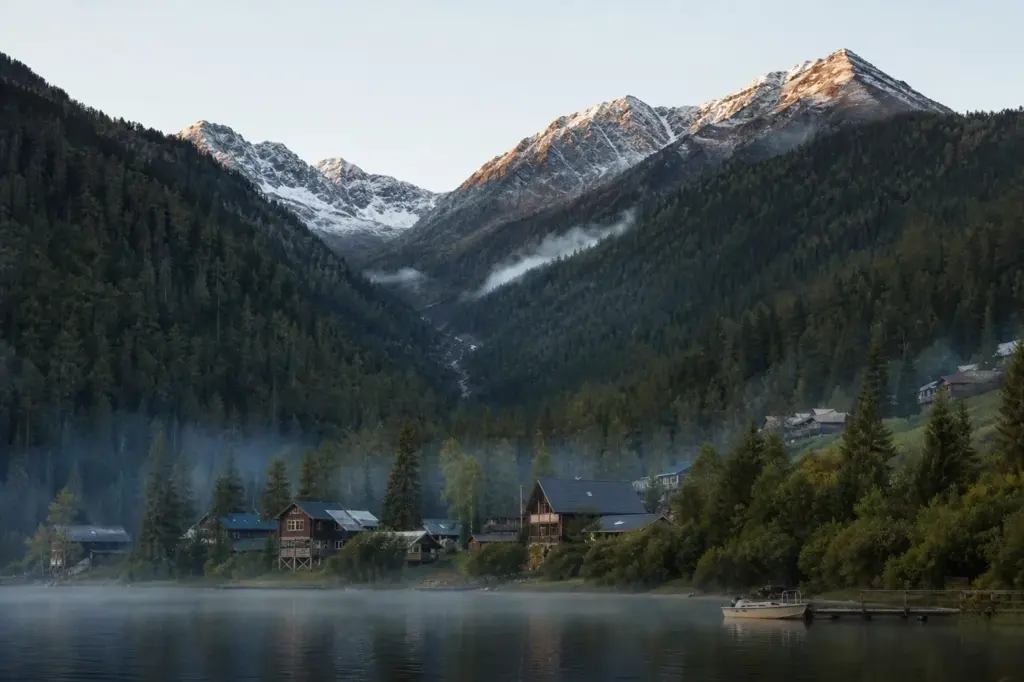
Artybash sits on the north shore of Lake Teletskoye, a 78-kilometre-long mountain lake in the Altai Republic. The village is tiny—around 600 residents—but it plays a disproportionately large role as a gateway for visitors entering the region. Twin villages Artybash and Iogach face each other across the northern waters; Artybash is the larger and hosts most of the tourism infrastructure: boat piers, guesthouses, cafes, a visitors’ information centre, and rental outfits offering fishing and water transport.
Summer brings hikers, boaters and nature enthusiasts who use Artybash as a base for multi-day lake cruises, waterfall expeditions and forest walks. Winter transforms the place into a quieter retreat: the lake freezes, forested slopes turn snow-white, and the rhythm slows to reflect, warm drinks and solitary walks.
Quick Facts
| Russian name | Артыбаш |
|---|---|
| Built / opened | 1928 |
| Address | Turochaksky District, Altai Republic, Russia Google MapsApple MapsYandex Maps2GIS |
| Best time to visit | Summer (June–August): Warmest season, with long daylight hours and all ferries and businesses operating. Daytime temperatures range from 15–20°C. This is peak season; expect crowds at boat piers and fully booked guesthouses. June is the wettest month; July and August are drier and offer the clearest lake views. Early autumn (September–early October): Excellent light, fewer visitors, and stable weather. Daytime temperatures 10–15°C. Water is cold. Some tourist businesses begin closing by late September. Late autumn and spring (May, October–April): Fewer facilities open; some boats do not run. Temperatures hover around freezing or below. Snow and fog are common. Not recommended for first-time visitors or those without wilderness experience. Winter (December–February): The lake freezes; specialist ice activities (skating, hiking on ice) are possible. Temperatures drop to –10 to –20°C. Accommodation and hot meals are available but shops and tourist services are minimal. Only for visitors comfortable with isolation and cold. |
| Recommended duration | 2–4 days |
What Is (and Isn't) Part of a Visit to Artybash, Altai Mountains?
| Part | Status | Notes |
|---|---|---|
| Artybash settlement and village amenities | Included in the standard ticket | Walking, shopping, dining, accommodation booking and tourist information are all available in the village itself. |
| Lake Teletskoye boat pier and ferries | Included in the standard ticket | Public and private boat services depart from piers within walking distance of village centre; ferry schedules are seasonal. |
| Altai Nature Reserve Information Centre | Included in the standard ticket | Free entry to the information centre; special-access permits for interior reserve areas require separate booking and payment. |
| Iogach village (across the lake) | Separate ticket or institution | Reached by ferry or private boat; a separate settlement with its own guesthouses and serves as an alternative base. |
| Waterfall trails and lake-shore hikes | Separate ticket or institution | Most scenic walks require boat transport to trailheads; some multi-day hikes require guides and wilderness permits from the Altai Reserve. |
| Altai Reserve interior and protected areas | Separate ticket or institution | Protected areas on the eastern shore require special permits and are often accessed by guided tours arranged in Artybash or Gorno-Altaysk. |
Why Visit Artybash, Altai Mountains?
Lake Teletskoye itself is the main draw—it stretches 78 kilometres south into mountainous terrain accessible only by boat or hiking trail. The lake is famous for its waterfalls (Korbu, Estyuba and others), remote wilderness villages, and the Altai Nature Reserve on its eastern shore. Artybash is where you board ferries and rent boats to reach them.
The settlement also offers a rare glimpse of real mountain life in Siberia. Expect basic infrastructure: timber buildings, small shops, outdoor activities and genuine hospitality. This is not a manicured resort but an authentic foothold for wilderness exploration.
Highlights of Artybash, Altai Mountains
Lake Teletskoye boat tours
Lake Teletskoye stretches 78 kilometres long and up to 5 kilometres wide, with a maximum depth of 325 metres. Day-long ferries run from Artybash down the lake's centre, stopping at remote waterfalls and villages. Private boat rental is also available for flexible exploration of coves and fishing grounds. Allow 5–8 hours for a full lake crossing by ferry.
Tip: Book ferries the day before in high season (June–August). Private boats cost more but offer freedom; ask at the main pier or your guesthouse.
Waterfall walks
Waterfalls including Korbu, Estyuba and 40 Sins are accessible by boat and short forest walks. These cascade through dense taiga down the lake's southern shores. The higher you climb, the fewer visitors you'll encounter. Some waterfalls can be visited as day trips from Artybash; others require overnight stays in south-shore camps.
Tip: Waterfall viewing is best in June–July when snowmelt raises the flow. Wear waterproof boots and bring a dry bag for camera gear.
Altai Nature Reserve information centre
The Information Centre of the Altai Reserve is situated in Artybash. It provides maps, guides, information on trails and wildlife, and arranges special-access permits for reserve areas. Staff can advise on multi-day trekking routes, best seasons and safety. The reserve protects the eastern shore and interior peaks.
Tip: Visit first thing to gather maps and book a guided walk if you lack hiking experience in remote terrain.
Mountain-lake landscape
Artybash sits surrounded by forested peaks at the northern tip of Lake Teletskoye. In winter, shimmering ice and snow-dusted mountains create a special landscape. The shoreline offers accessible walks from the village; higher trails climb into forest ridges with open views across the lake to the Sayan Mountains in the distance.
Tip: Early morning light and late afternoon sun produce the best photography. Mist often settles over the lake in June–July; clear skies favour September–October.
Iogach village across the water
Twin villages Artybash and Iogach lie opposite each other at the northern tip of Lake Teletskoye. Iogach is smaller and quieter. A short ferry crossing or summer boat hire lets visitors explore the other bank, which offers alternative accommodation, hiking starts and a different angle on the lake's northern landscape.
Tip: Take a morning ferry across for a day walk, then return by evening ferry—it gives you a second base without changing hotels.
Biya River outflow
The Biya River flows out of the lake in the north, draining into the Ob River system that reaches the Arctic. The river creates a narrow channel between Artybash and Iogach, with fast currents and scenic banks. Kayaking and slow boat rides through the narrows are popular summer activities.
Tip: River viewing is best from the bridge and riverbank paths near the village centre. Early morning often brings local birdlife.
Atmosphere
Artybash feels quiet and purpose-built for outdoor visitors rather than tourism spectacle. The architecture is simple: timber cabins, small cafes with wood stoves, a handful of shops stocked with basics, tourist-oriented guesthouses. In summer, the place buzzes gently with hikers, boaters and fishers preparing for lake excursions; in winter, it falls almost silent.
The dominant sound is water—the lake lapping the shore, the Biya River rushing through the narrows, occasional boat engines. The air carries the scent of taiga forest, woodsmoke and, on damp days, petrichor. Weather changes fast; fog rolls in, then clears to brilliant sun. Locals are helpful and accustomed to international visitors, though English is limited.
History of Artybash, Altai Mountains
Artybash began to operate in 1928 as a tent camp, and in the mid-1930s the first wooden buildings were built. It emerged as a Soviet tourism base during the era when Siberian wilderness was being opened to domestic recreation.
For decades, Artybash remained a modest seasonal retreat for Russian holidaymakers from the lowlands. The Altai mountains were sacred to indigenous Altai peoples long before Soviet times, and the lake’s ecology made it a focus for nature conservation efforts that led, eventually, to the establishment of the Altai Nature Reserve on the eastern shore.
In the post-Soviet era, international tourism grew slowly. Road access improved in phases; in recent years, major infrastructure work has aimed to make the access road more passable, though journeys remain demanding. Guesthouses diversified from state tourism bases to private enterprises, from basic dormitories to comfortable log cabins.
Today, Artybash remains fundamentally a gateway settlement: small, infrastructure-light, and defined by its geography—the sole accessible point from which to explore the lake by public transport or boat hire. Climate and isolation have preserved its character as a place for serious visitors rather than casual passing trade.
Legends and Myths about Artybash, Altai Mountains
Sacred waters of the Altai
Legend – historically unreliable. Altaians consider sacred mountains in the region, including Belukha, which they call 'Uch Sumer' (Three-headed) or 'Kadyn-Bazhy' (the top of the Katun). High snowy mountains serve the Altai as objects of sacred veneration. Lake Teletskoye, fed by mountain snowmelt and surrounded by these peaks, holds spiritual significance in Altai cosmology as a gateway between earth and sky worlds. Local guides occasionally reference these traditions.
Tickets and Booking for Artybash, Altai Mountains
Artybash itself is free to enter and explore. To visit, you need accommodation (guesthouses, hotels, cabins) and ferry or boat transport. Booking recommendations depend on season and travel style.
- Accommodation: Book guesthouses and hotels through their websites, email or phone (contact details available through Russian tourism sites or Booking/Airbnb). High season (June–August) fills quickly; book 1–2 months ahead. Low season (May, September) offers availability and lower rates.
- Boat ferries: Ferries run summer only (roughly June–September); schedule and ticket availability depend on water level and weather. Ask at your guesthouse or at the Altai Reserve Information Centre upon arrival.
- Private boat hire: Arrange through guesthouses or directly with boat owners at the main pier. Costs vary by boat type and distance; a full day costs ₽₽₽ (mid-range).
- Reserve permits: For interior reserve areas, contact the Altai Nature Reserve office in Gorno-Altaysk or via the Information Centre in Artybash.
Plan and Book
Suggested itineraries Artybash, Altai Mountains
2 days
Arrive in Artybash. Explore the village, walk the riverbank, visit the Information Centre. On day two, take a half-day boat tour to a nearby waterfall (Korbu or Estyuba) and return to the village. Spend evenings in a cafe, hiking a forest track or by the water watching light change across the mountains.
4 days
Days 1–2: Settle in, explore village and short lake walks. Day 3: Full-day ferry crossing the lake, visiting multiple waterfalls and a remote south-shore village or camp, returning to Artybash. Day 4: Morning walk, lunch, departure—or optional day hike into the taiga forest near the village.
Half day (transit or brief visit)
Arrive morning. Visit Information Centre, grab coffee, walk to the main pier and along the Biya River. Board an afternoon ferry for a 2–3 hour scenic cruise of the northern lake. Depart or overnight if transport allows.
How to Get to Artybash, Altai Mountains
By air and road: Fly into Barnaul (the capital of Altai Krai, the lowland region adjacent to Altai Republic) from Moscow or another Russian city. From Barnaul airport, hire a car or join a shared tour van. The drive to Artybash takes 6–8 hours and covers approximately 250 kilometres, partly on the scenic but rough mountain roads.
By air to Gorno-Altaysk: Alternatively, fly to Gorno-Altaysk (the capital of Altai Republic, closer to the mountains). From there, Artybash is 150–170 kilometres away by road (4–5 hours by car or minibus). Shared shuttle vans and tour operators depart from Gorno-Altaysk hotels and the city centre.
Road conditions: The main route from Gorno-Altaysk to Artybash is 157 kilometres. The final section is a mountain road with occasional potholes and rough patches. In summer it is passable by ordinary car; in winter, snow may close it temporarily. During wet seasons (spring and autumn), road conditions can deteriorate. Check current conditions with local tour operators or your accommodation before booking.
No public buses: Regular public buses do not reliably serve Artybash; hire a car, book a tour, or arrange a shuttle through your guesthouse in Gorno-Altaysk.
Accessibility
Artybash is not specifically accessible for visitors with mobility restrictions. Accommodation varies from timber cabins without lifts to guesthouses with ground-floor rooms; ask ahead when booking. The village centre is flat and walkable on compacted earth and gravel. Boat access to waterfalls and lake sites may involve steep shoreline trails; inform boat operators of any mobility needs when booking.
Medical facilities in Artybash are basic (a small clinic); serious emergencies require helicopter evacuation to Gorno-Altaysk. Those with medical needs should carry adequate medication and inform their accommodation upon arrival.
Food Nearby
Artybash has a handful of cafes and small restaurants, mostly seasonal and basic. Expect simple Russian cuisine: soups, bread, grilled fish and meat, tea and coffee. The Altai is known for fresh taiga ingredients and local fish from the lake. Food options are limited outside summer; if visiting in shoulder seasons, buy supplies in Gorno-Altaysk before arriving. Guesthouses typically offer breakfast and dinner as part of their packages; inquire when booking. No international food brands or upscale dining exists in the village.
What to Bring
Waterproof jacket and layered clothing (weather changes rapidly and mist is common). Sturdy hiking boots (trails are muddy and uneven). High SPF sunscreen (altitude intensifies UV; reflection off the lake adds exposure). Insect repellent (mosquitoes are heavy in summer). A torch or headlamp. Medications and a basic first-aid kit (the clinic has limited supplies). Camera batteries recharge slowly with intermittent power. Accommodation is basic; bring a sleep sheet if you prefer extra cleanliness or are sensitive to bedding. Rubbish bins are limited; carry out waste. No security screening or bag rules apply; valuables are generally safe in locked rooms.
Best Views and Photo Spots of Artybash, Altai Mountains
Biya River viewpoint (village bridge)
Fast-flowing emerald water framed by dense forest and forested ridges in the background. Best at sunrise when mist rises off the water and morning light catches the rapids. The bridge itself is a simple wooden structure; shoot from the bridge or riverbank paths on either side.
Best time: Early morning (06:00–08:00) in summer; golden-hour late afternoon light also works but brings crowds if ferries are loading.
Lake Teletskoye shoreline (village waterfront)
Open water stretches south toward distant snow-capped peaks. On clear days, the Sayan Mountains are visible across the central lake. Forested slopes meet the water; small boats and fishing frames add human scale.
Best time: Mid-morning (09:00–12:00) when light is bright and shadows minimal. September offers clearest skies; June–July often brings atmospheric mist.
Opposite shore (Iogach from the ferry)
Artybash's settlement nestles against forested slopes on the far shore. The lake's width creates depth and scale. Small cabins and boat piers punctuate the shoreline. Twin ridges frame the composition.
Best time: Mid-lake crossing, mid-morning light. Ferry schedules vary; morning ferries usually depart 08:00–10:00.
Mountain ridge above Artybash (short forest trek)
Looking down on the village and the lake's northern basin from 200–300 metres above. Forest canopy in foreground; water and mountains beyond. Used in winter for snow-landscape photos showing forested slopes descending to frozen lake.
Best time: Late afternoon (15:00–18:00) when lowland shadows extend and ridge tops catch side light. September–October for clearest air; June–July for lush green and wildflowers.
Photography Rules
Landscape and nature photography are permitted throughout Artybash and around the lake. Drones are not officially restricted but are rare and may attract attention; check with the Information Centre or your accommodation. No tripods or professional gear restrictions are enforced on public land. Photography inside the Altai Reserve and from boats may require permits—ask the Information Centre. Mobile signal is weak; download offline maps and photos to cloud storage regularly.
Family Suitability
Artybash is moderately suitable for families with children 8 years and older who are comfortable with simple accommodation and outdoor-focused activities. Younger children may find the pace slow and accommodation basic.
Stroller access is poor (gravel paths, no smooth pavements). Boat ferries are safe but can be crowded and noisy. Short waterfall walks are family-friendly; longer treks require stamina and proper gear. Cafes lack high chairs or children's menus; bring snacks. Internet and entertainment are minimal, encouraging outdoor play.
In winter, the village is quiet and offers limited services; not ideal for families seeking activity.
Russia Vibes Tips
- Arrive with cash in rubles. ATMs in Artybash are unreliable and often empty. Guesthouses and the information centre accept cards, but shops and small cafes expect cash. Withdraw funds in Gorno-Altaysk before the final drive.
- Book accommodation and ferries as early as possible in summer. Popular guesthouses fill 4–8 weeks ahead; if you arrive without booking in peak season, you may find no rooms and no ferry space. May and September are safer for walk-ups.
- Check ferry schedules in person upon arrival. Schedules are posted at the pier and at the Information Centre; they change based on water level, weather and demand. Phone calls to Artybash are unreliable; ask your guesthouse to confirm.
- Bring waterproof bags and respect the lake's cold. Water temperature is 10–15°C even in August. If you fall in, hypothermia sets in quickly. Boat operators provide life jackets; wear them even on short hops. Respect warnings about wind and weather delays.
- Do not assume English is spoken. Russian language basics (please, thank you, numbers, key nouns) are invaluable. Download a translation app offline before arriving; cellular signal is weak but WiFi reaches some guesthouses.
Explore Nearby Artybash, Altai Mountains
Related guides
 Altai Mountains: Best Places, Scenic Routes and Travel Tips
Main image: AI-generated illustration. It may not show the place exactly as it looks.
Browse more: All Altai Mountains · All Hidden Russia · All Sightseeing · All Sightseeing in Altai Mountains
FAQ: Artybash, Altai Mountains
Can I visit Artybash for just one day?
Technically yes, but not recommended. The journey from Gorno-Altaysk alone takes 4–5 hours by car. A meaningful stay includes overnight accommodation, exploration of the village and a boat excursion. A minimum of 2 days is realistic. One-day visits are only practical if you're already staying nearby.
Is the road to Artybash passable in my car?
In summer, yes—most ordinary cars reach Artybash. The road is rough but negotiable. In spring and autumn, mud and potholes make conditions difficult; SUVs and rental vehicles with good clearance are preferable. Winter snow can close the road temporarily. Ask your guesthouse or a tour operator about current conditions before driving.
Do I need special permits to visit Artybash?
No permit is needed to visit the village itself. If you plan to hike into the Altai Nature Reserve or to areas on the lake's protected eastern shore, you may need a permit from the reserve office. Ask at the Information Centre in Artybash when you arrive.
What language is spoken?
Russian is the primary language. English is rare and usually limited to younger guesthouse staff. Learn basic Russian phrases or use an offline translator app. Guides and boatmen may speak minimal English; consider hiring a local guide if communication is critical.
When is the best time to visit?
June–August is peak season (warmest, all facilities open, but crowded). September–early October offers excellent light and fewer visitors with stable weather. May and late April offer spring colours but cool temperatures. Winter requires cold-weather experience and acceptance of minimal facilities.
Can I fish in the lake?
Yes. The lake is known for pike, perch and char. Guesthouses and boat owners can arrange fishing trips and provide equipment rental. A fishing permit from the Altai Republic may be required; ask locally. Fishing is best June–August.
Is the water safe to drink?
Tap water from guesthouses is generally safe but cold and mineral-rich. Bring a water filter or drinking tablets if you prefer to be cautious. Bottled water is available in village shops. Do not drink directly from the lake or streams without treatment.
What wildlife should I watch for?
Bears, wolves and lynx inhabit the Altai taiga but rarely venture near the village. You are far more likely to see deer, squirrels, birds and fish. Mosquitoes are heavy in summer. Tick-borne illnesses (tick-borne encephalitis) are a risk in spring–summer; wear long sleeves and apply repellent, and check your body daily.
Russia Vibes is a one-person project. A coffee keeps it going
How we research and update our guides
About this guide: AI assistance and accuracy
This guide is created with the help of AI and is based on official sources where available. Mistakes can still happen. Opening hours, prices, rules and other details are given to the best of our knowledge as of the date shown and can change without notice. It offers general recommendations only, not professional, legal or travel advice. Please confirm important details with the official source before you travel; you are responsible for your own plans and decisions.
Packing for this trip
* Affiliate link: as an Amazon Associate we earn from qualifying purchases at no extra cost to you.

Take this guide with you
Get a free PDF of this guide to print or read offline: key facts, tips and a map link on a few clean pages.
Report an issue on this page
Paying for your trip: please read
International sanctions affect payments between Russia and many other countries. In practice, cards issued in the EU, the UK, the US and several other countries often do not work in Russia, Russian cards usually do not work abroad, and some booking platforms, airlines and payment providers limit or suspend their services for Russia. The situation changes frequently.
We do not give legal or financial advice, and this site does not encourage anyone to break or circumvent sanctions. Whatever you plan, you are responsible for following the laws and regulations that apply to you, including those of your country of residence and citizenship.
Many travelers still organise their stay lawfully. It is worth asking your bank or payment provider what is currently permitted, contacting hotels, tour operators and carriers directly about the payment methods they accept, and checking which services are open to customers from your country. Clarify payment, cancellation and refund terms before you commit to a booking, and keep your plans flexible.
Partner links on this site may not be available in every country, and prices, availability and rules in our guides can differ from what you see when you book.