
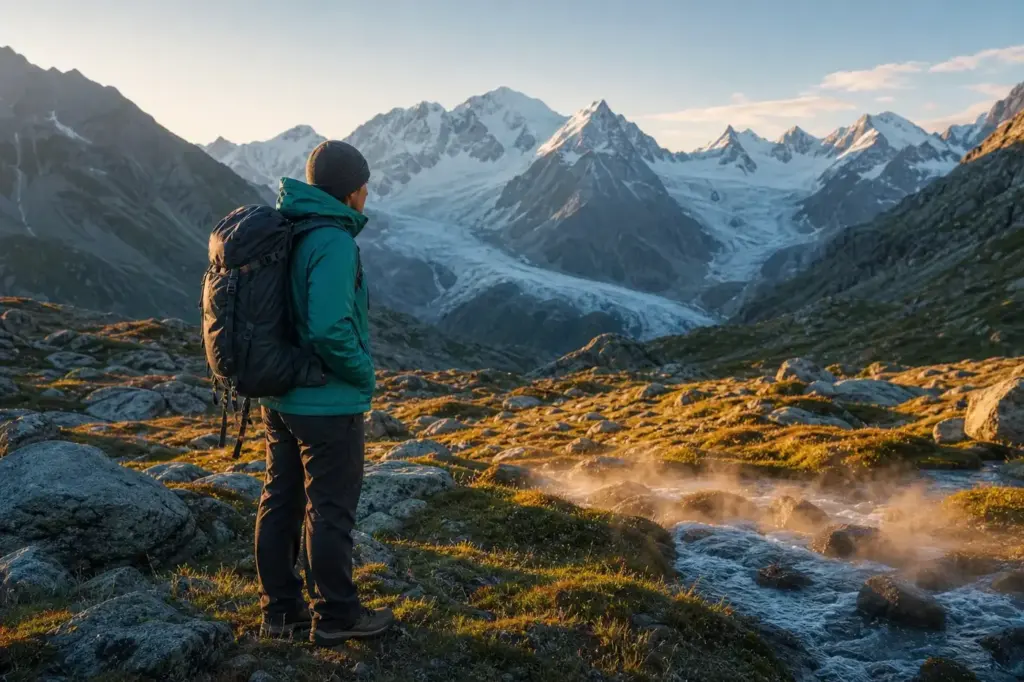
The Altai Mountains span over 2,500 km across Russia, Mongolia, Kazakhstan, and China, with peaks reaching 4,509 metres and glaciers above 2,800 metres. When packing for trekking or hiking here, you need to prepare for a severely continental climate where weather changes within hours and temperatures depend heavily on elevation and season.
This guide covers the essential gear for summer and shoulder-season visits. Whether you’re on a day hike from a lodge or a multi-day backcountry trek, the key principle is layering. Recommended option: assemble your packing kit 2–3 weeks ahead to confirm all gear is functional and properly sized.
Quick answer: Pack a three-season sleeping bag, waterproof shell jacket and pants, sturdy broken-in hiking boots, thermal base layers, insulated down jacket, trekking poles, sun protection, and a reliable daypack. Bring all supplies in advance—no shops exist in remote areas. Total time to organize packing: 2–3 weeks.
At a Glance
| Total time | 2–3 weeks to organize and test all gear before departure |
|---|---|
| Typical cost | ₽₽₽ |
What You Need Before You Start
- Sturdy, waterproof hiking boots broken in through previous use
- Waterproof shell jacket and rain pants rated for mountain weather
- Three-season or four-season sleeping bag rated to −10°C or lower
- Moisture-wicking base layers (merino wool or synthetic, not cotton)
- Insulated puffy jacket with high fill power (700–800)
- Trekking poles for balance and knee support on steep terrain
- SPF50 sunscreen and sunglasses (UV intensity is extreme at altitude)
- Warm hat, gloves, and balaclava even for summer treks
- Water bottle or hydration bladder and portable water filter
- First aid kit suitable for remote mountain rescue conditions
Compare Your Options
| Option | Duration | Price | Notes |
|---|---|---|---|
| Guided multi-day trek with full support (camel or horse) | 5–7 days typical | ₽₽₽ | Tour operator provides tent, sleeping bag, food, cook, guide, and pack animals. You carry only day gear and personal items. Best for those new to backcountry travel or at high altitude. Most common option in Mongolia's Altai. Departs June–September. |
| Independent backcountry trek with purchased camping gear | 5–10 days depending on route | ₽₽ | You organize, purchase, and carry all camping, cooking, and navigation gear plus food. Requires experience and fitness. No fuel canisters sold in-country; bring a multi-fuel stove. Suitable for experienced trekkers July–August only. |
| Day hikes from a lodge or base camp | 3–6 hours per day | ₽₽ | Stay in a guesthouse or ger camp and make daily hiking excursions with minimal gear. Best for those less experienced or short on time. Pack only day supplies, warm layers, and rain gear. Available June–September. |
| Glacier expedition to Potanin Glacier or Khuiten Peak | 8–10 days | ₽₽₽₽ | Requires mountaineering experience and winter gear (crampons, ice axe, rope). Sleeping bag rated to −20°C, four-season tent, advanced navigation skills. Only for experienced mountaineers. July–August only. Hire professional guide; never attempt solo. |
| Short acclimatization hike near Ölgii | 1–3 days | ₽₽ | Day or overnight hikes near town to acclimate before longer treks. Pack summer layers only. Good for assessing fitness and testing all gear. Available May–September. |
₽ budget · ₽₽ moderate · ₽₽₽ upscale · ₽₽₽₽ splurge. Price levels are estimates compared with typical prices for visitors.
Step-by-Step Instructions
Step 1: Check your hiking boots at least three weeks ahead
Take your boots on several multi-hour hikes over different terrain to break them in completely. Blisters at altitude are debilitating and difficult to treat in remote areas. If they cause pain or rub, have time to replace them before you leave. Boots must be waterproof and have ankle support for uneven, rocky ground. Go-Tex or equivalent is essential.
Tip: Buy boots at least a month before your trek and test them immediately, not the week before departure.
Step 2: Assemble your base layer system
Purchase or gather two thermal base layers (top and bottom) in merino wool or synthetic materials that wick moisture away from skin. Cotton traps sweat and cold, so avoid it entirely. You need one set to wear while the other dries. Include thermal socks and sock liners to reduce friction and prevent blisters during long days.
Tip: Merino wool regulates temperature better than synthetic but is more expensive; synthetic works well and dries faster.
Step 3: Select an insulated jacket and mid-layers
Choose a puffy jacket with 700–800 fill power down or synthetic insulation rated for your target elevation. Add a lightweight fleece pullover (200-weight) as a mid-layer that packs small. An optional light down vest adds versatility without bulk. Your mid-layers must compress well since you'll wear or pack them all day.
Tip: Synthetic insulation retains warmth when wet; down is lighter and more compressible but fails if soaked.
Step 4: Invest in a waterproof shell jacket and pants
Buy a Gore-Tex or equivalent waterproof, windproof shell jacket rated for mountain weather. Equally important: waterproof shell pants. Summer storms develop quickly in the Altai, and wind at altitude is intense. The shell must be breathable to prevent condensation inside when you're hiking uphill. Pack both in compression bags to save space.
Tip: Test your shell on a rainy day hike before the trip; cheap waterproof materials fail after a few hours of heavy rain.
Step 5: Choose and test a sleeping bag rated to −10°C or lower
Even in July and August, base camps at higher elevations drop to near freezing at night. A four-season bag is ideal, but a high-quality three-season bag rated to −10°C works if well-insulated. Fill power should be 700+ for down or equivalent synthetic. Sleep in your bag at home for a night to confirm it keeps you warm and zips smoothly.
Tip: Bring a thin sleeping liner to extend the life of your sleeping bag and add 2–3°C of warmth without much weight.
Step 6: Add warm hat, gloves, and face protection
Pack a warm beanie and insulated gloves even for summer treks; mountain temperatures drop 2°C for every 300 metres of elevation gain. Include a balaclava or neck gaiter to protect your face from wind and intense UV at altitude. Wet hair and exposed skin freeze quickly in the wind above 3,000 metres.
Tip: Bring a silk or synthetic neck gaiter that doubles as a dust mask during windy descents or camel-supported treks.
Step 7: Pack sun and UV protection gear
Bring SPF50 sunscreen, polarized sunglasses, and a wide-brimmed sun hat. At 3,000+ metres elevation, UV intensity is nearly double that at sea level. Chapstick with SPF prevents cracked lips and sun damage. Apply sunscreen every few hours and after water crossings or swimming.
Tip: Bring solid sunscreen stick to avoid spills; liquid and gel formats leak in backpacks under pressure.
Step 8: Select trekking poles and daypack
Choose two telescoping trekking poles with shock-absorbing tips to reduce strain on knees during descents. Get a 30L daypack with a waterproof rain cover to hold snacks, water, extra layers, and a first aid kit during daily hikes. The pack must have a hip belt to transfer weight from shoulders to hips.
Tip: Test your fully-loaded daypack on a practice hike to confirm the fit and weight distribution before you leave home.
Step 9: Prepare water, food, and navigation supplies
Bring a water bottle or hydration bladder (2–3 litre capacity) and a portable water filter or purification tablets. Pack high-calorie trekking snacks (nuts, dried fruit, energy bars). Carry a topographic map, GPS device, and compass—mobile signals are weak or absent throughout the Altai. Mark your planned route and download offline maps.
Tip: Rivers and glacier-fed streams may contain giardia; always filter or treat water before drinking.
Step 10: Build a comprehensive first aid kit
Include blister prevention (Moleskin or duct tape), pain relief, antibiotics, anti-diarrhoea medication, altitude sickness tablets if ascending above 3,500 metres, and tweezers for splinters. The nearest hospital may be hours away by emergency helicopter. Include a small first aid manual specific to backcountry rescue.
Tip: Practice blister prevention before the trek; treat hot spots immediately with Moleskin to avoid serious infection in remote areas.
Step 11: Pack personal hygiene and toilet supplies
Bring biodegradable soap, toothbrush, toothpaste, hand sanitizer, and toilet paper with a waste bag (Leave No Trace). Include a light travel towel and any personal medications. Camps may have limited or no running water, especially at high altitude.
Tip: Use biodegradable wipes instead of soap to conserve water and reduce environmental impact.
Step 12: Arrange transport for camping and support gear
If trekking independently, you must carry a tent, sleeping mat, and cooking stove yourself or arrange camel or horse support to carry main luggage. Use soft duffel bags (not hard cases) for pack animals. If using a tour operator, confirm they provide tent, stove, fuel, and meals so you only pack personal items and day gear.
Tip: Camel-supported treks are standard in Mongolia's Altai; confirm all support logistics with your tour operator 4–6 weeks ahead.
Common Mistakes to Avoid
- Bringing new, untested boots. Blisters develop within hours at altitude on uneven terrain, making hiking painful or impossible. Your boots must have at least 20 hours of wear on varied ground before departure.
- Packing cotton base layers or socks. Cotton holds moisture against your skin, leading to rapid heat loss and blisters. Use only merino wool or synthetic moisture-wicking materials.
- Underestimating nighttime cold. Assuming summer means warm nights is dangerous. Even in July, base camps above 2,500 metres drop to near freezing. A sleeping bag rated to at least −10°C is non-negotiable.
- Forgetting waterproof gear. The Altai's summer storms develop suddenly, with rain and strong wind within minutes. A cheap rain jacket fails after a few hours; invest in quality Gore-Tex or equivalent.
- Carrying too much gear. Pack light but smart. Each item must serve multiple purposes. Heavy backpacks cause injury on steep descents; use camel or horse support if trekking independently to avoid carrying more than 15 kg.
- Assuming gas fuel is available locally. Camping fuel canisters are not sold in the Altai region. Bring a multi-fuel stove and fuel from home, or hire a tour operator that provides all cooking gear.
- Neglecting sun protection at altitude. UV intensity at 3,000+ metres can cause severe sunburn in 2–3 hours. Wear SPF50 daily, reapply after water, and protect your nose, ears, and neck with a hat and neck gaiter.
Tickets, Payment and Booking
Pack independently or book through tour operators offering Altai trekking and support services. If purchasing gear locally before arrival: bring USD cash in small bills, as international cards are rarely accepted outside major cities and exchange rates at ATMs may be poor. If hiring camel or horse support, confirm logistics with your operator 4–6 weeks in advance; pack animals are the standard method of luggage transport in Mongolia’s Altai and require reservation. Official information on trekking permits and restrictions is available through Mongolia’s Ministry of Environment and Tourism (Ulaanbaatar office) and local soum administrations in Bayan-Ölgii Province.
Russia Vibes Tips
- Breathable shells prevent internal condensation. Even waterproof jackets that are not breathable trap sweat inside when you climb, defeating their purpose. Test your shell on a humid day to confirm moisture escapes through the material, not just condenses inside.
- Break in your trekking poles at home. Practice descents on stairs or hills to develop muscle memory; pole techniques reduce knee strain by 25% on steep downhills. Adjust strap length so your elbow bends at 90 degrees when poles touch the ground.
- Elevations change fast in mountains. Pack layers in your daypack so you can add or shed clothing every 30–60 minutes as you climb. Overheating while ascending leads to excessive sweating and rapid cooling on descents.
- Summer storms at altitude freeze clothing and gear in minutes. Even in July, protect all electronics (camera, GPS) in waterproof bags and change out of wet layers within 30 minutes of a storm to prevent hypothermia.
- Acclimatize for 1–2 days above 2,500 metres before ascending higher. Sleep at moderate elevation for a night, then move to base camp. This reduces altitude sickness risk and confirms your gear functions in cold, thin air.
- Carry a lightweight emergency tarp or bivy sack in your day pack. If weather traps you at altitude, a 200-gram tarp provides shelter and prevents wind chill. Combine it with your rain shell and puffy jacket for emergency warmth.
Explore Nearby How to Pack for the Altai Mountains, Altai Mountains
Related guides
 Altai Mountains: Best Places, Scenic Routes and Travel Tips
Main image: AI-generated illustration. It may not show the place exactly as it looks.
 Best Hiking Trails and Nature Walks, Lake Baikal: Coastal Routes and Alpine Treks
Main image: AI-generated illustration. It may not show the place exactly as it looks.
Browse more: All Altai Mountains · All How-To · All How-To in Altai Mountains · All Other
FAQ
Do I need a four-season sleeping bag for summer trekking in the Altai?
A high-quality three-season bag rated to −10°C works for July–August at lower elevations (up to 2,500 metres). Above 3,000 metres, a four-season bag or winter-rated bag (−15°C or colder) is safer. Night temperatures near glaciers drop below −5°C even in summer, so err on the side of warmth.
Can I rent trekking gear instead of buying it?
Rentals are extremely limited and poor quality in the Altai region. Boots, sleeping bags, and shells available for rent are often worn and may not be suitable for altitude. Purchase quality gear at home to ensure function and fit. Budget ₽₽₽ to ₽₽₽₽ for a complete personal kit.
How much do I need to spend on gear to trek safely?
A functional kit for summer trekking costs ₽₽₽–₽₽₽₽ depending on brand and quality. Prioritize boots, sleeping bag, shell, and base layers over luxury items. You can reuse most gear for years if cared for properly.
Should I hire a guide, or can I trek independently?
Independent trekking is possible but risky for beginners. Trails are poorly marked, weather changes rapidly, and the nearest rescue is hours away. Hire a professional mountain guide (available through tour operators) for your first Altai trek. Cost is ₽₽₽ per day for a guide plus porter support.
What should I do with my gear after trekking?
Dry your tent, sleeping bag, and layers completely before storing to prevent mold. Air out boots and inspect for damage. Clean your filter and stove. Proper storage extends gear life by 5–10 years. Keep receipts and tags for warranty claims if anything fails.
Is travel insurance mandatory, and what should it cover?
Travel insurance is not legally required but is essential for remote mountain trekking. Ensure your policy covers high-altitude rescue (above 3,000 metres), helicopter evacuation, and emergency repatriation. Medical costs from rescue in the Altai can exceed ₽₽₽₽ without insurance.
Can children trek in the Altai with proper packing?
Children ages 8–12 can do day hikes and short treks (1–3 days) on guided routes below 2,500 metres with appropriate gear. Young children (under 8) should stay at base camps. All children need properly fitted boots, warm layers, and age-appropriate backpacks. A professional guide is mandatory.
What is the best season to trek, and does packing change by month?
July and August are safest: warmest days, least snow, and most established trails. June and early September can have unexpected snowstorms. Winter (November–April) treks require expedition-grade four-season gear, crampons, and professional guide. Pack July–August packing lists only for those months.
Russia Vibes is a one-person project. A coffee keeps it going
How we research and update our guides
About this guide: AI assistance and accuracy
This guide is created with the help of AI and is based on official sources where available. Mistakes can still happen. Opening hours, prices, rules and other details are given to the best of our knowledge as of the date shown and can change without notice. It offers general recommendations only, not professional, legal or travel advice. Please confirm important details with the official source before you travel; you are responsible for your own plans and decisions.
Packing for this trip
* Affiliate link: as an Amazon Associate we earn from qualifying purchases at no extra cost to you.

Take this guide with you
Get a free PDF of this guide to print or read offline: key facts, tips and a map link on a few clean pages.
Report an issue on this page
Paying for your trip: please read
International sanctions affect payments between Russia and many other countries. In practice, cards issued in the EU, the UK, the US and several other countries often do not work in Russia, Russian cards usually do not work abroad, and some booking platforms, airlines and payment providers limit or suspend their services for Russia. The situation changes frequently.
We do not give legal or financial advice, and this site does not encourage anyone to break or circumvent sanctions. Whatever you plan, you are responsible for following the laws and regulations that apply to you, including those of your country of residence and citizenship.
Many travelers still organise their stay lawfully. It is worth asking your bank or payment provider what is currently permitted, contacting hotels, tour operators and carriers directly about the payment methods they accept, and checking which services are open to customers from your country. Clarify payment, cancellation and refund terms before you commit to a booking, and keep your plans flexible.
Partner links on this site may not be available in every country, and prices, availability and rules in our guides can differ from what you see when you book.