
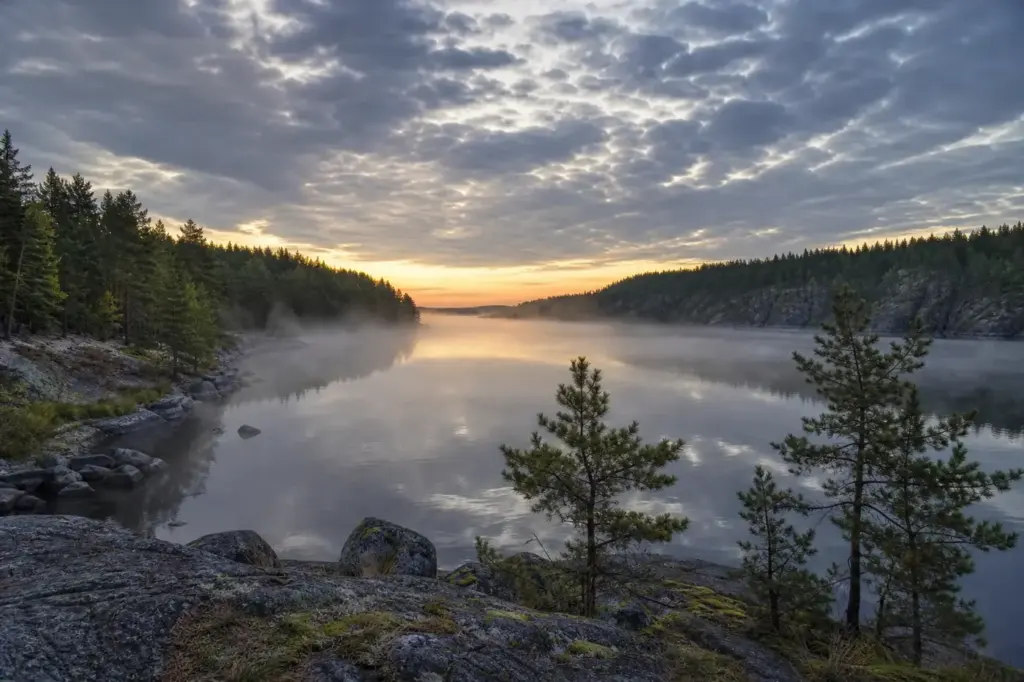
National parks and nature reserves cover more than one million hectares across Karelia, protecting some of northern Europe’s most intact wilderness. This curated list highlights the best national parks and nature reserves in Karelia for visitors seeking diverse experiences, from remote mountain hiking and ancient forests to island architecture and accessible waterfall walks.
The selection includes parks with visitor infrastructure and facilities, alongside strict reserves where access is more limited. All entries are verified as currently operating and suitable for independent visitors or guided trips. This guide covers ten destinations across the region.
Route: 2 stops, about 8498 min of walking between stops (estimate)
At a Glance
| # | Place | Best for | Good to know |
|---|---|---|---|
| 1 | Paanajarvi National Park | Best for mountain wilderness and hiking | Loukhsky District, northwest Karelia; paid entry; trails, camping and basic accommodation available |
| 2 | Kizhi Island Museum-Reserve | Best for wooden architecture and island views | About 68 kilometres from Petrozavodsk, reached by hydrofoil ferry; paid entry; day-trip accessible |
| 3 | Vodlozersky National Park | Best for old-growth forests and untouched wilderness | Northwestern Karelia, remote location; paid entry; basic lodging and boat rentals available through park office |
| 4 | Kivach Nature Reserve | Best for waterfall and accessible day trips | Near Kondopoga, about 100 kilometres from Petrozavodsk; paid entry; café and visitor facilities on-site |
| 5 | Ladoga Skerries National Park | Best for island scenery and boating | Karelia's southern shore, accessible from Petrozavodsk; boat tours available; check official site for current access points |
| 6 | Kalevalsky National Park | Best for old-growth pine forest | Northern Karelia near Kostomuksha; paid entry; marked trails and basic accommodation available |
| 7 | Kostomuksha Nature Reserve | Best for border wilderness and rare salmon | Northwestern Karelia near Kostomuksha; restricted access; permits and guided tours required |
| 8 | Valaam Archipelago Nature Park | Best for island monastery and spiritual heritage | Lake Ladoga, accessible by ferry from Sortavala or other departure points; paid entry to monastery grounds; accommodation available |
| 9 | Tolvojarvy Landscape Reserve | Best for subtle northern forest beauty | Central Karelia; free or low-cost access; simple facilities; locally organized guidance recommended |
| 10 | Ruskeala Mountain Park | Best for marble quarries and geological interest | Near Sortavala, western Karelia; paid entry; guides, equipment rentals and café on-site; accessible day trip from Petrozavodsk |
How We Chose
Entries were selected based on official information from the Republic of Karelia government tourism site and park management authorities. All are currently operating protected areas with public access. Selection prioritized:
- Established national parks and nature reserves with documented visitor access
- Geographic diversity across the region (northern mountains, central lakes, western islands)
- Mix of landscapes: old-growth forests, tundra, islands, waterfalls and highland scenery
- Availability of marked trails, basic facilities or guided tour services
- Recognition by international conservation bodies where applicable
1. Paanajarvi National Park – Best for mountain wilderness and hiking
Inaugurated in 1992, the park covers 1,040 square kilometres of taiga, lakes and rivers. Nuorunen, the highest point of Karelia, is located in the park area—a 577-meter peak with views across forests and the Russian-Finnish border. The largest lake, Paanajarvi, stretches 23.5 km from west to east but is only 0.5–1.5 km wide. The park is well equipped to receive visitors, with hiking paths and trails laid out, footbridges placed over streams and swamps, and informational stands and camping places available.
Good to know: Loukhsky District, northwest Karelia; paid entry; trails, camping and basic accommodation available
Tip: Kivakka fell offers a more easily accessed viewpoint than the higher Nuorunen, with a 6 km footpath to the peak and views of Kivakka waterfalls below.
2. Kizhi Island Museum-Reserve – Best for wooden architecture and island views
Kizhi is an island museum of wooden architecture and a UNESCO World Heritage Site on Lake Onega. The island contains 89 monuments of traditional wooden architecture: houses, chapels, mills, barns, outbuildings and other structures transported from various parts of Karelia. The heart of the ensemble is the Kizhi Pogost, featuring the 37-meter-tall Church of the Transfiguration, built in the early 18th century entirely from wood without a single nail.
Good to know: About 68 kilometres from Petrozavodsk, reached by hydrofoil ferry; paid entry; day-trip accessible
Tip: Many visitors photograph only the Church of the Transfiguration and leave, but the museum-reserve extends far beyond the central churchyard—explore the many farmhouses, chapels and outbuildings scattered across the island.
3. Vodlozersky National Park – Best for old-growth forests and untouched wilderness
Vodlozersky National Park is the largest reserve of untouched forests and marshes in Europe. The park protects boreal forest landscape across northwestern Karelia with numerous lakes and waterways. Visitors can explore the wilderness by foot, boat or canoe along established routes. The remote location and limited infrastructure make this choice ideal for experienced backcountry visitors.
Good to know: Northwestern Karelia, remote location; paid entry; basic lodging and boat rentals available through park office
Tip: Book accommodation and activities well in advance through the park office, as the remote wilderness setting means limited services and seasonal access restrictions.
4. Kivach Nature Reserve – Best for waterfall and accessible day trips
Established in 1931 to study and protect taiga of the Republic of Karelia, the reserve centers on the famous Kivach waterfall on the Suna River, measuring 10.4 meters. The waterfall is the biggest lowland waterfall in Europe. Walking trails through old forest lead to viewing platforms. The reserve lies within easy reach of Petrozavodsk, making it suitable for a half-day excursion.
Good to know: Near Kondopoga, about 100 kilometres from Petrozavodsk; paid entry; café and visitor facilities on-site
Tip: Visit in spring when water flow is highest after snowmelt—the cascade appears most dramatic and the roar carries through the forest.
5. Ladoga Skerries National Park – Best for island scenery and boating
Located on the north and northwestern shores of Lake Ladoga, the park was officially created in 2017. The park features numerous small rocky islands (skerries) on narrow bays and channels. More than 650 rocky islands resemble Norwegian fjords—a unique natural area, not only in Karelia but all over the world. Access is primarily by boat tours or private vessel.
Good to know: Karelia's southern shore, accessible from Petrozavodsk; boat tours available; check official site for current access points
Tip: Summer is ideal for island exploration and photography; arrange boat tours in advance, as independent boat access has specific regulations.
6. Kalevalsky National Park – Best for old-growth pine forest
The park covers one of the last old-growth boreal pine forests in Europe. Situated on the border between Russia and Finland, the park is located 30 km north of the town of Kostomuksha. The park protects pristine northern forest with hiking trails and basic visitor facilities. It offers a quieter alternative to more developed national parks.
Good to know: Northern Karelia near Kostomuksha; paid entry; marked trails and basic accommodation available
Tip: This park is less crowded than Paanajarvi but requires similar preparation; check trail conditions before visiting and hire a local guide for deeper wilderness exploration.
7. Kostomuksha Nature Reserve – Best for border wilderness and rare salmon
Established in 1983, Kostomuksha is a strict ecological reserve of forests, lakes, rivers and wetlands on the border of Russia and Finland. Scientific purposes include protection of forest reindeer and a type of landlocked salmon. The reserve is part of a transboundary complex with Finnish reserves. Access is more restricted than national parks, typically requiring guided visits or permits.
Good to know: Northwestern Karelia near Kostomuksha; restricted access; permits and guided tours required
Tip: Contact the reserve administration in advance to arrange access; this is the least accessible option on this list but rewards dedicated visitors with pristine taiga.
8. Valaam Archipelago Nature Park – Best for island monastery and spiritual heritage
The Valaam Archipelago Nature Park comprises a group of 50 islands on Lake Ladoga. The islands are notable for the historic Valaam Monastery, one of Russia's oldest spiritual centers, set within protected natural landscape. Visitors can explore both the monastic heritage and surrounding forest and rocky shorelines by foot and boat.
Good to know: Lake Ladoga, accessible by ferry from Sortavala or other departure points; paid entry to monastery grounds; accommodation available
Tip: Many ferries operate seasonally; book accommodation well ahead during summer; plan at least a full day to explore the islands and monastery meaningfully.
9. Tolvojarvy Landscape Reserve – Best for subtle northern forest beauty
A smaller protected area in central Karelia preserving intact boreal forest and wetland ecosystems. The reserve offers less-visited trails through classic taiga landscape with small lakes and streams. It provides a quieter experience for visitors seeking solitude in northern nature without the crowds of larger parks.
Good to know: Central Karelia; free or low-cost access; simple facilities; locally organized guidance recommended
Tip: This reserve is best suited for visitors with backcountry experience and flexibility; services are minimal, so bring supplies and check access conditions ahead of time.
10. Ruskeala Mountain Park – Best for marble quarries and geological interest
While operating as a commercial park rather than a strict nature reserve, Ruskeala protects dramatic geological formations including historic marble quarries that have filled with crystal-clear water. Underground lakes, tunnels and exposed rock formations create a unique landscape. Visitors can hike trails, kayak on underground lakes, or descend ropes into quarry depths.
Good to know: Near Sortavala, western Karelia; paid entry; guides, equipment rentals and café on-site; accessible day trip from Petrozavodsk
Tip: Bring waterproof clothing and sturdy shoes; cave exploration and rope access activities require basic fitness but offer unforgettable views of geological history.
Russia Vibes Tips
- Most parks require advance booking for accommodation and guides, especially during June through August. Plan visits during shoulder seasons (May, September) for fewer crowds and better weather predictability. Winter access is limited; check park websites before traveling.
- Karelia's northern location means extreme seasonal variation. Spring (May) brings high water levels and rushing waterfalls; summer (June–August) offers warmth and midnight light; autumn (September–October) features dramatic colors; winter requires specialized gear. Choose your season based on what landscapes attract you.
- Most protected areas require entry permits or fees. Purchase these at visitor centers or park offices upon arrival, or arrange in advance for remote parks. National parks typically cost moderate fees; strict reserves charge less or are free but offer limited access.
- Insect pressure peaks in July and early August. Bring strong repellent and consider visiting in June or early September if mosquitoes concern you. Long-sleeved clothing and hat provide additional protection without chemicals.
- Many trails in Karelia cross wetlands and require waterproof boots. The ground is often boggy even in summer. Lightweight gaiters protect boots from mud and insects. Standard hiking boots without ankle support struggle in these conditions.
- Cell phone coverage is unreliable in remote parks. Download offline maps before entering protected areas. In strictly protected reserves (Kostomuksha, parts of Vodlozersky), hiring local guides is strongly recommended for safety and navigation.
Explore Nearby Best National Parks and Nature Reserves, Karelia
Browse more: All Guides · All Guides in Karelia · All Karelia · All Other
FAQ
Is Kizhi Island part of a national park or a separate museum?
Kizhi Island has a nature reserve protecting rare animal and plant species, but the major landmark is the Kizhi State Open-Air Museum of History, Architecture and Ethnography. It functions both as a nature reserve and museum institution with separate admission.
What's the difference between a national park and a nature reserve in Russia?
National parks (национальный парк) allow moderate public access for tourism and recreation along designated trails. Nature reserves (заповедник) are stricter protected areas with limited visitor access, primarily for scientific research. Some areas, like Kizhi, combine both designations.
Can I visit Karelia's parks without a guide?
National parks like Paanajarvi and Kalevalsky have marked trails suitable for independent hiking with proper preparation. Strict reserves like Kostomuksha typically require permits and guides. Island parks (Kizhi, Valaam) can be visited independently but may benefit from guided tours for cultural context.
What is the best season to visit Karelia's parks?
Summer (June–August) offers warmth, accessibility and midnight light but means crowds and insects. Winters are harsh with deep snow. Spring (May) and autumn (September–October) provide fewer crowds, dramatic lighting and manageable weather—ideal for most visitors.
How do I reach parks from Petrozavodsk?
Kivach Nature Reserve and Ladoga Skerries are accessible by bus or car. Kizhi Island requires a ferry (hydrofoil or boat). Northern parks like Paanajarvi require driving several hours plus overnight stays. Check the official Karelia tourism site for current transport schedules and park websites for access details.
Are dogs and pets allowed in the parks?
Most parks restrict pets to protect wildlife. Strict nature reserves like Kostomuksha prohibit them entirely. Check individual park regulations before planning visits with animals; pet-friendly trails may be designated.
Do I need special permits beyond a park entry ticket?
National parks typically require only entry tickets purchased on-site or in advance. Fishing and photography in some areas may need additional permits. Strict reserves like Kostomuksha require special permits obtained before arrival. Always check the official park website.
What wildlife might I encounter?
Karelia's forests host moose, reindeer, lynx, wolverine and brown bear—usually shy and rarely seen. Landlocked salmon species are protected in Kostomuksha. Birds include grouse, owls and warblers. Beavers are common near waterways. Respect wildlife by keeping distance and making noise on trails.
Russia Vibes is a one-person project. A coffee keeps it going

Take this guide with you
Get a free PDF of this guide to print or read offline: key facts, tips and a map link on a few clean pages.
Report an issue on this page
Paying for your trip: please read
Payments and bookings between Russia and many other countries are currently restricted. In practice, cards issued in the EU, the UK, the US and several other countries often cannot be used in Russia, Russian cards usually cannot be used abroad, and some booking platforms, airlines and payment providers limit or pause their services for Russia. The situation changes frequently.
We do not give legal or financial advice, and this site does not encourage anyone to break any rule that applies to them. Whatever you plan, you are responsible for following the laws and regulations that apply to you, including those of your country of residence and citizenship.
Many travelers still organise their stay without problems. It is worth asking your bank or payment provider what is currently possible, contacting hotels, tour operators and carriers directly about the payment methods they accept, and checking which services are open to customers from your country. Clarify payment, cancellation and refund terms before you commit to a booking, and keep your plans flexible.
Partner links on this site may not be available in every country, and prices, availability and rules in our guides can differ from what you see when you book.
How we research and update our guides
About this guide: AI assistance and accuracy
This guide is created with the help of AI and is based on official sources where available. Mistakes can still happen. Opening hours, prices, rules and other details are given to the best of our knowledge as of the date shown and can change without notice. It offers general recommendations only, not professional, legal or travel advice. Please confirm important details with the official source before you travel; you are responsible for your own plans and decisions.
* Affiliate link: as an Amazon Associate we earn from qualifying purchases at no extra cost to you.