
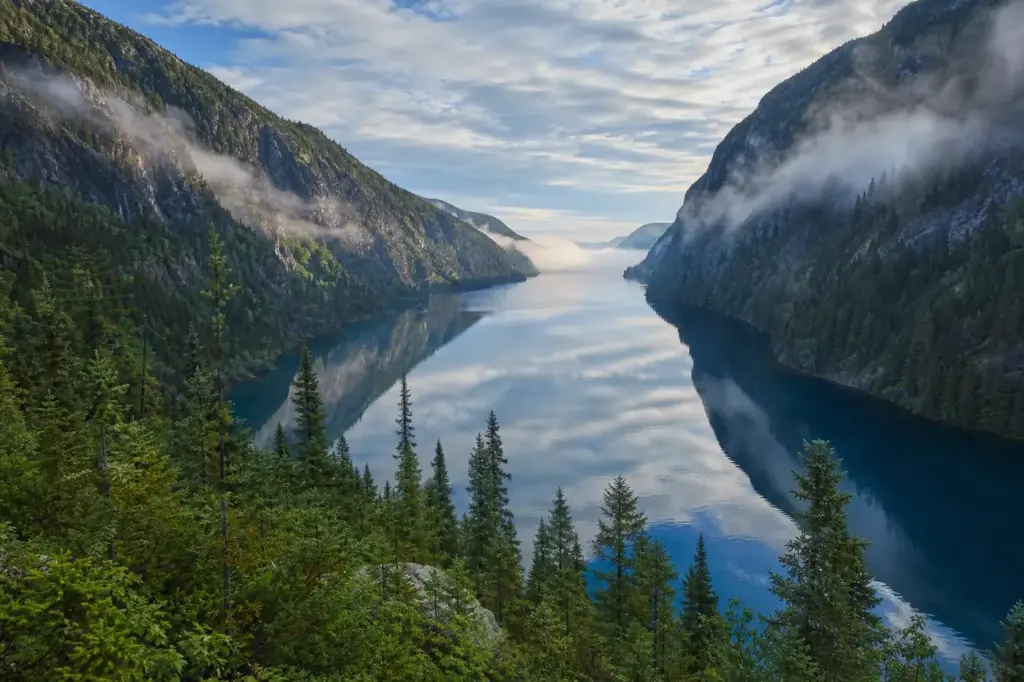
Paanajärvi National Park lies in northwestern Karelia, within sight of the Finnish border near the Arctic Circle. This vast, pristine reserve centres on two remarkable natural features: Mount Nuorunen, at 576 metres the highest point in the Republic of Karelia, and Lake Paanajärvi, a deep glacial lake carved into a narrow ravine and surrounded by forest-clad mountainsides.
The park exists as true wilderness with minimal tourist infrastructure. Visits are strictly controlled to protect its fragile ecosystems, and all visitors must book in advance through the official Visitor Centre in the village of Pyaozersky. Summer dates sell out months ahead, as only a limited number of groups are permitted each season.
Quick Facts
| Russian name | Национальный парк «Паанаярви» |
|---|---|
| Built / opened | 1992 |
| Address | ул. Дружбы, 32, посёлок Пяозерский, Лоухский район, Карелия, 186667 Google MapsApple MapsYandex Maps2GIS |
| District | Loukhsky |
| Admission | ₽₽ per group; free entry for Russian citizens under 16, seniors over 60, and disabled visitors |
| Best time to visit | Summer (June–August): The prime season. Days are long (near-midnight sun in early June), trails are snow-free, and the lake is calm for boating. Temperatures range 15–20°C. Midges and mosquitoes are active in June and early July but diminish by August. Book accommodation months in advance as summer dates sell out by early spring.Autumn (September–October): Fewer visitors, clearer skies, crisp air and forest colours. Temperatures drop to 5–10°C. Weather becomes unpredictable; rain and early snow are possible in October. Shorter days limit exploration time.Winter (November–March): The park remains open for ski tourism and snowmobiling. Temperatures drop to −15°C or lower; daylight is minimal in December–January. This season attracts hardy, experienced winter trekkers, not casual hikers. Bookings are less competitive.Spring (April–May): Conditions are transitional. Melting snow blocks trails; the lake may still be partially frozen. The Olanga River swells with snowmelt, making rapids dangerous. Late May is the earliest practical time to visit. |
| Website | paanajarvi-park.com |
What Is (and Isn't) Part of a Visit to Paanajärvi National Park, Karelia?
| Part | Status | Notes |
|---|---|---|
| Lake Paanajärvi and boat tours | Included in the standard ticket | Included in park entry. Most visitors reach the lake by guided motorboat tour departing the base camp; independent kayaking is also available. |
| Mount Nuorunen hiking trail | Included in the standard ticket | Included in park entry. Well-marked trail to the summit takes 4–5 hours round trip. Self-guided or with a guide available. |
| Olanga River and rapids | Separate ticket or institution | Guided kayaking or rafting trips arranged separately; requires advance booking and additional fee beyond park entry. |
| Fishing | Separate ticket or institution | Fishing requires a separate permit purchased at the Visitor Centre. Guide services available. Additional cost. |
| Oulanka National Park (Finland) | Outside / not part of it | The adjacent Finnish park is accessible only from the Finnish side and is not part of this reserve. |
| Visitor Centre museum | Separate ticket or institution | Located in Pyaozersky village, not within the park. Free entry for park visitors; booking office is here. |
Why Visit Paanajärvi National Park, Karelia?
This is the northernmost intact taiga landscape most visitors to Karelia will experience. The park’s isolation means you will encounter genuine wilderness—ancient spruce and pine forests, clear water, and wildlife including brown bears, wolverines and white-tailed eagles—rather than managed attractions. The hike to Mount Nuorunen’s summit rewards effort with views across the border into Finland. Lake Paanajärvi’s striking beauty, hemmed by 300-metre cliffs, makes it memorable even in poor weather.
The park is listed in the PAN Parks system, a European-wide certification for exceptionally wild protected areas managed for both conservation and sustainable tourism.
Highlights of Paanajärvi National Park, Karelia
Mount Nuorunen
The highest peak in Karelia stands at 576 metres and anchors the park's eastern ridge. A marked trail leads to the summit, where visibility on clear days extends into Finland. The ascent takes 4–5 hours round trip and involves forested slopes and open rock sections with cairns marking the way. This is the park's most popular single destination.
Tip: Start early to ensure good light at the summit; bring extra water as the upper slopes can be dry even after rain.
Lake Paanajärvi
The lake is Fennoscandia's deepest small lake at 128 metres and stretches 23 kilometres east to west through a deep canyon-like ravine. Its water is unusually transparent. Most visitors reach the lake by guided boat tours that depart from the park's base camp, revealing cliffs, rapids and the remote landscape inaccessible on foot.
Tip: Book lake tours when you make your park reservation, as availability is limited. Morning departures offer better light on the steep shores.
Taiga Forest Ecosystem
The park protects 1,044 square kilometres of boreal forest dominated by spruce and pine, with pristine bogs, streams and rapids. This is Scandinavian and Russian taiga habitat identical in ecology to Finland's adjacent Oulanka National Park. The forest floor hosts lingonberries, cloudberries and mushrooms in season, and the quiet is absolute except for bird calls and water.
Tip: Walk slowly and listen; moose, reindeer and wolverines inhabit the forest but are rarely seen. Early morning offers the best chance of wildlife.
Olanga River
This river flows through the park and hosts several impressive rapids, most notably Kivakkakoski. Guided kayaking and rafting trips follow the river from higher to lower sections, offering a different perspective on the landscape and forest. The river is important for salmon spawning in early summer.
Tip: River trips require advance booking and vary by water level. Spring melt makes rapids impassable; summer conditions are optimal for most paddlers.
Visitor Centre in Pyaozersky
Located 700 kilometres northwest of Petrozavodsk, the Visitor Centre houses a small museum on local nature and history, a library, and the booking office. Staff here provide permits, answer questions and arrange accommodation and activities. The centre sits on the Murmansk railway, accessible from Petrozavodsk or Murmansk by train.
Tip: Do not travel to the park without first visiting or calling the centre. All necessary documents and permits are issued here; arriving without them will prevent entry.
Fishing for Arctic Fish
The lake and rivers hold salmon, trout, grayling and whitefish. Licensed fishing is permitted with advance arrangement and a separate fishing permit purchased at the Visitor Centre. Early summer and autumn see the most activity. Fishing typically involves boat access to remote sections of river or lakeside.
Tip: Fishing permits are separate from park entry. Arrange with the Visitor Centre when booking; they can recommend guides familiar with current conditions.
Atmosphere
The park embodies silence and solitude. Outside the brief summer season when a few dozen groups visit, you may be alone in the forest for hours. The forest is dense and dim, with soft ground, the smell of wet earth and resin, and constant birdsong. Weather changes rapidly; mist and rain are common even in summer, adding to the sense of remoteness. There is no mobile signal and no nearby roads. The base camp and cabin settlements are modest, with kerosene lamps and wood stoves. Visitors tend to be serious hikers and naturalists rather than day-trippers, creating a contemplative atmosphere.
Evenings at the base camp gather around the fire or in communal spaces, where guides and other visitors share stories of the day. The light lingers late in summer, allowing long walks well into the evening. Winter transforms the landscape to deep snow and near-continuous darkness, attracting a smaller, hardy group of ski tourists.
History of Paanajärvi National Park, Karelia
The Paanajärvi landscape has been inhabited for thousands of years by Sámi herders and Karelian fisher communities. The village of Paanajärvi, after which the park is named, sat on the western shore of the lake with its church on the southern side. A ferry once connected settlements on opposite shores. Life was isolated but sustainable until the 20th century.
After the Winter War (1939–40) and the Soviet-Finnish peace, the border was redrawn and the population of approximately 500 was evacuated to Finland. Soviet collectivisation and central planning in the 1950s saw small remote communities as economically unviable, and settlement efforts ceased. The village was abandoned, and the forest began to reclaim it.
On 20 May 1992, the national park was formally established by decree of the Russian Federation government. The boundary and management framework were designed to protect the lake’s unique ecology and the taiga forest from logging pressure. The park received certification from PAN Parks—an international system under the World Wildlife Fund—recognising it as one of Europe’s wildest protected areas and committing it to sustainable, low-impact tourism combined with environmental education.
Since 1992, visitor infrastructure has grown modestly: the Visitor Centre in nearby Pyaozersky was expanded, basic cabins were built at the base camp, and marked trails were established. Visitor numbers are intentionally capped to preserve the wilderness character. The park remains one of Russia’s most remote and least visited national parks.
Legends and Myths about Paanajärvi National Park, Karelia
The Lake in the Ravine
Legend – historically unreliable. Local tradition holds that Lake Paanajärvi was formed when the earth split open along ancient faults during a catastrophic event, creating the deep canyon. The lake then filled the rift, becoming so deep that its bottom has never been fully explored. The story reflects the geological truth: the lake lies in a fault zone and is indeed exceptionally deep, giving it an almost mystical appearance when viewed from the high cliffs above.
Nuorunen's Lonely Peak
Legend – historically unreliable. In Sámi and Karelian folklore, Mount Nuorunen was said to be the home of spirits who guarded the high places and the wild lands beyond. The peak's isolation and prominence made it a place of reverence, and shamans were believed to climb it to communicate with the spirits of the taiga. Though now a trekking destination, the mountain retains its sense of solitude and mystery.
Tickets and Booking for Paanajärvi National Park, Karelia
| Ticket | Price | Includes |
|---|---|---|
| Group entry (international visitors) | ₽₽ | Park entry for one group (typically 5–15 people); 24-hour access to trails, base camp facilities and marked routes |
| Lake Paanajärvi motorboat tour | ₽₽ | Guided half-day boat excursion on the lake; departure from base camp |
| River kayaking or rafting trip | ₽₽ | Guided paddling excursion on Olanga River; duration and route vary |
| Fishing permit (daily) | ₽ | One-day licence to fish in designated sections; guide services available separately |
| Cabin accommodation (per night) | ₽₽ | Simple wood cabin with basic amenities; must be booked in advance with park |
₽ budget · ₽₽ moderate · ₽₽₽ upscale · ₽₽₽₽ splurge. Price levels are estimates compared with typical prices for visitors.
All visitors must book in advance. The Visitor Centre office, located at 32 Druzhby Street in Pyaozersky, handles bookings by phone (+7 814 39-48-504) or email (paanajarvi.tur@onego.ru). Online bookings are also available at the official website. Reservations open each winter (typically February) for the following summer season; popular dates sell out within days.
International visitors should provide passport details when booking. A group typically consists of 5–15 people, though smaller parties can sometimes be accommodated. The park requires confirmation at least two weeks before arrival. Without advance registration and a permit, entry is refused.
Walk-in visits are not possible. During weekdays the office is open 09:00–17:00; tourists with confirmed bookings are accepted daily 08:00–19:00. Accommodation at park cabins must also be reserved when booking entry.
Russian citizens, children under 16, pensioners over 60, and disabled visitors receive reduced rates and free companion tickets. Check the official website (paanajarvi-park.com) for current rates, terms and full visitor rules.
Plan and Book
Suggested itineraries Paanajärvi National Park, Karelia
3 days
Day 1: Arrive at base camp, orientation walk around facilities, evening on the lakeshore. Day 2: Early start for Mount Nuorunen hike (4–5 hours round trip), return for dinner. Day 3: Guided motorboat tour of Lake Paanajärvi in the morning, depart in the afternoon.
5 days
Day 1: Arrival and settlement. Day 2: Mount Nuorunen hike. Day 3: Full-day lake boat tour with packed lunch. Day 4: Forest walks along marked trails, visit rapids. Day 5: Early departure or optional fishing/paddling activity before leaving.
7+ days
Combine all main attractions: hiking, boating, river paddling, fishing, and multi-day wilderness treks to remote cabins. Longer stays allow time for wildlife observation and deeper immersion in the taiga landscape.
How to Get to Paanajärvi National Park, Karelia
By air and train: Fly to either Petrozavodsk (from Moscow) or Murmansk. From Petrozavodsk, take the overnight train north on the Murmansk line towards Murmansk; get off at Loukhi station (approximately 12 hours). From Murmansk, take the same train south. Loukhi is the district capital and the nearest rail hub.
From Loukhi to Pyaozersky: Arrange a minibus or car transfer with the Visitor Centre when you book (approximately 70 kilometres, 1.5–2 hours by road). No public bus service connects them reliably. Pyaozersky is a small settlement on the Murmansk railway; the Visitor Centre is in the village centre.
From Pyaozersky to the park: The Visitor Centre will arrange your final transfer to the park base camp (approximately 30 kilometres, 1–1.5 hours). This transfer is included in most bookings.
Important: Do not attempt to reach the park independently. All access is coordinated through the Visitor Centre.
Accessibility
The park has no paved roads or wheelchair-accessible paths. All movement beyond the base camp requires hiking or boat travel. Cabins are basic, with uneven floors, steep stairs and outdoor pit toilets. There are no accessible facilities. Visitors with mobility limitations should contact the Visitor Centre before booking to discuss what activities are feasible for their situation.The long journey (train, then minibus) and remote location may be challenging for visitors with medical needs, as there is no hospital on-site and evacuation by helicopter is the only emergency option. Travel insurance is strongly recommended.
Food Nearby
No restaurants or shops exist within or near the park. All food must be brought from outside or arranged in advance through the Visitor Centre. Some accommodation packages include simple meals prepared on-site by park staff. Pyaozersky village has a small shop where visitors can purchase basic supplies, but stock is limited. Plan and provision carefully before departing for the park.
What to Bring
Bring sturdy, waterproof hiking boots, weatherproof jacket and trousers, insulating layers, hat and gloves even in summer (mornings are cold). Pack a high-factor sunscreen and insect repellent for summer; mosquitoes are aggressive in June–July. Bring a torch (headlamp), first-aid kit, water bottle and high-energy snacks. Rain is frequent; a compact tent or emergency shelter is wise for extended walks. All drinking water should be purified or brought with you.No bag search is conducted, but carry your passport at all times within the park and Visitor Centre zone.
Best Views and Photo Spots of Paanajärvi National Park, Karelia
Mount Nuorunen summit
On a clear day, the summit offers unobstructed 360-degree views across the taiga to the Finnish border, Lake Paanajärvi far below, and the surrounding ridges. The foreground rocks and distant forest create depth. Late afternoon light from the west is dramatic.
Best time: Afternoon, two hours before sunset; aim for late June–July when skies are clearest. Avoid midday overhead sun.
Lake Paanajärvi western shore, from boat
The steep, forested cliffs plunging directly into deep water create a dramatic perspective from the boat. Reflections on calm water double the impact. Early morning light grazes the cliff faces with low-angle warmth.
Best time: Early morning departures (8:00–09:00) offer calm water and soft light. Cloudy days reduce harsh contrasts; misty mornings add atmosphere.
Forest floor at sunrise near base camp
Close-up views of the forest's layered structure—moss, dwarf shrubs, fallen logs, and the tall spruce canopy overhead—best capture the taiga's intimate scale. Early light filters through mist and trees in golden bands.
Best time: One hour after sunrise, June–July when the sun rises early. Overcast mornings produce soft, even light ideal for forest detail.
Olanga River rapids
Fast water, white spray, dark rock and forest backdrop create dynamic compositions. Best from close vantage points near footbridges or during guided paddling trips where you can approach from the water.
Best time: Late May–June when snowmelt creates vigorous flow. Afternoon light creates sparkle on spray; early morning offers soft light.
Pyaozersky village and Visitor Centre exterior
The modest Soviet-era buildings and landscape surrounding the Visitor Centre provide context on the human settlement's scale against the wilderness. The settlement sits between forest and road, illustrating the boundary between civilization and wild land.
Best time: Late afternoon when shadow emphasizes the small buildings against the vast forest backdrop.
Photography Rules
Photography is unrestricted. Drones are prohibited in the national park and surrounding areas. Tripods are permitted on trails and at viewpoints. There is no restriction on flash or indoor photography (the Visitor Centre museum is open to photography). Mobile phone signal is absent; plan accordingly if you rely on cloud backup or GPS.
Family Suitability
This park is not recommended for young children or first-time wilderness visitors. The isolation, long journey, challenging hikes and absence of medical facilities make it unsuitable for families with children under 12. Older children (teens) with hiking experience can manage the trails and may find the wilderness rewarding, but they should be accustomed to camping and basic conditions.There are no stroller-friendly paths. Cabins are basic with outdoor toilets. Weather is unpredictable, and enforced advance bookings mean flexibility is limited. Families should consider lower-altitude nature parks closer to cities (Karelia region has several) before attempting Paanajärvi.
Russia Vibes Tips
- Book at least three months in advance for summer visits. Popular weeks (late June–early July) are typically full by early April. If your preferred dates are unavailable, consider August, when crowds thin and weather remains excellent but bookings are easier to secure.
- Request a guide for your first hike to Mount Nuorunen. Park guides know the terrain, wildlife behaviour and best routes. The trail is marked but navigating in fog or poor visibility is difficult without experience; a guide also enables faster pace and safer descent.
- Bring a quality map and compass or GPS in addition to the park's trail guides. Mobile signal is absent, and although trails are marked, getting lost is possible in poor visibility. Many visitors spend their money on a portable GPS device that runs on batteries and carries offline maps.
- Pack extra high-calorie snacks (nuts, energy bars, dried fruit). The walk to Nuorunen summit is exhausting at high latitude; cabin meals may be simpler than expected. Carrying additional food gives you flexibility to stay longer on trails or take unofficial breaks.
- Arrange your Pyaozersky accommodation before arriving. Although the Visitor Centre can suggest options, small guest houses book quickly. Staying in the village allows you to explore the Visitor Centre museum and adjust to the remote location before entering the park proper.
- Ask the Visitor Centre staff about current wildlife sightings before starting trails. They have radio contact with guides in the park and can advise on moose activity, recent bear tracks or optimal times for observation. Early morning (6:00–8:00) offers the best chance of seeing large animals.
Explore Nearby Paanajärvi National Park, Karelia
Related guides
 Karelia: Best Places, Lakes, Islands and Travel Tips
Main image: AI-generated illustration. It may not show the place exactly as it looks.
Browse more: More in Loukhsky · All Karelia · All Parks · All Sightseeing · All Sightseeing in Karelia
FAQ: Paanajärvi National Park, Karelia
Do I need special permits beyond the standard park ticket?
Yes. In addition to paying park entry, all foreign visitors must register at the Visitor Centre and obtain a park pass. Fishing, kayaking and guided services each require separate booking and often separate fees. Accommodation is also reserved separately. The Visitor Centre coordinates all permits when you book.
Can I visit the park without booking in advance?
No. Advance booking through the Visitor Centre is mandatory. The park exists to protect wilderness and limits visitor numbers strictly. Walk-ins are turned away. Plan bookings months ahead for summer; off-season visits may require less notice.
Is the Mount Nuorunen hike difficult?
It is moderately challenging: 4–5 hours round trip with sustained climbing, often steep sections, and elevation gain of approximately 400 metres. The trail is well-marked and does not require technical climbing. However, weather changes rapidly, and the upper slopes are exposed. Fit adults can manage it; those unaccustomed to hiking should consider a guide or shorter trails.
What is included in the park entry fee?
Park entry (₽₽ per group) covers base camp accommodation, access to marked trails, and use of facilities. Lake motorboat tours, river paddling, fishing and specialized activities carry separate fees. Meals and cabin accommodation may or may not be included depending on your booking package; confirm when booking.
How do I get from Petrozavodsk or Murmansk to the park?
Take the overnight train from either city towards Murmansk; get off at Loukhi station. From Loukhi, arrange a transfer (70 km) to Pyaozersky village where the Visitor Centre is located. From there, the park arranges your final transfer. The Visitor Centre coordinates all transport when you book; do not attempt independent travel.
What wildlife might I see?
Brown bears, wolverines, moose, reindeer and lynx inhabit the park but are rarely seen. Birds are common: white-tailed eagles, woodpeckers and owls. Fish in the lake include salmon and trout. Early morning forest walks offer the best chance of spotting larger animals. Guides greatly increase the likelihood of observation.
Is the park open in winter?
Yes. Winter attracts ski and snowmobile enthusiasts. Temperatures drop below −15°C, and daylight is minimal in December–January. Winter visits are less competitive for bookings but require experience with harsh conditions. Summer is far more popular and accessible.
Are there shops or restaurants near the park?
No. There are no restaurants, shops or services within the park or base camp. Pyaozersky village (30 km away) has a small shop with limited stock. All food and supplies must be brought from Petrozavodsk or Murmansk or arranged through your accommodation. Plan provisioning before you travel.
Russia Vibes is a one-person project. A coffee keeps it going
How we research and update our guides
About this guide: AI assistance and accuracy
This guide is created with the help of AI and is based on official sources where available. Mistakes can still happen. Opening hours, prices, rules and other details are given to the best of our knowledge as of the date shown and can change without notice. It offers general recommendations only, not professional, legal or travel advice. Please confirm important details with the official source before you travel; you are responsible for your own plans and decisions.
Packing for this trip
* Affiliate link: as an Amazon Associate we earn from qualifying purchases at no extra cost to you.

Take this guide with you
Get a free PDF of this guide to print or read offline: key facts, tips and a map link on a few clean pages.
Report an issue on this page
Paying for your trip: please read
International sanctions affect payments between Russia and many other countries. In practice, cards issued in the EU, the UK, the US and several other countries often do not work in Russia, Russian cards usually do not work abroad, and some booking platforms, airlines and payment providers limit or suspend their services for Russia. The situation changes frequently.
We do not give legal or financial advice, and this site does not encourage anyone to break or circumvent sanctions. Whatever you plan, you are responsible for following the laws and regulations that apply to you, including those of your country of residence and citizenship.
Many travelers still organise their stay lawfully. It is worth asking your bank or payment provider what is currently permitted, contacting hotels, tour operators and carriers directly about the payment methods they accept, and checking which services are open to customers from your country. Clarify payment, cancellation and refund terms before you commit to a booking, and keep your plans flexible.
Partner links on this site may not be available in every country, and prices, availability and rules in our guides can differ from what you see when you book.