

Kivach Nature Reserve, established in 1931, is a Russian zapovednik (strict nature reserve) protecting taiga ecosystems in the Republic of Karelia. Situated about 20 km northwest of Kondopoga, the reserve covers 10,880 hectares of forest and lake territory just northwest of Lake Onega. The reserve’s main draw is the famous 10.4-meter Kivach waterfall on the Suna River.
The reserve earned international recognition through its association with Russian Romantic literature. Gavrila Derzhavin, a Russian poet, was inspired by its “unruly stream” to write “Waterfall”, one of the most important Russian poems of the 18th century. Alexander II of Russia later commissioned a new road to Kivach, a pavilion on the right bank of the stream and a bridge slightly downstream.
Current access notice: As of October 2026: Seasonal variations in operating hours apply. The excursion zone is open earlier in summer (07:00) and closes later (23:00), while winter hours are more limited (08:00–17:00). The waterfall's flow varies dramatically by season and water level.
Quick Facts
| Russian name | Кивач заповедник |
|---|---|
| Built / opened | 1931 |
| Address | Kondopozhsky District, Republic of Karelia, Russia Google MapsApple MapsYandex Maps2GIS |
| District | Kondopozhsky |
| Admission | ₽ |
| Best time to visit | Spring (May–June): Snowmelt swells the Suna River, making the waterfall at its most dramatic. The forest awakens with bird song and fresh growth. Summer (July–August): Longest daylight hours extend into late evening; forest trails are fully accessible and wildflowers bloom. Peak tourist season brings larger crowds. Autumn (September–October): Golden light filters through yellowing birch and pine; berries ripen, and bird migration occurs. Fewer visitors create a more peaceful experience. Winter (November–April): Snow transforms the landscape, old pines bend under white weight, and the waterfall often freezes. Shortest hours and coldest temperatures limit visitor numbers and trail accessibility; roads may require winter tires.Weekday mornings offer the quietest experience. The waterfall's flow peaks during spring floods and after heavy rains. |
| Website | zapkivach.ru |
What Is (and Isn't) Part of a Visit to Kivach Nature Reserve, Karelia?
| Part | Status | Notes |
|---|---|---|
| Waterfall viewing area | Included in the standard ticket | Access to the main Kivach waterfall viewing platforms is included with standard reserve admission. |
| Nature Museum | Included in the standard ticket | The museum detailing flora, fauna, and entomological collections is accessible with reserve admission. |
| Arboretum with Karelian birch | Included in the standard ticket | The open-air tree collection and walking paths are part of the visitor zone. |
| Ecological trails and forest paths | Included in the standard ticket | Main accessible trails are included; longer guided routes require advance booking. |
| Guided tours of remote zones | Separate ticket or institution | Deep forest routes like Sopokhsky Pine Forest and Spring Bogs tours require pre-booking and guided services; check official website for availability and rates. |
| Visitor amenities (café, souvenir shop) | Separate ticket or institution | Refreshments and souvenirs are available but charged separately from admission. |
| Suna River strictly protected areas | Not open to visitors | Most of the reserve's 10,880 hectares remain closed to public access; only the designated tourist zone is open. |
Why Visit Kivach Nature Reserve, Karelia?
The Suna River runs through the reserve over a ridge of Precambrian Diabase to create the waterfall for which the reserve is best known. Beyond the waterfall, the reserve protects diverse taiga ecosystems. The reserve contains 569 species of vascular plants, 48 species of mammals, and 197 species of birds. Over 85% of the reserve is dense, untouched forest, with some trees that have been standing tall for over 440 years. The reserve’s territory includes an arboretum, created in 1948, with forty-three tree species, including the famous Karelian birch.
How Kivach Nature Reserve, Karelia Is Laid Out
The most popular routes start from the central path of the reserve. The main visitor facilities cluster around the waterfall viewing area. A museum of the nature reserve provides comprehensive information about the reserve and displays flora and fauna. On the territory there is a cafeteria and an exhibition pavilion. Surrounding the developed tourist zone, ecological trails extend through the surrounding forest.
Highlights of Kivach Nature Reserve, Karelia
Kivach Waterfall
The famous Kivach waterfall is 10.4 meters high on the Suna River. The Suna River runs over a ridge of Precambrian Diabase to create the waterfall. In 1936, the Soviets diverted part of the river to feed a local hydroelectric power station, which affected the waterfall negatively. The waterfall is most impressive during spring floods, but remains an iconic Karelian landmark. The diabase cliffs framing the falls create a dramatic natural amphitheater. Walk to the viewing platforms on both banks to appreciate different perspectives.
Tip: Visit in May or June when snowmelt increases water flow and the waterfall is at its most powerful; at other times it may reduce to a trickle.
Nature Museum
The museum provides comprehensive information about the reserve and displays the brightest representatives of flora and fauna. Visitors can see the structure of Karelian birch wood and learn about its origin. The local museum is famous for its entomological collection. The tour is valid all year round and is attractive in any season. The museum is open winter (October–April) from 10:00 to 17:00, and summer (May–September) from 09:00 to 21:00.
Tip: Allocate at least 45 minutes; the insect collection and exhibits on Karelian flora are more detailed than typical nature reserve museums.
Karelian Birch Arboretum
The arboretum, created in 1948, has forty-three tree species, including the famous Karelian birch. Among plants brought from different continents, the Karelian birch grows; by sight an ordinary-looking tree has gained worldwide fame because of the color and beauty of the wood pattern. This open-air collection showcases both the reserve's native species and exotic plantings collected over decades. The arboretum trails are easily walked and offer interpretive signage.
Tip: The Karelian birch looks unremarkable in leaf; ask staff about the wood samples in the museum to understand why the pattern is prized by furniture makers.
Sopokhsky Pine Forest
Pineries of 200–250 years old predominate on the territory of the reserve. Sopokhsky Pinewood is a spacious pinewood with a continuous cover of mosses and lichens. The bright decoration of green carpets includes berry bushes: blueberries and lingonberries. This old-growth forest enclosure is a protected zone where visitors can experience primary taiga on designated trails. The route is opened usually in summer time; the distance is about 2.5 km with a duration of about 2 hours; a preliminary application is required to book.
Tip: These trails require advance booking and are seasonal; plan this visit for summer months and arrange guides ahead through the official website.
Ecological Paths and River Trail
The bank of the river Suna is covered with a carpet of meadow plants, decorated with mighty pine trees and graceful spruce trees; there is an ecological path here. The preserve is crossed with the Suna River which has more than 50 rapids and waterfalls. The main accessible path follows the river downstream from the waterfall, offering views of the diabase cliffs and secondary rapids. The trail is well-maintained and suitable for most fitness levels.
Tip: Start early to avoid afternoon crowds during summer; the trails become slippery after rain on the forest floor sections.
Rudnik Island
Island Rudnik serves as a reminder of the large-scale mining works that were conducted for two centuries in the territory where the reserve was subsequently formed. This small island within the reserve tells the human history of industrial extraction in the region, contrasting with the present conservation mission. Views of the island are best from certain points along the river trail.
Tip: The island is not directly accessible to visitors; view it from the riverbank paths and ask guides for details about the 19th-century iron ore mining that once operated here.
Atmosphere
Dense, untouched forest covers over 85% of the reserve, with some trees standing for over 440 years. The taiga forest is surprisingly quiet except for the roar of the waterfall and the sound of water at the river’s rapids. In summer, the light extends into the evening—sunsets come very late. In winter, the landscape becomes stark and silent, with snow clinging to the old pines and the waterfall often frozen or reduced to a whisper.
Visitors are typically regional tourists from Petrozavodsk and Kondopoga on day trips, along with some foreign nature enthusiasts. Weekday mornings are much quieter than weekends. The atmosphere is contemplative rather than bustling, with an emphasis on experiencing the forest rather than viewing attractions.
History of Kivach Nature Reserve, Karelia
Established in 1931, Kivach Nature Reserve was created to study and protect the taiga of the Republic of Karelia. Kivach reserve is the first protected territory in Karelia, organized in 1931 on the territory of 2,000 hectares and later enlarged till 10,600 hectares. The reserve was established at a time when conservation was gaining international attention following the 1931 International Conservation Congress.
The waterfall itself earned fame through Gavrila Derzhavin, a Russian poet inspired by its “unruly stream” to write “Waterfall”, one of the most important Russian poems of the 18th century. Many other eminent visitors followed Derzhavin to see the famed waterfall, including Alexander II of Russia, who commissioned a new road to Kivach, a pavilion on the right bank of the stream and a bridge slightly downstream.
In 1936, the Soviets diverted part of the river to feed a local hydroelectric power station, which affected the waterfall negatively, while its rivals—Girvas (14.8 m) and Por-Porog (16.8 m)—were destroyed altogether. This diversion reduced the waterfall’s year-round flow significantly. Nowadays Kivach wakes up only during spring floods, creating seasonal variation in its visual impact. Despite this alteration to its hydrology, the reserve preserved the surrounding taiga ecosystems through the Soviet era and into the modern period.
Legends and Myths about Kivach Nature Reserve, Karelia
The Waterfall's Literary Immortality
Legend – historically unreliable. Gavrila Derzhavin, a Russian poet, was inspired by the waterfall's "unruly stream" to write "Waterfall", one of the most important Russian poems of the 18th century. The poem elevated Kivach from a local landmark to a symbol of Russian Romantic nature. The work became a canonical text taught in Russian schools, ensuring that Kivach remains part of Russian cultural memory centuries after its composition.
The Tsar's Pavilion
Disputed by historians. Alexander II of Russia commissioned a new road to Kivach, a pavilion on the right bank of the stream and a bridge slightly downstream. This royal investment in infrastructure to access the waterfall underscored its significance as a national treasure and marked it as worthy of imperial attention. The pavilion enabled easier viewing and became a symbol of the site's importance to Russian culture.
Tickets and Booking for Kivach Nature Reserve, Karelia
| Ticket | Price | Includes |
|---|---|---|
| Adult admission (international visitors) | ₽ | Access to the main waterfall viewing area, arboretum, nature museum, and designated ecological trails. |
| Child admission (ages 7–18) | ₽ | Same as adult admission; children under 7 typically enter free. |
| Children under 7 | Free | Free entry to all public areas of the reserve. |
₽ budget · ₽₽ moderate · ₽₽₽ upscale · ₽₽₽₽ splurge. Price levels are estimates compared with typical prices for visitors.
Tickets are purchased at the checkpoint upon arrival. At the checkpoint of the reserve you can get information about the visit and pay the entrance tickets. Same-day visits are the standard; advance booking is not required for basic entry, though it is essential for guided tours of remote zones. The official website (zapkivach.ru) provides current rates and booking information for specialized tours.
Rates for Russian citizens and other concession categories (pensioners, students, families) differ from international visitor rates; these change regularly and should be confirmed directly with the reserve. Visit the official website for the most current ticket categories and prices.
Plan and Book
Suggested itineraries Kivach Nature Reserve, Karelia
1–2 hours
Enter at the checkpoint and proceed directly to the waterfall viewing platforms. Spend 15–20 minutes viewing the Kivach waterfall from both banks, then return for a brief visit to the arboretum. This quick visit captures the reserve's main attraction without extended forest exploration.
2–3 hours
Start at the waterfall viewing area (20 minutes), then visit the Nature Museum (45 minutes). Walk the main ecological trail along the Suna River (60–90 minutes), observing the rapids downstream and taking in the forest. Visit the arboretum and Karelian birch collection on your way out.
Half day (4–5 hours)
Begin with the waterfall and museum (1.5 hours), then follow the Sopokhsky Pine Forest trail if pre-booked (2 hours). Include a lunch break at the reserve cafeteria (30 minutes). This schedule provides a deeper forest immersion while preserving the main attractions.
Full day excursion
Book a guided tour (3–4 hours) of remote zones such as Spring Bogs or deep taiga sections, combined with unguided visits to the waterfall, museum, and arboretum. This approach requires advance planning but provides naturalist-led education and access to areas beyond the standard tourist zone.
How to Get to Kivach Nature Reserve, Karelia
The reserve is situated about 20 km northwest of the town of Kondopoga. The Nature Reserve of Kivach is located to the north of Petrozavodsk (65 km). There is no railway or metro serving the reserve directly.
By bus: You can get here by bus from the Petrozavodsk bus station; the journey time is about 1.5 hours; distance from Petrozavodsk is 60 km. Buses depart daily from Petrozavodsk; check schedules at the main bus station or online platforms serving Karelia.
By car: Rent a car in Petrozavodsk or Kondopoga and drive north on regional roads; the road is paved all the way to the reserve checkpoint. From Kondopoga, the drive takes approximately 25–35 minutes depending on road conditions.
By taxi or tour: Organized excursion tours depart regularly from Petrozavodsk hotels; these typically include transport, entrance fees, and guided commentary on the journey.
Accessibility
There is good asphalt all the way to the checkpoint. The main waterfall viewing platforms are accessible by short, level paved or well-maintained dirt paths from the visitor center. The Nature Museum building has entry-level accessibility. Ecological trails through the forest involve uneven terrain, tree roots, and moss-covered ground; these are not wheelchair-accessible. Visitor facilities include a parking area convenient to the checkpoint and museum. Consult the official website or contact the reserve directly about wheelchair accommodations for specific routes.
Food Nearby
On the territory there is a cafeteria. There is a souvenir, tea and pastry buffet. The reserve's on-site café offers light refreshments, tea, and snacks; bring additional provisions for a longer visit or picnic. The nearest towns (Kondopoga and Petrozavodsk) are 20–65 km away; a grocery stop before arriving is recommended.
What to Bring
Wear sturdy, waterproof hiking boots or shoes with good grip; the forest floor is uneven and often damp, and trails can be slippery even when dry. Bring water, snacks, and sun protection (hat, sunscreen) for summer visits. In spring and autumn, carry a light rain jacket; forest air is cool even when skies appear clear. Winter visitors need warm winter clothing, gloves, and thermal layers. A camera or phone is essential for capturing the waterfall and forest scenes. Binoculars are helpful for bird-watching; the reserve hosts 197 bird species. Insect repellent is useful in summer. Bags and personal items are not restricted.
Best Views and Photo Spots of Kivach Nature Reserve, Karelia
Main waterfall viewing platform (right bank)
Frontal view of Kivach waterfall with diabase cliffs framing the cascade. The platform is elevated slightly, providing a classic postcard perspective of the 10.7-meter drop.
Best time: Late morning or early afternoon when light is high and even; spring or early summer when water flow is strong.
Left-bank overlook trail
The waterfall shot from river level with the forested canyon walls rising behind. This perspective emphasizes the scale of the diabase cliff and the power of the falling water.
Best time: Late afternoon when sun angles lower and shadows create depth; overcast days reduce glare on water.
Arboretum collection among birch and exotic conifers
Close-up botanical portraits, especially the distinctive Karelian birch bark patterns and old-growth pine trunks among cultivated species.
Best time: Mid-day for even light on the tree trunks; autumn for color contrast between native and introduced species.
River trail downstream from waterfall
Secondary rapids and forest canyon with moss-covered rocks and the Suna River valley receding into the distance.
Best time: Early morning when mist may cling to the river and light is soft; overcast days emphasize the lush green of the forest.
Pine forest interior along Sopokhsky trail
Ancient, towering pines with continuous moss and lichen carpet at their base; the forest floor glows green in summer light filtering through the canopy.
Best time: Midday when dappled sunlight penetrates the dense canopy; summer for vibrant moss and berry colors.
Photography Rules
Photography for personal use is permitted throughout the public visitor zones. Tripods and drones are not allowed. Flash photography is not prohibited but is unnecessary and disturbs wildlife. Professional photography or commercial shooting requires prior permission from the reserve administration; inquire at the checkpoint or via the official website.
Family Suitability
The reserve is family-friendly for children aged 5 and older. The reserve's dense forest includes some trees that have been standing for over 440 years. Main attractions—the waterfall viewing platforms, arboretum, and museum—are easily reached by short, paved or well-cleared paths. The museum offers interactive exhibits about local flora and fauna. However, the forest trails are uneven and involve tree roots and wet ground; younger children may find them challenging. Strollers are not practical on the main ecological trails. Children under 7 enter free. The reserve provides a genuine nature experience without crowding, making it suitable for families seeking quiet outdoor time rather than entertainment attractions.
Russia Vibes Tips
- Visit in May or June for the waterfall's most impressive flow. The reserve operates from 07:00 during these months, allowing an early start to avoid afternoon crowds.
- The nature museum is often overlooked but contains detailed insect collections and information panels on Karelia's ecology. Budget 45 minutes rather than a quick visit.
- Book guided tours of remote zones (Sopokhsky Forest, Spring Bogs) several days in advance through the official website; they add significant depth to the visit and are not available spontaneously.
- Wear waterproof boots even on clear days; the forest floor is perpetually damp. Paths become especially slippery after rain or overnight frosts.
- Bring a local Russian phrase book or download a translation app; staff speak minimal English, and trail signs are in Russian and Karelian.
Explore Nearby Kivach Nature Reserve, Karelia
Related guides
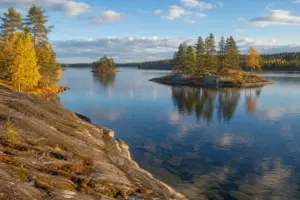 Karelia: Best Places, Lakes, Islands and Travel Tips
Main image: AI-generated illustration. It may not show the place exactly as it looks.
Browse more: More in Kondopozhsky · All Karelia · All Parks · All Sightseeing · All Sightseeing in Karelia
FAQ: Kivach Nature Reserve, Karelia
Is the waterfall worth visiting if I've seen larger waterfalls elsewhere?
The Kivach waterfall is the second-highest cascade waterfall after the Rhine Falls. However, in 1936, the Soviets diverted part of the river to a hydroelectric power station, and nowadays Kivach wakes up only during spring floods. The literary and historical significance (Derzhavin's 18th-century poem, Alexander II's royal visit) matters more than raw height. Visit for the forest and history rather than sheer spectacle.
How long should I spend at the reserve?
Allocate an hour per visit for the waterfall and quick arboretum walk. For a meaningful forest experience, allow 3–4 hours. A full day with guided tours of remote zones provides the deepest immersion. Plan depends on whether you want a quick stop or an ecological education.
Can I visit in winter, and is the waterfall frozen?
Winter hours are 10:00–17:00. Winter visits are possible but daylight is limited. Kivach wakes up only during spring floods, so winter flow is minimal and the waterfall often appears as a frozen stream or small trickle. Winter beauty lies in the snow-laden forest and silence, not the waterfall itself.
Is a guide necessary for a standard visit?
No. Main attractions (waterfall, museum, arboretum) are easily explored independently on marked paths. Guided walks are available; advanced reservation is required. Guides add ecological knowledge but are not essential. Book guides only for remote forest zones.
What is Karelian birch, and why is it in the arboretum?
The Karelian birch grows in the arboretum; by sight an ordinary-looking tree has gained worldwide fame because of the color and beauty of the wood pattern. The distinctive grain pattern makes it prized for fine furniture. The arboretum protects and showcases native species, and Karelian birch is a cultural emblem of the region.
How do I get to the reserve without a car?
You can get here by bus from the Petrozavodsk bus station; the journey time is about 1.5 hours; distance from Petrozavodsk is 60 km. Direct buses run daily; check schedules at Petrozavodsk bus station. Tour operators also offer minibus transport from Petrozavodsk and nearby towns.
Are there camping or overnight facilities at the reserve?
No overnight facilities or camping are available within the reserve. Visitors make day trips from Petrozavodsk (65 km away) or Kondopoga (20 km away), both of which offer hotels and guesthouses. The reserve strictly limits public access to the excursion zone.
What is the significance of the 1931 founding date?
Kivach reserve is the first protected territory in Karelia, organized in 1931 on the territory of 2,000 hectares. It was created at a time when conservation internationally was gaining recognition. The reserve protected old-growth taiga forest and the culturally significant waterfall from industrial extraction.
Russia Vibes is a one-person project. A coffee keeps it going
How we research and update our guides
About this guide: AI assistance and accuracy
This guide is created with the help of AI and is based on official sources where available. Mistakes can still happen. Opening hours, prices, rules and other details are given to the best of our knowledge as of the date shown and can change without notice. It offers general recommendations only, not professional, legal or travel advice. Please confirm important details with the official source before you travel; you are responsible for your own plans and decisions.
Packing for this trip
* Affiliate link: as an Amazon Associate we earn from qualifying purchases at no extra cost to you.

Take this guide with you
Get a free PDF of this guide to print or read offline: key facts, tips and a map link on a few clean pages.
Report an issue on this page
Paying for your trip: please read
International sanctions affect payments between Russia and many other countries. In practice, cards issued in the EU, the UK, the US and several other countries often do not work in Russia, Russian cards usually do not work abroad, and some booking platforms, airlines and payment providers limit or suspend their services for Russia. The situation changes frequently.
We do not give legal or financial advice, and this site does not encourage anyone to break or circumvent sanctions. Whatever you plan, you are responsible for following the laws and regulations that apply to you, including those of your country of residence and citizenship.
Many travelers still organise their stay lawfully. It is worth asking your bank or payment provider what is currently permitted, contacting hotels, tour operators and carriers directly about the payment methods they accept, and checking which services are open to customers from your country. Clarify payment, cancellation and refund terms before you commit to a booking, and keep your plans flexible.
Partner links on this site may not be available in every country, and prices, availability and rules in our guides can differ from what you see when you book.