
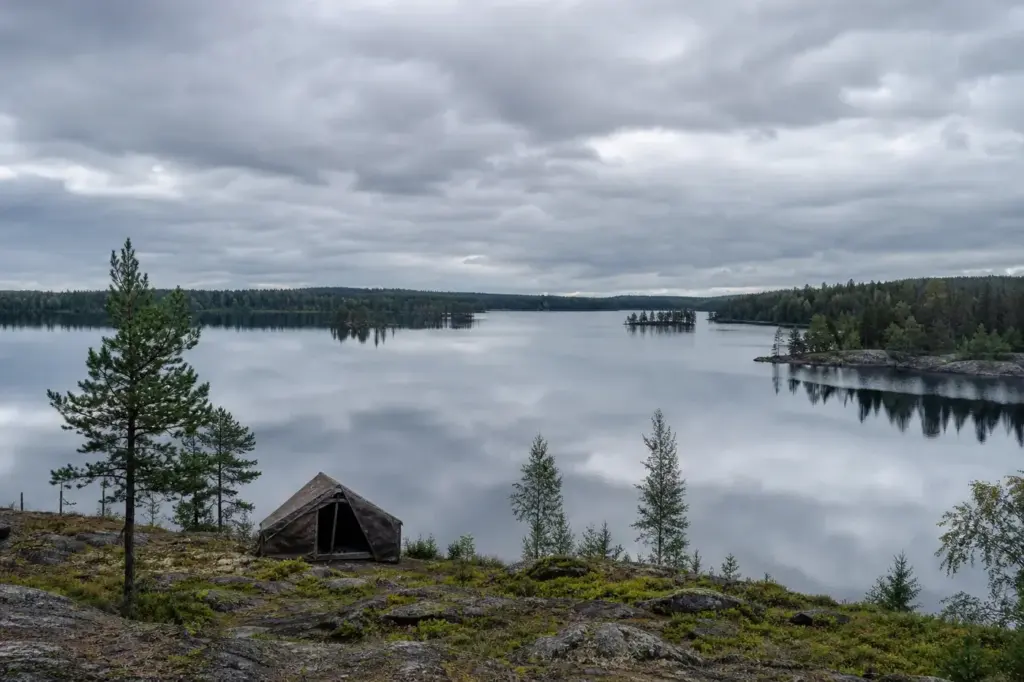
Vodlozero National Park spans the borderlands of Karelia and Arkhangelsk Oblast in northwestern Russia, protecting one of the continent’s last expanses of undisturbed taiga forest. The park was established in 1991 to preserve the unique natural environment and cultural heritage of the Vodlozero watershed and became a UNESCO Biosphere Reserve in 2001.
The central attraction is Lake Vodlozero itself, a vast body of water with 190 islands surrounded by ancient forest where trees average 240 years old and some exceed 500 years. The Ileksa River, the lake’s main inflow, flows through a dramatic southern valley, while the Vodla River carries the lake’s waters toward Lake Onega. Only one permanent settlement—Kuganavolok village—remains within the park boundaries.
Quick Facts
| Russian name | Водлозерский национальный парк |
|---|---|
| Built / opened | 1991 |
| Address | дер. Кугнаволок, Республика Карелия, Россия 164892 Google MapsApple MapsYandex Maps2GIS |
| Admission | Free admission; permit required |
| Best time to visit | Summer (June–August): Best season for hiking and paddling. Long daylight hours (nearly 24-hour twilight by June), water temperatures suitable for boating, and established trails are passable. Insect life is intense; bring repellent. Crowds are minimal but accommodation may be limited.Early autumn (September–early October): Excellent hiking season with clearer skies, fall colors in the forest, and fewer insects. Water temperatures begin to drop. Roads may become muddy as weather changes. This window is short.Winter (December–March): Frozen lakes allow ice crossing and a completely different landscape experience. Days are very short. Temperatures can drop well below freezing. Only experienced winter campers should visit; guides are essential. Permits may be restricted.Spring (April–May): Unpredictable. Roads are often impassable from snowmelt. Lake ice melts gradually; dangerous for crossing. Hiking becomes possible only in late May. Generally not recommended due to access difficulties. |
| Website | vodlozero.ru |
What Is (and Isn't) Part of a Visit to Vodlozero National Park, Karelia?
| Part | Status | Notes |
|---|---|---|
| Lake Vodlozero and islands | Included in the standard ticket | Central feature of the park; access by boat from Kuganavolok or designated water routes. |
| Ileksa River valley and tributary lakes | Included in the standard ticket | Southern section of the park; accessible by hiking trails and paddling routes through forest passages. |
| Established hiking trails and marked routes | Included in the standard ticket | Multi-day treks connect lakes, river valleys, and shelter points; paths are not always well-marked and guides are recommended. |
| Abandoned settlements and wooden chapels | Included in the standard ticket | Visible on islands and shorelines; many require boat access; some are undergoing restoration by the park authority. |
| Camping and overnight accommodation | Separate ticket or institution | Designated tourist camps and shelter huts exist at established points; private camping requires advance booking and permits. |
| Visitor center facilities (Kuganavolok) | Separate ticket or institution | Permit issuance, guide booking, and basic accommodation available at Kuganavolok; essential for planning any visit. |
| Motorboat services and commercial tours | Separate ticket or institution | Not part of park infrastructure; private operators may provide transport but must be arranged through visitor center contacts. |
| Road access to Kuganavolok | Outside / not part of it | Accessed via unpaved forest road from regional towns (Onega or Pudozh); road condition varies by season; not maintained to standard highways. |
Why Visit Vodlozero National Park, Karelia?
Visitors come to experience one of Europe’s most pristine wilderness areas, where vast old-growth forests and clear lakes have been spared the development that transformed the rest of the continent. The park offers genuine isolation and solitude in a landscape largely unchanged for centuries, with exceptional opportunities for hiking, boating, and wildlife observation including moose, bears, wolves, and numerous bird species.
The region holds deep cultural significance as the ancestral homeland of the Vodlozers, a Karelian ethnic group with distinct traditions. Visitors can explore abandoned settlements, ancient chapels, and wooden churches that speak to centuries of human presence in harmony with the wilderness.
How Vodlozero National Park, Karelia Is Laid Out
The park stretches more than 180 kilometers from south to north, divided into three main forestry districts: Vodlozero (centered at Kuganavolok), Ileksa (centered at the town of Onega), and Pudog (centered at Valdai village). Lake Vodlozero occupies the northern portion of the park, with the Ileksa River valley dominating the southern section. The vast majority of the park remains roadless and accessible only on foot, by water, or with a guide.
The administrative center is based in Petrozavodsk, 150 kilometers away. Access is controlled through Kuganavolok village, which houses the visitor center where permits are obtained. Overnight stays require booking accommodation at designated locations or camping at established stops. Multi-day routes typically follow established hiking trails or water routes linking lakes through forest passages.
Highlights of Vodlozero National Park, Karelia
Lake Vodlozero
The park's centerpiece is a massive freshwater lake 36 kilometers long and 16 kilometers wide, covering 322 square kilometers with 190 islands. The lake freezes solid by early November and remains icebound until early May, creating contrasting seasons for visitors. Water is exceptionally pure and soft. The main inflow is the Ileksa River from the south; the Vodla River carries water northward toward Lake Onega, connecting this remote watershed to Europe's second-largest lake.
Tip: Lake Vodlozero offers island camping and boat access to shore-based trails; plan water routes with a local guide familiar with seasons and weather patterns.
Ileksa River Valley
The southern section of the park centers on the Ileksa River, a 155-kilometer tributary that connects a chain of larger lakes—Kalgachinskoye, Monastyrskoye, Luzskoye, and Nelmozero—in a dramatic valley landscape. This region features rolling hills and flatter ecosystems than the northern lake zone. The river corridor supports diverse wildlife including moose and migratory birds.
Tip: The Ileksa valley is navigable by experienced paddlers and accessible to trekkers; water levels vary seasonally, so timing matters for boat routes.
Old-Growth Forest
The park preserves one of Europe's largest continuous expanses of pristine taiga forest, largely unmodified by industrial logging. Trees average 240 years old, with some specimens exceeding 500 years. This virgin forest ecosystem is unique in contemporary Europe, sheltering wolves, bears, lynx, wolverines, and hundreds of bird species. The forest canopy creates an atmosphere of profound silence and timelessness.
Tip: Early morning walks offer the best wildlife observation; insect repellent is essential in summer months.
Kuganavolok Village and Visitor Center
Kuganavolok is the only permanent settlement within the park and the mandatory entry point for all visitors. The village houses the administrative center and visitor services where permits are issued, accommodation is booked, and information about trails and water routes is provided. Rangers and guides are available here. The village offers a window into contemporary life on the park's periphery.
Tip: Permits must be obtained in advance; allow extra time before traveling to arrange guides or confirm camping availability.
Abandoned Settlements and Wooden Chapels
The Vodlozero region historically supported 40 settlements on islands and shorelines; today only Kuganavolok remains populated. Scattered throughout the park are ruins of abandoned villages and surviving wooden chapels—some centuries old—representing the cultural heritage of the Vodlozers. These structures stand as monuments to past settlement patterns and traditional Karelian spirituality. Restoration projects are ongoing.
Tip: Visiting abandoned sites requires a guide; many are on islands accessible only by boat and are sensitive to disturbance.
Winter Landscape and Ice Crossing
From November through April, the frozen lake transforms the landscape completely. Ice can reach sufficient thickness for safe walking and light vehicle use, opening direct routes across the lake that are closed the rest of the year. Winter camping is possible for experienced visitors, though conditions are harsh. The silent, snow-covered forest and crystalline ice create an entirely different experience from summer.
Tip: Winter visits require substantial preparation, warm equipment, and guide knowledge of ice safety; beginners should avoid winter travel.
Atmosphere
Vodlozero is a landscape of profound silence and stillness. The endless forest of dark green conifers meets steel-gray water under an enormous sky. In summer, insect life is intense, and the long northern days (nearly round-the-clock twilight by June) create an otherworldly quality. In autumn, the forest turns rich browns and golds, and migratory birds fill the air. Winter transforms it into a frozen wilderness where sound travels crystalline and clearly.
The park feels genuinely remote. The absence of roads, motorboats, and crowds creates a sense of stepping outside the modern world. Occasional signs of past settlement—a weathered chapel, overgrown ruins—appear unexpectedly. You encounter mostly silence, the sound of water, birdcall, and wind through old trees. Early morning paddling on the lake or hiking through forest are the primary ways visitors engage with the landscape. The mood is contemplative and demanding rather than recreational.
History of Vodlozero National Park, Karelia
The Vodlozers were an ethnic group believed to consist of people who had come from Novgorod and Moscow in the 14th–15th centuries. These settlers established a distinctive culture centered on fishing, hunting, and seasonal settlement across the region’s lakes and rivers. Far back in the past, there were around 40 settlements located on islands and the coastline of the lake, supporting a thriving if isolated community.
The region maintained this settlement pattern for centuries, with wooden churches and chapels built to serve scattered communities. Traditional crafts, folk celebrations, and unique architectural styles developed that reflected both Karelian heritage and the demands of wilderness living. This cultural layer remains embedded in place names, building styles, and surviving structures.
In 1935, the lake was turned into a seasonal reservoir for logging. Large-scale industrial forestry operations followed through much of the 20th century, marking a fundamental shift from traditional settlement patterns. Many villages were abandoned as logging camps replaced permanent settlements, and forest ecosystems were modified for resource extraction.
National park “Vodlozersky” was established by decree of the government of the Russian Federation in 1991 to preserve the unique natural environment and cultural heritage of the Vodlozero area, to carry out scientific research, organize ecological education and tourism. Park became the first protected object of such level on the European North of Russia. In 2001 by decree of UNESCO Park received a status of biosphere reserve, first in the system of national parks of Russia. The park’s creation marked the end of industrial exploitation and the beginning of wilderness restoration and cultural heritage documentation.
Legends and Myths about Vodlozero National Park, Karelia
The Vodlozers as Descendants of Lost Princes
Spirits of the Old Forest
Legend – historically unreliable. The ancient trees and pristine forest of Vodlozero feature in local folklore as home to spirits and protective forest powers. Traditional stories describe these forests as inhabited by forces that demand respect and reward those who approach with humility. Such beliefs likely reflect both Finnic animistic traditions and the genuine power of the wilderness landscape itself—its scale, age, and ability to humble human presence.
Tickets and Booking for Vodlozero National Park, Karelia
| Ticket | Price | Includes |
|---|---|---|
| Park permit (domestic visitor) | ₽ | Entry permit valid for stated duration; rates for Russian residents differ significantly. |
| Park permit (international visitor) | ₽₽ | Entry permit; exact cost and duration vary; arranged through visitor center. |
| Guide services (daily rate) | ₽₽₽ | Professional guide for trekking or paddling; essential for safety and route planning; must be arranged in advance. |
| Accommodation at tourist camp or shelter | ₽ | Basic bunk bed or shelter space; availability limited; requires advance reservation. |
₽ budget · ₽₽ moderate · ₽₽₽ upscale · ₽₽₽₽ splurge. Price levels are estimates compared with typical prices for visitors.
Permit and booking: All visitors must obtain a permit from the park’s visitor center in Kuganavolok. Contact the center by phone or via the official website to arrange permits, book guides, and reserve accommodation. Permits should be arranged well in advance, especially for summer months. Guides are available at the center and are strongly recommended for first-time visitors unfamiliar with the terrain or water conditions.
How to reach the visitor center: Kuganavolok village is accessed via an unpaved forest road from the towns of Onega or Pudozh. Road condition varies seasonally. Allow extra travel time and confirm road passability before departure. Vehicle travel may be restricted during spring thaw or heavy rain.
Rates and concessions: Permit costs are significantly lower for Russian citizens and certain concession categories (students, pensioners, children). Prices shown are approximate and subject to change. Visit the official website at vodlozero.ru for current fees, booking procedures, and all categories.
Plan and Book
Suggested itineraries Vodlozero National Park, Karelia
2–3 days
Based at Kuganavolok village, take a guided day hike or paddling route from the visitor center to explore nearby shoreline and lake islands. Visit one abandoned settlement or accessible chapel. Return to accommodation at village guest facilities each evening. Suitable for visitors with limited time or mobility restrictions.
4–5 days
Multi-day trek into the northern lake zone. Paddle or hike from Kuganavolok to camping sites on islands or shelters on the lake shore. Explore hidden coves, island camps, and forest walks. Requires fitness, camping skills, and willingness to be self-sufficient. A guide is recommended.
6–7 days
Extended wilderness journey combining Lake Vodlozero and the Ileksa River valley. Hike through forest to the southern valley, paddle upstream through connected lakes, and return via alternate routes. Visit multiple abandoned settlements and experience diverse ecosystems. Requires experience, guide support, and complete self-sufficiency in remote wilderness.
Winter (2–5 days)
Traverse the frozen lake and winter forest landscape. Ice crossing and winter camping offer isolation and natural beauty but demand substantial cold-weather experience, specialized equipment, and guides. Not recommended for beginners.
How to Get to Vodlozero National Park, Karelia
From Petrozavodsk (regional capital, 150 km away): Rent a car or arrange transport via a local taxi or tour operator. Travel south toward Pudozh on regional roads. The unpaved forest road to Kuganavolok branches off near the Pudozhsky District. Allow 4–5 hours of driving on unpaved roads. Road quality varies with season.
From the town of Onega: An alternative approach is via forest roads from Onega (70 km from Kuganavolok). Onega is on the White Sea railway line; from there, arrange onward transport to the village.
From the town of Pudozh: Pudozh is a regional hub with bus connections from Petrozavodsk and Onega. From Pudozh, it is 100 km by forest road to Kuganavolok. Taxi services or car rental are necessary.
Public transport: No direct public transport to Kuganavolok exists. Visitors must arrange private vehicles or join organized tours. Confirm road conditions and timing with tour operators or the visitor center before departure.
Accessibility
Vodlozero National Park is a wilderness area with no modern amenities or accessibility infrastructure. There are no paved paths, no wheelchair access, no elevators, or adaptive facilities. Overnight stays are in basic shelters or tents. Access is by hiking or paddling on unmarked terrain.Visitors with mobility limitations can be accommodated only through special arrangements and guide support. The visitor center at Kuganavolok can discuss possibilities on a case-by-case basis. Contact the park in advance to arrange any specific needs.The landscape itself demands fitness and self-sufficiency. Hiking routes are not graded for difficulty, and navigation requires map skills or guide knowledge. Weather can change rapidly; clothing and emergency preparedness are essential.
Food Nearby
No restaurants or shops exist within the park. Kuganavolok village has minimal services. All food must be brought from outside. Carry sufficient provisions for your entire stay, including emergency reserves. Drinking water is available from the lake (though should be purified) or from shelter sources. Fish can be caught with appropriate permits; hunting requires special authorization.Petrozavodsk and the towns of Pudozh and Onega have ordinary shops where supplies can be purchased before departure. Plan provisions carefully for multi-day wilderness travel where resupply is impossible.
What to Bring
Clothing and shelter: Bring waterproof, layered clothing suitable for cool, damp conditions even in summer. A three-season tent and sleeping bag are essential for camping. Warm clothing for temperature swings is critical.Navigation and safety: Detailed maps of the park area are essential. A compass and GPS device are valuable, though signals can be unreliable in remote forest. A first-aid kit and emergency supplies are mandatory. Insect repellent (mosquitoes and horseflies are fierce in summer) is non-negotiable. A water purification method (tablets, filter) is needed for longer stays.Cooking: Lightweight camping stove and fuel, cookware, and eating utensils. All food must be carried in. Solid bag discipline is needed to avoid attracting wildlife.Special items: Binoculars for birdwatching, a headlamp for night movement, and sun protection (UV is strong at high latitude even on overcast days) are practical. For winter travel, insulated boots, heavy insulation layers, and a specialized winter sleeping system are essential.Bag policy: Keep backpacks secured against weather and animals; store food in sealed containers away from shelters.
Best Views and Photo Spots of Vodlozero National Park, Karelia
Lake Vodlozero from the northern shore near Kuganavolok
Wide open water with the forested southern shoreline forming a distant treeline. In calm conditions, reflections of sky and forest mirror perfectly on the water surface. The vastness of the lake creates a sense of overwhelming scale. Morning light from the east illuminates the forest fringe.
Best time: Early morning (5–7 am) in summer for calm water and clear light; autumn mornings offer golden forest colors reflected in the water.
Island campsites at sunset
Low sun casting long shadows across the water and across tent sites. The old-growth forest creates dramatic silhouettes. Water glows amber or gold. The contrast between human encampment and wilderness is stark and contemplative.
Best time: June–August, one to two hours before sunset; northern latitude means extended twilight for prolonged photography.
Ileksa River valley from high ground
The river winding through forested valley with connected lakes visible in sequence. Rolling hills and varied tree heights create depth and texture. Moody skies over the valley create atmospheric conditions. The landscape conveys remoteness and continuity.
Best time: Autumn (September–October) for golden forest color and clearer air; early morning for mist over the water.
Abandoned chapel or settlement structure
Weathered wooden building, often with a simple cross or distinctive architecture, framed by surrounding forest. Decay and nature's reclamation create a poignant contrast. Light filtering through trees around the structure adds atmosphere.
Best time: Soft overcast light for detail; avoid harsh midday sun that creates blown-out skies behind structures.
Forest detail: ancient trees and understory
Massive trunks of 200–500 year-old trees with complex bark textures, surrounding smaller growth, and a carpet of moss and forest floor. The layered green creates depth and complexity. Close-up photography reveals the forest's complexity.
Best time: Overcast conditions reveal texture without harsh shadows; early morning mist adds atmosphere.
Frozen lake in winter from shore
Vast expanse of smooth ice, snow-covered or bare depending on wind, meeting the dark forest edge under low-angle winter sun. The stark color contrast and clarity of air create geometric composition. Human tracks on ice provide scale.
Best time: Clear winter days with low sun angle; late afternoon creates longest shadows and warmest light tones on ice.
Photography Rules
Photography is permitted throughout the park. Drones are not allowed without special authorization from the park administration. Tripods may be used for landscape photography. Flash photography is permitted outdoors but should be minimized near nesting birds during breeding season (May–July). Indoor photography of wooden chapels and artifacts may have restrictions; ask permission from guides or locals. Photographing abandoned settlements is permitted, but treat these sites respectfully as cultural heritage.
Family Suitability
Vodlozero is not suitable for families with young children or inexperienced outdoor travelers. The park offers genuine wilderness with no developed infrastructure, no playgrounds, and significant physical demands. Multi-day expeditions require paddling skills, hiking fitness, and camping experience. Overnight transport involves boats or forest paths, not roads.Families with teenagers and camping experience may visit on shorter, guided excursions based from Kuganavolok village, but longer wilderness travel is not recommended for children. Infants and toddlers cannot be accommodated. Stroller access is impossible; all terrain is natural. Weather is unpredictable and can be dangerous; medical support is distant.Educational value is high for older teens interested in wilderness ecology, traditional culture, or survival skills, but comfort and convenience expectations must be minimal. Advance planning and guide support are essential.
Russia Vibes Tips
- Book guides and accommodation at least one month in advance, especially for summer travel. The park has limited capacity and no walk-in options. A guide is nearly essential for first-time visitors unfamiliar with route-finding in forest and water navigation in connected lakes.
- Verify road conditions to Kuganavolok before departure. The forest road is unpaved and impassable during spring thaw (April–May) and after heavy rain. Call the visitor center to confirm accessibility. In summer, roads may still have deep mud sections requiring four-wheel drive.
- Bring insect repellent for summer months. Mosquitoes and horseflies are relentless from June through August, especially near water and in quiet forest. High-concentration DEET products are more effective than alternatives. Head nets offer relief when repellent fails.
- Never assume water sources are safe without treatment. Lake and river water can be contaminated despite the pristine appearance. Carry purification tablets, a portable filter, or boiling capability. Many visitors become sick from untreated water.
- Plan exit timing carefully if paddling. Weather can trap visitors on islands or cause water conditions unsuitable for boats. Build in two or three extra days beyond your planned return to account for wind, rain, or rough water. Helicopter evacuation exists but is expensive.
- Respect abandoned settlements and chapels as cultural heritage, not as recreation props. Do not remove objects, damage structures, or mark walls. Many sites are actively being restored by the park. Treat them with the solemnity they deserve as monuments to past communities.
Explore Nearby Vodlozero National Park, Karelia
Browse more: All Karelia · All Parks · All Sightseeing · All Sightseeing in Karelia
FAQ: Vodlozero National Park, Karelia
Do I need a permit to visit Vodlozero National Park?
Yes. All visitors require a permit from the park, regardless of nationality or planned activities. Permits are issued by the visitor center in Kuganavolok village. Apply in advance through the official website (vodlozero.ru) or by phone. Permits specify duration and permitted zones.
Can I drive into the park to visit the lake?
No. There are no roads into the park interior. The only road access is to Kuganavolok village, the entry point. From there, you must travel by foot or boat. Most visitors do multi-day treks or paddling expeditions that are entirely on foot or water.
Do I need a guide?
Guides are not legally required but are strongly recommended, especially for first-time visitors. Routes are not always marked, navigation requires map and compass skills, and a local guide knows about weather, water conditions, wildlife safety, and historical sites. Guides are available through the visitor center and should be booked in advance.
What is the best season to visit?
Summer (June–August) offers the longest daylight, passable hiking trails, and water suitable for paddling, but brings intense insect life. Early autumn (September–early October) offers excellent hiking with fewer insects and fall colors, but the window is short. Spring and late autumn are difficult due to weather and road access. Winter requires specialized skills.
Can I camp anywhere, or are there designated sites?
Designated campsites and shelter huts exist at established locations. Camping outside these sites requires special authorization from the park. Established camps offer basic facilities and help with waste management. Check the official website or ask the visitor center for current camp locations and booking procedures.
How long should I plan to spend?
A short visit to Kuganavolok village takes one day. A meaningful wilderness experience requires at least 3–4 days for paddling or hiking. Extended expeditions of 6–7 days allow exploration of multiple zones and abandoned settlements. Multi-week journeys are possible for experienced travelers.
Is Vodlozero the same as Lake Vodlozero?
Lake Vodlozero (or just Vodlozero) is the large lake itself; Vodlozersky National Park is the protected wilderness area surrounding the lake and including the Ileksa River valley and extensive forest. The park is much larger than the lake alone.
What fish species can I catch?
Lake Vodlozero supports various freshwater fish species common to northern lakes. Fishing is permitted with a valid Russian fishing license; international visitors should clarify regulations with the park. Catch-and-release or subsistence fishing for food is allowed under certain conditions. Ask the visitor center for current rules and best spots.
Russia Vibes is a one-person project. A coffee keeps it going
How we research and update our guides
About this guide: AI assistance and accuracy
This guide is created with the help of AI and is based on official sources where available. Mistakes can still happen. Opening hours, prices, rules and other details are given to the best of our knowledge as of the date shown and can change without notice. It offers general recommendations only, not professional, legal or travel advice. Please confirm important details with the official source before you travel; you are responsible for your own plans and decisions.
Packing for this trip
* Affiliate link: as an Amazon Associate we earn from qualifying purchases at no extra cost to you.

Take this guide with you
Get a free PDF of this guide to print or read offline: key facts, tips and a map link on a few clean pages.
Report an issue on this page
Paying for your trip: please read
International sanctions affect payments between Russia and many other countries. In practice, cards issued in the EU, the UK, the US and several other countries often do not work in Russia, Russian cards usually do not work abroad, and some booking platforms, airlines and payment providers limit or suspend their services for Russia. The situation changes frequently.
We do not give legal or financial advice, and this site does not encourage anyone to break or circumvent sanctions. Whatever you plan, you are responsible for following the laws and regulations that apply to you, including those of your country of residence and citizenship.
Many travelers still organise their stay lawfully. It is worth asking your bank or payment provider what is currently permitted, contacting hotels, tour operators and carriers directly about the payment methods they accept, and checking which services are open to customers from your country. Clarify payment, cancellation and refund terms before you commit to a booking, and keep your plans flexible.
Partner links on this site may not be available in every country, and prices, availability and rules in our guides can differ from what you see when you book.