
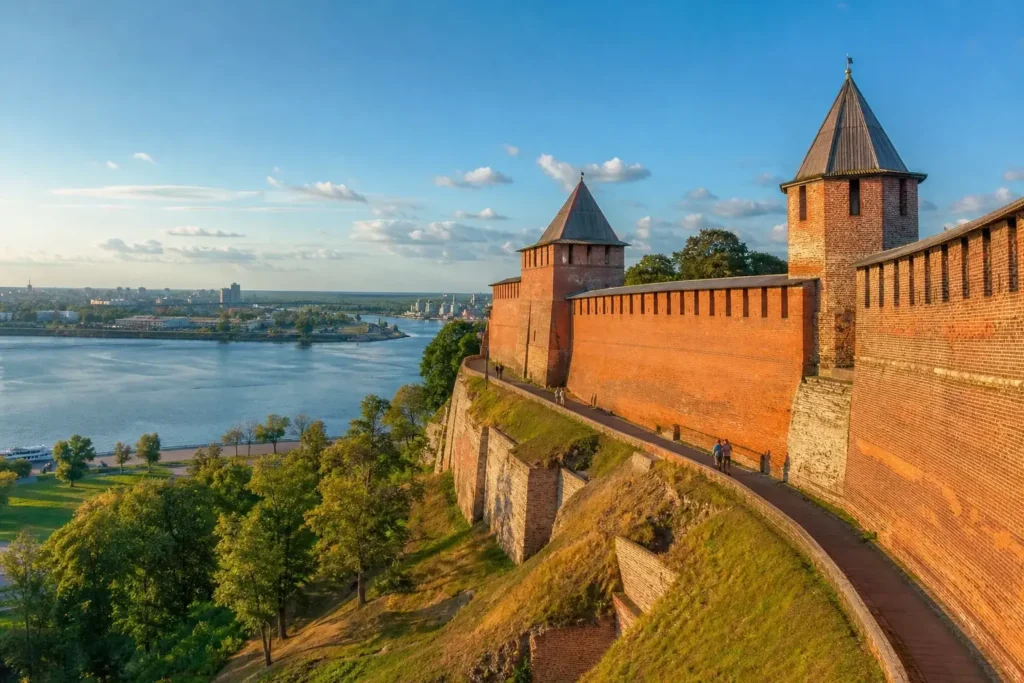
The Nizhny Novgorod Kremlin stands as the defining landmark of the city, a powerful stone fortress that rises dramatically from a steep riverbank overlooking the confluence of two major rivers. Built between 1508 and 1515 under the direction of Italian architect Pietro Francesco, it replaced an earlier wooden fortification destroyed by fire. The fortress was designed with advanced defensive architecture suited to artillery warfare—its thirteen brick towers jut beyond the massive walls, allowing defenders to fire at attackers from multiple angles.
The Kremlin has served as the city’s administrative and military center for five centuries, surviving numerous sieges and wars without ever being taken by force. Today, visitors can explore the grounds freely, walk sections of the fortress walls during warmer months, and visit museums housed in several towers that tell the story of the region’s history from medieval times through the Soviet era.
Quick Facts
| Russian name | Нижегородский кремль |
|---|---|
| Built / opened | 1508 |
| Architect(s) | Pietro Francesco (Pyotr Fryazin) |
| Address | Площадь Минина и Пожарского, 6, Нижний Новгород, Нижегородская область, Россия, 603005 OpenStreetMap · Google Maps |
| District | Nizhny Novgorod |
| Metro | Gorkovskaya (Line 1, From station, ~15 min walk to Kremlin entrance) |
| Opening hours | Daily 06:00-22:00 (Nov-Apr: until 21:00)
Wall walk and museums (seasonal): April-November 10:00-17:00; hours vary by month |
| Admission | Free entry to grounds; wall walk and museums ₽₽ |
| Best time to visit | Season: Late spring (May-June) and early autumn (September) offer ideal conditions—warm weather, lower humidity than mid-summer, and manageable crowds. Summer (July-August) is the peak tourist season but can be hot and crowded. Winter is quieter and atmospheric but the wall walk is restricted to a limited section; winter visits suit photography and contemplative exploration.Day of the week: Weekdays are noticeably quieter than weekends. Early morning (before 10:00) and late afternoon (after 17:00) draw fewer visitors in any season.Time of day: Late afternoon provides the best light for photography, as sun crosses the red-brick towers from the west. Early morning creates long shadows and misty riverbank views. Sunset from the wall (if visiting during wall-walk season) is particularly atmospheric. |
| Recommended duration | 2–3 hours |
| Website | ngiamz.ru/nizhegorodskiy-kreml |
What Is (and Isn't) Part of a Visit to Nizhny Novgorod Kremlin?
| Part | Status | Notes |
|---|---|---|
| Kremlin grounds (fortress area, pathways, views) | Included in the standard ticket | Free entry to walk around the compound, view the towers, and explore most outdoor areas. |
| Wall walk (circular route along the fortress walls) | Separate ticket or institution | Seasonal (April-November), requires a ticket; varies in availability from spring through autumn. |
| Tower museums (History and Architecture Museum branches in Zachatskaya, Nikolskaya, Ivanovskaya towers) | Separate ticket or institution | Individual tower entry or bundled with wall-walk ticket; open year-round with limited winter hours. |
| Manege Exhibition Hall | Separate ticket or institution | 19th-century building within Kremlin; hosts rotating exhibitions; often included in wall-walk ticket. |
| Archangel Michael Cathedral | Included in the standard ticket | Inside Kremlin grounds; visible and generally accessible but hours may be restricted during services. |
| Arsenal Contemporary Art Centre | Separate ticket or institution | Located within Kremlin; separate admission from general fortress entry. |
| Art Museum (Governor's residence) | Separate ticket or institution | Housed in former Governor's residence within Kremlin; separate ticket required. |
| Military open-air exhibition and Eternal Flame | Included in the standard ticket | Visible and accessible during daylight hours as part of general Kremlin grounds. |
Why Visit Nizhny Novgorod Kremlin?
The Kremlin offers several compelling reasons to visit. First, the panoramic views from the wall walks and observation points overlook both rivers and stretch across the historic city center—particularly striking at sunset. Second, the fortress itself is a masterpiece of medieval military engineering; the massive brick walls and distinctive towers are visible from across the city and photograph beautifully from multiple vantage points. Third, the Kremlin’s history spans Russian expansion, the Time of Troubles, and World War II, making it essential for anyone interested in Russian history. Fourth, it remains one of Russia’s most authentically preserved Kremlins, restored carefully over decades rather than heavily modernized.
How Nizhny Novgorod Kremlin Is Laid Out
The Kremlin occupies an irregular fortress compound on a steep hilltop, with an 82-meter elevation difference between its highest and lowest points. The main entrance is through an archway near Minin and Pozharsky Square, where a tourist information center and ticket office are located. The 13 towers are unevenly spaced around the compound; the Dmitrievskaya Tower, at the highest point, is the most recognizable landmark and serves as the visual symbol of the fortress. From the entrance, visitors can explore the grounds on foot, discovering museums in several towers, open-air military exhibitions, the Eternal Flame memorial, and various government buildings. The circular wall walk (available seasonally) provides continuous views and connects the towers that house exhibition spaces.
Highlights of Nizhny Novgorod Kremlin
The Dmitrievskaya Tower
The tallest and most iconic tower of the Kremlin, the Dmitrievskaya (St. Demetrius Tower) is instantly recognizable from across Nizhny Novgorod due to its distinctive pyramidal red-brick spire. This is the most photographed element of the fortress and serves as the main gathering point for visitors. The tower contains a small museum and offers views across the Volga; in winter, a limited wall route still connects from here.
Tip: Arrive at the Dmitrievskaya in late afternoon for the best photographs as light crosses the fortress walls from the west.
The Stone Walls and Wall Walk
The Kremlin's most striking feature is its massive defensive perimeter of red brick walls extending over 2 kilometers. Construction began in 1500 and took 15 years, with Italian engineers supervising Russian stonemasons. The walls remain remarkably well-preserved, thick enough to have incorporated anti-aircraft guns during World War II. A seasonal circular route allows visitors to walk atop the walls from April through November, experiencing the full scale of the fortification.
Tip: Book the wall walk in advance during summer weekends, as ticket offices can become crowded. The route is typically open 10:00-17:00 but hours shift backward as daylight shortens in autumn.
The Archangel Michael Cathedral
Inside the Kremlin stands the Archangel Michael Cathedral, the city's oldest stone church, dating to the mid-17th century. Built in the distinctive tent-roof style of Russian Orthodox architecture, it remains one of the few religious buildings preserved within the fortress compound. The cathedral showcases traditional Russian ecclesiastical design that contrasts with the fortress's purely military architecture.
Tip: The cathedral is a working church; hours may be limited during services. Check at the information center for current access.
The Kremlin Museums in the Towers
Several towers contain branches of the Nizhny Novgorod State History and Architecture Museum. The Zachatskaya and Nikolskaya towers house permanent exhibits on the city's history, while the Ivanovskaya Tower showcases specific collections. These museum spaces tell the story of the fortress, the city's role in Russian expansion against the Khanate of Kazan, and its survival through the Time of Troubles. Exhibits are modest but historically significant.
Tip: Museum hours vary by tower and season; the main circular route from April to November includes access to multiple tower museums. Individual tower visits are possible year-round Tuesday-Sunday 10:00-17:00.
The Manege Exhibition Hall
Built in the 19th century with striking red-and-white brick arches, the Manege stands within the Kremlin grounds and now serves as an exhibition space. Its distinctive architecture blends Russian Revival elements with fortress functionality. The Manege hosts rotating exhibitions and is often included in wall-walk tickets.
Tip: Exhibitions change regularly; check the official website or the information center to see what is on display during your visit.
Panoramic Views of the Rivers
The Kremlin's position at the confluence of the Volga and Oka rivers provides unobstructed views across both waterways and the city beyond. The elevated position—82 meters above the lowest point—makes this one of the city's premier viewpoints. Early morning or late afternoon light transforms the landscape, and clear weather reveals views many kilometers downriver.
Tip: Bring a camera and a small bottle of water. The fortress walls offer natural seating in many spots; the wall walk can take 1.5 to 2 hours depending on museum visits.
Atmosphere
The Kremlin feels both monumental and intimate. Walking its grounds, you sense the weight of five centuries of military and political history. The massive red-brick walls are austere and powerful, unadorned compared to other Russian Kremlins, which gives them a stark, almost stern character. The stone rarely feels theatrical—it reads as genuinely formidable rather than recreated.
The Kremlin is busiest in summer and on weekends when tour groups converge. Early weekday mornings in spring or autumn are quieter, allowing you to experience the fortress with minimal crowds. At midday, the fortress is often sunny and windswept. In winter, though the wall walk is restricted, the grounds remain open and feel especially atmospheric—quieter, with fewer tourists, and the fortress’s defensive purpose becomes more legible against the grey sky.
History of Nizhny Novgorod Kremlin
Nizhny Novgorod was founded in 1221 as an outpost of the Suzdal principality at the strategic confluence of two major rivers. In 1392, the city came under Moscow’s control and developed into a crucial stronghold against the Khanate of Kazan to the east. By the early 16th century, the original wooden fortifications had become obsolete for modern warfare.
In 1500, under Grand Prince Ivan III and his son Vasily III, construction of the stone Kremlin began under the direction of Italian architect Pietro Francesco (known in Russian as Pyotr Fryazin). The main fortification work proceeded from 1508 to 1515. Italian engineers supervised Russian stonemasons in building thirteen towers and massive brick walls that stretched over two kilometers. According to historical accounts, surrounding villages were taxed with eggs—thousands were needed to mix with mortar to create strong stonework. The oak walls of the old wooden fortress were destroyed by a devastating fire in 1513, spurring completion of the stone walls.
The fortress never fell to siege or conquest despite numerous attempts. It withstood attacks during Russian campaigns against Kazan in the 16th century and endured the upheaval of the Time of Troubles (1598–1613) without capitulation. This record of invulnerability made Nizhny Novgorod a symbol of Moscow’s eastern frontier strength.
In the 18th and 19th centuries, as military threats diminished, the Kremlin gradually transformed into an administrative center. Government buildings were constructed within its walls, and its role shifted from active defense to symbolic authority. During World War II, anti-aircraft guns were mounted on the towers to defend against German air raids, making the ancient fortress relevant once more to warfare—though this time against aerial bombardment rather than siege.
In the 1950s, large-scale restoration began under architect Svyatoslav Agafonov and continued for three decades. The work preserved the original brick walls and tower structures while carefully stabilizing damaged sections. These restorations have allowed the Kremlin to survive into the modern era as one of Russia’s most authentically preserved medieval fortresses. Today it stands as the chief attraction of Nizhny Novgorod and a testament to 16th-century military architecture.
Legends and Myths about Nizhny Novgorod Kremlin
The Egg Mortar
Legend – historically unreliable. Local tradition claims that thousands of fresh eggs were required to strengthen the mortar used in constructing the Kremlin walls, with surrounding villages taxed in eggs rather than money. While historical sources confirm that villages did contribute materials for the fortress, the specific extent of egg use in the mortar remains unclear. Whether eggs genuinely improved the stonework's durability or whether this was simply a practical supply method used at the time is debated, but the story survives as a vivid symbol of the fortress's monumental construction effort.
The Kremlin Never Fell
Disputed by historians. Over five centuries, the Kremlin supposedly repelled every siege and military assault directed against it. While it is historically accurate that the fortress withstood numerous Kazan campaigns and the Time of Troubles, historians note that the fortress was not as frequently besieged as popular memory suggests. The unbroken defense record is accurate for major sieges, though the claim that it 'never fell' becomes more legendary in its absoluteness than historical in its specificity.
Tickets and Booking for Nizhny Novgorod Kremlin
| Ticket | Price | Includes |
|---|---|---|
| Kremlin wall walk (circular route with museum access) | ₽₽ | Access to fortress wall with observation points and entry to exhibits in select towers (Zachatskaya, Nikolskaya, and sometimes Ivanovskaya; includes Manege). |
| Individual tower museum (one tower) | ₽ | Entry to one specific tower museum; can be purchased separately or as part of wall-walk ticket. |
| Winter wall route (partial, Dmitrievskaya to Chasovaya Tower) | ₽ | Limited winter wall access (November-April) from St. Demetrius Tower to Clock Tower; fewer museums included. |
₽ budget · ₽₽ moderate · ₽₽₽ upscale · ₽₽₽₽ splurge. Price levels are estimates compared with typical prices for visitors.
Tickets and advance booking: Tickets can be purchased at the on-site ticket offices located near the Kremlin entrance at Minin and Pozharsky Square. During the high season (May-October) and on weekends, purchasing tickets in advance online is strongly recommended to avoid queues.
Entrances: The main entrance is through an archway at Minin and Pozharsky Square. Additional passages through various towers provide alternative access points around the compound. Tourist information centers are staffed at Building 7A daily from 10:00 to 20:00.
Pricing note: The rates listed apply to foreign adult visitors. Prices for Russian citizens, students, seniors, and children differ significantly. The official website at ngiamz.ru lists all categories and current pricing.
Plan and Book
Suggested itineraries Nizhny Novgorod Kremlin
2 hours
Enter at Minin and Pozharsky Square. Visit the information center and museum shop. Walk the grounds to view the Archangel Michael Cathedral and the open-air military exhibition. Climb to the Dmitrievskaya Tower for panoramic views. Visit one tower museum. Return through a different passage to experience varied perspectives of the walls.
3 hours
Begin as above, then walk a significant section of the wall path (available seasonally). Visit two tower museums in succession. Stop at the Manege Exhibition Hall if an exhibition is on display. Spend time at a viewing point overlooking both rivers. End with a final circuit of accessible ground-level areas to absorb the full scale of the fortress.
Half day (4+ hours)
Complete the full circular wall walk if available (April-November). Visit all accessible tower museums. Explore the Arsenal Contemporary Art Centre or Art Museum if time permits. Sit at multiple viewpoints. Photograph from different angles. Take time to read historical markers and plaques. Conclude with a quiet walk around the perimeter to observe details of the stonework and towers.
How to Get to Nizhny Novgorod Kremlin
Metro: Take the Avtozavodskaya line (Line 1) to Gorkovskaya station, the northern terminus. This station opened in 2012 and is the closest metro stop to the Kremlin’s upper areas.
From Gorkovskaya station: Exit the station and walk toward Gorky Square (Площадь Горького). Follow signs or main streets downhill toward the historic center. The walk is approximately 15 minutes downhill, passing through the commercial district. Alternatively, after exiting the station, take any tram or bus heading toward the Kremlin area.
By taxi or ride-share: Nizhny Novgorod’s ride-share services operate widely. Direct the driver to “Minin and Pozharsky Square” (Площадь Минина и Пожарского) or “Kremlin Entrance” (Вход в кремль). Rides from the city center cost ₽.
Walking from the city center: If staying in the historic Lower Posad district, the Kremlin is reachable on foot (10-20 minutes depending on starting point). Head uphill toward the river and follow signs for the Kremlin.
Accessibility
General accessibility: The Kremlin grounds are open and largely walkable for visitors with normal mobility. However, the fortress sits on a steep hillside with an 82-meter elevation change between highest and lowest points, making some paths challenging for those with limited mobility or younger children in strollers.Wall walk: The wall walk involves stairs and uneven stone surfaces; it is not wheelchair-accessible. Sturdy, closed-toe walking shoes are recommended.Pathways within grounds: Main ground-level pathways are relatively level but paved with uneven historic stonework; some sections may present challenges for wheelchair users. Benches are scattered throughout for rest.Facilities: Restrooms are available near the information center and at the Manege Exhibition Hall. No official accessibility statement is published on the main website; contact the information center (+7 831 282-25-40) in advance if you have specific access requirements.
Food Nearby
The area immediately surrounding the Kremlin entrance at Minin and Pozharsky Square hosts cafés, small restaurants, and souvenir shops. Within a 5-10 minute walk downhill toward Bolshaya Pokrovskaya Street (the main historic commercial street), numerous dining options range from street food vendors to sit-down restaurants. Food options include Russian cuisine, international restaurants, and casual cafés. Most are open daily from around 11:00 to 21:00 or later, though specific hours vary. Water and light refreshments are available at the information center and the Manege.
What to Bring
Wear comfortable walking shoes with good grip, as fortress stone pathways are uneven and can be slippery when wet. Bring sun protection (hat, sunscreen) even in spring and autumn. A light jacket is useful as the elevated position can be windy. Bring water—there are no water fountains within the fortress, though some refreshment stands operate seasonally. A camera or phone is essential for the views. In winter, warm layers and waterproof outerwear are necessary; paths may be icy.Security and bags: Bags are permitted but large backpacks may be restricted if exhibits are crowded; keep bags secure in small museums and tower spaces.
Best Views and Photo Spots of Nizhny Novgorod Kremlin
Dmitrievskaya Tower (St. Demetrius Tower) courtyard view
The tallest tower's distinctive red-brick pyramidal spire dominates the frame, with secondary towers visible to left and right. The surrounding fortress walls create geometric depth. This is the most iconic single photograph of the Kremlin and recognizable across Russia.
Best time: Late afternoon (4:00-6:00 PM) when sun from the west illuminates the red brick. Any season; clear days preferred.
Wall walk mid-section with river views
From any section of the upper wall walk (accessible spring-autumn), the red-brick fortification wall stretches into distance with the Volga and Oka rivers visible below. Trees and city skyline provide context. The layers of wall and towers create strong compositional lines.
Best time: Mid-afternoon for even light across walls. Autumn offers clearer air; summer provides green foliage in surrounding landscape.
Kremlin viewed from across the Volga River
From the opposite riverbank (accessible via paths on the lower embankment on the south side of the Volga), the entire fortress profile is visible rising from the steep riverbank. This broader perspective shows the fortress's relationship to the landscape and its formidable scale.
Best time: Morning or early afternoon when the fortress face faces toward the light. Autumn or spring for clearest skies.
Chasovaya Tower (Clock Tower) sunset view westward
From this western tower during wall-walk season, sunset light floods across the fortress toward the camera. The Volga bends in the distance; secondary towers create silhouettes. Golden light on red brick is dramatic.
Best time: One hour before sunset in spring through autumn when wall walk is open. Clear evenings preferred; bring camera ready before final hour of light.
Photography Rules
Photography is generally permitted throughout the Kremlin grounds and is encouraged. Tripods may be used in open areas of the grounds but may be restricted during crowded times or within museum spaces in the towers. Flash is not permitted in tower museums. Drone photography is not permitted. Professional photography or filming may require prior permission from the Kremlin administration.
Family Suitability
The Kremlin is moderately suitable for families with children old enough to walk for extended periods. Young children (under 8) may struggle with the steep terrain and long distances. Toddlers in strollers face challenges due to uneven stone pathways and elevation changes; stroller wheels may jam on historic stonework. The wall walk involves stairs and is not suitable for very young children or those afraid of heights (walls are ~10 meters high with metal railings).Older children (8+) enjoy exploring the towers, viewing the rivers, and learning about medieval fortifications. Tower museums are modestly sized and not overwhelming. The fortress's outdoor character means families can move at their own pace without time pressure. Public restrooms are available. Summer crowds can make the experience challenging for families seeking a quiet outing; weekday visits are preferable.
Russia Vibes Tips
- The wall walk is seasonal and hours shift backward as autumn progresses. If you plan to walk the walls, visit in May-August when hours are more generous (typically until 7:00-8:00 PM). By October, closing times drop to 4:00-5:00 PM, and after November 7 the route is limited to the Dmitrievskaya-Chasovaya section only until April.
- The Kremlin's eastern side, along the Oka River, offers the least-crowded paths and excellent views overlooking the narrower river valley. Most tour groups concentrate on the Dmitrievskaya Tower and the main western walls; a counterclockwise route starting from the southeast provides a more solitary experience.
- Visit the Kremlin in late afternoon and plan to stay until dusk if possible. The changing light across the red brick towers during the hour before sunset is dramatic, and crowds typically diminish after 5:00 PM even in summer.
- The Tourist Information Center (Building 7A) staff speak English and can provide current tower-by-tower opening hours, which vary by season. Museum hours differ from wall-walk hours—confirm what is actually open before purchasing a ticket.
- If you plan to visit multiple tower museums, purchasing the full wall-walk ticket (even if you don't walk the full wall) is usually more economical than buying individual tower tickets. The same ticket provides access to multiple exhibits.
- Bring water and avoid visiting at midday in summer; the fortress offers minimal shade, and the stone walls retain and radiate heat. Early morning or late afternoon visits are more comfortable.
Explore Nearby Nizhny Novgorod Kremlin
Sights near Nizhny Novgorod Kremlin
 Nizhny Novgorod State Art Museumabout 250 m away (~4 min walk) · typical visit: 2–3 hours
Main image: AI-generated illustration. It may not show the place exactly as it looks.
 Chkalov Staircase, Nizhny Novgorod – about 500 m away (~8 min walk) · typical visit: 45 minutes to 1.5 hoursOpen 24 hours
Main image: AI-generated illustration. It may not show the place exactly as it looks.
 Bolshaya Pokrovskaya Street, Nizhny Novgorod – about 700 m away (~12 min walk) · typical visit: 1.5–2 hoursOpen 24 hours
Main image: AI-generated illustration. It may not show the place exactly as it looks.
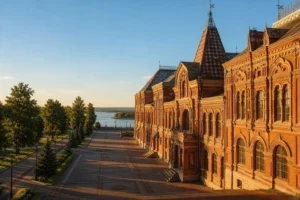 Nizhny Novgorod Fair, Nizhny Novgorod – about 2.6 km away · typical visit: 1–2 hoursOpen daily 10:00–19:00
Main image: AI-generated illustration. It may not show the place exactly as it looks.
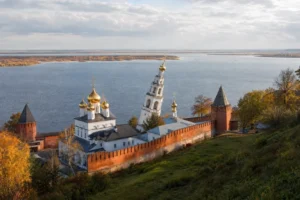 Pechersky Ascension Monastery, Nizhny Novgorodabout 3.0 km away · typical visit: 1–2 hours
Main image: AI-generated illustration. It may not show the place exactly as it looks.
Restaurants and cafes near Nizhny Novgorod Kremlin
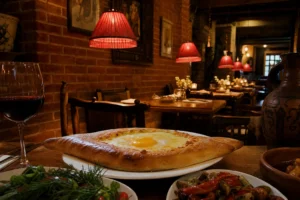
 Khachapuriya, Nizhny Novgorodabout 450 m away (~7 min walk)
Main image: AI-generated illustration. It may not show the place exactly as it looks.
 BaklaDzhan, Nizhny Novgorodabout 550 m away (~9 min walk)
Main image: AI-generated illustration. It may not show the place exactly as it looks.
 Dzhani Restorani, Nizhny Novgorodabout 650 m away (~10 min walk)
Main image: AI-generated illustration. It may not show the place exactly as it looks.
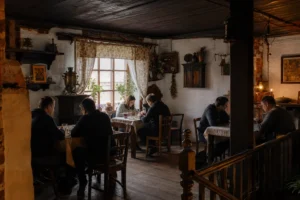 Korchma Khutorok, Nizhny Novgorodabout 700 m away (~11 min walk)
Main image: AI-generated illustration. It may not show the place exactly as it looks.
Hotels near Nizhny Novgorod Kremlin
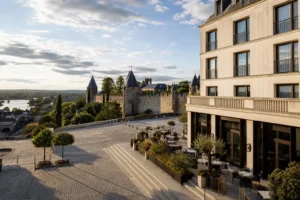 Sheraton Nizhny Novgorod Kremlinabout 450 m away (~7 min walk)
Main image: AI-generated illustration. It may not show the place exactly as it looks.
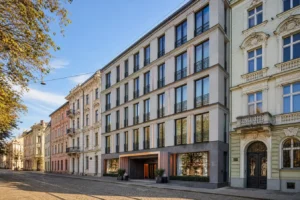 Mercure Nizhny Novgorod Center, Nizhny Novgorodabout 750 m away (~12 min walk)
Main image: AI-generated illustration. It may not show the place exactly as it looks.
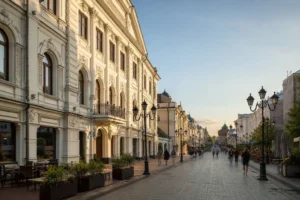 Jouk Jacque Hotel, Nizhny Novgorodabout 900 m away (~15 min walk)
Main image: AI-generated illustration. It may not show the place exactly as it looks.
Related guides
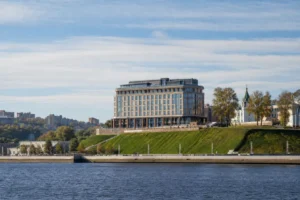 AZIMUT Hotel Nizhny Novgorod: Central Location on the Strelka
Main image: AI-generated illustration. It may not show the place exactly as it looks.
 Nikitin Hotel: 19th-Century Comfort at the Rivers’ Confluence
Main image: AI-generated illustration. It may not show the place exactly as it looks.
 Smile Hostel, Nizhny Novgorod: City Center Location, Themed Rooms, and Booking Tips
Main image: AI-generated illustration. It may not show the place exactly as it looks.
 Hampton by Hilton Nizhny Novgorod: City Center Hotel with Breakfast and Fitness
Main image: AI-generated illustration. It may not show the place exactly as it looks.
 Marins Park Hotel Nizhny Novgorod: Central Riverside Location and Booking
Main image: AI-generated illustration. It may not show the place exactly as it looks.
Browse more: More in Nizhny Novgorod · All Landmarks · All Nizhny Novgorod · All Sightseeing · All Sightseeing in Nizhny Novgorod
FAQ: Nizhny Novgorod Kremlin
Is entry to the Kremlin free?
Yes, entry to the Kremlin grounds and the ability to walk around freely are completely free. However, climbing the fortress walls and entering tower museums require separate paid tickets. This distinction often surprises visitors expecting to pay for general entry.
What is included in the wall-walk ticket?
The wall-walk ticket (₽₽) provides access to climb and walk atop the fortress walls and includes entry to museums in select towers (typically Zachatskaya, Nikolskaya, and Ivanovskaya) plus the Manege Exhibition Hall. The exact museums included may vary seasonally; confirm at purchase.
When is the wall walk open?
The wall walk is available April through November. Hours vary by month: May-August typically 10:00-20:00, September-October 10:00-17:00 with times shifting earlier as daylight shortens. From November 7 to April 7, only a limited winter route (Dmitrievskaya to Chasovaya Tower) operates 10:00-16:00. Confirm exact dates and hours at the information center before visiting.
Is the wall walk safe for people afraid of heights?
The walls are approximately 10 meters high and have metal railings. The stone surface is solid and stable. However, the height and the fact that the fortress sits on a steep hill (creating additional height perception) make it uncomfortable for those with significant height anxiety. Much of the fortress can be enjoyed from ground level without ascending the walls.
Can I visit with young children?
The Kremlin is partially suitable for families. Young children can explore the grounds freely, and older children (8+) enjoy the towers and views. However, toddlers in strollers face challenges with uneven stone pathways and elevation changes. The wall walk is not recommended for children under 8 due to height and stairs. A 2-hour ground-level visit is manageable with children; longer stays may be tiring.
Is there a difference between the Nizhny Novgorod Kremlin and other Russian Kremlins?
Yes. The Nizhny Novgorod Kremlin is smaller than Moscow's and less elaborate architecturally, but it is more authentically preserved as a medieval fortress rather than modernized. Its position on a steep riverbank with an 82-meter elevation difference is unique among Russian Kremlins. It was built later (early 1500s) than Moscow's (1485) and never became a palace complex, remaining primarily military and administrative.
How long does a typical visit take?
A casual ground-level walk exploring the courtyard and viewing the Dmitrievskaya Tower takes 1–1.5 hours. Adding one or two tower museums extends this to 2–2.5 hours. A complete wall walk visiting multiple museums takes 3–4 hours. Many visitors spend 2–3 hours without feeling rushed.
Do I need a guided tour?
Not necessary. The fortress is easy to navigate independently, with clear pathways and signage in Russian and English. Guided tours are available through the information center and external tour operators and can provide historical depth, particularly if you are interested in military architecture or Russian history. However, independent exploration is equally rewarding and allows flexibility with time spent at favorite spots.
Russia Vibes is a one-person project. A coffee keeps it going
How we research and update our guides
About this guide: AI assistance and accuracy
This guide is created with the help of AI and is based on official sources where available. Mistakes can still happen. Opening hours, prices, rules and other details are given to the best of our knowledge as of the date shown and can change without notice. It offers general recommendations only, not professional, legal or travel advice. Please confirm important details with the official source before you travel; you are responsible for your own plans and decisions.

Take this guide with you
Get a free PDF of this guide to print or read offline: key facts, tips and a map link on a few clean pages.
Report an issue on this page
Paying for your trip: please read
International sanctions affect payments between Russia and many other countries. In practice, cards issued in the EU, the UK, the US and several other countries often do not work in Russia, Russian cards usually do not work abroad, and some booking platforms, airlines and payment providers limit or suspend their services for Russia. The situation changes frequently.
We do not give legal or financial advice, and this site does not encourage anyone to break or circumvent sanctions. Whatever you plan, you are responsible for following the laws and regulations that apply to you, including those of your country of residence and citizenship.
Many travelers still organise their stay lawfully. It is worth asking your bank or payment provider what is currently permitted, contacting hotels, tour operators and carriers directly about the payment methods they accept, and checking which services are open to customers from your country. Clarify payment, cancellation and refund terms before you commit to a booking, and keep your plans flexible.
Partner links on this site may not be available in every country, and prices, availability and rules in our guides can differ from what you see when you book.