
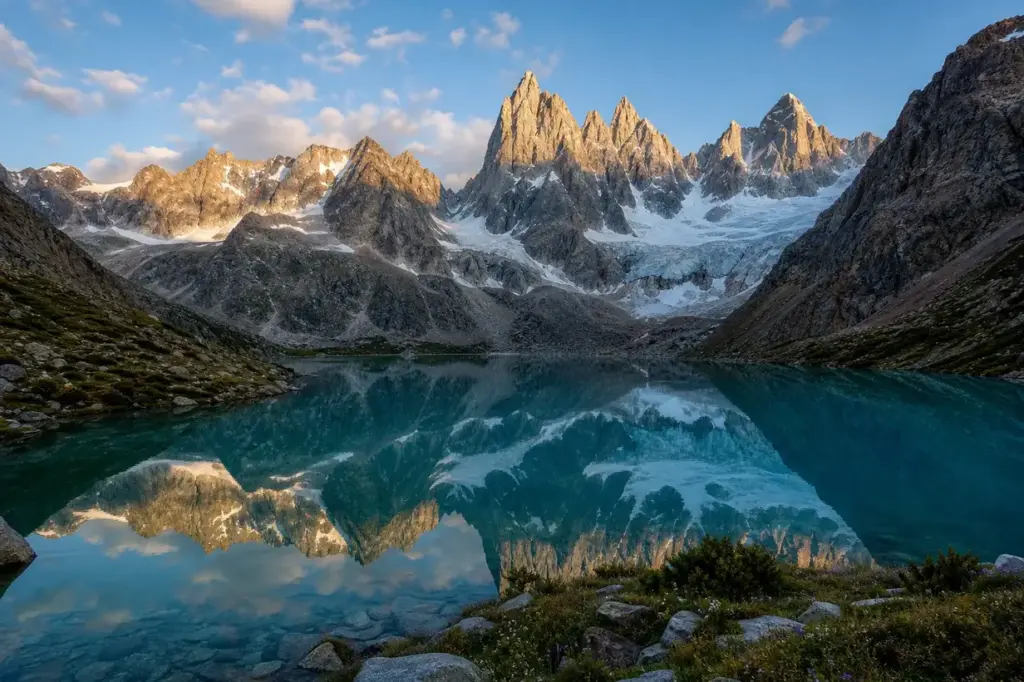
Multinskiye lakes are located on the northern slope of Katunsky ridge in the Altai Mountains, on the territory of Ust-Koksinsky district of the Altai Republic. This cascade of alpine lakes sits high in the mountains, situated at about 1,700 meters above sea level in the Multa River basin. The Multinsky Lakes are a remote trekking destination where the unique nature, protected plants and animals have been preserved—a world apart from everyday civilization.
The largest of the Multinskiye lakes are the Verkhneye (Upper), Sredneye (Middle), Nizheneye (Lower) and Poperechnoye (Cross-sectional). Overall, there are more than 40 of these lakes. Most visitors focus on three main lakes, each separated by forested terrain and mountain passes, accessible only by organized tour or with local guides.
Current access notice: For foreigners it's a bit of a pain to get the paperwork done as you need an extra border pass to visit the Multinsky Lakes, as the area is near the Russian border. As of October 2026: International visitors require a special permit for border-zone travel in the Ust-Koksinsky district. Check with your tour operator or the Altai Republic border administration well in advance of your trip.
Quick Facts
| Russian name | Мультинские озёра |
|---|---|
| Address | Ust-Koksinsky District, Altai Republic Google MapsApple MapsYandex Maps2GIS |
| District | Ust-Koksinsky |
| Admission | free |
| Best time to visit | Summer (June–August) is the only practical season, when snow melts and trails are passable. July and August see the warmest weather and most daylight but also the most tourists. Early June and late August offer smaller crowds and still-good weather.
July–August temperatures range from +15–20°C at lake level to +5–10°C in early morning and evening. Snow can fall even in summer at higher elevations. Winter access is not practical for regular trekking; lakes freeze, roads become impassable, and specialized mountain skills are required. |
| Recommended duration | 5–7 days |
What Is (and Isn't) Part of a Visit to Multinsky Lakes, Altai Mountains?
| Part | Status | Notes |
|---|---|---|
| Lower, Middle, and Upper Multinsky Lakes | Included in the standard ticket | The three main lakes accessible on standard treks; free to visit but require organized tour access. |
| Forest trail system and Shumy waterfall area | Included in the standard ticket | Public alpine trails connecting the lakes; part of the trekking route. |
| Tourist camp at Lower Lake | Separate ticket or institution | Accommodations, meals, and services at the base camp require separate booking with the tour operator or resort. |
| Lake Kuyguk and high-altitude lakes | Separate ticket or institution | Extended treks to these lakes require separate multi-day guided packages; not included in day-hike access. |
| Belukha Mountain | Outside / not part of it | Visible from the Multinsky Lakes but located 60 km away; reaching it requires a separate climbing expedition. |
| Katun Nature Reserve boundary | Separate ticket or institution | The area around Upper Multa Lake is part of the Katun Nature Reserve. The Upper Lake and surrounding area may have restricted access; confirm with local authorities. |
Why Visit Multinsky Lakes, Altai Mountains?
In good weather, you can see Belukha Mountain, the highest point of Altai, from the shores of Multinskie Lakes. From Nizhneye Lake it is only 60 km and some tourists combine vacation on the lakes with climbing Belukha.
The lakes offer pristine alpine scenery: the lake’s mirror-like surface, 2370 meters long and up to 900 meters wide, reflects floating clouds and peaks of nearby mountains in calm weather. The trail passes through Shumy—an isthmus between the Lower and Middle lakes, formed by huge boulders up to 20 m in diameter. Water breaks through this dam, creating a contrast to the quiet surface of the two lakes.
How Multinsky Lakes, Altai Mountains Is Laid Out
The nearest settlements to the lakes are the villages of Multa and Maralnik-1. All the routes to the lakes usually pass through them. The road to the mountain lakes starts there, a 13-km windy route through the forest. Tourists usually go there either on foot or order a transfer by truck or SUV. It is impossible to pass with an average car.
You have to walk about 4 km along the forest path along the shore to get to the next lake, Sredneye Lake. These lakes are separated by the Shumy waterfall, formed of large boulders. It is unreal to see all the lakes in one day, they are several kilometers away from each other and through narrow mountain passes.
Visitors typically base themselves at the Lower Lake, with day hikes to the Middle and Upper Lakes taking 4–8 hours each. Tourist camps and simple accommodations exist at the Lower Lake; hikers on longer treks camp or use mountain shelters.
Highlights of Multinsky Lakes, Altai Mountains
Lower Multinsky Lake (Nizhneye)
The lake is located at an altitude of 1710 meters. The lake's mirror-like surface, 2370 meters long and up to 900 meters wide, reflects floating clouds and peaks of nearby mountains in calm weather. This is the most accessible lake and often the base for further exploration. The Lower Lake sits in a wide valley and offers the most stable campground.
Tip: Arrive early if staying overnight; campsites fill quickly during high season (July–August).
Middle Multinsky Lake (Sredneye)
You have to walk about 4 km along the forest path along the shore to get to the next lake, Sredneye Lake. Accessed from the Lower Lake by a scenic forest walk, the Middle Lake sits at a slightly higher elevation and offers similar turquoise water. The trail passes through Shumy—an isthmus between the Lower and Middle lakes, formed by huge boulders up to 20 m in diameter. Water breaks through this dam, creating a contrast to the quiet surface of the two lakes.
Tip: Rent a speedboat across the Lower Lake from the tourist camp to save a 1.5-hour walk.
Upper Multinsky Lake (Verkhneye)
It is located at an altitude of 1860 m, in a deep rocky circus near the lower border of the tar glacier. In front of you is a huge, emerald lake, which is guarded by snowy mountains. The valley is decorated with mountains with glaciers, at the foot of which there is a huge lake. A steep climb of 3–4 hours from the Middle Lake.
Tip: Day-hike from the Middle Lake and return before dark, or plan an overnight camp at the Upper Lake if equipped.
Shumy Waterfall and Boulder Field
The trail passes through Shumy—an isthmus between the Lower and Middle lakes, formed by huge boulders up to 20 m in diameter. Water breaks through this dam, creating a contrast to the quiet surface of the two lakes. This dramatic narrow passage, marked by the roar of rushing water, makes for memorable photos and an important waypoint.
Tip: Shumy is best crossed in calm weather; strong water flow makes crossing difficult and dangerous during heavy snow melt.
Lake Kuyguk (Emerald Lake)
In this tour we will show the amazing Multin lakes, the incredible emerald lake Kuyguk. The color of the water is incredible turquoise. It feels like someone painted this lake with the most beautiful watercolor paints. Kuyguk lies at higher elevation and requires a more challenging trek but offers stunning alpine views.
Tip: Kuyguk is often included in longer multi-day treks and requires pre-planning; it is not easily reached from a day-hike base.
Belukha Mountain Viewpoint
In good weather, you can see Belukha Mountain, the highest point of Altai, from the shores of Multinskie Lakes. From Nizhneye Lake it is only 60 km and some tourists combine vacation on the lakes with climbing Belukha. The peak is visible on clear days from elevated vantage points around the Upper Lake.
Tip: Bring high-quality binoculars or telephoto lens to photograph Belukha; the peak appears as a white triangle on the horizon.
Kolban Peak
The highest scalable peak at the Multinskye Lakes accessible to hikers is Mt Kolban at 3150m. A strenuous day ascent from Upper Lake offering panoramic views of the entire lake system and surrounding ranges.
Tip: Kolban requires mountaineering experience; hire a local guide and start at dawn to finish in daylight.
Atmosphere
The Multinsky Lakes feel deeply remote. The first day of travel by truck through muddy forest roads heightens the sense of entering wilderness. Once at the lakes, silence dominates—only wind through pines, the calls of alpine birds, and the distant roar of waterfalls break the quiet.
Daylight shapes the atmosphere dramatically. Early morning brings mist rising from the turquoise water and sharp alpine light. Midday brings crowds to prime viewing spots and photo locations, but numbers remain modest compared to lowland trekking routes. Evening transforms the landscape: glaciers and peaks glow amber and rose as shadows deepen. Stars are brilliant at night, unobstructed by light pollution.
In summer (July–August), small groups of trekkers and climbers occupy campsites, creating a convivial atmosphere around campfires. Weather can change abruptly: warm sunny afternoons give way to sudden fog and cold rain. The landscape feels alive and demanding, requiring respect and preparation rather than casual day-tripping.
Legends and Myths about Multinsky Lakes, Altai Mountains
Belukha's Sacred Presence
Legend – historically unreliable. In good weather, you can see Belukha Mountain, the highest point of Altai, from the shores of Multinskie Lakes. From Nizhneye Lake it is only 60 km and some tourists combine vacation on the lakes with climbing Belukha. In Altai tradition, Belukha is a sacred mountain, home to spirits and cosmic energy. Locals say that to glimpse the peak from the Multinsky Lakes is a sign of spiritual blessing.
The Glacial Birth of the Lakes
Legend – historically unreliable. Local guides speak of how the Multinsky Lakes were carved by glaciers during the Ice Age, their turquoise color arising from glacial silt suspended in the water. Over centuries, the glaciers retreated to high elevations but left behind their crystalline lakes as monuments to their passage.
Tickets and Booking for Multinsky Lakes, Altai Mountains
| Ticket | Price | Includes |
|---|---|---|
| Group trek to Multinsky Lakes (3–5 days) | ₽₽ | Transport from village of Multa, guide, camping or hut accommodation, meals, transfer back |
| Individual hike access (no guide) | Free | Access to public trails; camping permitted |
| Tourist camp accommodation and meals | ₽₽ | Overnight stay at Lower Lake camp, meals, use of facilities |
| Speedboat transfer across Lower Lake | ₽ | One-way boat ride from Lower to Middle Lake |
₽ budget · ₽₽ moderate · ₽₽₽ upscale · ₽₽₽₽ splurge. Price levels are estimates compared with typical prices for visitors.
Access to the Multinsky Lakes is best arranged through authorized tour operators based in Gorno-Altaysk or nearby towns. Independent visitors can arrange accommodation and transport through the tourist camp at the Lower Lake, but international visitors must obtain a special border permit in advance—this cannot be done on arrival.
- Tour operators typically offer 3–8 day trekking packages that include transport from Gorno-Altaysk or Barnaul, mountain vehicle transfer from the village of Multa, accommodation, meals, and guides.
- Permits: Contact the Altai Republic border administration or your tour operator 30–60 days ahead to arrange border-zone paperwork for international visitors.
- Season and availability: Tours operate primarily June through September; dates open as weather permits. Book 2–4 weeks in advance for mid-summer travel.
- Same-day access: Not possible; minimum 3-day trek recommended; single-day visits are impractical given the 13 km forest drive and walking distances.
Russian citizens and residents pay different rates and may have fewer permit restrictions. Check the Altai Republic tourism portal for current tour operator listings and booking procedures.
Suggested itineraries Multinsky Lakes, Altai Mountains
3 days
Day 1: Travel from Gorno-Altaysk to village of Multa (5–6 hours by road). Day 2: 4×4 truck transfer to Lower Lake (2 hours), walk to Middle Lake and back (4–5 hours). Day 3: Day walk to Upper Lake or explore lakeside. Return by truck to Multa village for evening departure.
5 days
Day 1: Travel to Multa village. Day 2: Truck to Lower Lake, forest walk to Middle Lake. Day 3: Day hike to Upper Lake or Shumy waterfall area. Day 4: Rest day at camp or explore side trails; optional horseback riding. Day 5: Return to Gorno-Altaysk.
7 days
Day 1: Travel to Multa village. Day 2: Truck to Lower Lake base. Days 3–5: Trek to Middle, Upper, and potentially Kuyguk Lake or Mount Kolban. Day 6: Rest and photography day. Day 7: Return journey to Gorno-Altaysk.
How to Get to Multinsky Lakes, Altai Mountains
From Gorno-Altaysk (375 km away): There is a public bus from Barnaul, Biysk and Gorno-Altaisk (travel time 9-14 hours) along the famous Chuisky tract, one of the most picturesque roads in Russia, to the village of Multa. From Multa village, organized tours provide 4×4 vehicle transfers for the 13 km forest road to the lakes; private cars are not suitable for this route.
Alternative route: Stage length: 375 km from Gorno-Altaysk, 640 km from Barnaul, 825 km from Novosibirsk by minibus. Tour operators arrange transport from major regional airports and city centers.
All visits require booking through a tour operator or the local tourist camp; independent drop-off is not available. International visitors must complete border-zone permit paperwork in advance.
Accessibility
The Multinsky Lakes are not wheelchair accessible. The 13 km forest road to the trailhead requires high-clearance 4×4 vehicles. Trails are unmaintained mountain terrain with steep sections, boulders, and river crossings. Physical fitness and trekking experience are essential.
Visitors with mobility concerns should discuss options with tour operators, as some shorter variants and horseback-riding options may be available. No formal accessibility information is published by local authorities.
Food Nearby
No restaurants or shops exist at the lakes. Upon arrival, we are accommodated in tents on the territory of the recreation center in the village of Multa. Tour packages include meals prepared at base camps by guides. Independent trekkers must bring all food and water purification supplies. The tourist camp at Lower Lake may offer basic provisions and hot tea.
In the village of Multa and nearby Maralnik-1, small shops and simple cafes serve locals but may have limited supplies; stock up in Gorno-Altaysk before departing.
What to Bring
Essential gear: warm layers (fleece, down jacket), rain waterproof jacket and pants, trekking boots with ankle support, wool socks, hat, gloves, high-SPF sunscreen. The air temperature in the early morning and late evening is +8…+12C. Bring a headlamp, first-aid kit, blister treatment, and altitude-sickness medication if prone.
Pack high-calorie snacks (nuts, chocolate, energy bars). Carry a water bottle and water purification tablets; glacial water requires treatment. A lightweight sleeping bag (rated to freezing) is essential if camping. Trekking poles reduce knee strain on steep descents.
Bag policy: Pack light; guides or hired horses can carry group equipment. Carry valuables in a money belt.
Best Views and Photo Spots of Multinsky Lakes, Altai Mountains
Lower Multinsky Lake shoreline at sunrise
Turquoise water mirrors sharp alpine peaks and early-morning sky; mist rises from the lake surface. The vast mirror-like lake stretches 2370 m with dark forest framing both shores. Best with polarizing filter.
Best time: Early morning (05:00–07:00) when mist is present and light is warm; shoot into the light for silhouette effects.
Shumy waterfall and boulder field from upstream
Dramatic massive boulders frame roaring water between Lower and Middle lakes. Misty spray and churning white water contrast with dark stone and pine forest. Creates dynamic action shots.
Best time: Midday for clear light through mist; July–August when water flow is highest from snow melt.
Upper Multinsky Lake with Belukha peak on horizon
Rocky cirque with glacier visible at lake's far end; distant white peak of Belukha appears on the horizon. Alpine meadow in foreground with wildflowers (July–August). Wide depth from meadow to mountains.
Best time: Mid-afternoon when Belukha peak is illuminated and clouds have cleared; requires clear weather and binoculars to resolve distant peak.
Middle Lake from northern shore looking toward peaks
Emerald water reflects jagged mountain silhouettes and glaciers. Foreground includes low alpine vegetation and boulders. Intimate framing of peaks above water.
Best time: Late afternoon when peaks catch golden light (17:00–19:00); shadows define mountain relief.
Lake Kuyguk at midday (if accessible on trek)
Intense turquoise water in glacier-carved basin surrounded by bare rock and scree slopes. Contrast between vivid water color and monochrome stone creates striking color study.
Best time: Midday overhead light for saturation of turquoise color; overcast skies reduce reflections and emphasize water hue.
Photography Rules
Photography is not restricted. Bring a versatile zoom lens (24–70mm and 70–200mm) for landscape and wildlife. A tripod is useful for sunrise/sunset shots but heavy; consider a compact travel tripod. Polarizing filters reduce reflection glare from water and glaciers. Protect electronics from cold, moisture, and sand; bring lens cleaning supplies. Drone flying may be restricted near nature reserves; inquire locally.
Family Suitability
Minimum age: 12 years old for organized treks, though fitness and experience vary by individual. The 13 km forest road is rough; young children may find it uncomfortable. Trail hiking involves steep climbs, boulder fields, and creek crossings unsuitable for toddlers and non-hikers.
Strollers and prams are impractical. Families with children aged 12+ in good fitness can participate in shorter 3-day treks to Lower and Middle Lakes. Younger or less athletic children may enjoy the base camp and short walks without ascending to higher lakes.
Tour operators can advise on family-friendly variants and horseback options for lighter hiking days.
Russia Vibes Tips
- Book border permits 4–6 weeks ahead: International visitors cannot skip this step. Contact the Altai Republic border administration or ask your tour operator to handle it; last-minute applications often fail.
- Arrive at the Lower Lake on Day 2, not Day 1: Most tours depart Gorno-Altaysk in the morning and reach the lake by early afternoon. Rushing to Middle Lake on arrival day is exhausting and affects acclimatization. Rest and explore locally on Day 2.
- Rent a speedboat across Lower Lake to save 1.5 hours: The walk around the lower shore is scenic but long. One-way boat transfer leaves more time for exploring Middle and Upper Lakes.
- Pack sunscreen and shade: At 1700–1860 m elevation with reflection off water and snow, UV exposure is severe. Reapply frequently; glacier and rock glare accelerates burning.
- Expect weather changes daily: Morning sun turns to afternoon cloud and sudden rain. Carry rain gear even on clear departures. Wind picks up in late afternoon; start day hikes by 07:00.
- Don't skip acclimatization on Day 2: The elevation change is moderate but noticeable for lowland visitors. Spend the first full day at Lower Lake with short walks rather than pushing to Upper Lake immediately.
Explore Nearby Multinsky Lakes, Altai Mountains
Related guides
 Altai Mountains: Best Places, Scenic Routes and Travel Tips
Main image: AI-generated illustration. It may not show the place exactly as it looks.
 Kucherla Lake: Trekking Gateway to Mount Belukha
Main image: AI-generated illustration. It may not show the place exactly as it looks.
Browse more: More in Ust-Koksinsky · All Altai Mountains · All Parks · All Sightseeing · All Sightseeing in Altai Mountains
FAQ: Multinsky Lakes, Altai Mountains
Do I need a special permit to visit the Multinsky Lakes?
For foreigners it's a bit of a pain to get the paperwork done as you need an extra border pass. International visitors require a border-zone permit from the Altai Republic authorities. Apply 4–6 weeks ahead through your tour operator or contact the border administration directly. Russian citizens typically do not need this permit.
Can I visit the lakes independently without a guide?
Technically yes, but impractical. Explorers were discouraged by a lack of information resources about available tracks, maps and guidebooks plus the need to secure special access permits. Therefore they chose to explore the area around the Multinskye Lakes near Ust-Koksa with a guide. Tours handle permits, transport, and logistics; independent travel requires solving these alone.
How do I get from the village of Multa to the lakes?
The road to the mountain lakes starts there, a 13-km windy route through the forest. Tourists usually go there either on foot or order a transfer by truck or SUV. It is impossible to pass with an average car. Tours include 4×4 vehicle transfer; the drive takes 2–3 hours.
What is the altitude and will I experience altitude sickness?
The lake is located at an altitude of 1710 meters. For example, Lake Kuiguk is situated at the height of 2200 meters. Most people adjust fine, but anyone prone to altitude sickness should acclimatize on Day 2 before ascending higher.
When is the best time to visit?
June through September, with July and August offering the warmest weather and most daylight but also more tourists. Early June and late August have smaller crowds. Winter is not viable for standard trekking.
How much hiking is involved each day?
Day hikes typically cover 8–12 km with significant elevation gain and loss. Expect 4–8 hours of walking daily depending on route. Fitness requirements are moderate to high; trail experience is helpful.
Can I see Mount Belukha from the Multinsky Lakes?
In good weather, you can see Belukha Mountain, the highest point of Altai, from the shores of Multinskie Lakes. From Nizhneye Lake it is only 60 km and some tourists combine vacation on the lakes with climbing Belukha. You cannot reach Belukha as part of a standard lake trek; it requires a separate expedition.
What accommodation options exist?
At the Lower Lake, tour operators run a base camp with tents or wooden huts and meals included. Higher lakes require camping with a tent and sleeping bag. No hotels or hostels exist at the lakes themselves.
Russia Vibes is a one-person project. A coffee keeps it going
How we research and update our guides
About this guide: AI assistance and accuracy
This guide is created with the help of AI and is based on official sources where available. Mistakes can still happen. Opening hours, prices, rules and other details are given to the best of our knowledge as of the date shown and can change without notice. It offers general recommendations only, not professional, legal or travel advice. Please confirm important details with the official source before you travel; you are responsible for your own plans and decisions.
Packing for this trip
* Affiliate link: as an Amazon Associate we earn from qualifying purchases at no extra cost to you.

Take this guide with you
Get a free PDF of this guide to print or read offline: key facts, tips and a map link on a few clean pages.
Report an issue on this page
Paying for your trip: please read
International sanctions affect payments between Russia and many other countries. In practice, cards issued in the EU, the UK, the US and several other countries often do not work in Russia, Russian cards usually do not work abroad, and some booking platforms, airlines and payment providers limit or suspend their services for Russia. The situation changes frequently.
We do not give legal or financial advice, and this site does not encourage anyone to break or circumvent sanctions. Whatever you plan, you are responsible for following the laws and regulations that apply to you, including those of your country of residence and citizenship.
Many travelers still organise their stay lawfully. It is worth asking your bank or payment provider what is currently permitted, contacting hotels, tour operators and carriers directly about the payment methods they accept, and checking which services are open to customers from your country. Clarify payment, cancellation and refund terms before you commit to a booking, and keep your plans flexible.
Partner links on this site may not be available in every country, and prices, availability and rules in our guides can differ from what you see when you book.