
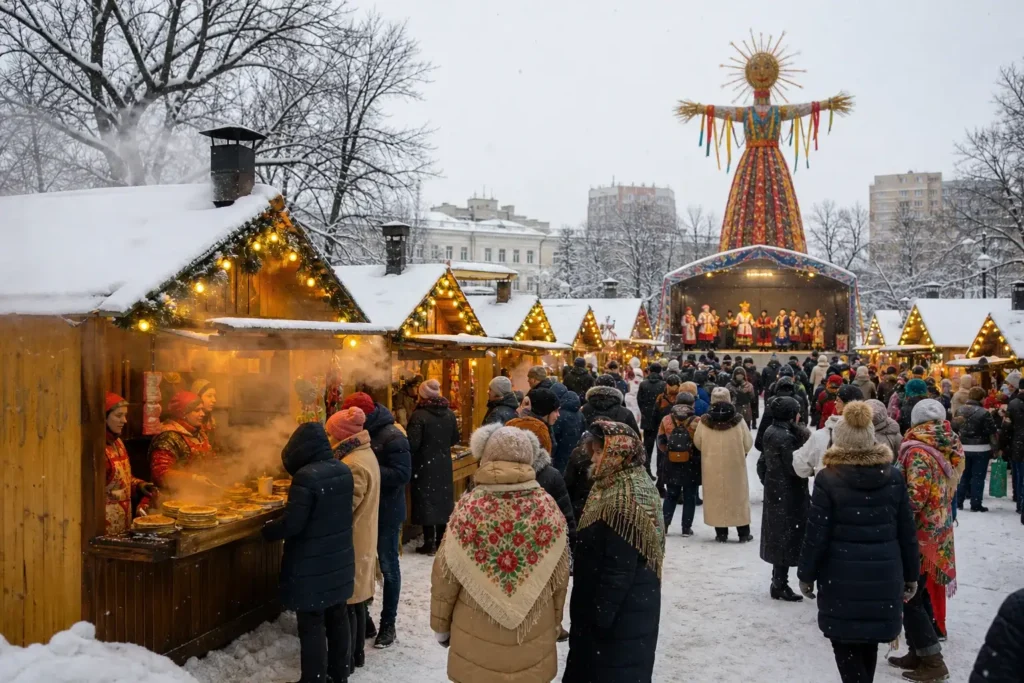
Maslenitsa Celebrations, Saint Petersburg, mark the week before Orthodox Great Lent, when the city says goodbye to winter with pancakes, folk music and street games. The date moves each year, falling in late February or March.
Celebrations are held in parks and squares across the city, and the sites change from year to year. This page explains the customs, what a visitor can expect and how to plan a day. Check the official city announcements for the current edition.
Quick Facts
| Russian name | Масленица в Санкт-Петербурге |
|---|---|
| Type | Recurring event |
| When | Every year in the week before Orthodox Great Lent, usually in late February or March. The date moves with the date of Orthodox Easter. |
| Typical duration | One week, with the main events on the weekends |
| Public holiday | No, an observance (regular working day) |
| Address | Площадки по всему городу, меняются каждый год (venues across the city change each year) |
| District | Tsentralny |
| Admission | Open-air events are generally free. Food and drinks at stalls cost extra (₽). |
| Best time to visit | Go in the afternoon on a weekend, when the programme is fullest and the effigy is burned on the last day. The weather is often cold or wet, so check the forecast. |
| Last updated | October 17, 2026 |
Dates, programs and prices change from year to year. Always check the official website for the current edition.
Why Visit Maslenitsa Celebrations, Saint Petersburg?
- Pancakes everywhere: blini are the food of the week and are sold at stalls across the city.
- Folk traditions: music, songs, games and costumes in the open air.
- The burning of the figure: a straw effigy of winter is burned on the last day.
- A city-wide event: many parks and squares host their own programme.
- A winter-to-spring moment: a good time to see locals outdoors after the cold months.
What to Expect at Maslenitsa Celebrations, Saint Petersburg
Maslenitsa follows a familiar pattern. Stalls sell pancakes with sour cream, jam, caviar or other fillings, and tea from large samovars. Folk groups play and sing, and children take part in games and contests.
The week ends on Forgiveness Sunday, the last day before Lent, when a straw figure called Maslenitsa is burned and people ask each other’s forgiveness. Venues, programmes and the exact order of events vary by year, so check the official announcement for the current edition.
Highlights of Maslenitsa Celebrations, Saint Petersburg
Pancakes and tea
Blini are the centre of the celebration. They are round and golden, a symbol of the returning sun, and are served at stalls with a range of fillings. Tea from a samovar is the usual drink.
Stalls and menus vary by venue.
Tip: Try a plain pancake with sour cream first, then a filled one.
Folk music and games
Stages and open areas host folk groups, dancing and games. Some are for children, such as tug-of-war or climbing a pole, and many invite visitors to join.
Programmes vary each year.
Tip: Stay for the afternoon programmes, when more groups perform.
The burning of the effigy
On the last day, a large straw figure is burned, symbolising the end of winter. The ceremony is the climax of the week.
The time and place vary by venue.
Tip: Arrive early to find a place near the fire.
Park and square venues
Events are held in city parks and squares, and the main site differs each year. In earlier centuries, Admiralty Meadow and other central spaces hosted the big fairs.
Check the official announcement for the current sites.
Tip: Choose a venue near a metro station to avoid long walks in the cold.
Historic echoes
The Shrovetide fair of 19th-century Saint Petersburg, with booths and ice hills, is the setting of Stravinsky's ballet Petrushka. The modern celebration is smaller but recalls that tradition.
This is background rather than a sight to visit.
Tip: Read a short note on Petrushka before you go for context.
What It Means for Your Visit
The celebrations mostly affect parks and squares. Crowds are large on the weekends, especially at the main venues, and nearby streets may be closed for events. Cafes and stalls are busy, and queues form for pancakes.
It is not a public non-working day, so shops and museums keep their usual hours. Check the official announcements for the current edition and dress for cold weather.
Atmosphere
The mood is warm and noisy against the cold. Steam rises from the pancake stalls, accordion music carries across the snow and children in boots run between the booths. People wear thick coats and bright scarves, and the smell of frying butter hangs in the air.
As the afternoon goes on, the crowd gathers around the stage and then the fire. The burning of the figure draws a hush and then cheers, and people drift away with warm hands and full stomachs.
History of Maslenitsa Celebrations, Saint Petersburg
Maslenitsa has its roots in an old Slavic spring festival, later merged with the Orthodox calendar as the last week before Great Lent. During that week, meat is no longer eaten, but dairy foods, including pancakes, are allowed.
In Saint Petersburg in the 18th and 19th centuries, Shrovetide fairs were held on large squares such as Admiralty Meadow, with booths, ice hills and shows. The fair is the setting of Stravinsky’s ballet Petrushka, first staged in 1911.
In the Soviet period, the religious meaning faded, and the week became a secular folk holiday. After the 1990s, Maslenitsa returned as a public celebration with folk programmes and food.
Today the city and its districts hold events in parks and squares, and the sites and programmes change each year.
Tickets and Booking for Maslenitsa Celebrations, Saint Petersburg
Most open-air events are free, and no tickets are needed to walk around. Food, drinks and some activities are paid. Details change by year, including venues and programmes, so check the official announcements before you go.
- Where to check: the official city and district announcements for the current edition.
- Lead time: no booking is usually needed for outdoor events.
- Payment: the sanctions rules of your own country may limit the use of some Russian payment services, so check this yourself. Carry some cash for small stalls.
Rates for any ticketed programmes differ for Russian citizens and foreign visitors; see the city government portal (gov.spb.ru) for the current programme.
Get Tickets for Maslenitsa Celebrations, Saint Petersburg
How to Get to Maslenitsa Celebrations, Saint Petersburg
Sites vary by year, but central venues are common.
- Admiralteyskaya (Line 5): for sites near Palace Square and the Admiralty.
- Nevsky Prospekt (Line 2) and Gostiny Dvor (Line 3): for sites along Nevsky Prospekt.
- Check the venue: confirm the address in the current announcement.
See How to Use the Metro, Saint Petersburg.
Food Nearby
Stalls at the venues sell pancakes, tea and snacks. Cafes nearby offer sit-down options with a warm interior. For sit-down options see Best Restaurants, Saint Petersburg.
What to Bring
Warm layers, waterproof boots, gloves and a hat. Carry some cash for small stalls.
Best Views and Photo Spots of Maslenitsa Celebrations, Saint Petersburg
The pancake stalls
Rows of stalls with steam and warm lights.
Best time: Late afternoon
The folk stage
Costumed groups against a snowy background.
Best time: Afternoon
The burning of the effigy
A tall straw figure on fire with a crowd around.
Best time: Sunday evening
Photography Rules
Photography is free in public areas. Be polite when photographing people, especially performers. Drones are not allowed in the centre.
Family Suitability
Very good for families, with games, food and a festive mood. Dress children warmly. Strollers can be difficult on snowy paths.
Russia Vibes Tips
- Check the date each year, as Maslenitsa moves with Orthodox Easter.
- Go on the final Sunday to see the burning of the figure.
- Try different fillings, as stalls compete with unusual combinations.
- Pick a venue in the centre if you have a short stay.
- Carry a warm drink in a flask; queues for hot tea are long.
Explore Nearby Maslenitsa Celebrations, Saint Petersburg
Sights near Maslenitsa Celebrations, Saint Petersburg
 Palace Square, Saint Petersburg · typical visit: 30–60 minutes, more with the Hermitage
Main image: AI-generated illustration. It may not show the place exactly as it looks.
 Nevsky Prospekt, Saint Petersburg · typical visit: 2–4 hours for the main stretch; a full day with stops
Main image: AI-generated illustration. It may not show the place exactly as it looks.
Related guides
 Winter Itinerary, Saint Petersburg: Museums and Palaces in the Cold
Main image: AI-generated illustration. It may not show the place exactly as it looks.
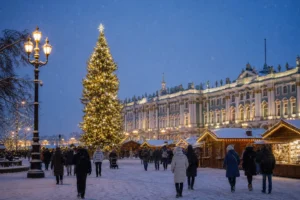 Best Winter Activities, Saint Petersburg: 9 Ideas for Cold Days
Main image: AI-generated illustration. It may not show the place exactly as it looks.
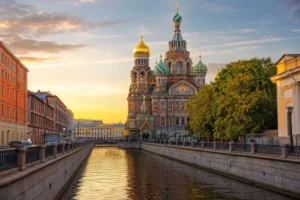 Tsentralny District, Saint Petersburg: Churches, Museums, Nevsky
Main image: AI-generated illustration. It may not show the place exactly as it looks.
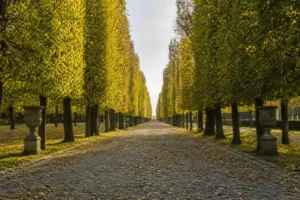 Best Parks and Gardens, Saint Petersburg: 8 Green Escapes in the City
Main image: AI-generated illustration. It may not show the place exactly as it looks.
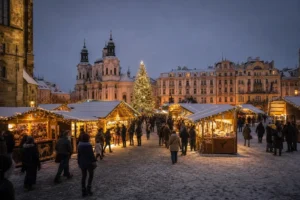 Saint Petersburg Christmas Market: What to Expect in Winter
Main image: AI-generated illustration. It may not show the place exactly as it looks.
Browse more: More in Tsentralny · All Entertainment · All Events & Holidays · All Events & Holidays in Saint Petersburg · All Saint Petersburg
FAQ: Maslenitsa Celebrations, Saint Petersburg
When is Maslenitsa?
In late February or March, in the week before Orthodox Great Lent. The date moves each year.
What is eaten?
Pancakes (blini) with fillings such as sour cream, jam or caviar.
Is it a public holiday?
No, it is a traditional observance, not a non-working day.
What is burned on the last day?
A straw figure that stands for winter.
Are the events free?
Most open-air events are free; food costs extra.
Where are the events held?
In parks and squares around the city; sites change each year.
Is it the same as Orthodox Christmas?
No, it comes before Lent in late winter.
Is it good for children?
Yes, with games and food.
Russia Vibes is a one-person project. A coffee keeps it going
Last updated: October 17, 2026.
How we research and update our guides
About this guide: AI assistance and accuracy
This guide is created with the help of AI and is based on official sources where available. Mistakes can still happen. Opening hours, prices, rules and other details are given to the best of our knowledge as of the date shown and can change without notice. It offers general recommendations only, not professional, legal or travel advice. Please confirm important details with the official source before you travel; you are responsible for your own plans and decisions.
International sanctions affect payments between Russia and many other countries. In practice, cards issued in the EU, the UK, the US and several other countries often do not work in Russia, Russian cards usually do not work abroad, and some booking platforms, airlines and payment providers limit or suspend their services for Russia. The situation changes frequently. We do not give legal or financial advice, and this site does not encourage anyone to break or circumvent sanctions. Whatever you plan, you are responsible for following the laws and regulations that apply to you, including those of your country of residence and citizenship. Many travelers still organise their stay lawfully. It is worth asking your bank or payment provider what is currently permitted, contacting hotels, tour operators and carriers directly about the payment methods they accept, and checking which services are open to customers from your country. Clarify payment, cancellation and refund terms before you commit to a booking, and keep your plans flexible. Partner links on this site may not be available in every country, and prices, availability and rules in our guides can differ from what you see when you book.Paying for your trip: please read
Report an issue on this page

Take this guide with you
Get a free PDF of this guide to print or read offline: key facts, tips and a map link on a few clean pages.