
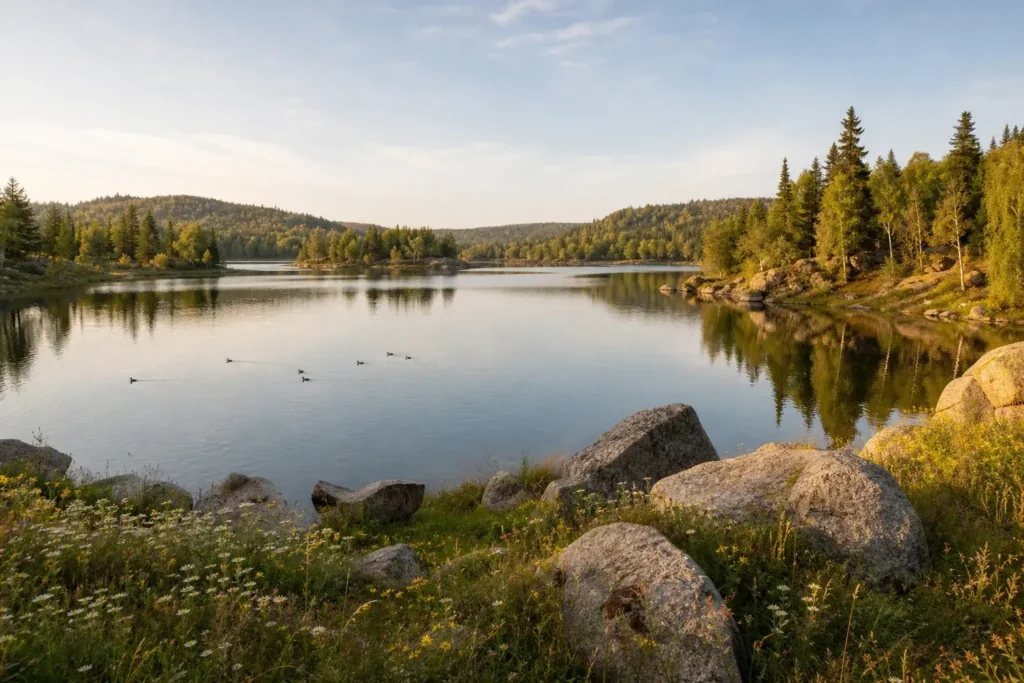
Lakes and Nature Around Yekaterinburg is built for outdoor enthusiasts, photographers, and anyone seeking forest air and water within reach of Russia’s fourth-largest city. The itinerary assumes a relaxed pace—mornings on the water, afternoons in wooded parks—and takes advantage of Yekaterinburg’s position on a natural watershed that cradles two dozen lakes and reservoirs.
In three days, you will have seen the city’s oldest lake, walked among millennia-old granite boulders, cycled through birch forest, and encountered the landscape that shaped the Urals. The pace is unhurried and mostly free or low-cost; the terrain ranges from paved park trails to quiet forest paths.
Route: 2 stops, about 4.5–7 hours including walking (estimate)
At a glance: Day 1: Explore Shartash Lake's shoreline, visit the Stone Tents granite formations, and enjoy lakeside picnics and swimming. Day 2: Cycle the full perimeter trail around Shartash Lake (12.5 km), stopping at forest viewpoints and the historic Izoplit village. Day 3: Venture to Tavatui Lake north of the city or explore the riverside parks and pond system closer to downtown Yekaterinburg.
Day 1: Shartash Lake and Stone Formations
Begin at Shartash, a bean-shaped, million-year-old lake in Yekaterinburg's Kirovsky district. The morning offers clear water and manageable crowds. Walk the western shore meadows where tame ducks and squirrels approach visitors, then detour inland to the Stone Tents (Shartashskye Kamennye Palatki), ancient granite outcrops that were sacred to Iron Age peoples. Bring a picnic; facilities are scattered but adequate.
- Shartash Lake – Bean-shaped lake with swimming beach and meadows; 12 km shoreline through birch forest (2–3 hours)
- Stone Tents (Shartashskye Kamennye Palatki) – Massive granite boulders and weathered stone formations near the lake; easy walking trails (1–1.5 hours)
- Lakeside picnic area – Open meadows with seating and water access; ducks and squirrels commonly seen (30–45 minutes)
- Verkh-Isetskiy Pond – Smaller pond closer to downtown, accessible by tram; quieter alternative if weather is poor (1 hour)
Tip: Shartash is best visited midweek in summer or early autumn to avoid weekend crowds. Bring sun protection and insect repellent. Water quality is safe for swimming but can be cold even in July; locals recommend noon to 3 p.m. for the warmest hour.
Day 2: Full Lake Cycle and Forest Trail
Today is a full-day bicycle loop around Shartash Lake. The cycle trail is 12.5 km and mostly flat, suitable for leisure cycling, passing through Shartash Forest Park and the small village of Izoplit on the south shore. You'll see deeper forest on the east bank, reedy inlets, and occasional fishermen. The trail is well marked but quiet; bring water and lunch.
- Shartash Lake north shore – Starting point; rental bikes available at park entrance (30 minutes)
- Shartash Forest Park trails – Wooded paths with occasional clearings; scenic forest cycling (2–2.5 hours)
- Izoplit village – Historic settlement on the south shore; small local shops and rest stops (45 minutes–1 hour)
- East shore viewpoint – Forest opens to views of the full lake from the far bank (1 hour)
- Return via west meadows – Completion of the loop; post-cycle swim or picnic possible (1–1.5 hours)
Tip: Rent bikes from the park entrance (budget rate, ₽) or bring your own. The loop is best done clockwise starting north to have the afternoon sun at your back. Parks and trails are free; no ticket required. Weekday visits are quieter. Carry a map or download the trail offline if mobile signal is unreliable.
Day 3: Tavatui Lake or Riverside Parks
Choose between two options: venture north to Lake Tavatui (about 40 km from downtown, a half-day excursion via train or taxi) to see a large, pristine lake known for excellent water quality and a quieter, more rural atmosphere; or stay closer and explore the Iset River dam, downtown ponds, and Kharitonov Garden. Both options are suitable for a morning or afternoon outing before departure.
- Option A – Tavatui Lake – Freshwater lake 40 km north; clean water, pine forest, summer swimming and boating; reachable by train to Tavaturovo station then taxi (4 hours return)
- Option B – Iset River Weir and City Pond – Central dam with gardens and sculptures; riverside walks; free access (1–1.5 hours)
- Option B – Kharitonov Garden – Historic 18th-century estate garden; peaceful shaded paths; moderate entrance fee ₽₽ (1–2 hours)
- Option B – Botanical Garden of Ural Federal University – Tropical greenhouse and outdoor plant collections; indoor/outdoor mix suitable if weather turns (entrance fee ₽₽)
Tip: Tavatui requires advance planning: check train times on the Sverdlovsk Oblast railway website. The journey is worthwhile for pristine nature but leaves little time for the city. Staying close (Option B) allows leisurely afternoon exploration before evening departure. All river sites are free or low-cost and require no ticket purchase in advance.
Russia Vibes Tips
- Shartash Lake is best in summer (June to early September) and autumn (September to early October), when water is warm enough for swimming and insects are manageable. Winter transforms the lake into a frozen landscape suitable for ice skating and cross-country skiing, but hiking and cycling are harder.
- Water quality at Shartash is safe for swimming but can show algae blooms in hot July and August. Early morning (before 10 a.m.) offers calmer water and cooler temperatures. The lake contains fish but no harmful bacteria reported by officials, though some visitors note caution about diving or prolonged immersion.
- Weekend crowds at Shartash can be heavy; Friday afternoons through Sunday draw families and local cyclists. For solitude, visit Tuesday through Thursday morning. Parking fills quickly at peak times; arrive before 10 a.m. if driving.
- The cycling trail around Shartash (12.5 km) is flat and suitable for families, but the south shore near Izoplit becomes muddy after rain. Check weather forecasts before committing to a full loop; partial trails are equally rewarding.
- Bring your own food and water. Lakeside cafés are few and expensive (₽₽₽). Small convenience stores in Izoplit village stock basics but may close early. Picnic supplies are best bought in the city center (budget supermarket chains Magnit or Pyaterochka) before heading to the lake.
- Winter ice on the lake and ponds is typically thick enough for walking by late November but thaws unpredictably in spring. Check with the park office before planning winter activities. Ice skating facilities are available at Shartash and nearby Verkh-Isetskiy Pond in winter months.
Explore Nearby Lakes & Nature Around Yekaterinburg, Yekaterinburg
Browse more: All Itineraries · All Itineraries in Yekaterinburg · All Short Stays · All Yekaterinburg
FAQ
How far is Shartash Lake from downtown Yekaterinburg?
Shartash Lake is about 3 km east of the city center and reachable by tram or taxi in 15–20 minutes from downtown. A metro or tram ticket costs a few rubles. Driving or cycling is also feasible; follow signs to the Kirovsky district.
Is Shartash Lake safe for swimming?
Yes, the water is generally safe and is regularly used by locals for swimming in summer. The lake is fed by underground springs and is typically clean, though algae can appear in very hot weather. Water temperature is coolest in June and July, reaching 18–20°C by August. Check local conditions before visiting in July or August, as algae blooms occasionally form.
Do I need a ticket to visit Shartash Lake?
No, Shartash Lake and the surrounding forest park are free to visit. There are no entrance gates or admission fees. Some facilities like parking, bike rentals, and paid recreation complexes (gazebo and barbecue rental) charge a small fee (₽ to ₽₽), but walking and picnicking are always free.
Can I rent a bicycle at Shartash Lake?
Yes, bike rentals are available at the park entrance on the north shore (budget rate, ₽). The 12.5 km loop around the lake is flat and well-maintained, suitable for casual cyclists and families. Bring your own bike if you prefer; the trail is public and costs nothing to use.
What is the Stone Tents formation and how do I reach it?
Stone Tents (Shartashskye Kamennye Palatki) are ancient granite boulders and outcrops on the shore and inland from Shartash Lake. They were a sacred site for Iron Age peoples and remain a natural monument. Walk inland from the western shore meadows or follow the forest trail on the east side; no ticket is required. The walk is easy and takes 30–45 minutes from the lake edge.
What should I bring for a day at the lake?
Bring sun protection (hat, sunscreen), insect repellent, a full water bottle, and packed lunch (few cafés nearby). If swimming, bring a towel and change of clothes. For cycling the full 12.5 km loop, wear comfortable shoes and bring a repair kit. A light jacket is useful for evening cooling, and a plastic bag for waste (leave no trash).
When is the best time to visit lakes and nature around Yekaterinburg?
Late May to early September offers warm weather, swimming water, and open parks. Autumn (September to early October) has excellent light and fewer insects. Winter (December to early March) transforms lakes into skating surfaces and forests into white landscapes, but requires specialized clothing and is not ideal for casual visits. Avoid mud season in April and late October.
How do I get to Lake Tavatui from Yekaterinburg?
Lake Tavatui is about 40 km north of Yekaterinburg. Take a train to Tavaturovo station (about 1 hour from Yekaterinburg's central station) and then a taxi or local bus to the lake. Alternatively, arrange a guided tour or hire a taxi for the drive. Check train schedules in advance, as services can be infrequent on weekends.
Russia Vibes is a one-person project. A coffee keeps it going
How we research and update our guides
About this guide: AI assistance and accuracy
This guide is created with the help of AI and is based on official sources where available. Mistakes can still happen. Opening hours, prices, rules and other details are given to the best of our knowledge as of the date shown and can change without notice. It offers general recommendations only, not professional, legal or travel advice. Please confirm important details with the official source before you travel; you are responsible for your own plans and decisions.

Take this guide with you
Get a free PDF of this guide to print or read offline: key facts, tips and a map link on a few clean pages.
Report an issue on this page
Paying for your trip: please read
International sanctions affect payments between Russia and many other countries. In practice, cards issued in the EU, the UK, the US and several other countries often do not work in Russia, Russian cards usually do not work abroad, and some booking platforms, airlines and payment providers limit or suspend their services for Russia. The situation changes frequently.
We do not give legal or financial advice, and this site does not encourage anyone to break or circumvent sanctions. Whatever you plan, you are responsible for following the laws and regulations that apply to you, including those of your country of residence and citizenship.
Many travelers still organise their stay lawfully. It is worth asking your bank or payment provider what is currently permitted, contacting hotels, tour operators and carriers directly about the payment methods they accept, and checking which services are open to customers from your country. Clarify payment, cancellation and refund terms before you commit to a booking, and keep your plans flexible.
Partner links on this site may not be available in every country, and prices, availability and rules in our guides can differ from what you see when you book.