
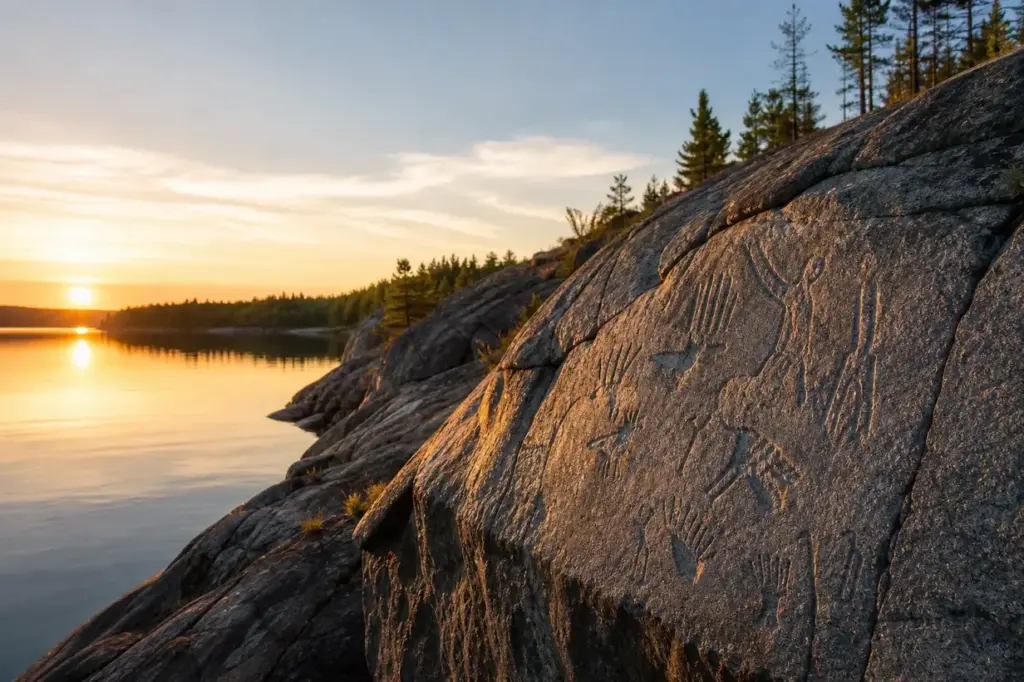
The Lake Onega Petroglyphs are situated in the north-west of Russia in the Republic of Karelia on the eastern shore of the lake. These petroglyphs represent one of the largest independent centres of Neolithic rock art in Europe, dating to between circa 4,500 BCE to 3,500 BCE. The Lake Onega component is part of a larger UNESCO designation: 33 petroglyph sites split between Lake Onega, with 22 sites and more than 1,200 figures in Pudozhsky District, and the White Sea 300 km away with 3,411 figures in Belomorsky District.
The petroglyphs include multi-figure, realistic hunting scenes and have been preserved without later additions, due to being covered by sand deposits. They give observers a sight into the Neolithic culture of Fennoscandia.
Quick Facts
| Russian name | Онежские петроглифы |
|---|---|
| Built / opened | 3000 BCE |
| Address | Eastern shore of Lake Onega, Pudozhsky District, Republic of Karelia Google MapsApple MapsYandex Maps2GIS |
| District | Pudozhsky |
| Admission | free |
| Best time to visit | Summer (June–August) is the optimal season. Daylight is nearly continuous, water is calm and accessible, and weather is most stable. Late May and early September can work but are less reliable.Spring (April–May) and autumn (September–October) are possible but water conditions can be rough and daylight is shorter, making it harder to view and photograph the carvings.Winter is not recommended for tourist visits due to ice, snow and severe weather, though the lake does freeze, theoretically allowing winter access in some years.Weekdays in July and early August offer calmer conditions and fewer other visitors than weekends, though visitor numbers to this remote site are always low. |
| Recommended duration | 3–4 hours |
| Website | whc.unesco.org/en/list/1654 |
What Is (and Isn't) Part of a Visit to Lake Onega Petroglyphs, Karelia?
| Part | Status | Notes |
|---|---|---|
| Lake Onega petroglyph carvings (1,200+ figures across 22 sites) | Included in the standard ticket | Free, open-air archaeological site on the eastern shore. Part of UNESCO World Heritage Site but no official visitor infrastructure or museum on-site. |
| White Sea petroglyphs (3,411 figures, 11 sites) | Outside / not part of it | A separate component of the same UNESCO designation, located 300 km away near Belomorsk. Not part of a Lake Onega visit. |
| Kizhi Pogost wooden churches | Outside / not part of it | A different UNESCO site on an island in Lake Onega, requiring separate boat and museum visit. Often confused with petroglyphs but is a completely separate attraction. |
| Museum or visitor centre at Lake Onega Petroglyphs | Not open to visitors | There is no official on-site museum, visitor centre or entrance fee. The petroglyphs are in open landscape accessible from nearby settlements. |
| Guided tours and boat access | Separate ticket or institution | Local tourism services in Pudozh or Shalsky may arrange boat tours or guides; these are organised privately and not part of an official site administration. |
Why Visit Lake Onega Petroglyphs, Karelia?
The petroglyphs of Lake Onega are located along the eastern shore for 18.5 kilometres, including more than 1,200 figures in 25 groups located at 17 capes and 6 islands. Primitive artists on the shores of Lake Onega most often depicted birds and a little less often animals, with also images of people or supernatural beings. The most famous image is a two-metre petroglyph depicting a humanoid with a rectangular head. Visiting these sites connects you directly to one of northern Europe’s oldest artistic traditions and offers insight into ancient life, belief systems and hunting practices of Neolithic peoples.
How Lake Onega Petroglyphs, Karelia Is Laid Out
The petroglyphs are located along the eastern shore of Lake Onega in 25 groups spread across 17 capes and 6 islands. The most accessible and famous groups are named after geographic features: Besov Nos (Devil’s Nose), Kladovets, Gagazhem, Peri Nos and Gurias island. The entire petroglyph-bearing stretch extends about 18.5 kilometres. Each cape and island holds distinct groupings of carvings; the capes are rocky promontories that rise from the water, while some figures are carved on offshore islands. Most visitor access is focused on the main capes near settlements and accessible by local transport or boat tours.
Highlights of Lake Onega Petroglyphs, Karelia
Besov Nos (Devil's Nose) Cape
The rock at Besov Nos has been nicknamed Devil's Nose by locals, who believe the petroglyphs depict representatives of evil spirits. For several millennia, the petroglyphs remained unchanged, and only in the 19th century did monks of the local monastery decide to 'neutralize' one by carving an Orthodox cross over its left hand, a form in which it appears to researchers and tourists today. This site showcases both the ancient carvings and later cultural layers of modification.
Tip: Approach by boat from Pudozh or Shalsky settlements; the cape is a distinctive rocky headland on the lake's eastern shore.
Kladovets Cape
Petroglyphs are arranged in groups on rocky promontories including Kladovets. This cape contains one of the larger concentrations of figures and hunting scenes, offering a sense of the variety of subjects carved into the rock face.
Tip: Look for the groupings on the cape face; bring binoculars to see details from a safe distance on the shore.
Humanoid with Rectangular Head
The most famous image is a two-metre petroglyph depicting a humanoid with a rectangular head. This distinctive figure is one of the most recognizable carvings at the site and has become iconic in discussions of Neolithic Scandinavian art. Its meaning remains debated among researchers.
Tip: Ask local guides which cape currently shows this figure most clearly; water levels and erosion can affect visibility.
Peri Nos Cape
Petroglyphs are arranged in groups on rocky promontories including Peri Nos. This cape offers another concentration of animal and hunting imagery typical of the Lake Onega petroglyphic tradition, distinct in style from the carvings at nearby capes.
Tip: Combine a visit to Peri Nos with adjacent capes for a fuller picture of stylistic variation across the site.
Gurias Island Figures
Petroglyphs are arranged in groups including on Gurias island. The island location adds a different perspective to viewing the carvings, requiring boat access or shallow-water crossing. The offshore setting may have held spiritual significance for Neolithic peoples.
Tip: Plan an island visit only in calm water and confirm boat access with local services in advance.
Bird and Animal Imagery
Primitive artists on the shores of Lake Onega most often depicted birds and a little less often animals, with also images of people or supernatural beings. The dominance of avian figures suggests strong spiritual or practical connections between Neolithic lake communities and migratory bird populations.
Tip: Study the bird carvings to notice variations in technique and posture; some appear to be in flight, others at rest.
Atmosphere
The Lake Onega Petroglyphs sit on a remote, wind-swept shoreline where ancient rock faces meet the water. In summer, the northern daylight is long and the lake is calm, making the carvings easier to spot and photograph. In winter, ice and snow can obscure or highlight the petroglyphs depending on light and angle. The sites feel isolated and contemplative—there are few visitors and often no facilities. The sound of water lapping against the rocks and the vastness of the lake create a sense of timelessness that connects you to the people who carved these images millennia ago. Local fishing communities and occasional researchers are the main human presence.
History of Lake Onega Petroglyphs, Karelia
The petroglyphs date to between circa 4,500 BCE to 3,500 BCE. They were created about 5–6 thousand years ago, when the territory of modern Karelia was only inhabited by primitive tribes. The carvings were made by striking the rock surface with stone tools, a laborious process that suggests these sites held significant cultural importance. The exact meaning and purpose of the petroglyphs remain subjects of scholarly debate.
It is believed that places with petroglyphs were sanctuaries for the people that created them, where the indigenous inhabitants of Karelia prayed to their gods and, perhaps, offered sacrifices to them. The repeated subject matter—birds, deer, seals, hunters and enigmatic human-like figures—suggests that these capes and islands may have been ritual gathering places or important hunting landmarks.
The petroglyphs have been preserved without later additions, due to being covered by sand deposits. This accidental preservation kept the carvings intact for thousands of years. In the middle of the 19th century, geologist Konstantin Grevingk, a professor at the University of Tartu, discovered the many drawings carved on stones on the east coast of Lake Onega. Since that time, people became aware of the existence of the Onega petroglyphs, one of the main attractions of Karelia.
The petroglyphs received UNESCO World Heritage Site status on July 28, 2021, at the 44th UNESCO World Heritage Committee session. The Karelian petroglyphs became the 31st Russian site on the UNESCO World Heritage List.
Legends and Myths about Lake Onega Petroglyphs, Karelia
Devil's Nose and Evil Spirits
Legend – historically unreliable. Locals believe that the petroglyphs depict representatives of evil spirits, and therefore have nicknamed the rock on which they are depicted, Devil's Nose. The supernatural interpretation may reflect both the site's remote, windswept setting and the mysterious nature of the ancient carvings themselves. The monastic era modification of the humanoid figure with an Orthodox cross may have been an attempt to 'Christianise' or spiritually neutralise the pre-Christian imagery.
Sacred Hunting Grounds and Sanctuaries
Disputed by historians. It is believed that places with petroglyphs were sanctuaries for the people that created them, where the indigenous inhabitants of Karelia prayed to their gods and, perhaps, offered sacrifices to them. The consistent placement of carvings on capes and islands overlooking the water suggests these were not random markings but deliberate records of spiritual or practical importance tied to the hunt and water spirits.
Tickets and Booking for Lake Onega Petroglyphs, Karelia
The Lake Onega Petroglyphs are free to visit. There is no ticket system or official booking required. The sites are outdoors on the lake shore and in open access, but reaching them requires logistical planning.
How to access: Visits are organised through local services in the towns of Pudozh or Shalsky, both on the lake’s eastern shore. Private boat tours, local guides and transport can be arranged through tourism operators in these settlements or coordinated in advance with Karelia tourism services.
Timing: Visit in summer (June–August) when water is navigable, daylight is long and weather is most stable. Spring and autumn crossings are possible but less reliable due to ice and storms. Winter is not recommended for tourist access.
ID: Bring identification. No special permits are required to visit the open sites, but having a photo ID is wise in remote areas.
For official information on the site and any updates to access conditions, visit the UNESCO World Heritage page at whc.unesco.org.
Plan and Book
Suggested itineraries Lake Onega Petroglyphs, Karelia
Half day (3–4 hours)
Start from Pudozh or Shalsky by boat. Visit one or two main capes such as Besov Nos and Kladovets. Spend time examining the carvings from the shore using binoculars or close photography. Return by boat to base town. This plan focuses on the most famous figures and gives a sense of the site without requiring multiple locations.
Full day (6–8 hours)
Arrange a full-day boat tour from Pudozh covering three to four capes (Besov Nos, Kladovets, Peri Nos, and possibly Gurias island). Include time for hiking between some sites on shore if accessible. Pack lunch and water. This allows deeper observation of stylistic variation and fuller appreciation of the landscape setting.
How to Get to Lake Onega Petroglyphs, Karelia
Lake Onega Petroglyphs are located in Pudozhsky District on the eastern shore of Lake Onega. There is no direct public transport or road to the petroglyph sites; access is by boat.
By air and train: Fly or take a long-distance train to Petrozavodsk, capital of Karelia. From Petrozavodsk, hire a car or take a bus to Pudozh (about 200 km, 3–4 hours) or Shalsky (alternative base on the lake shore). These are the main departure points for boat access to the petroglyphs.
From Pudozh or Shalsky: Hire a private boat or join an organised tour. Boat travel takes 1–2 hours depending on which capes you visit. In summer, local tourism services may have regular excursions; in other seasons, advance booking is essential. The lake can be rough; confirm weather and water conditions before departure.
By car: If driving from Petrozavodsk, follow the main highway south towards Pudozh. Base yourself in Pudozh or nearby settlements and arrange boat transport from there.
Accessibility
The Lake Onega Petroglyphs are located on remote, rocky shores with no developed paths, ramps or accessible facilities. Reaching the sites requires boat access and often scrambling over rocks.Mobility: Wheelchair access is not feasible. The terrain is uneven, rocky and exposed. Visitors must be able to climb in and out of boats and walk on uneven ground.Physical requirements: Boat travel across an open lake can be rough. Visitors should be comfortable on water and able to balance in a moving boat. Rock formations vary in height and require careful footing.Facilities: There are no toilets, shelters, benches or water supplies at the petroglyph sites. Visitors must be self-sufficient and bring all supplies needed for the duration of the visit.Weather exposure: Sites are fully exposed to sun, wind and rain. Bring protective clothing and sun protection.
Food Nearby
Pudozh and Shalsky are small towns with limited dining options. Bring packed food, water and snacks for the boat trip and time at the petroglyphs. Small shops in Pudozh sell basic groceries. If taking a guided tour, confirm whether meals are provided or arrange food in advance with the tour operator.
What to Bring
Sturdy hiking boots or boat shoes with grip; a rain jacket; sun protection (hat, sunscreen, sunglasses); insect repellent (especially in early summer); a camera with a telephoto lens or good binoculars to view details from a distance; notebook and pencil for notes; packed lunch and plenty of water. Bring a small waterproof bag for valuables during boat travel. Bag and security checks are not formal but secure your belongings against water spray and rough handling.
Best Views and Photo Spots of Lake Onega Petroglyphs, Karelia
Besov Nos (Devil's Nose) Cape from the water
The famous humanoid figure and surrounding carvings are most clearly visible from a boat or raft positioned offshore at moderate distance. The rocky face of the cape rises steeply from the water, and the petroglyphs catch light best from the water-level perspective.
Best time: Morning light (6–9 am in summer) illuminates the east-facing rocks from the side, creating shadow depth that emphasises the carved relief.
Kladovets Cape rocky face
Multiple groupings of hunting scenes and animal figures crowd the rock face here. Photographing from an angled boat position shows the full composition of several interlinked carvings.
Best time: Mid-morning (9 am–noon) when sun is higher and detail is visible without excessive shadow.
Petroglyph silhouette against sky from shore
Standing on the shore or on accessible rocks, photograph the carvings backlit or side-lit against the water and sky. This emphasises the carved outline and three-dimensionality of the images.
Best time: Late afternoon (4–7 pm) when lower sun angle creates dramatic side-lighting and longer shadows on rock surfaces.
Lake shore landscape with capes in distance
Wide-angle shots of the petroglyph-bearing capes from the boat show the dramatic, isolated setting and scale of the Neolithic artistic tradition across the landscape.
Best time: Overcast days with soft light, or golden hour (early morning or late evening) for warm, even illumination of distant rock formations.
Photography Rules
Photography is allowed and encouraged at the petroglyphs. Bring a telephoto lens or strong binoculars to capture detail from shore without disturbing the rock surfaces. Early morning or late evening light (given the northern latitude's long summer days) provides the best angle for photographing the carved relief. Avoid using flash on close-up rock shots, as glare reduces detail visibility. No tripods, drones or commercial filming are permitted without advance permission from local authorities.
Family Suitability
The Lake Onega Petroglyphs are suitable for families with older children (8+) who are comfortable on boats and uneven terrain. The remote, open-air setting requires self-sufficiency and careful planning. Young children may struggle with the logistics of boat access, long periods without facilities, and the need to stand safely in a moving boat. There are no playgrounds, attractions or activities specifically for children beyond the educational value of seeing ancient rock art. Strollers are not practical. Families with hiking experience and good water comfort are best suited to this visit.
Russia Vibes Tips
- Book boat tours or guides well in advance, especially in July and August. Local operators in Pudozh may have limited capacity and irregular schedules outside peak season. Confirm departure times and group size before travel.
- The most famous petroglyph—the two-metre humanoid with rectangular head—is at Besov Nos, but its exact location and visibility depend on recent erosion and water levels. Ask your guide or local operator which cape currently shows it most clearly.
- Bring a telephoto camera lens or strong binoculars (10x magnification or higher). Most carvings are best viewed from a distance offshore rather than touching the rocks, which protects the ancient surfaces and gives better perspective on the full compositions.
- Plan for changeable weather. Even in summer, lake winds can pick up quickly and water conditions can roughen. Be prepared to shorten your visit or postpone if weather deteriorates. Always wear a life jacket on the boat.
- The rock surfaces are slippery when wet and can be sharp. Wear shoes with good grip and be careful when climbing rocks. Do not attempt to climb on the petroglyph-bearing rock faces; view and photograph from a safe distance to avoid damage and personal injury.
- Visit in early June or late August to avoid the worst summer insects and have more stable weather than peak July season. Fewer tourists are present, making for a more contemplative experience.
Explore Nearby Lake Onega Petroglyphs, Karelia
Related guides
 Karelia: Best Places, Lakes, Islands and Travel Tips
Main image: AI-generated illustration. It may not show the place exactly as it looks.
Browse more: More in Pudozhsky · All Karelia · All Landmarks · All Sightseeing · All Sightseeing in Karelia
FAQ: Lake Onega Petroglyphs, Karelia
Are the Lake Onega Petroglyphs part of a museum or heritage centre?
No. The petroglyphs are open-air archaeological sites with no museum, visitor centre or official entry fee. They are UNESCO-listed but managed in situ on the lake shore. Access is via private boat tours arranged through local tourism services.
Can I visit the petroglyphs without a guide?
Not easily. The sites are remote and accessible only by boat. You can hire a private boat from Pudozh or Shalsky, but a guide is highly recommended to identify the most important carvings and navigate between sites safely.
Are the White Sea petroglyphs part of a Lake Onega visit?
No. The White Sea petroglyphs are 300 km away near Belomorsk and are a separate UNESCO component. A Lake Onega visit focuses only on the eastern shore carvings.
What is the difference between Lake Onega Petroglyphs and Kizhi Island?
Kizhi is a UNESCO-listed wooden church site on an island in Lake Onega, accessible from Petrozavodsk by boat and ferry. The Lake Onega Petroglyphs are ancient rock carvings on the eastern shore, requiring separate boat access from Pudozh or Shalsky. They are different sites with different histories and purposes.
How long does a visit take?
A half-day visit covering one or two main capes takes 3–4 hours by boat. A full-day tour of three to four capes takes 6–8 hours. Travel time by boat between shore settlements and the petroglyphs is 1–2 hours each way.
When is the best time to visit?
June to August is optimal. Water is calm, daylight is long and weather is most stable. Late May and early September are possible but less reliable. Winter is not recommended due to ice and severe weather.
Is there food or shelter at the petroglyphs?
No. There are no facilities, shops, restaurants or shelters at the petroglyph sites. Bring all food, water and supplies. Pack lunch for the day and dress for exposure to sun, wind and rain.
Do I need a permit to visit the petroglyphs?
No permit is required to visit the open-access petroglyph sites. The sites are free. You will need to arrange and pay for private boat transport and guides through local tourism operators.
Russia Vibes is a one-person project. A coffee keeps it going
How we research and update our guides
About this guide: AI assistance and accuracy
This guide is created with the help of AI and is based on official sources where available. Mistakes can still happen. Opening hours, prices, rules and other details are given to the best of our knowledge as of the date shown and can change without notice. It offers general recommendations only, not professional, legal or travel advice. Please confirm important details with the official source before you travel; you are responsible for your own plans and decisions.
Packing for this trip
* Affiliate link: as an Amazon Associate we earn from qualifying purchases at no extra cost to you.

Take this guide with you
Get a free PDF of this guide to print or read offline: key facts, tips and a map link on a few clean pages.
Report an issue on this page
Paying for your trip: please read
International sanctions affect payments between Russia and many other countries. In practice, cards issued in the EU, the UK, the US and several other countries often do not work in Russia, Russian cards usually do not work abroad, and some booking platforms, airlines and payment providers limit or suspend their services for Russia. The situation changes frequently.
We do not give legal or financial advice, and this site does not encourage anyone to break or circumvent sanctions. Whatever you plan, you are responsible for following the laws and regulations that apply to you, including those of your country of residence and citizenship.
Many travelers still organise their stay lawfully. It is worth asking your bank or payment provider what is currently permitted, contacting hotels, tour operators and carriers directly about the payment methods they accept, and checking which services are open to customers from your country. Clarify payment, cancellation and refund terms before you commit to a booking, and keep your plans flexible.
Partner links on this site may not be available in every country, and prices, availability and rules in our guides can differ from what you see when you book.