
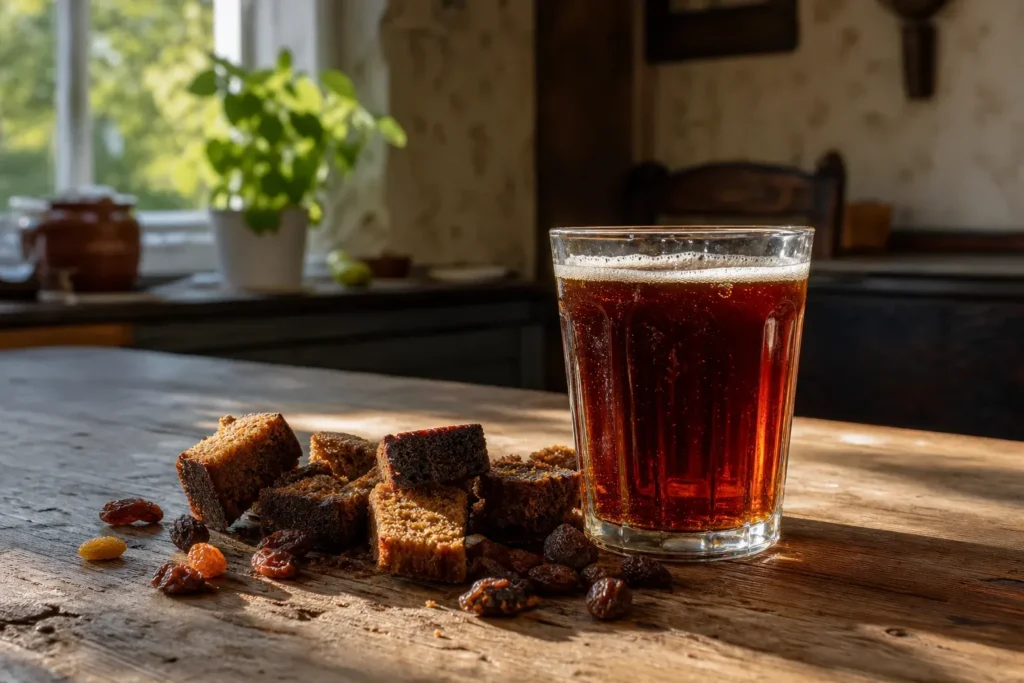
Kvass is a traditional Russian fermented drink with a distinctive bread flavour, gentle acidity and light carbonation. Known locally as квас, it is commonly associated with rye bread, malt and fermentation. Visitors to Volgograd may encounter kvass in shops, cafés and restaurants, particularly alongside traditional Russian food.
This guide explains how kvass is made, what distinguishes it from other beverages and how to prepare a simple version at home. The recommended method uses toasted dark rye bread, water, sugar and yeast. You will learn how to manage the short fermentation, adjust the flavour and serve the finished drink cold.
Quick answer: Toast dark rye bread, steep it in sweetened water, cool, add yeast and ferment until lightly sour. Strain and refrigerate before serving. Allow approximately 1–2 days.
At a Glance
| Type | Drinks |
|---|---|
| Local name | Квас |
| Origin | Traditional Russian and wider Eastern European fermented grain drink; commonly consumed throughout Russia, including Volgograd |
| Servings | Approximately 2 litres, or several small glasses |
| Total time | Approximately 24–48 hours including fermentation and refrigeration |
| Difficulty | Easy |
History and Story of Kvass, Volgograd
Kvass is part of a long tradition of fermented grain-based beverages in Russia and neighbouring regions. Its history is closely connected to the use of rye, malt and bread in everyday food preparation.
The Russian word квас refers to a fermented beverage rather than one single standardized home recipe. Traditional forms could be produced from grain-based wort, rye flour, malt or bread. Modern bread kvass is one accessible way of experiencing this broader tradition.
Historical references connect kvass with medieval Rus, and the drink became familiar across different levels of society. Over time, recipes developed according to the available ingredients, local preferences and intended use.
Kvass has a characteristic combination of sweetness and sourness. Fermentation changes the flavour of its grain ingredients and can create carbonation. It can also produce alcohol, meaning that the exact composition depends on the preparation method.
Commercial kvass and homemade kvass need not taste alike. Industrial products are produced with standardized methods, while home fermentation is affected by bread type, sugar content, yeast and temperature.
In Russian food culture, kvass is more than a drink. It can also be used as a base for cold soups, particularly okroshka. For that purpose, less sweet varieties generally work better than sweet drinking kvass.
Volgograd is one of many Russian cities where travellers can encounter this beverage. Kvass is not uniquely associated with the city, but its presence in local food culture provides a useful introduction to traditional Russian flavours.
Visitors who have never tasted it should approach kvass as its own beverage rather than expecting beer, lemonade or ordinary bread-flavoured water. Its fermented aroma, acidity and grain character are essential parts of the experience.
Ingredients
- 250 g dark rye bread
- 2500 ml drinking water
- 80 g granulated sugar
- 3 g active dry yeast
- 20 g raisins, optional
How Kvass, Volgograd Is Made
Step 1: Prepare the rye bread
Cut dark rye bread into small pieces and spread them on a baking tray. Toast at approximately 180°C until dry and well browned, but not burnt. The browning contributes much of the finished drink's roasted bread character. Remove the bread from the oven and let it cool before using it.
Tip: Avoid bread with strongly flavoured additions if you want a straightforward rye taste.
Step 2: Make the infusion
Place the toasted bread in a clean heat-resistant container. Boil the drinking water separately and pour it over the bread. Add the sugar and stir carefully. Cover loosely and leave the mixture to steep while it cools. The liquid gradually becomes darker and develops a pronounced toasted aroma.
Tip: A wide container is easier to handle than a narrow bottle during the initial preparation.
Step 3: Introduce the yeast
Once the infusion is lukewarm, dissolve the dry yeast in a small amount of the sweetened liquid. Return it to the main container and stir gently. Keep the container loosely covered to protect the contents while allowing fermentation gases to escape.
Tip: Never add yeast while the infusion is still very hot.
Step 4: Ferment the mixture
Leave the covered mixture at a moderate room temperature for approximately 10–16 hours. The liquid should begin developing a light sourness and signs of fermentation. Progress varies with temperature and yeast activity. Avoid direct sunlight, excessive warmth and contamination from utensils or hands.
Tip: Fermentation is not a fixed clock process; aroma and visible activity help indicate progress, but they do not prove microbial safety.
Step 5: Strain and assess
Pass the mixture through a fine sieve or clean food-safe cloth to remove the bread. Transfer the liquid into a clean vessel and check its aroma and appearance. Properly prepared kvass should smell pleasantly fermented and bread-like. Discard any batch that develops mould or an obviously abnormal smell.
Tip: Straining twice can remove more sediment if you prefer a clearer drink.
Step 6: Refrigerate and serve
Refrigerate the strained kvass until cold. Raisins may be added as a variation, but they can contribute to additional gas production. Avoid leaving sealed containers warm, and take care when opening carbonated homemade drinks. Serve chilled and consume promptly rather than relying on long room-temperature storage.
Tip: Try the first glass without extra flavourings so you can judge the natural balance of rye, sweetness and acidity.
Variants
- Dark rye bread kvass: A familiar homemade version with a toasted grain flavour.
- Malt kvass: Prepared using grain malt or a kvass wort base.
- White kvass: A lighter-coloured, often tart variety suitable for cooking.
- Raisin kvass: Includes raisins, which can affect flavour and fermentation.
- Fruit kvass: Incorporates fruit or berries for a different aroma.
- Beet kvass: A distinct vegetable-based fermented variation.
Common Mistakes to Avoid
- Using burnt rye bread instead of evenly toasted bread.
- Adding yeast before the hot infusion has cooled.
- Using a tightly sealed glass bottle during active fermentation.
- Expecting every type of kvass to be completely alcohol-free.
- Leaving the beverage unrefrigerated for an extended period after fermentation.
- Assuming sweet bottled kvass is ideal for making savoury okroshka.
- Using unclean containers or keeping a batch that shows signs of spoilage.
How to Order and Eat It
Kvass is normally enjoyed cold, served in a glass or used as an ingredient in a dish. Its flavour depends on the ingredients and the degree of fermentation. Some versions are comparatively sweet, while others are more tart and bread-forward.
In Volgograd, look for the Russian word квас when reading a drinks menu or shopping for beverages. If the type is unclear, ask whether it is sweet drinking kvass or a less sweet version suitable for okroshka.
Kvass pairs naturally with simple savoury foods, including rye bread, baked pastries and Russian cold dishes. It is also commonly associated with warm-weather meals.
Because kvass is fermented, its alcohol content is not necessarily zero. People who need to avoid alcohol should check the particular drink before consuming it.
To order: Можно, пожалуйста, квас? (Mozhno, pozhaluysta, kvas?)
Diet and Allergens
- Contains rye gluten
- Contains yeast
- May contain alcohol produced during fermentation
- No pork ingredients in the basic recipe
- No dairy ingredients in the basic recipe
- No eggs in the basic recipe
- Suitable for a vegan diet when made with the specified ingredients
Russia Vibes Tips
- Look for the word хлебный when searching for bread kvass; it identifies the bread-based style.
- Taste kvass cold rather than at room temperature to appreciate its normal serving character.
- Use unsweetened or less sweet kvass for okroshka rather than a dessert-like bottled version.
- If homemade kvass is too sweet, adjust the initial recipe on the next batch rather than extending fermentation unpredictably.
- Keep the bread evenly toasted; blackened pieces can affect the entire batch.
- Read ingredient information when buying commercial kvass, because formulations and fermentation methods differ.
Explore Nearby Kvass, Volgograd
Browse more: All Food & Drink · All Food & Drink in Volgograd · All Other · All Volgograd
FAQ
What exactly is Russian kvass?
Kvass is a traditional fermented drink commonly made from rye-based ingredients such as malt, flour or bread. It has a distinctive grain flavour, mild sourness and sometimes gentle carbonation. Its exact sweetness and acidity depend on the recipe. Kvass is consumed as a drink and used in some Russian cold soups.
What does kvass taste like?
Kvass often tastes like a lightly sweetened, fermented rye bread drink. Darker versions can have roasted and malty notes, while less sweet varieties may be noticeably tart. Commercial products may taste sweeter or more carbonated than simple homemade versions, so trying different types helps reveal the range.
Is kvass alcoholic?
Fermentation can produce alcohol, so kvass should not automatically be considered completely alcohol-free. The amount varies according to ingredients, manufacturing methods and fermentation conditions. Home preparation is especially variable. Check product information if the presence of alcohol matters to you.
Can I make kvass without rye bread?
Yes. Traditional and modern kvass recipes can use grain malt, flour, prepared wort or other suitable ingredients. The rye bread recipe is simply a convenient home method. Replacing the main ingredient changes the flavour and may require a different preparation process, so use a recipe designed for that variation.
Why is my homemade kvass bitter?
Overtoasted or burnt bread is one possible cause. Very dark bread and strongly flavoured grain ingredients can also introduce bitter notes. For a cleaner flavour, toast the bread evenly without charring it and begin with a relatively straightforward rye loaf rather than one containing numerous spices.
Can kvass be used in soup?
Yes. Kvass is a traditional liquid base for okroshka, a cold Russian soup made with chopped vegetables, herbs and often eggs or cooked meat. A less sweet, slightly tart kvass is generally preferable because it balances the savoury ingredients rather than making the soup taste sugary.
Is homemade kvass safe to keep at room temperature?
Homemade kvass should not be stored indefinitely at room temperature. Fermentation may continue, producing additional acidity, alcohol and gas. The safest practical approach is to work with clean equipment, follow a tested recipe, refrigerate the finished drink and discard batches showing signs of spoilage.
Where can I try kvass in Volgograd?
Look for kvass on the menus of restaurants serving Russian cuisine and in food shops selling traditional beverages. Availability varies, and not every establishment offers the same style. Ask for квас and check whether it is a sweet drinking version or a less sweet fermented bread drink.
Russia Vibes is a one-person project. A coffee keeps it going
How we research and update our guides
About this guide: AI assistance and accuracy
This guide is created with the help of AI and is based on official sources where available. Mistakes can still happen. Opening hours, prices, rules and other details are given to the best of our knowledge as of the date shown and can change without notice. It offers general recommendations only, not professional, legal or travel advice. Please confirm important details with the official source before you travel; you are responsible for your own plans and decisions.

Take this guide with you
Get a free PDF of this guide to print or read offline: key facts, tips and a map link on a few clean pages.
Report an issue on this page
Paying for your trip: please read
International sanctions affect payments between Russia and many other countries. In practice, cards issued in the EU, the UK, the US and several other countries often do not work in Russia, Russian cards usually do not work abroad, and some booking platforms, airlines and payment providers limit or suspend their services for Russia. The situation changes frequently.
We do not give legal or financial advice, and this site does not encourage anyone to break or circumvent sanctions. Whatever you plan, you are responsible for following the laws and regulations that apply to you, including those of your country of residence and citizenship.
Many travelers still organise their stay lawfully. It is worth asking your bank or payment provider what is currently permitted, contacting hotels, tour operators and carriers directly about the payment methods they accept, and checking which services are open to customers from your country. Clarify payment, cancellation and refund terms before you commit to a booking, and keep your plans flexible.
Partner links on this site may not be available in every country, and prices, availability and rules in our guides can differ from what you see when you book.