
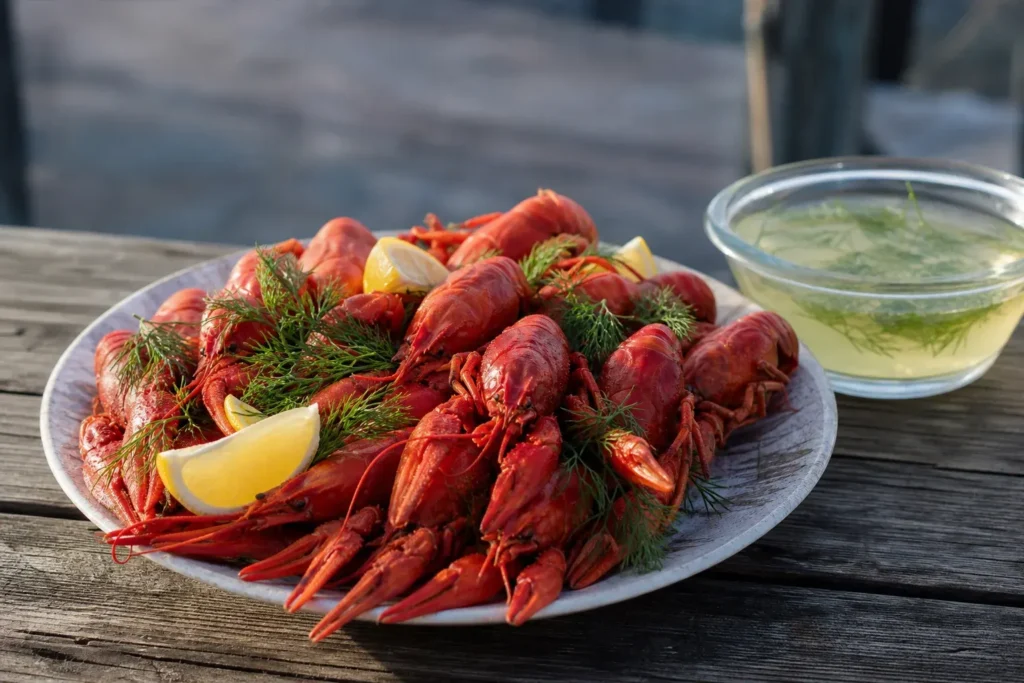
Boiled crayfish is one of Russia’s most characteristic appetizers, with deep roots in the country’s culinary tradition. In Volgograd, located on the Volga river basin—historically one of Russia’s prime crayfish-fishing regions—this dish remains a classic way to enjoy fresh crayfish. This guide shows how to prepare boiled crayfish the traditional Russian way.
The dish is straightforward: live crayfish are briefly boiled in seasoned brine, then left to cool and absorb flavors. Most visitors find the preparation takes about an hour from start to finish. You will need to source live crayfish and become comfortable with basic kitchen technique, but the result is a dish that has been served at Russian tables for over 350 years.
Quick answer: In Russia, crayfish are a traditional seasonal appetizer used as an accompaniment to beer and liquor. Buy live crayfish, prepare a seasoned brine with dill and bay leaves, boil them for 10–15 minutes, then cool and infuse them in the broth for at least 30 minutes. Total time: approximately 1 hour 15 minutes from preparation to serving. Budget-friendly cost.
At a Glance
| Type | Dishes |
|---|---|
| Local name | Вареные раки |
| Origin | Volgograd Region fish recipes include sturgeon balyk, local Caspian herring and crayfish. In pre-revolutionary Russia, the most famous crayfish were caught at the confluence of the Belaya and Kama rivers; most often they were boiled with dill. Crayfish appeared in Russian cuisine in the second half of the 17th century, with cooking beginning under Tsar Alexei Mikhailovich. |
| Servings | 2–4 people |
| Total time | 1 hour 15 minutes |
| Difficulty | Easy |
History and Story of Boiled Crayfish, Volgograd
The earliest documented efforts in crayfish cultivation in Russia trace back to the 19th century; over time, crayfish emerged as popular delicacies appreciated by both the nobility and the general populace. In Russian pre-revolutionary catering establishments, boiled crayfish were a popular snack, as depicted in Boris Kustodiev’s 1916 painting ‘Moscow Tavern’, which shows a bowl of boiled red crayfish on a buffet counter. The crayfish industry was geographically confined to the Don, Kuban, and Volga river basins. The dish remains especially popular in southern Russia, where the Volga and Don rivers historically supplied abundant fresh crayfish.
Ingredients
- 1 kg live crayfish (10–20 pieces)
- 2 litres water
- 2–3 tablespoons salt
- 1 small bunch fresh dill
- 2–3 bay leaves
- 5–6 peppercorns or allspice berries
- 1 lemon (optional)
- Large pot (at least 6 litres)
How Boiled Crayfish, Volgograd Is Made
Step 1: Select and prepare live crayfish
Purchase only live crayfish. Check that the tail is curled tightly under the body and that the crayfish move when touched. Dead crayfish must never be boiled, as they spoil rapidly and are unsafe to eat. Rinse each crayfish thoroughly under cold running water with a soft brush to remove sand, silt and algae from the shell. Optionally, soak them in clean cold water for 1–2 hours to allow them to expel impurities from their intestines.
Tip: Buy crayfish from a reliable fishmonger or market; check they smell of fresh water, not ammonia.
Step 2: Prepare the cooking brine
Fill a large stockpot with water and add salt, dill, bay leaves, peppercorns and allspice berries. For 1 kg of crayfish, use 2 litres of water and about 2–3 tablespoons of salt. Add 1 small bunch of fresh dill (or 1–2 teaspoons dill seeds), 2–3 bay leaves, and 5–6 peppercorns. You may also add a halved lemon to sharpen the flavour. Bring the broth to a rolling boil, then simmer gently for 10–15 minutes so the flavours infuse.
Tip: The brine should smell strongly of dill and herbs before you add the crayfish.
Step 3: Boil the crayfish
Carefully add live crayfish into the boiling water; return to a boil and simmer for 10–12 minutes until crayfish are bright red. Add them one or two at a time so the water remains at a rolling boil. Do not overcrowd the pot. The cooked crayfish become red after 15–25 minutes of boiling, depending on the size of the crayfish.
Tip: Larger crayfish take longer to cook; smaller ones may be done in 10 minutes.
Step 4: Let them infuse and cool
Stir in butter and turn off heat, cover with a lid and let crayfish infuse in stock for an additional 20 minutes. This allows them to absorb the broth's flavour. After 20 minutes, let them sit uncovered for at least 30 minutes more; ideally they should infuse for at least 1 hour. They can be eaten warm, at room temperature, or chilled.
Tip: If making them ahead, leave them in the broth overnight in the refrigerator for deeper flavour.
Step 5: Arrange and serve
Remove the crayfish from the broth with a slotted spoon and arrange them on a plate. You may garnish with fresh dill sprigs. Pour some of the cooking broth into a small bowl or cup to serve alongside; this acts as a dipping sauce and adds moisture to the meat. Serve with cold beer, vodka, or other chilled drinks.
Tip: Russians usually consume the entire crayfish, short of the shell and the antennae.
Variants
- Boiled crayfish with beer: add a glass of dark beer to the brine for a richer, slightly bitter flavour.
- Crayfish with apples and corn: add peeled apple wedges and corn kernels to the brine for sweetness.
- Crayfish with horseradish and sour cream: serve cooked crayfish with a cold sauce of sour cream mixed with grated horseradish and mustard.
- Crayfish in cream sauce: toss warm crayfish with melted butter, fresh cream and herbs (French-style).
- Cold marinated crayfish: chill completely and serve with vinegar-based dressing for summer eating.
Common Mistakes to Avoid
- Using dead crayfish: never boil crayfish that are not visibly alive at the moment they go into the water. Dead crayfish contain bacteria that rapidly multiply and cause food poisoning. Discard any crayfish with a foul smell or those that do not move.
- Cooking for too long: overcooking makes the meat tough and rubbery. 10–15 minutes is sufficient; the crayfish turn bright red when ready. Do not extend the boiling time.
- Insufficient salt: the brine must be well seasoned for the flavour to infuse into the meat. Taste the cooled broth; it should be noticeably salty, similar to seawater.
- Skipping the infusion period: many people remove hot crayfish immediately after boiling, missing the most important step. The meat needs 30 minutes to 1 hour in the warm (then cool) broth to absorb flavour. Patience is essential.
- Not cooling them properly: serving boiling-hot crayfish makes them harder to peel. Allow them to cool to warm or room temperature so you can handle them comfortably and the flavour is more pronounced.
- Using tap water without cleaning the crayfish: sand and silt trapped in the shell will end up in your pot and between your teeth. Always rinse and brush thoroughly before cooking.
How to Order and Eat It
Crayfish are eaten by hand. Twist and pull off the head to separate it from the tail. Suck the brown meat and juices from inside the head—this is considered the finest part. Crack the shell of the tail down the centre with your fingers or teeth and pull out the white meat. The only tricky part is removing the long, thin digestive tract that runs inside the shell. Dip each piece in the broth as you eat. The claws contain small amounts of tender meat if you are willing to work for it. Serve with plenty of napkins and cold beer or vodka. The whole process is social and communal; crayfish are meant to be shared and eaten slowly.
To order: Вареные раки [varenye raki]
Diet and Allergens
- shellfish
- no gluten (boiling method)
Russia Vibes Tips
- Buy crayfish in season (summer and early autumn) when they are at their best and most affordable. Off-season crayfish are often imported frozen or in brine, lacking the tender sweetness of fresh spring-caught crayfish.
- Use dill seed if you have it; it stays in the broth rather than floating to the surface like fresh dill fronds. If using fresh dill, place it loosely so you can easily remove it before serving.
- Never leave cooked crayfish at room temperature for more than 2 hours. Either eat them warm or cool them quickly and refrigerate. They keep refrigerated in their broth for 2–3 days.
- If cooking a large quantity for a party, work in batches rather than overcrowding the pot. The broth temperature will drop too much if you add too many crayfish at once, and they will steam rather than boil.
- The best way to transport cooked crayfish is in a sealed container with their broth, kept cool. This prevents them from drying out and keeps the flavour fresh.
- Some Russian cooks add a pinch of sugar (about 1 teaspoon per 2 litres) to balance the salt and bring out sweetness in the meat—experiment to taste.
Explore Nearby Boiled Crayfish, Volgograd
Browse more: All Food & Drink · All Food & Drink in Volgograd · All Other · All Volgograd
FAQ
Can I cook frozen crayfish instead of live ones?
No. Boiled crayfish must be cooked from live crayfish only. Frozen crayfish lose quality and texture when thawed and boiled. If you cannot find live crayfish, buy pre-cooked frozen or canned crayfish tails instead, which are eaten as a cold appetizer with mayo or with vinegar.
How do I know if a crayfish is truly alive before cooking?
A live crayfish's tail should be tightly curled or straight, not limp or extended. When touched, it will move its antennae or legs. The body should feel firm, not soft. If the tail is drooping loosely under the body, the crayfish is either dead or dying and must be discarded.
What size crayfish is best for boiling?
Medium crayfish (10–12 cm long) cook most evenly and have good meat yield. Very small crayfish cook quickly but have little meat; very large ones take longer and may cook unevenly. Aim for crayfish roughly the size of your thumb when you buy them.
How much salt should I use?
For 1 kg of crayfish in 2 litres of water, use 2–3 tablespoons of salt. The broth should taste like seawater—pleasantly salty but not overwhelming. Taste a spoonful before serving; you can always add more salt to the broth.
Can I reuse the cooking broth?
Yes. If you have leftover broth, strain it through a sieve and refrigerate. You can use it again for the next batch of crayfish, though the flavour will be less intense. Discard it after 3 days.
Is the brown material inside the head safe to eat?
Yes. The brown meat inside the head and around the body is edible and considered a delicacy. Some people suck it directly from the shell; others extract it carefully with a small fork. Avoid eating the hard greenish substance (the liver), which some people remove first.
Can I serve crayfish hot, or must they be cold?
You can serve them either way. Warm crayfish straight from the broth are tender and aromatic. Cold crayfish are traditional for summer eating with cold beer or vodka. Many Russians eat them at room temperature. Choose what appeals to you.
Are boiled crayfish expensive?
Crayfish are moderately priced for a special occasion. Whole live crayfish cost more than processed crayfish tails, but less than lobster. In Volgograd, locally sourced crayfish are less expensive than imported ones. Budget roughly moderate cost for a meal serving 2–4 people.
Russia Vibes is a one-person project. A coffee keeps it going
How we research and update our guides
About this guide: AI assistance and accuracy
This guide is created with the help of AI and is based on official sources where available. Mistakes can still happen. Opening hours, prices, rules and other details are given to the best of our knowledge as of the date shown and can change without notice. It offers general recommendations only, not professional, legal or travel advice. Please confirm important details with the official source before you travel; you are responsible for your own plans and decisions.

Take this guide with you
Get a free PDF of this guide to print or read offline: key facts, tips and a map link on a few clean pages.
Report an issue on this page
Paying for your trip: please read
International sanctions affect payments between Russia and many other countries. In practice, cards issued in the EU, the UK, the US and several other countries often do not work in Russia, Russian cards usually do not work abroad, and some booking platforms, airlines and payment providers limit or suspend their services for Russia. The situation changes frequently.
We do not give legal or financial advice, and this site does not encourage anyone to break or circumvent sanctions. Whatever you plan, you are responsible for following the laws and regulations that apply to you, including those of your country of residence and citizenship.
Many travelers still organise their stay lawfully. It is worth asking your bank or payment provider what is currently permitted, contacting hotels, tour operators and carriers directly about the payment methods they accept, and checking which services are open to customers from your country. Clarify payment, cancellation and refund terms before you commit to a booking, and keep your plans flexible.
Partner links on this site may not be available in every country, and prices, availability and rules in our guides can differ from what you see when you book.