
Updated
Herring Day takes place in spring, most often in late April, and is dedicated to the first herring expeditions in 1948 and the history of fishing in the region. This unique celebration originated at the Museum of the World Ocean and has become one of Kaliningrad‘s most distinctive seasonal festivals. The occasion marks the start of the spring herring fishing season and honours the fleet that helped rebuild the region’s economy after World War II.
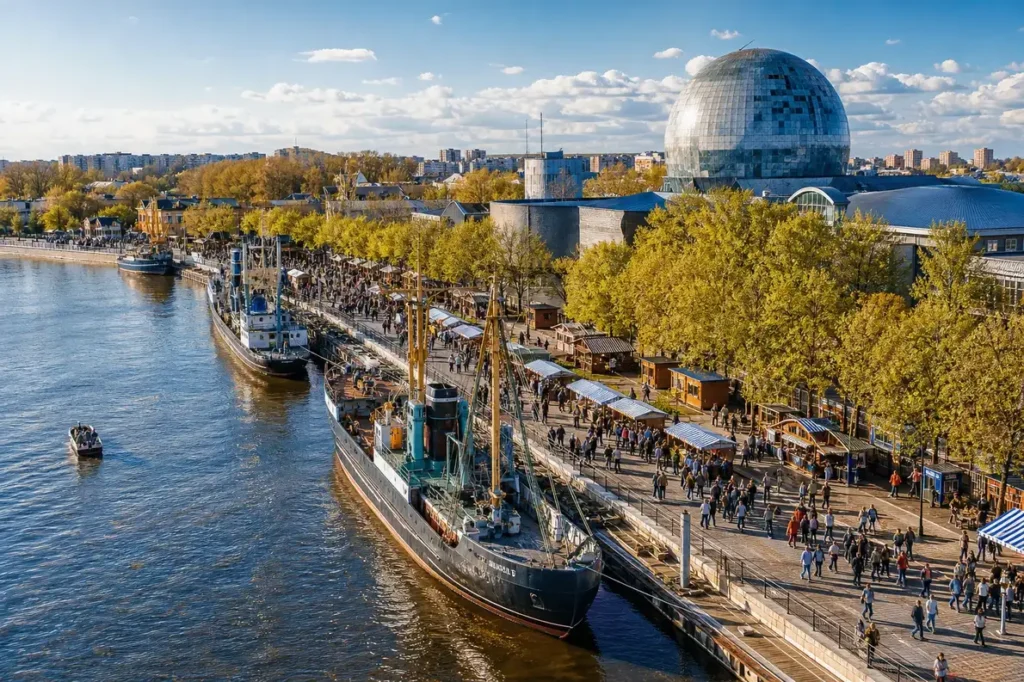
Unlike generic food festivals, Herring Day intertwines local maritime heritage with gastronomy. Visitors encounter a working waterfront atmosphere on the embankment, where fishing vessels are moored, locals gather to cook and eat, and traditional skills are demonstrated live.
Quick Facts
| Russian name | День селёдки |
|---|---|
| Type | Recurring event |
| When | Every year in April |
| Typical duration | 1–2 days |
| Public holiday | No, an observance (regular working day) |
| Address | Набережная Преголи (Pregolya Embankment), Музей Мирового Океана, Калининград OpenStreetMap · Google Maps |
| District | Kaliningrad |
| Admission | free |
| Best time to visit | Late morning or early afternoon for lower crowds; early April for milder spring weather; sunny days make the embankment most pleasant. Avoid midday on warm weekends when the crowds are heaviest. |
| Website | visit-kaliningrad.ru/en/calendar |
Dates, programs and prices change from year to year. Always check the official website for the current edition.
Why Visit Herring Day, Kaliningrad?
The program includes a theatrical performance “Fishing Boat”, excursions to fishing vessels, fish cutting workshops, interactive activities for children and educational activities about the work of fishermen. You’ll understand why herring shaped Kaliningrad’s post-war identity and why it remains central to Baltic cuisine. The celebration draws tourists from neighbouring Lithuania and Poland, creating a genuinely cross-border atmosphere.
This is gastronomy rooted in survival and labour—a chance to taste how ordinary people fed a recovering region and what that legacy tastes like today.
What to Expect at Herring Day, Kaliningrad
At the folk festival dedicated to the traditions of the Russian fishing fleet, you can taste all kinds of treats made from herring, as well as attend amateur concerts, buy souvenirs, attend master classes. The embankment transforms into an outdoor market where vendors sell fresh herring, smoked fish and traditional dishes. Live performances and maritime competitions take place throughout the day. During the massive program everyone could choose a pastime: competition of amateur fishermen, fishermen’s stories contest, or maritime games. Food stalls line the waterfront, offering fresh Baltic fish prepared in various regional styles. Families arrive to browse amber souvenirs and watch folk performances celebrating regional fishing heritage.
What It Means for Your Visit
Herring Day takes place in spring, most often in late April, or May. The Pregolya Embankment near the Museum of the World Ocean becomes crowded during festival hours, typically beginning in late morning. Some museum galleries and exhibitions remain open with extended access. Food vendors occupy prime riverside positions, so arrival in early afternoon or late morning offers easier movement and shorter queues at stalls.
The festival is free to attend; food and souvenirs are paid separately. Public transport operates normally, though the embankment area sees concentrated foot traffic. Check the official visit-kaliningrad website for the exact April date each year, as the festival sometimes shifts by a week depending on weekend scheduling.
Atmosphere
The embankment becomes a working-day tableau rather than a staged show. Fishing vessels sit at their moorings; the smell of smoked fish and grilling permeates the air; voices speak Russian, Lithuanian, Polish and German. The Museum of the World Ocean is one of the key cultural centers of the Kaliningrad region, so Herring Day attracts a wide range of visitors: tourists, locals and visitors to the city. Early afternoon draws the largest crowds; mornings are quieter. The mood is convivial and practical—people arrive to eat, not just to watch. Children run between food stalls; elderly fishermen stand in clusters telling stories; the mood is expectant and grounded in genuine local tradition rather than performance.
History of Herring Day, Kaliningrad
The unusual holiday appeared in 2006 at the initiative of the Museum of the World Ocean. The festival was born from a simple historical fact: The holiday is connected with the first herring expedition, gone to the shores of Iceland from the port of Kaliningrad in April 1948. That voyage was not merely a fishing trip—it marked the beginning of the region’s recovery. With this expedition began the fishing fleet of the region.
After World War II, Kaliningrad (then newly incorporated into the Soviet Union) lay in ruins. The herring fleet became an instrument of reconstruction, feeding the country and rebuilding the port city’s economy. A single fishing expedition in April 1948 became foundational myth and national economic policy. The small vessel SRT-129, the first fishing boat to make this journey, still sits on the embankment as a monument.
The Museum of the World Ocean established Herring Day as a folk observance to connect contemporary Kaliningrad to that post-war maritime heritage. It has grown from a local initiative into a festival attracting visitors from across Russia and the Baltic region. The date—April, when the spring fishing season begins—reconnects the present to the rhythms of the sea.
Tickets and Booking for Herring Day, Kaliningrad
At the folk festival dedicated to the traditions of the Russian fishing fleet, you can taste all kinds of treats made from herring, as well as attend amateur concerts, buy souvenirs, attend master classes. Entry to the embankment and festival activities is free. Food and souvenir purchases are separate and vary in price depending on what you buy. Herring Day takes place in spring, most often in late April, or May. The exact date shifts each year within that window. Check the official Kaliningrad tourism website (visit-kaliningrad.ru) for the current year’s date before planning your visit. No advance tickets or reservations are required for the public festival areas.
How to Get to Herring Day, Kaliningrad
The Museum of the World Ocean and Pregolya Embankment are centrally located on the river in downtown Kaliningrad. If arriving by car, parking is available near the embankment (paid). If arriving by public transport, minibus (marshrutka) routes pass near the museum; ask the driver for “Muzey Mirovogo Okeana” (Museum of the World Ocean). The embankment is a 10–15 minute walk from central Kaliningrad’s main streets. No metro exists in Kaliningrad, so local buses or taxis are the main transport options from elsewhere in the city.
Accessibility
The Pregolya Embankment promenade is largely flat and paved, suitable for wheelchair users and people with limited mobility. The Museum of the World Ocean building itself has accessible entrances. Crowded conditions during peak festival hours may make navigation difficult for those with mobility restrictions. Benches line the embankment for rest.
Food Nearby
During Herring Day, food vendors line the embankment selling herring prepared in multiple ways: smoked, salted, pickled, and in traditional dishes such as herring salad and fish soup. No separate restaurants need to be visited; the festival itself provides abundant food options at the waterfront.
What to Bring
Comfortable walking shoes, as the embankment involves standing and strolling. A light jacket or sweater for April weather. Cash for food and souvenirs (some vendors may not accept cards). A bag or backpack if you plan to buy amber souvenirs. Sunscreen if the day is clear and warm.
Best Views and Photo Spots of Herring Day, Kaliningrad
Pregolya Embankment facing the fishing vessels
The SRT-129 and other historical fishing boats sit moored against the embankment, with the Museum of the World Ocean building as backdrop. The scene captures the working waterfront atmosphere and the festival's maritime heritage focus. Best framed from the promenade looking toward the water.
Best time: Mid-morning for even light and lower crowds; golden hour (late afternoon) for warm light on the vessels.
Food vendor stalls along the embankment
Crowds of people eating smoked fish and herring dishes, with the river in the background. This captures the human dimension of the festival and the everyday joy of gathering to eat. Colours are warm and textures rich.
Best time: Midday to mid-afternoon when stall activity is highest and natural light is bright.
Museum of the World Ocean facade from the embankment
The modern museum building frames the festival scene, with people, stalls and river visible in foreground. The architecture anchors Kaliningrad's maritime identity in the composition.
Best time: Late morning for architectural light without harsh shadows.
Photography Rules
No restrictions on photography for personal use at the festival. Tripods and professional equipment may require special permission; check with Museum of the World Ocean staff on-site. Flash photography is acceptable outdoors. The embankment and vessels provide excellent photo opportunities throughout the day.
Family Suitability
Suitable for families with children of all ages. Festival programs typically include children's activities, theatrical performances and interactive fish-cutting demonstrations. The embankment is pedestrian-friendly with open space for walking. Food stalls offer both fish dishes and simpler options. Crowds can be dense at midday, so early arrival or visiting later in the afternoon may be more comfortable for families with young children. No stroller-specific obstacles, though the embankment can be crowded.
Russia Vibes Tips
- Arrive by late morning to see the festival at a more relaxed pace and secure good positions at food stalls. The embankment becomes increasingly crowded after noon on weekends.
- Bring cash. Many food vendors operate on a cash-only basis, though larger vendors and the museum may accept cards.
- Try "selyodka pod shuboy"—herring salad—which is a traditional Russian dish often sold at the festival. It pairs layered herring, vegetables and mayonnaise in a way that showcases the fish's versatility.
- Visit the Museum of the World Ocean galleries during the festival for extended hours and special exhibitions that complement the outdoor activities. The small vessel SRT-129, centrepiece of the festival, is permanently moored alongside.
- Ask locals or museum staff about demonstrations happening throughout the day. Fish-cutting workshops and fishing stories attract smaller audiences than the main food areas and offer insight into the work.
Explore Nearby Herring Day, Kaliningrad
Related guides
 Zdravcity, Kaliningrad: 24-Hour Pharmacy Chain and Online Marketplace
Main image: AI-generated illustration. It may not show the place exactly as it looks.
 SPAR, Kaliningrad: 70+ Supermarket Locations for Groceries and Meals
Main image: AI-generated illustration. It may not show the place exactly as it looks.
 Tram system, Kaliningrad: Historic rides through the city
Main image: AI-generated illustration. It may not show the place exactly as it looks.
 Port of Kaliningrad: Working Cargo Port, Historic Maritime Hub
Main image: AI-generated illustration. It may not show the place exactly as it looks.
 Khrabrovo Airport: Getting to Kaliningrad by Air
Main image: AI-generated illustration. It may not show the place exactly as it looks.
Browse more: More in Kaliningrad · All Events & Holidays · All Events & Holidays in Kaliningrad · All Festivals · All Kaliningrad
FAQ: Herring Day, Kaliningrad
When exactly does Herring Day happen?
Herring Day is held annually in April, most often in late April, to coincide with the traditional spring herring fishing season. The exact date shifts year to year depending on weekend scheduling. Check visit-kaliningrad.ru for the current year's confirmed date before booking travel.
Is there an admission fee to attend?
No. Entry to the embankment and festival areas is free. Food and souvenir purchases are separate and vary in cost depending on what you buy.
What fish will be served?
Herring is the star, prepared in multiple styles: smoked, salted, pickled, and in traditional dishes such as herring salad (selyodka pod shuboy) and fish soup. Other Baltic fish may also be available from vendors.
Can I bring children?
Yes. The festival is family-friendly with activities and performances for children, open embankment space, and food options suitable for all ages. Crowds are heaviest at midday on weekends; arriving earlier or later in the afternoon may be more comfortable.
Is the Museum of the World Ocean open during the festival?
Yes. The museum building typically has extended hours during Herring Day, with galleries and exhibitions open to visitors. The small historical fishing vessel SRT-129 is permanently displayed on the embankment next to the museum.
What should I wear?
Comfortable walking shoes are essential, as the festival involves standing and strolling. A light jacket or sweater is suitable for April weather in Kaliningrad. Bring sunscreen if the day is clear. Consider waterproof shoes if rain is forecast.
Can I take photographs?
Yes. Personal photography is unrestricted at the festival. The embankment, vessels and crowds provide excellent photo opportunities. Tripods and professional equipment may need special permission from museum staff.
Why is Herring Day celebrated in April?
The festival commemorates the first herring fishing expedition that left Kaliningrad's port in April 1948, which marked the beginning of the post-World War II fishing fleet. April is also the start of the traditional spring herring fishing season.
Russia Vibes is a one-person project. A coffee keeps it going
How we research and update our guides
About this guide: AI assistance and accuracy
This guide is created with the help of AI and is based on official sources where available. Mistakes can still happen. Opening hours, prices, rules and other details are given to the best of our knowledge as of the date shown and can change without notice. It offers general recommendations only, not professional, legal or travel advice. Please confirm important details with the official source before you travel; you are responsible for your own plans and decisions.

Take this guide with you
Get a free PDF of this guide to print or read offline: key facts, tips and a map link on a few clean pages.
Report an issue on this page
Paying for your trip: please read
International sanctions affect payments between Russia and many other countries. In practice, cards issued in the EU, the UK, the US and several other countries often do not work in Russia, Russian cards usually do not work abroad, and some booking platforms, airlines and payment providers limit or suspend their services for Russia. The situation changes frequently.
We do not give legal or financial advice, and this site does not encourage anyone to break or circumvent sanctions. Whatever you plan, you are responsible for following the laws and regulations that apply to you, including those of your country of residence and citizenship.
Many travelers still organise their stay lawfully. It is worth asking your bank or payment provider what is currently permitted, contacting hotels, tour operators and carriers directly about the payment methods they accept, and checking which services are open to customers from your country. Clarify payment, cancellation and refund terms before you commit to a booking, and keep your plans flexible.
Partner links on this site may not be available in every country, and prices, availability and rules in our guides can differ from what you see when you book.