
Updated
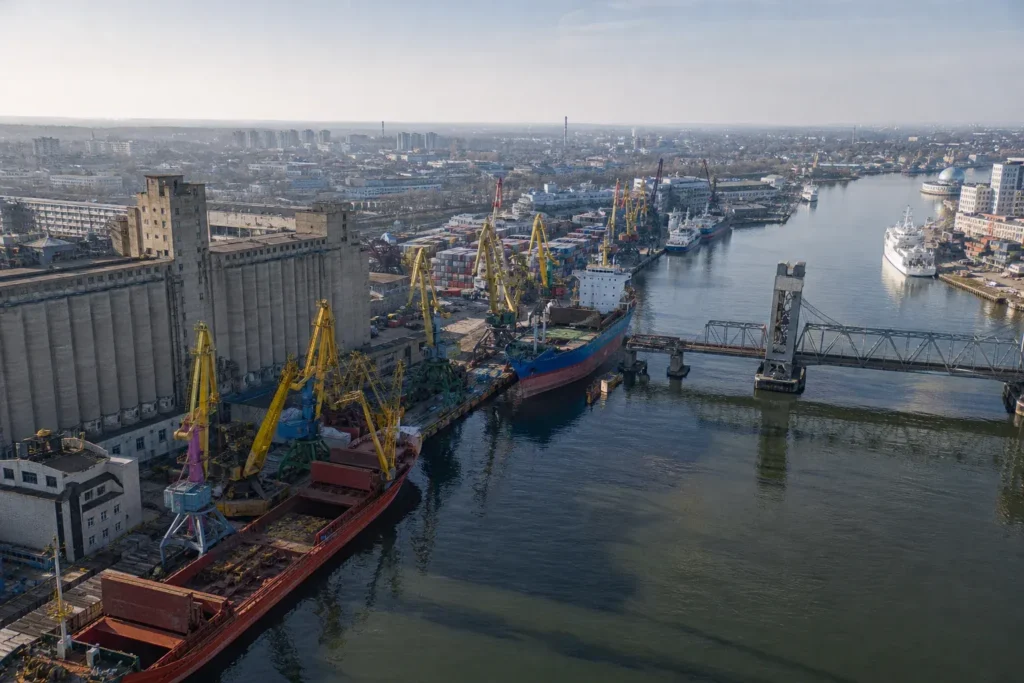
The Port of Kaliningrad is a seaport on the Baltic Sea, located in the city of Kaliningrad, Russia and serves as a significant maritime gateway for trade and transportation. Located at the mouth of the Pregel River, the port consists of 3 basins: Volnaya Harbour, Industrialnaya Harbour and Lesnaya Harbour.
The port is kept open all year round by icebreakers. The port contains multiple specialized terminals handling various types of cargo including container, bulk, and oil terminals.
Quick Facts
| Russian name | Порт Калининград |
|---|---|
| Type | Transport hub |
| Built / opened | 1945 |
| Address | Portovaya St. 24, Kaliningrad 236003 OpenStreetMap · Google Maps |
| District | Kaliningrad |
| Best time to visit | Spring through early autumn (May to September) offer the most pleasant weather for river boat tours viewing the port. Summer provides long daylight hours ideal for photography. Winter is possible but cold; the port remains active year-round thanks to icebreaker support. |
| Website | kscport.ru |
How to Get to and from Port of Kaliningrad, Kaliningrad
| Option | Duration | Price | Notes |
|---|---|---|---|
| Sightseeing River Boat Tours | 1-2 hours | ₽₽ | River cruises from Kaliningrad's city center pass by the port, allowing views of the working port, historic cranes, grain elevators, and the lifting railway bridge. Tours depart from various points along the Pregolya River embankment. |
| Museum of the World Ocean Visit | 2-3 hours | ₽₽ | Located adjacent to the port on the Pregolya River, this museum offers the best perspective on the port's maritime heritage and history. The museum waterfront location provides views of active port operations. |
| Port Embankment Walk | 30-45 minutes | Free | Walk along the public embankment areas near the Museum of the World Ocean to view the port from shore. Note that the active cargo port itself is not open to unescorted public access. |
₽ budget · ₽₽ moderate · ₽₽₽ upscale · ₽₽₽₽ splurge. Price levels are estimates compared with typical prices for visitors.
Why Visit Port of Kaliningrad, Kaliningrad?
The Kaliningrad Port is an active cargo port located in the bed of the Pregolya River, near the Museum of the World Ocean. Sightseeing boats that take tourists to the historical center of Kaliningrad can go into the port territory so that tourists can see the old elevators, cranes and ships. An old crane installed in the 1930s has been preserved here. The buildings of two elevators, built in 1924, are visible, which for a long time remained the largest grain elevators in Europe and are still used to store grain today.
Highlights of Port of Kaliningrad, Kaliningrad
Pregolya River Location
The Kaliningrad Port is an active cargo port located in the bed of the Pregolya River, near the Museum of the World Ocean. Sightseeing boats that take tourists to the historical center can go into the port territory to see the old elevators, cranes and ships.
Tip: Join a river sightseeing tour to view the port from the water without entering the working port area.
Historic Grain Elevators
Two elevators, built in 1924, are visible from outside the port. For a long time they remained the largest grain elevators in Europe and are still used to store grain today.
Tip: The elevators are best viewed from a distance via river tours; they are not open to public access as they remain active cargo facilities.
1930s Port Crane
An old crane installed in the 1930s has been preserved here. The crane represents the port's industrial heritage from the mid-20th century and is visible from the river.
Tip: View from the embankment or river tours; do not enter the active working port area.
Lifting Railway Bridge
The Kaliningrad Port is separated from the Museum of the World Ocean by a two-tier railway bridge built in 1926. Soviet engineers built two pylons with a central span that can be lifted up for the passage of ships.
Tip: The bridge lifting is extremely rare; visit the Museum of the World Ocean nearby instead for better access to waterfront attractions.
Maritime Trade Heritage
A railway system was opened between Prussia and Russia, stimulating the Port of Kaliningrad's commerce and making it an important export point for Russian grain, flax, hemp, and seeds. During the 19th Century, the port was the second most important naval base for Prussia and then Germany. Modern fortifications were finished in 1905.
Tip: The port's history is best understood through the nearby Kaliningrad Regional Museum of History and Arts.
Atmosphere
The Kaliningrad Port is an active cargo port, where ships are loaded and unloaded daily. The atmosphere is industrial and working, with large container ships, cranes, and grain elevators dominating the waterfront. The port sits within the Pregolya River valley, creating a dynamic contrast between industrial infrastructure and historical architecture visible from the river. Sightseeing boats allow tourists to observe the port from the water, providing views of the working landscape without disrupting cargo operations. The port is most visibly appreciated from river cruises or the adjacent museum embankment, where the scale and complexity of modern maritime commerce become apparent against Kaliningrad’s historical backdrop.
History of Port of Kaliningrad, Kaliningrad
The Teutonic Knights built a fortress in 1255, and the town of Konigsberg grew around it. Konigsberg was given civic privileges in 1286 and entered the Hanseatic League in 1340.
The Grand Master of the Teutonic Knights made it his home from 1457, and the dukes of Prussia lived there from 1525 to 1618. Shifting and silting of channels to the harbor limited trade for many years, and wars damaged the city. But by the beginning of the 18th Century, the city had largely recovered.
In 1701, the first king of Prussia was crowned Frederick I in the city’s castle. The Napoleonic wars brought much suffering to the city, and it was the site for planning Prussia’s successful uprising. A railway system was opened between Prussia and Russia, stimulating the Port of Kaliningrad’s commerce and making it an important export point for Russian grain, flax, hemp, and seeds.
During the 19th Century, the Port of Kaliningrad was the second most important naval base for Prussia, and then Germany. Modern fortifications were started in the mid-19th Century and finished in 1905. A Sea Channel began in the port of Kaliningrad, which allowed naval vessels to enter the port of Konigsberg. Its construction began in 1901, but as the displacement of ships increased, the fairway was constantly deepening. This channel opens into the Baltic Sea in the city of Baltiysk.
The Baltic Sea port city of Kaliningrad has been a fortress since its founding as Konigsberg in 1255. The Soviet Union‘s Red Army captured it from the Germans in April 1945 in one of the last combat operations in East Prussia. Калининградская область was established on April 7, 1946. On July 4 of the same year, the city of Königsberg was renamed Kaliningrad City.
Approximately 3,300 vessels and 15,380,000 tonnes of cargo are handled annually. Today the port remains one of Russia’s most important commercial maritime gateways and continues to handle a diverse range of cargo types serving Russian trade with European and international markets.
Tickets and Payment at Port of Kaliningrad, Kaliningrad
The Port of Kaliningrad is an active commercial cargo facility, not a public transport hub. International visitors cannot board cargo vessels or ferries at this port. Sightseeing opportunities are limited to river boat tours and views from public embankments. To view the port and maritime heritage, book a river sightseeing tour through Kaliningrad tour operators or visit the adjacent Museum of the World Ocean, which offers the best perspective on the port’s history and operations. Check local tour company websites for current schedules and availability.
Flights, Transfers and Planning
How to Get to Port of Kaliningrad, Kaliningrad
The Port of Kaliningrad is located along the Pregolya River in the city center. From downtown Kaliningrad, walk west toward the river embankment near the Museum of the World Ocean (approximately 10-15 minutes on foot from the main train station area). Public viewing points and river boat tour departure points are accessible from the embankment. The working port itself is not open to unescorted visitors; views are best obtained from river tours or the Museum of the World Ocean waterfront.
Accessibility
River boat tours and public embankment areas have variable accessibility. The Museum of the World Ocean adjacent to the port may offer wheelchair access; check with the museum directly. The active port area is not accessible to the general public.
Food Nearby
The Museum of the World Ocean and surrounding embankment areas have cafes and restaurants. Kaliningrad's city center, within walking distance, offers numerous dining options ranging from casual to upscale. River boat tour operators may offer catering on longer cruises.
What to Bring
Comfortable walking shoes for embankment exploration; waterproof jacket for river tours; camera for photography. Dress warmly in cooler months. The port area is exposed to wind and weather given its river location.
Photography Rules
Photography is permitted from public embankments and river boats. The working cargo port itself restricts photography for security reasons. Best photographic perspectives are from river cruises, which position you for clear views of the historic elevators, cranes, and the lifting railway bridge.
Family Suitability
River boat tours are family-friendly and engaging for children interested in ships and maritime operations. The embankment walk is suitable for families with older children. The adjacent Museum of the World Ocean offers excellent educational content for families. Stroller access on embankments varies; river boats may have limited stroller accommodation.
Russia Vibes Tips
- Do not attempt to enter the active working cargo port. It is a secured industrial facility with restricted access. Enjoy views from authorized river tours and public embankments only.
- Combine a port viewing river tour with a visit to the Museum of the World Ocean for the best understanding of Kaliningrad's maritime history and the port's role in the region.
- The lifting railway bridge between the port and museum is a historic landmark worth photographing, but lifts are extremely rare in modern times as large ships rarely navigate beyond the port.
- The 1924 grain elevators visible from the river are impressive industrial-era structures and make excellent photography subjects, especially in late afternoon light.
- Visit in late spring or summer for the best river tour conditions. Winter ice breakup in spring creates interesting dynamics as icebreakers keep the port operational.
Explore Nearby Port of Kaliningrad, Kaliningrad
Sights near Port of Kaliningrad, Kaliningrad
 Fishing Village, Kaliningrad – about 12.9 km away · typical visit: 1.5–2 hoursOpen 24 hours
Main image: AI-generated illustration. It may not show the place exactly as it looks.
Related guides
 Tram system, Kaliningrad: Historic rides through the city
Main image: AI-generated illustration. It may not show the place exactly as it looks.
 Khrabrovo Airport: Getting to Kaliningrad by Air
Main image: AI-generated illustration. It may not show the place exactly as it looks.
 Central District, Kaliningrad: Local Neighborhoods and What to See
Main image: AI-generated illustration. It may not show the place exactly as it looks.
 Day of the Navy, Kaliningrad: Parades, Fireworks and Naval Displays
Main image: AI-generated illustration. It may not show the place exactly as it looks.
 Victory Day, Kaliningrad: History and Celebrations on May 9
Main image: AI-generated illustration. It may not show the place exactly as it looks.
Browse more: More in Kaliningrad · All Airports & Transport · All Airports & Transport in Kaliningrad · All Kaliningrad · All Other Hubs
FAQ: Port of Kaliningrad, Kaliningrad
Can I visit the Port of Kaliningrad as a tourist?
The Port of Kaliningrad is an active commercial cargo facility, not open to unescorted public access. However, you can view the port from public embankments near the Museum of the World Ocean or from authorized river boat sightseeing tours.
Is there a passenger ferry service from the Port of Kaliningrad?
The port does not operate regular passenger ferry services for tourists. A cargo ferry service exists between Baltiysk (connected to the port by canal) and Ust-Luga, but this primarily carries railway cars and cargo, not leisure passengers.
What can I actually see when visiting the port area?
From river boat tours or the public embankment, you can see the active cargo operations, historic grain elevators (built in 1924), an old 1930s crane, container ships, the lifting railway bridge from 1926, and the industrial waterfront landscape. The Museum of the World Ocean provides historical context.
How far is the port from Kaliningrad city center?
The port is located within Kaliningrad's city center along the Pregolya River, approximately 10-15 minutes' walk from the main train station area and immediately adjacent to the Museum of the World Ocean.
When was the Port of Kaliningrad established?
The modern port was reorganized in 1945, though maritime trade from Königsberg dates back centuries. The port's current infrastructure evolved through the 19th and early 20th centuries.
What types of cargo does the port handle?
The port imports fish products, foodstuffs and containerized cargo, and exports timber, pulp, rolled metal, scrap metal, grain, coal, coke, oil and fertilizer.
Is the port open in winter?
The port is kept open all year round by icebreakers. This makes it crucial to Russia's Baltic commerce despite winter conditions.
What is the best way to see the port?
Book a river sightseeing tour for the best views and understanding of the port's operations. Alternatively, visit the Museum of the World Ocean, which offers waterfront views and historical exhibits explaining the port's maritime heritage.
Russia Vibes is a one-person project. A coffee keeps it going
How we research and update our guides
About this guide: AI assistance and accuracy
This guide is created with the help of AI and is based on official sources where available. Mistakes can still happen. Opening hours, prices, rules and other details are given to the best of our knowledge as of the date shown and can change without notice. It offers general recommendations only, not professional, legal or travel advice. Please confirm important details with the official source before you travel; you are responsible for your own plans and decisions.

Take this guide with you
Get a free PDF of this guide to print or read offline: key facts, tips and a map link on a few clean pages.
Report an issue on this page
Paying for your trip: please read
International sanctions affect payments between Russia and many other countries. In practice, cards issued in the EU, the UK, the US and several other countries often do not work in Russia, Russian cards usually do not work abroad, and some booking platforms, airlines and payment providers limit or suspend their services for Russia. The situation changes frequently.
We do not give legal or financial advice, and this site does not encourage anyone to break or circumvent sanctions. Whatever you plan, you are responsible for following the laws and regulations that apply to you, including those of your country of residence and citizenship.
Many travelers still organise their stay lawfully. It is worth asking your bank or payment provider what is currently permitted, contacting hotels, tour operators and carriers directly about the payment methods they accept, and checking which services are open to customers from your country. Clarify payment, cancellation and refund terms before you commit to a booking, and keep your plans flexible.
Partner links on this site may not be available in every country, and prices, availability and rules in our guides can differ from what you see when you book.