
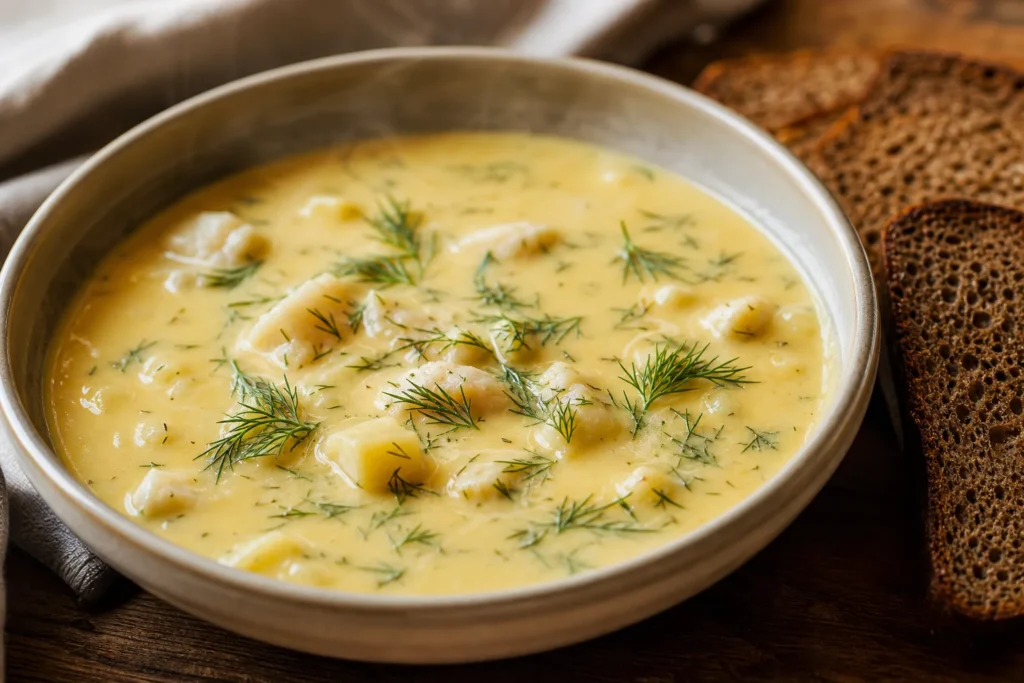
This silky, nourishing soup represents the culinary heritage of Königsberg, the East Prussian capital now known as Kaliningrad. The dish bridges the German and Baltic traditions that shaped the city’s food culture for seven centuries. The recommended way is to prepare it at home using the ingredients and methods that made it famous in regional restaurants.
You’ll learn how to build the foundational fish broth, enrich it with cream and egg yolks, and season it with spices that give the soup its distinctive character. East Prussian fish soup recipe preparation takes about 45 minutes from start to finish.
Quick answer: Heat a light fish stock with white wine and aromatics, simmer sea perch fillets until tender, create a liaison of egg yolks and cream, and finish with spices and fresh herbs. Total time: 45 minutes. Cost: moderate for ingredients.
At a Glance
| Type | Dishes |
|---|---|
| Local name | Königsberger Fischsuppe |
| Origin | East Prussia (now Kaliningrad, Russia) |
| Servings | 2–4 servings |
| Total time | 45 minutes |
| Difficulty | Medium |
History and Story of East Prussian Fish Soup, Kaliningrad
East Prussian fish soup emerged from the culinary traditions of Königsberg, the Baltic trading port that was the capital of East Prussia. The combination of cream, fish stock, egg yolks and wine reflects both German cooking techniques and the abundance of fresh fish in the Baltic Sea. The dish was part of everyday cooking for centuries but gained particular renown in the 19th and 20th centuries as restaurants in Kaliningrad continued to serve it. After World War II, when the region became part of the Soviet Union, the dish persisted in local restaurants, though recipes often evolved with available ingredients.
Ingredients
- 500 g sea perch fillets (or other white fish like cod or bass)
- 1 litre fish stock or light chicken stock
- 250 ml dry white wine
- 150 ml single cream
- 2 egg yolks
- 1 small onion
- 1 carrot
- 2 bay leaves
- Salt and white pepper to taste
- 2 tablespoons butter
- 1 tablespoon flour
- Fresh dill for garnish
How East Prussian Fish Soup, Kaliningrad Is Made
Step 1: Prepare the stock base
In a large pot, combine fish stock and white wine. Add the onion (whole or halved), carrot cut into chunks, and bay leaves. Bring to a simmer over medium heat and let it infuse for 15 minutes. This creates the aromatic foundation for the soup.
Tip: If using chicken stock instead of fish stock, the soup will be lighter in flavor but still delicious.
Step 2: Cook the fish
Strain the stock through a fine sieve to remove vegetables and bay leaves. Return the strained liquid to the pot and bring back to a gentle simmer. Cut the sea perch fillets into large pieces, season lightly with salt and pepper, and add them to the simmering stock. Poach for 8–10 minutes until the fish is tender and begins to flake.
Tip: Do not boil vigorously; a gentle simmer keeps the fish pieces intact.
Step 3: Make the thickening roux
While the fish cooks, melt butter in a small pan over medium heat. Sprinkle flour over it and whisk continuously for 2–3 minutes until you have a pale paste. This roux will thicken the soup and give it a silky consistency without lumps.
Tip: The roux should smell nutty but not brown.
Step 4: Thicken the soup
Slowly add the roux to the simmering stock, whisking constantly to break up any lumps. Stir for 2–3 minutes until the soup thickens slightly. It should coat the back of a spoon but remain pourable.
Tip: Add the roux gradually; you can always add more if needed, but you cannot remove it easily.
Step 5: Create the liaison
In a small bowl, whisk the egg yolks with the cream. Remove the pot from direct heat and let it cool for 1–2 minutes so it is no longer actively boiling. Slowly pour the egg and cream mixture into the soup while whisking constantly. This tempers the eggs and creates a smooth, rich texture.
Tip: If the soup is still boiling, the eggs will scramble. Patience is essential here.
Step 6: Season and finish
Taste the soup and adjust the salt and white pepper. Return the fish pieces to the pot if they were removed. Warm through gently for another minute or two. Serve hot, garnished with fresh dill and accompanied by dark rye bread.
Tip: Warm the serving bowls beforehand to keep the soup hot longer.
Variants
- Königsberger Fischsuppe with mushrooms: some recipes add sautéed mushrooms (particularly ceps or button mushrooms) to the broth for earthiness.
- With additional herbs: dill, parsley, or chervil can be added to the finished soup or used as garnish.
- Lighter version: made with fish stock alone, with no wine, for a more delicate flavor.
- With potatoes: diced potatoes added to the broth earlier in cooking create a more substantial dish.
- Modern variations: some Kaliningrad restaurants add mustard, horseradish or citrus zest for sharpness.
Common Mistakes to Avoid
- Boiling the soup too vigorously after adding the egg yolk mixture, which causes curdling and breaks the creamy texture. Always keep the heat very gentle once the liaison is added.
- Adding the roux too quickly, which creates lumps. Whisk continuously as you pour it in gradually.
- Using very thick or heavy cream when the original recipe calls for light cream or crème fraîche, which makes the soup too rich and masks the delicate fish flavor.
- Overcooking the fish fillets until they disintegrate. Poach gently and check for doneness frequently; they cook quickly.
- Skipping the aromatics (onion, carrot, bay leaves) in the stock base. These vegetables build the foundational flavor that distinguishes this soup from plain fish soup.
- Adding cold eggs directly to hot soup instead of tempering them, which scrambles the yolks instead of creating a silky emulsion.
How to Order and Eat It
Serve the soup piping hot in warm bowls. The traditional accompaniment is dark rye bread or Pumpernickel, which soaks up the rich cream sauce. Some versions include boiled potatoes served in the bowl alongside the fish. A small glass of dry white wine or schnapps pairs well with the dish. In Kaliningrad, the soup is usually eaten as a first course for a formal meal, though it is substantial enough to be a light main course when served with bread.
To order: Königsberger Fischsuppe, bitte [Koenigs-berger Fish-sup-peh, BIT-teh]
Russia Vibes Tips
- Use fresh fish stock if possible, either homemade or from a quality supplier. Bouillon cubes and commercial stock can make the soup cloudy and less refined.
- Kaliningrad restaurants serve this soup year-round, but it is particularly satisfying in autumn and winter when heavier, cream-based dishes are more common.
- The soup tastes even better the next day as the flavors develop and meld. Reheat gently without boiling to preserve the creamy liaison.
- If you cannot find sea perch, substitute any delicate white fish such as cod, halibut, bass or brill. Avoid oily fish like salmon or mackerel, which overpower the soup.
- This soup is a good introduction to East Prussian cuisine if you are dining at a traditional restaurant in Kaliningrad. Order it alongside Königsberger Klopse (meatballs in caper sauce) to experience the full range of the region's flavors.
Explore Nearby East Prussian Fish Soup, Kaliningrad
Browse more: All Food & Drink · All Food & Drink in Kaliningrad · All Kaliningrad · All Other
FAQ
Is East Prussian fish soup different from Russian ukha (fish soup)?
Yes. Ukha is typically a clear, brothlike soup with simple vegetables and herbs, while East Prussian fish soup is thickened with a roux and enriched with cream and egg yolks, making it much denser and more luxurious. Both are Baltic fish soups but from different culinary traditions.
Can I use frozen fish fillets?
You can, but fresh fillets will give a cleaner flavor and better texture. If using frozen fish, thaw it completely and pat it dry before poaching so it absorbs the broth properly.
What if I don't have white wine?
You can omit the wine and use all fish stock, though the soup will lack the slight acidity and aromatic depth that white wine provides. Do not substitute red wine or other wines, as they will color and flavor the soup incorrectly.
Is this soup safe for people with shellfish allergies?
Yes, if made with the ingredients listed. However, many fish stocks contain shellfish as flavoring ingredients, so check the label. Additionally, some kitchens may prepare fish soup near shellfish preparation areas, so ask at restaurants about cross-contamination if you have severe allergies.
How long does the soup keep in the refrigerator?
Store it in an airtight container for up to 2 days. The egg yolk emulsion may break down slightly when reheated, so reheat gently over low heat, stirring frequently, and do not boil.
Can I make the soup ahead and reheat it?
Yes, but it is best to prepare the soup base (stock with fish) ahead and store it separately from the cream and egg yolk liaison. Finish the soup just before serving or within an hour of reheating.
What is the difference between this soup and Mecklenburg fish soup?
Mecklenburg fish soup, from the region north of Berlin, typically includes potatoes, cabbage and is thickened with flour and milk. East Prussian fish soup is more delicate, relies on cream and egg yolks, and has fewer vegetables.
Where can I try authentic East Prussian fish soup in Kaliningrad?
Traditional restaurants that specialize in German or East Prussian cuisine usually offer this soup. Menus vary by season and availability, so call ahead or check reviews to confirm it is being served when you plan to visit.
Russia Vibes is a one-person project. A coffee keeps it going
How we research and update our guides
About this guide: AI assistance and accuracy
This guide is created with the help of AI and is based on official sources where available. Mistakes can still happen. Opening hours, prices, rules and other details are given to the best of our knowledge as of the date shown and can change without notice. It offers general recommendations only, not professional, legal or travel advice. Please confirm important details with the official source before you travel; you are responsible for your own plans and decisions.

Take this guide with you
Get a free PDF of this guide to print or read offline: key facts, tips and a map link on a few clean pages.
Report an issue on this page
Paying for your trip: please read
International sanctions affect payments between Russia and many other countries. In practice, cards issued in the EU, the UK, the US and several other countries often do not work in Russia, Russian cards usually do not work abroad, and some booking platforms, airlines and payment providers limit or suspend their services for Russia. The situation changes frequently.
We do not give legal or financial advice, and this site does not encourage anyone to break or circumvent sanctions. Whatever you plan, you are responsible for following the laws and regulations that apply to you, including those of your country of residence and citizenship.
Many travelers still organise their stay lawfully. It is worth asking your bank or payment provider what is currently permitted, contacting hotels, tour operators and carriers directly about the payment methods they accept, and checking which services are open to customers from your country. Clarify payment, cancellation and refund terms before you commit to a booking, and keep your plans flexible.
Partner links on this site may not be available in every country, and prices, availability and rules in our guides can differ from what you see when you book.