
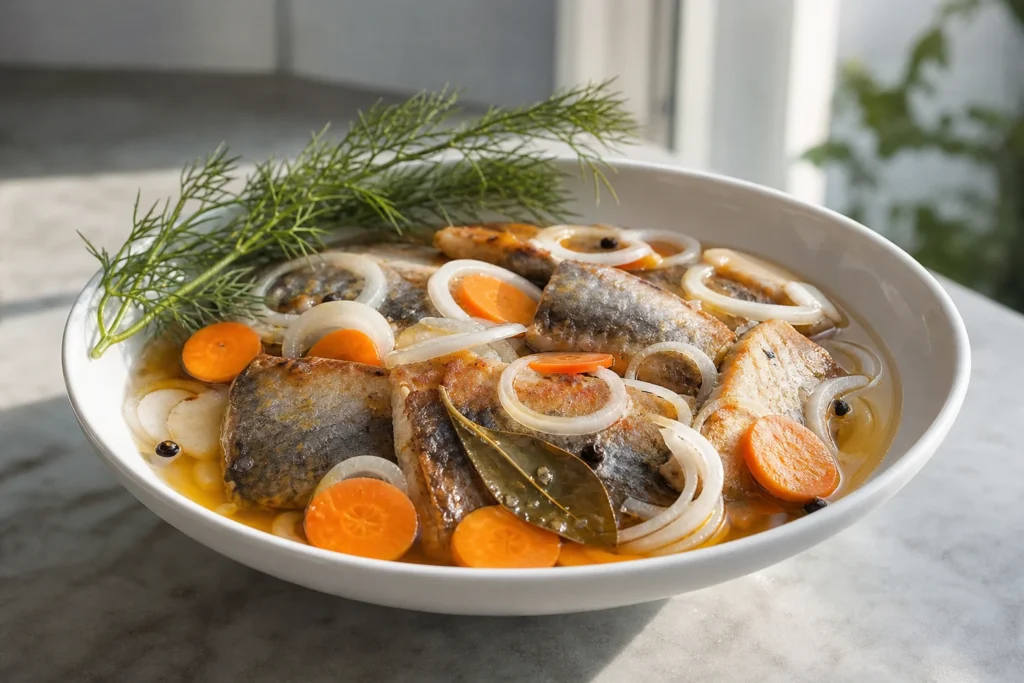
This guide shows you how to prepare fried Baltic herring, a signature fish dish of Kaliningrad that dates to the city’s history as the East Prussian port of Königsberg. The preparation is straightforward for anyone with access to fresh or thawed herring fillets and basic pantry ingredients.
The method below yields herring that can be served warm with potatoes and fresh dill, or cooled and marinated for storage. How to cook Baltic herring Kaliningrad style requires no special equipment—just a frying pan, a bowl for the marinade, and about an hour of time. The dish pairs well with dark bread and beer, as it traditionally does in the region.
Quick answer: Bread herring fillets with flour and egg, fry them golden on both sides until crisp, then cool and place them in a hot spiced vinegar marinade with onion and carrots. The whole process takes about one hour, with most time spent cooling and infusing flavors. No special skills needed; budget ingredients.
At a Glance
| Type | Dishes |
|---|---|
| Local name | Селёдка жареная |
| Origin | East Prussia / Kaliningrad region |
| Servings | 2–4 servings |
| Total time | 1 hour (including cooling and marinating) |
| Difficulty | Easy |
History and Story of Baltic Herring, Kaliningrad
Baltic herring has been a staple of East Prussian cuisine for centuries, caught fresh from the Baltic Sea in the waters near Kaliningrad (formerly Königsberg). The region’s abundance of herring made it a protein accessible to all classes, from laborers to nobility. Fried herring became the foundation for many regional dishes: served as a simple weekday meal with potatoes, transformed into the elaborate *Königsberger Klopse* (meatballs with herring-infused sauce), or preserved in marinade for storage through winter months. After World War II, when the German population left Kaliningrad, Russian and Soviet cooks maintained the herring-cooking traditions, adapting recipes and blending them with Russian tastes. Today, Kaliningrad celebrates this heritage with a Herring Day festival each spring. The fish remains affordable, abundant, and iconic to the city’s culinary identity.
Ingredients
- 600 g fresh Baltic herring fillets (or thawed)
- 1 egg
- 100 ml whole milk or water
- 60 g plain flour or rye flour
- 1 litre water for marinade
- 2 medium onions
- 2 medium carrots
- 30 ml vinegar (5–6% acidity)
- 10 g salt
- 7 g sugar
- 5 black peppercorns
- 2 bay leaves
- Oil or butter for frying
How Baltic Herring, Kaliningrad Is Made
Step 1: Prepare the fish
Pat the herring fillets dry with paper towels. If using whole frozen herring, thaw completely and fillet by running a sharp knife along the backbone, separating the flesh on both sides. Remove any remaining small bones with tweezers. Rinse fillets under cold water and dry thoroughly.
Tip: Dry fillets fry better and develop a crispier exterior. If using pre-packed fillets from a supermarket, skip the filleting step.
Step 2: Season and coat the fillets
Beat the egg with milk in a shallow bowl. Sprinkle salt and white pepper on the flesh side of each fillet. Dip each fillet, flesh side down, into the egg mixture, then press both sides lightly into the flour, shaking off excess.
Tip: A light flour coating is enough; excess flour will burn. You can use rye flour for a nuttier flavor, traditional in Baltic cuisine.
Step 3: Fry until golden
Heat a tablespoon of oil or butter in a heavy skillet over medium-high heat until it shimmers. Carefully place the fillets flesh side down and fry for 2–3 minutes until the flesh is golden brown. Flip and fry the skin side for another 2–3 minutes until crisp. Transfer to a clean plate and let cool to room temperature.
Tip: Do not crowd the pan; fry in batches if needed. The herring is done when both sides are golden and the flesh flakes slightly.
Step 4: Make the marinade
Peel and thinly slice the carrots and onions. Bring the water to a boil in a saucepan, add salt, sugar, peppercorns, and bay leaves. Simmer for 2 minutes, then remove from heat and add vinegar. Stir well and let cool for 5 minutes.
Tip: Do not skip cooling the marinade before pouring it over the fish; the hot liquid will continue to cook the herring slightly, softening the flesh.
Step 5: Assemble and marinate
Transfer the cooled fried herring to a deep bowl or jar. Strain the marinade, keeping the sliced vegetables. Layer the herring with the cooked onion and carrot slices, then pour the strained liquid over everything, ensuring the fish is covered.
Tip: If the herring is not fully submerged, pour a thin stream of oil over the top to seal it and prevent the fish drying out.
Step 6: Chill and serve
Cover the bowl and refrigerate for at least 30 minutes before serving. The dish keeps refrigerated for up to three days. Serve at room temperature or chilled, garnished with fresh dill if available.
Tip: The flavors develop more richly after 2–3 hours in the marinade. The herring can be eaten warm fresh from the pan with potatoes, or cool and marinated as a cold appetizer.
Variants
- Fried herring with sour cream and dill served warm over boiled potatoes, without marinade
- Cold pickled herring (selyodka): salt-cured herring stored in a vinegar brine with no hot-frying step
- Herring salad (selyodka pod shuboy): layers of marinated herring with grated boiled vegetables, mayonnaise, and hard-boiled egg—a Russian festive classic
- Herring pâté (forshmak): ground fried herring mixed with onion, traditionally served as an appetizer on dark bread
Common Mistakes to Avoid
- Not drying the fillets properly before breading—wet fish will not fry crisply and will absorb too much oil, becoming greasy.
- Using flour that is too thick or coating the fillets twice—this creates a heavy, doughy crust rather than a thin crispy shell.
- Pouring hot marinade directly over warm herring—this continues to cook the delicate flesh and makes it mushy. Always cool both the fish and the marinade first.
- Skipping the vegetables in the marinade—they are not optional garnish; they infuse the brine with flavor and are eaten with the fish.
- Using vinegar that is too strong (above 8% acidity)—this will overpower the delicate taste of the herring. Check the label; 5–6% is ideal.
- Overcrowding the pan while frying—this lowers the oil temperature and causes the herring to steam rather than fry, resulting in a soggy exterior.
How to Order and Eat It
Fried herring is traditionally eaten with dark rye or wheat bread, holding a slice of fish on the bread and taking a bite. The bread absorbs the fish’s oil and vinegar flavors. Serve with boiled potatoes, a simple green salad, or pickled vegetables on the side. In Kaliningrad, herring is almost always accompanied by beer or vodka, which cuts through the richness of the fat and balances the salty-vinegar notes. The cooked vegetables from the marinade—sliced carrot and onion—should be eaten with the fish. In formal settings, herring may be plated individually with a fork; for casual meals, it is eaten by hand with bread.
To order: Селёдку, пожалуйста [Selyodku, pozhaluysta]
Russia Vibes Tips
- Kaliningrad's fish markets sell pre-filleted herring year-round, often freshly thawed from cold storage. If buying whole fresh herring, ask the fishmonger to fillet it on the spot; this saves time and ensures the bones are removed cleanly.
- Baltic herring is leaner and more delicate than Atlantic herring. Do not overcook it; even a minute too long in the pan will dry it out. The fish should still feel slightly tender when you press it gently with a fork.
- Make the herring a day or two ahead if you have time. The marinade improves overnight and the flavors marry better. Covered, it will keep refrigerated for three to four days.
- If you can find rye flour instead of wheat, use it; it adds a subtle nutty flavor that is historically authentic to the region and pairs beautifully with the vinegar and spices.
- Herring is an oily fish with a naturally strong, savory flavor. Visitors sometimes find the taste surprising on first encounter. Pair it with acidic or creamy elements—vinegar, onion, sour cream, or dark bread—to balance the richness.
- Leftover marinated herring keeps well and can be eaten cold straight from the jar as a quick breakfast or snack with bread over several days. No reheating needed.
Explore Nearby Baltic Herring, Kaliningrad
Browse more: All Food & Drink · All Food & Drink in Kaliningrad · All Kaliningrad · All Other
FAQ
What is Baltic herring and how is it different from regular Atlantic herring?
Baltic herring is a smaller subspecies of Atlantic herring that lives in the brackish waters of the Baltic Sea. It is more delicate, less oily, and milder in flavor than large Atlantic herring. The smaller size and thinner flesh make it ideal for simple preparations like frying whole or filleting quickly.
Can I use frozen herring?
Yes. Frozen herring is widely available and is the norm in Kaliningrad supermarkets. Thaw it slowly in the refrigerator overnight, then pat it completely dry before breading and frying. Thawed herring performs just as well as fresh in this recipe.
Do I have to marinate the herring after frying, or can I eat it warm?
You can eat it immediately after frying while warm, served with potatoes and fresh dill. Marinating is optional and adds flavor and extends storage life, but the herring is fully cooked and edible straight from the pan.
What do I do if I cannot find vinegar, or if it is too strong?
If vinegar is too strong (more than 8% acidity), dilute it with water. If vinegar is unavailable, you can use fresh lemon juice mixed with a little salt and sugar as a substitute, though the flavor will be slightly different.
Is Baltic herring a local specialty I should eat in Kaliningrad, or can I cook it anywhere?
Baltic herring is iconic to Kaliningrad's cuisine, tied to the city's maritime history and East Prussian heritage. While herring exists worldwide, Kaliningrad's access to fresh, high-quality Baltic herring from local boats, combined with the centuries-old cooking tradition, makes eating it there part of the cultural experience.
How long does the marinated herring keep?
Covered and refrigerated, marinated herring keeps for three to four days. The marinade preserves the fish naturally through salt and vinegar, but consume it within this window for best flavor and food safety.
What is 'selyodka pod shuboy' and how does it differ from this recipe?
Selyodka pod shuboy ('herring under a fur coat') is a festive Russian salad made by layering marinated herring with grated boiled vegetables, mayonnaise, and hard-boiled egg, creating a tall, dome-shaped dish. This recipe is a simple fried-and-marinated herring preparation; the salad is a more elaborate, vegetable-heavy dish with different textures and presentation.
Can I make this dish ahead for a picnic or trip?
Yes, marinated herring is ideal for travel. Pack it in a sealed jar with the liquid; it keeps cool and requires no reheating. Eat it cold with bread or potatoes. It is a traditional on-the-go food in the Baltic region.
Russia Vibes is a one-person project. A coffee keeps it going
How we research and update our guides
About this guide: AI assistance and accuracy
This guide is created with the help of AI and is based on official sources where available. Mistakes can still happen. Opening hours, prices, rules and other details are given to the best of our knowledge as of the date shown and can change without notice. It offers general recommendations only, not professional, legal or travel advice. Please confirm important details with the official source before you travel; you are responsible for your own plans and decisions.

Take this guide with you
Get a free PDF of this guide to print or read offline: key facts, tips and a map link on a few clean pages.
Report an issue on this page
Paying for your trip: please read
International sanctions affect payments between Russia and many other countries. In practice, cards issued in the EU, the UK, the US and several other countries often do not work in Russia, Russian cards usually do not work abroad, and some booking platforms, airlines and payment providers limit or suspend their services for Russia. The situation changes frequently.
We do not give legal or financial advice, and this site does not encourage anyone to break or circumvent sanctions. Whatever you plan, you are responsible for following the laws and regulations that apply to you, including those of your country of residence and citizenship.
Many travelers still organise their stay lawfully. It is worth asking your bank or payment provider what is currently permitted, contacting hotels, tour operators and carriers directly about the payment methods they accept, and checking which services are open to customers from your country. Clarify payment, cancellation and refund terms before you commit to a booking, and keep your plans flexible.
Partner links on this site may not be available in every country, and prices, availability and rules in our guides can differ from what you see when you book.