
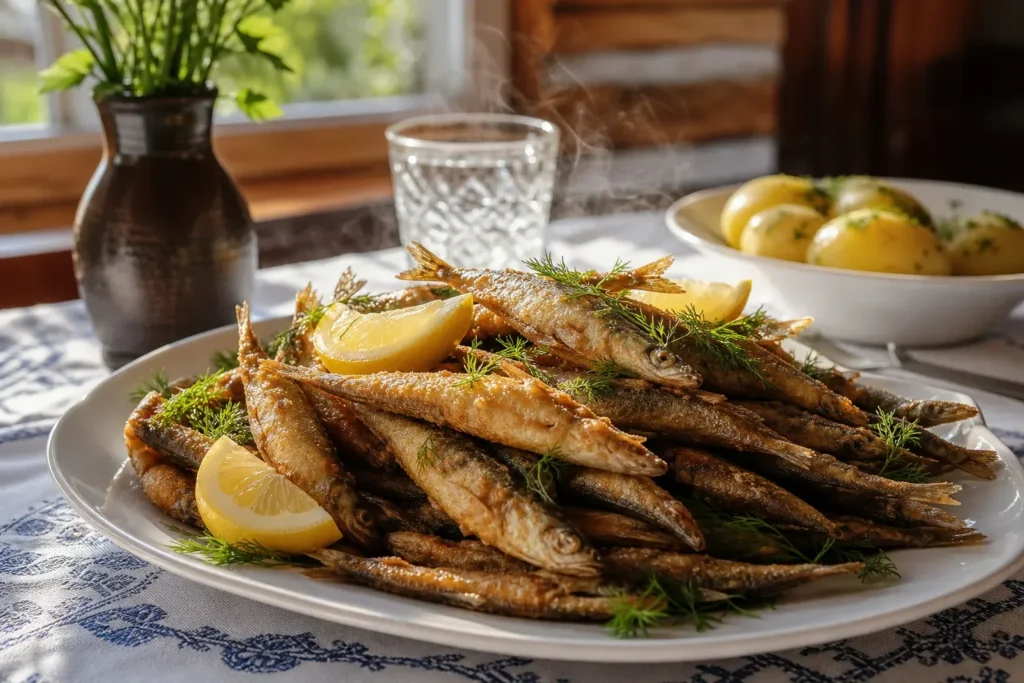
This recipe is for anyone visiting Saint Petersburg in spring and wanting to try the city’s most iconic seasonal fish. Koryushka arrives in the Neva each April and May, and locals celebrate it as a fleeting culinary tradition. This guide will teach you the classic method: the recommended option is simple pan-frying, which takes about 15 minutes and requires no special skills.
The dish lives up to its seasonal nature—fresh koryushka appears for just two months, making it the perfect meal to eat when the fish run, eaten with a cold drink and fresh lemon, the way Saint Petersburg residents have prepared it for centuries.
Quick answer: Wash it, remove the head and guts, coat it with a mixture of flour and salt and pan-fry. Total time: about 20 minutes. The fish rarely grows past 8 inches, is fatty for its size, so it cooks quickly. Cost is budget (₽).
At a Glance
| Type | Dishes |
|---|---|
| Local name | Корюшка жареная |
| Origin | The koryushka story dates back to the 18th century, when it provided sustenance to the growing population of the recently founded Saint Petersburg, the new Russian capital. It was such a crucial source of food that in 1705, Peter the Great issued a decree on the support of fishermen, and in the spring of 1708, a celebration dedicated to smelt was held in the city for the first time. |
| Servings | 2–4 people |
| Total time | 20 minutes |
| Difficulty | Easy |
History and Story of Koryushka, Saint Petersburg
The koryushka story dates back to the 18th century, when it provided sustenance to the growing population of the recently founded Saint Petersburg, the new Russian capital. These cigar-sized fish have saved this city from starvation more than once. In nearby Kronstadt there is monument is dedicated to the Koryushka’s service as patriotic protein during the Nazi blockade. This recipe, known since the beginning of the 19th century, was one of Emperor Nicholas I’s favorite dishes. Today, koryushka remains central to Saint Petersburg’s spring identity, celebrated in annual festivals and regarded as the defining taste of the season.
Ingredients
- 500 g fresh koryushka, cleaned
- 100 g all-purpose flour
- 5 g salt
- 60 ml vegetable oil
- 1 lemon, cut into wedges
- Fresh herbs (dill or parsley)
How Koryushka, Saint Petersburg Is Made
Step 1: Rinse and clean
Wash it, remove the head and guts. Because the fish is tiny, most of the skeleton is edible and will crisp into calcium-rich crunch as it fries—there is no need to fillet. Place cleaned fish on paper towels to dry slightly.
Tip: Do not scale the fish; the delicate skin adds flavor and texture.
Step 2: Prepare the coating
Mix flour and salt in a shallow bowl. This simple coating is traditional in Saint Petersburg.
Tip: Do not use breadcrumbs; the flour crust should stay thin.
Step 3: Coat the fish
Working in batches, toss the cleaned koryushka in the flour-salt mixture until lightly covered on all sides. Shake off any excess.
Tip: Leave fish whole—do not fillet or cut them.
Step 4: Heat the oil
Pour vegetable oil into a wide, shallow pan and heat over medium-high heat until shimmering but not smoking. The oil should be about 1 cm deep.
Tip: Use a neutral oil with a high smoke point, such as sunflower or vegetable oil.
Step 5: Fry the fish
Carefully add the coated koryushka to the hot oil in a single layer. Fry for 1–2 minutes until the undersides turn golden, then flip gently and fry for another 1–2 minutes until both sides are crispy and the bones turn translucent white.
Tip: The crushy, golden delicacy will cook very quickly because the fish is so small.
Step 6: Drain and serve
Transfer fried koryushka to paper towels to drain briefly. Arrange on a plate and serve immediately while still hot. Scatter with fresh herbs and serve with lemon wedges.
Tip: It's best served hot, and with a cold beverage of your choice.
Variants
- "Koryushka a la Riga" – a dish that originated in the Latvian capital city of Riga. In this recipe, Koryushka is lightly dusted with flour, pan-fried until crispy, and served with a generous dollop of sour cream and a side of boiled potatoes. The combination of the crispy fish, creamy sour cream, and hearty potatoes creates a perfect balance of flavors and textures.
- Dried koryushka (salted and air-dried for several days), eaten as a snack with beer.
- You can still buy it smoked, dried, or canned off-season when fresh fish is unavailable.
Common Mistakes to Avoid
- Scaling or filleting the fish: leave them whole. The tiny bones become edible and the skin adds flavor.
- Overcooking the fish: because they are so small, koryushka cooks in just a few minutes. Watch carefully to avoid drying them out.
- Using cold oil: the oil must be hot enough to sizzle immediately when the fish enters the pan, otherwise they will be greasy rather than crispy.
- Removing the head before cooking: the head and guts add flavor. Remove them only if you strongly prefer—locals eat them whole.
- Adding complex seasonings: The traditional way of cooking and serving smelt in St. Petersburg is marinated and fried. Fish (preferably not very large ones) are washed, rolled in flour and left whole to fry on both sides in vegetable oil. Stick to salt, flour, and oil.
How to Order and Eat It
Eat koryushka by hand, picking up the whole fish and biting into the crispy body. The bones and head are edible and become tender and crunchy when fried. Squeeze fresh lemon over the fish for acidity. Traditionally, koryushka is eaten as a shared plate—multiple fish piled together for diners to grab by the handful. Pair with cold beer, kvass, or vodka.
To order: Жареную корюшку, пожалуйста [Zharenuyu koryushku, pozhaluysta]
Russia Vibes Tips
- The fish runs up the Neva in April and May, the embankments smell of cucumber for two weeks. If you are in Saint Petersburg outside this window, koryushka will not be fresh or may not be available at all. Check with restaurants or fish markets in late April to see if the season has begun.
- It smells like cucumbers. It only shows up in the spring. When koryushka are in season, the distinctive cucumber aroma fills the city and street vendors sell them everywhere. This is your signal that the fish is truly fresh.
- Smelt – or koryushka – is the main commercial fish in the area of the Gulf of Finland between Neva and Kronshdadt, near St Petersburg. Buy koryushka at fish markets near the Neva embankment, where vendors sell it freshly caught. Never buy frozen koryushka if fresh is available—the texture will not be the same.
- For the most part, it doesn't need scaling. This is the key to making koryushka easy. Simply clean the belly, keep the skin on, and fry. No scaling or filleting required.
- Do not cook koryushka in advance or reheat it. The fish must be fried and eaten hot the same day. The delicate flesh falls apart when cold or reheated.
- The city holds a festival for it. If you visit Saint Petersburg in late April or May, check whether a koryushka festival is happening. These festivals occur on the Petrograd Side and offer the chance to taste the dish prepared by different vendors and celebrate the seasonal tradition.
Explore Nearby Koryushka, Saint Petersburg
Related guides
 Nevsky Prospekt Area, Saint Petersburg: What Lies Along It
Main image: AI-generated illustration. It may not show the place exactly as it looks.
Browse more: All Food & Drink · All Food & Drink in Saint Petersburg · All Other · All Saint Petersburg
FAQ
Is koryushka only available in spring?
It is hard to name a Perfect Dish of a city when that dish only swims through twice a year, once in Spring and once in Autumn. Fresh koryushka peaks in April–May and again in autumn. If you're there off-season, though, you can still buy it smoked, dried, or canned.
What does koryushka taste like?
It smells like cucumbers. The flavor is delicate and slightly sweet, with a firm, fatty texture. Slightly larger than sardines, and without the fishiness, a heaping pile was served steaming with tartar sauce and a boiled potato.
Do I eat the bones and head of koryushka?
Yes. The fish rarely grows past 8 inches, is fatty for its size, so when fried, the entire skeleton becomes edible and crunchy. The head contains flavor and is traditionally eaten whole.
Why does koryushka smell like cucumber?
During the season, European smelt is sold not just in stores, but at stalls everywhere. You will recognize the fish by its cucumber-like smell. The cucumber scent is a natural characteristic of fresh smelt and is a sign of quality and freshness.
Can I substitute koryushka with other small fish?
While other small fish such as sardines or anchovies can be fried in a similar way, they will not have the same subtle flavor or texture. Koryushka is specific to Saint Petersburg and is celebrated for its unique taste. If you cannot find fresh koryushka, restaurants in the city serve it year-round from frozen or canned supplies.
Is this dish healthy?
Koryushka is a small, oily fish high in omega-3 fatty acids and can be eaten whole with the bones, providing extra calcium. However, because it is typically fried, the dish is calorie-dense. It is eaten in moderation, usually as an appetizer or snack with cold drinks.
Where did the koryushka festival originate?
It is said that Peter the Great issued a decree that supported the local fishermen who fished koryushka and approved the first festival dedicated to the fish in 1708. The festival tradition continues today as a celebration of the seasonal catch.
What oil should I use to fry koryushka?
Use a neutral vegetable oil such as sunflower oil, with a high smoke point. Avoid olive oil or other strong-flavored oils, which will overpower the delicate taste of the fish. Traditional Saint Petersburg recipes use vegetable or sunflower oil.
Russia Vibes is a one-person project. A coffee keeps it going
How we research and update our guides
About this guide: AI assistance and accuracy
This guide is created with the help of AI and is based on official sources where available. Mistakes can still happen. Opening hours, prices, rules and other details are given to the best of our knowledge as of the date shown and can change without notice. It offers general recommendations only, not professional, legal or travel advice. Please confirm important details with the official source before you travel; you are responsible for your own plans and decisions.

Take this guide with you
Get a free PDF of this guide to print or read offline: key facts, tips and a map link on a few clean pages.
Report an issue on this page
Paying for your trip: please read
International sanctions affect payments between Russia and many other countries. In practice, cards issued in the EU, the UK, the US and several other countries often do not work in Russia, Russian cards usually do not work abroad, and some booking platforms, airlines and payment providers limit or suspend their services for Russia. The situation changes frequently.
We do not give legal or financial advice, and this site does not encourage anyone to break or circumvent sanctions. Whatever you plan, you are responsible for following the laws and regulations that apply to you, including those of your country of residence and citizenship.
Many travelers still organise their stay lawfully. It is worth asking your bank or payment provider what is currently permitted, contacting hotels, tour operators and carriers directly about the payment methods they accept, and checking which services are open to customers from your country. Clarify payment, cancellation and refund terms before you commit to a booking, and keep your plans flexible.
Partner links on this site may not be available in every country, and prices, availability and rules in our guides can differ from what you see when you book.