
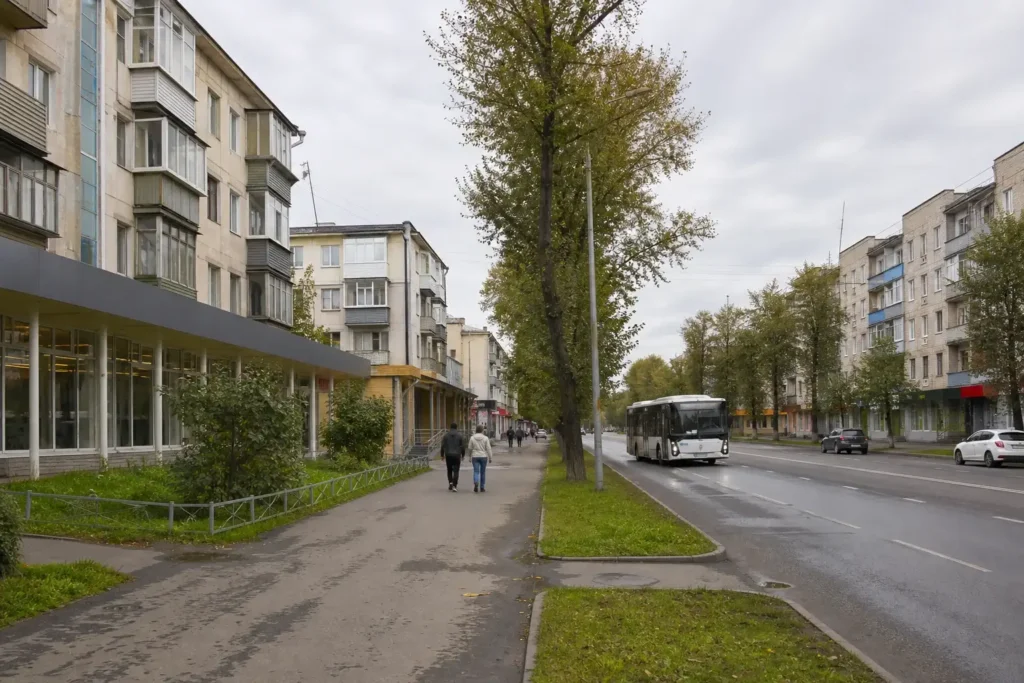
Chkalovsky District (Чкаловский) is a major administrative division of Yekaterinburg covering 402 square kilometers in the southern reaches of Russia’s fourth-largest city. The district, established in 1943, takes its name from Valery Chkalov, a celebrated Soviet test pilot and aviation pioneer. Home to approximately 286,000 residents, Chkalovsky is primarily a residential neighborhood with Soviet-era housing blocks mixed with newer development.
The district is well connected to central Yekaterinburg by two metro stations on the First Line: Chkalovskaya and Botanicheskaya, which opened in 2012 and 2011 respectively. Visitors find Chkalovsky useful as a base for accessing southern attractions and as a window into Yekaterinburg’s residential character beyond the city center.
Quick Facts
| Russian name | Чкаловский |
|---|---|
| Address | OpenStreetMap · Google Maps |
| District | Chkalovsky |
| Metro | Chkalovskaya (Line 1, south of district) Botanicheskaya (Line 1, southern terminal) |
| Best time to visit | Spring (May–June) and early autumn (September–early October) offer pleasant weather for exploring the neighborhoods on foot. Summer is also popular but can be warm. Winter brings snow and cold; dress warmly if visiting then. Weekdays are quieter; weekends bring more pedestrian activity around shopping centers. |
Why Visit Chkalovsky, Yekaterinburg?
Chkalovsky offers visitors a genuine view of how ordinary Yekaterinburg residents live, away from the center’s tourist attractions. The district contains shopping centers, parks, and local restaurants that reflect current urban Russian life. Its two metro stations provide quick access to downtown attractions while remaining more affordable than central hotels. The district is also a practical hub for travelers using the south bus station or exploring the botanical gardens and parks in the area.
How Chkalovsky, Yekaterinburg Is Laid Out
Chkalovsky District stretches south from central Yekaterinburg. The northern boundary of the district is marked by the Chkalovskaya metro station (on ulitsa 8 Marta), which serves as a key entry point. The southern terminal station, Botanicheskaya, lies on the line heading further south. The main commercial and administrative hub of the district centers around the district administration building, a distinctive Soviet structure with a five-pointed star atop the entrance, located on ulitsa 8 Marta. Shopping centers such as Alatyr and Uspensky are scattered through the district and serve as local landmarks. Most of the district consists of residential neighborhoods with a mix of Soviet apartment blocks and newer housing developments.
Atmosphere
Chkalovsky feels distinctly residential and workday, especially compared to Yekaterinburg’s central streets. The avenues are lined with five- to nine-story apartment blocks, many dating from the Soviet and immediate post-Soviet eras, interspersed with newer construction. Tree-lined streets give the area a quieter character than central districts. During working hours, the streets fill with commuters heading to and from the metro stations; evenings bring families to local parks and shops. The shopping centers provide gathering points, though the overall tempo remains more domestic than tourist-oriented. Autumn and winter bring dramatic changes—the long winters can leave snow-covered parks and streets, while summer offers green foliage and local outdoor markets near transit hubs.
History of Chkalovsky, Yekaterinburg
Chkalovsky District was formally established in 1943 as Yekaterinburg (then Sverdlovsk) expanded southward. The district’s name honors Valery Pavlovich Chkalov (1904–1938), a legendary Soviet test pilot and aviation hero whose short life and dramatic flights captured the Soviet imagination. Chkalov flew record-breaking routes, including a famous non-stop flight from Moscow to Vancouver that crossed the Arctic, cementing his status as a hero before his death in a test flight crash.
The district developed primarily during the Soviet era as a residential quarter for workers and their families, reflecting the industrial growth of Yekaterinburg (Sverdlovsk). Most of the distinctive architecture dates from the 1950s–1980s, when standardized apartment blocks were constructed to house the expanding urban workforce. The district grew from a sparsely populated periphery into a substantial urban zone with its own infrastructure, shops, and services.
For many decades, southern Yekaterinburg remained relatively isolated from the city center due to limited transport links. This changed dramatically with the opening of the Yekaterinburg Metro’s first line. Geologicheskaya station opened in 2002 as the line extended south; Chkalovskaya followed in July 2012 and Botanicheskaya in November 2011 (in the unusual sequence of Botanicheskaya opening eight months before Chkalovskaya due to construction phases and financing challenges). The arrival of metro service transformed Chkalovsky from a distant periphery into an accessible neighborhood and made it a practical choice for visitors and residents working downtown.
How to Get to Chkalovsky, Yekaterinburg
By metro: Chkalovskaya station (Line 1, exit onto ulitsa 8 Marta) is the primary entry point. From the station, the main district spreads in all directions. Walking south on ulitsa 8 Marta leads to the district administration building and shopping centers. Botanicheskaya station (the terminal station) lies at the southern end of the district.
On foot: The district is sprawling and requires metro or local bus transport for longer distances between neighborhoods. Most shops and amenities are within a 10–15 minute walk of the metro stations.
Accessibility
The metro stations Chkalovskaya and Botanicheskaya both have elevator access. Sidewalks in the commercial areas are generally in good condition, though older residential neighborhoods may have uneven surfaces. Wheelchairs are usable on metro platforms and in shops, though some smaller streets lack dedicated wheelchair paths.
Food Nearby
Chkalovsky District has numerous local cafés, fast-food chains, and restaurants scattered throughout, particularly near the Alatyr and Uspensky shopping centers and along the main streets. Options range from budget to moderate; authentic local dishes are served in small family-run cafés alongside international chains.
What to Bring
Comfortable walking shoes are essential, as the district is large and exploration involves significant walking. In winter, bring warm clothing, a hat, and waterproof boots. A local metro card or cash for transport is useful. The area is safe; standard urban precautions apply.
Photography Rules
No restrictions on photography in public areas, parks, or streets. Permission required if photographing private residences or inside homes. Commercial photography (commercial shoots) may require permission from property owners.
Family Suitability
Chkalovsky is family-friendly as a residential neighborhood. Parks offer playgrounds and walking paths suitable for strollers and children. Shopping centers have family amenities. The district has no specific tourist attractions that draw children, but the parks and open spaces are pleasant for families seeking a local atmosphere away from crowded central attractions. Schools, pediatric clinics, and playgrounds are part of the local infrastructure.
Russia Vibes Tips
- Don't expect tourist attractions in Chkalovsky itself; the district is residential. Use it as a base to reach central Yekaterinburg via the two-minute metro ride from Chkalovskaya, or stay for the authentic local experience and affordability.
- The shopping centers Alatyr and Uspensky (mentioned on district signage) offer genuine local shopping and dining without tourist markups. Uspensky frequently holds sales, making it worthwhile for budget shoppers.
- The distinctive district administration building with its five-pointed star is an easy landmark for orientation. It's located on ulitsa 8 Marta near Chkalovskaya metro station and serves as the visual centerpoint of the administrative area.
- Winter changes the character dramatically. If visiting in cold months, many locals move quickly between heated spaces; outdoor exploration requires serious cold-weather gear but reveals beautiful snow-covered parks and a quieter side of city life.
- Valery Chkalov, the district's namesake, is a significant figure in Russian aviation history. Visitors interested in Soviet aviation or Russian history will appreciate knowing this connection; museums in central Yekaterinburg hold more extensive exhibits on him.
Where to Find Chkalovsky, Yekaterinburg in Russia
More chains in Russia
 Downtown/City Center, Yekaterinburg
Main image: AI-generated illustration. It may not show the place exactly as it looks.
 Kirovsky, Yekaterinburg
Main image: AI-generated illustration. It may not show the place exactly as it looks.
 Leninsky, Yekaterinburg
Main image: AI-generated illustration. It may not show the place exactly as it looks.
 Verkh-Isetsky, Yekaterinburg
Main image: AI-generated illustration. It may not show the place exactly as it looks.
Browse more: More in Chkalovsky · All Neighborhood · All Neighborhoods · All Neighborhoods in Yekaterinburg · All Yekaterinburg
FAQ: Chkalovsky, Yekaterinburg
Is Chkalovsky District worth visiting as a tourist?
Chkalovsky itself has no major tourist attractions. It is valuable as a residential base for budget-conscious visitors, as an authentic window into how Yekaterinburg residents live, and for accessing shopping and local dining. Most tourist sites are in the city center, a quick metro ride away.
How do I get from Chkalovsky to downtown Yekaterinburg?
Take the metro from Chkalovskaya or Botanicheskaya station on Line 1 heading north. The journey to central stations such as Ploshchad 1905 Goda takes about 10–15 minutes. Alternatively, local buses serve the district but are slower than metro.
What does the five-pointed star on the district administration building represent?
It is a Soviet symbol representing communism and the five continents. The building, a typical Soviet-era administrative structure, dates from the Cold War period and remains a recognizable landmark in the district.
Is it safe to walk around Chkalovsky District alone?
Yes, Chkalovsky is a stable residential district with standard urban safety. Use common sense: avoid isolated areas at night, keep valuables secure, and stay aware of traffic. The areas near metro stations and shopping centers are busier and safer, especially in daylight.
Are there parks or green spaces in Chkalovsky?
Yes, the district has several parks serving local residents. The most notable is the Botanical Garden (near Botanicheskaya metro station), which is a major regional attraction. Local neighborhood parks offer playgrounds, walking paths, and green space for recreation.
What is Valery Chkalov, after whom the district is named?
Valery Chkalov (1904–1938) was a celebrated Soviet test pilot and aviation hero. He achieved fame for record-breaking long-distance flights, including a non-stop Arctic route from Moscow to North America. He died in a test flight crash and became a major Soviet icon.
Are there hotels in Chkalovsky District?
Yes, there are budget and mid-range hotels and hostels throughout the district, particularly near the metro stations. These offer affordable accommodation with convenient metro access to the city center, though they lack the amenities of central hotels.
When did the metro stations in Chkalovsky open?
Chkalovskaya station opened in July 2012, and Botanicheskaya (the terminal station) opened in November 2011. The unusual opening sequence reflected phased construction and financing. Before this, the district had limited transit connections.
Russia Vibes is a one-person project. A coffee keeps it going
How we research and update our guides
About this guide: AI assistance and accuracy
This guide is created with the help of AI and is based on official sources where available. Mistakes can still happen. Opening hours, prices, rules and other details are given to the best of our knowledge as of the date shown and can change without notice. It offers general recommendations only, not professional, legal or travel advice. Please confirm important details with the official source before you travel; you are responsible for your own plans and decisions.

Take this guide with you
Get a free PDF of this guide to print or read offline: key facts, tips and a map link on a few clean pages.
Report an issue on this page
Paying for your trip: please read
International sanctions affect payments between Russia and many other countries. In practice, cards issued in the EU, the UK, the US and several other countries often do not work in Russia, Russian cards usually do not work abroad, and some booking platforms, airlines and payment providers limit or suspend their services for Russia. The situation changes frequently.
We do not give legal or financial advice, and this site does not encourage anyone to break or circumvent sanctions. Whatever you plan, you are responsible for following the laws and regulations that apply to you, including those of your country of residence and citizenship.
Many travelers still organise their stay lawfully. It is worth asking your bank or payment provider what is currently permitted, contacting hotels, tour operators and carriers directly about the payment methods they accept, and checking which services are open to customers from your country. Clarify payment, cancellation and refund terms before you commit to a booking, and keep your plans flexible.
Partner links on this site may not be available in every country, and prices, availability and rules in our guides can differ from what you see when you book.