
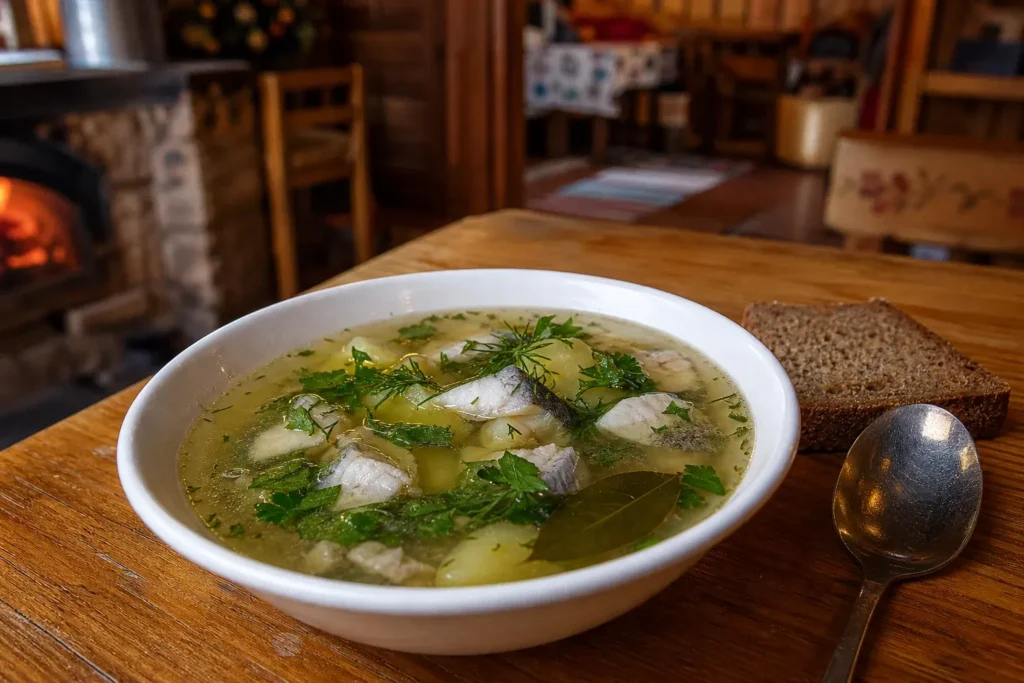
Ukha is one of Russia’s oldest dishes, a clear fish broth that embodies Siberian tradition and hospitality. In Irkutsk, visitors encounter this centuries-old soup in its most authentic form—made with freshwater fish from the region’s rivers and lakes, simmered with simple vegetables and fresh herbs until the broth turns crystalline and fragrant.
This article teaches you how to prepare authentic ukha at home or recognize it in local restaurants. The recommended approach uses whole fresh fish or fish heads to build a flavorful broth, then adds vegetables and fish fillet pieces, finishing with fresh dill—a preparation method favored by Siberian cooks.
Quick answer: In Siberia, ukha is traditionally made with salmon and trout. Prepare the fish broth first (30–45 minutes), then add vegetables and cook until potatoes are tender and fish is cooked through (10–15 minutes). Total time: 60–75 minutes. Cost: budget to moderate.
At a Glance
| Type | Dishes |
|---|---|
| Local name | уха |
| Origin | The term "ukha" for fish broth emerged in Russian cuisine in the late 17th to early 18th centuries. Beginning in the 15th century, fish was increasingly used to prepare ukha. In the 19th century, many travellers visiting Russia claimed ukha to be one of the best dishes in Russian cuisine. Lake Baikal in the Irkutsk region is historically significant in ukha preparation traditions. |
| Servings | 4 servings |
| Total time | 60–75 minutes |
| Difficulty | Easy |
History and Story of Ukha, Irkutsk
Ukha is a traditional rustic fish dish that dates back to the 11th century. It was not originally a fish soup; it was made from game and animal scraps, and only became a fish dish in the 15th century. By the 17th century, it had become an elevated dish served at royal courts. The original Russian recipe called for only fish, onions, and salt, but has since evolved to include potatoes, carrots, celery, dill and parsley. Fishermen follow their own rituals when cooking ukha, using river water and sometimes extinguishing a firebrand in the pot for aroma. They traditionally add vodka at the end as an antioxidant.
Ingredients
- 1 whole fresh fish (600–800 g, such as trout or salmon), cleaned, or fish heads and backbone
- 500 g fresh fish fillet (same type as broth fish), cubed
- 2–3 medium potatoes, peeled and cut into large pieces
- 1 large onion, halved or quartered
- 1–2 carrots, unpeeled, halved or quartered
- 2–3 bay leaves
- 6–8 whole black peppercorns
- 2 liters water or fish stock
- Fresh dill and parsley for garnish
- Salt to taste
How Ukha, Irkutsk Is Made
Step 1: Prepare the fish for broth
If using a whole fish, clean it well, removing gills and guts but keeping the head. If using fish heads and backbone, rinse thoroughly under cold water. Pat dry. Place the whole fish or bones in a large pot.
Tip: Fresh fish makes the clearest, most flavorful broth. Ask your fishmonger to clean the fish or prepare heads and spines.
Step 2: Build the broth foundation
Add water (about 2 liters), one halved onion, one halved carrot (keep unpeeled for clearer broth), bay leaves and peppercorns. Bring to a boil over high heat. Once boiling, immediately reduce heat to low.
Tip: Fresh cut fish is traditionally added to boiling salted vegetable broth based on onions and carrots.
Step 3: Simmer and skim
Simmer gently for 30–40 minutes. Using a slotted spoon, skim off white or gray foam that rises to the surface. Ukha is cooked with the lid open, simmering on low heat; boiling is unacceptable. Do not stir the broth during cooking to keep it clear.
Tip: Never let the broth boil hard or it will become cloudy instead of transparent.
Step 4: Strain the broth
Carefully pour the broth through a fine sieve lined with cheesecloth into a clean pot. Discard the cooked fish, vegetables and bones. If the fish has any meat still attached, remove it, chop finely and set aside; discard the rest.
Tip: Strain slowly and gently to avoid disturbing any sediment that may cloud the broth.
Step 5: Cook the vegetables
Return the clear broth to the heat. Cut fresh potatoes into large, uniform pieces and add them to the broth along with 2–3 fresh bay leaves. Bring to a gentle simmer. Cook for 8–10 minutes until potatoes are almost tender.
Tip: Cut vegetables uniformly so they cook at the same rate.
Step 6: Add the fish
Cut the fresh fish fillet into 2-inch cubes. Add to the simmering broth and cook for 8–10 minutes until the fish is just cooked through and flakes easily. Season with salt to taste.
Tip: Do not overcook the fish or it will fall apart and cloud the soup.
Step 7: Finish and serve
Remove from heat. Stir in a generous handful of fresh chopped dill and parsley. Ladle into bowls and serve immediately in deep bowls. Serve with dark rye bread and sour cream on the side.
Tip: Ukha was traditionally cooked over an open fire by fishermen using clear water from the same waters where they fished, resulting in a light, clear, delicious soup.
Variants
- White ukha: made from pike, whitefish, perch or bass, resulting in a very clear, delicate broth
- Red ukha (Siberian specialty): made from salmon, trout or sturgeon, favored in Irkutsk and northern Russia
- Black ukha: made from carp, sazan or crucian carp, producing a richer, darker broth
- Tsar ukha: historically made with chicken broth and saffron, served at imperial tables
- Omul ukha: specific to Lake Baikal region, using the endemic omul whitefish from Irkutsk waters
Common Mistakes to Avoid
- Using frozen fish instead of fresh: frozen fish releases more liquid and clouds the broth. Use the freshest fish available or ask the fishmonger for the daily catch.
- Stirring the broth: constant stirring breaks up particles and turns the soup cloudy. Let it simmer undisturbed.
- Boiling instead of simmering: vigorous boiling emulsifies fats and creates a murky broth. Keep heat low and gentle throughout.
- Overcooking the fish pieces: fish added in the final stage should cook just until tender, not until it falls apart. This takes 8–10 minutes for cubes; remove from heat as soon as done.
- Omitting the first vegetables from the broth: the onion and carrot used to make stock provide flavor and body. Do not skip this step even though they are strained out.
- Adding fish too early: if you add filleted fish to the initial broth-making phase, it will overcook and the broth will taste fishy and muddy. Add fish only in the final stage after straining.
How to Order and Eat It
Serve ukha hot in deep bowls. The tradition is to eat it with chunks of dark rye bread, which absorbs the fragrant broth. Often, sour cream is dolloped on top or served on the side. In Siberia, ukha is sometimes served with rasstegai (small fish pies). The soup should be clear and aromatic, with visible pieces of tender fish and cooked vegetables. Taste the broth first—it is the centerpiece of the dish. The simplicity is intentional; the depth of flavor comes from the quality of the fish and the gentle cooking method, not from many spices.
To order: Уху, пожалуйста [Ukhu, pozhaluysta]
Diet and Allergens
- Gluten-free (if no breadcrumbs are added as thickener)
Russia Vibes Tips
- If you cannot find fresh whole fish, ask your fishmonger to save you fish heads and spines. These contain collagen and gelatin that create the body of the broth. Many shops will give them to you free or very cheaply.
- The fish used should be fresh and tender varieties; not any fish is suitable for proper ukha. In Irkutsk, look for locally caught salmon, trout or Lake Baikal omul in markets and restaurants.
- The clarity of the broth is a sign of success. If your broth is cloudy after straining, you can brighten it by whisking two egg whites with a fork and slowly stirring them into the simmering broth. The proteins will collect sediment and rise to the top as a raft, which you can then skim off.
- Use non-oxidized, enameled or clay pots for cooking ukha. Aluminum or cast-iron pots can spoil the taste of the classic dish.
- Do not add more vegetables or cream than called for. Ukha's character comes from its clarity and the pure taste of good fish broth, not from heavy additions. Resist the urge to enrich it further.
- In Siberian tradition, some cooks add a small shot of vodka at the very end of cooking. This was historically used as an antioxidant to keep the broth clear. You can omit this step if you prefer.
Explore Nearby Ukha, Irkutsk
Related guides
 Local Food & Market Walk, Yekaterinburg: Central Market, Pelmeni and Street Eats
Main image: AI-generated illustration. It may not show the place exactly as it looks.
 Iset River Embankment & Plotinka Walk: Yekaterinburg’s Historic Heart
Main image: AI-generated illustration. It may not show the place exactly as it looks.
Browse more: All Food & Drink · All Food & Drink in Irkutsk · All Irkutsk · All Other
FAQ
What is the difference between ukha and a regular fish soup?
While ukha is a fish dish made with broth, calling it a fish soup may not be absolutely correct. Ukha prioritizes the clarity and purity of the broth itself; the broth is the star, not a background. Other fish soups may be creamy, cloudy, or heavily spiced. Ukha is spare and elegant.
Can I make ukha with just fish fillet, no heads or bones?
You can, but the result will lack the deep, silky body that comes from bones and collagen. Traditional ukha uses whole fish or fish heads and spines to build a rich, gelatinous broth. If using fillets only, add them at the very end for 10–12 minutes or the soup will become cloudy.
Is ukha served hot or cold?
Ukha is always served hot. It is a warming soup, especially important in Siberia's long winters. The aroma and warmth are part of the experience.
What does ukha taste like?
Ukha should taste clean and delicate, with the pure, slightly sweet flavor of fresh fish broth. It is not fishy or strong. The dill and parsley add a bright, fresh herbal note. The vegetables add subtle sweetness. Bay leaf and black pepper provide gentle spice.
Can I make ukha ahead of time?
Yes. Prepare the fish broth a day ahead and store it in the refrigerator. The day you serve it, gently reheat the broth, then add fresh potatoes, fish fillet and dill in the final stage. Do not reheat pre-cooked fish and vegetables multiple times, as the fish will overcook and the soup will cloud.
Is ukha gluten-free?
Yes. Ukha contains no flour or grains and is naturally gluten-free, provided you serve it with regular bread or rye bread (check that bread for gluten if eating with someone with celiac disease). Some restaurants might add breadcrumbs as a thickener; ask if uncertain.
What fish is best for ukha in Irkutsk?
Omul is an endemic whitefish from Lake Baikal, typically smoked or salted in Irkutsk. For fresh ukha, look for local salmon, trout, or Baikal omul in markets. Pike and perch also make excellent ukha. Ask your fishmonger for the freshest fish available.
Why does my ukha look cloudy instead of clear?
This happens when the broth is boiled too hard, stirred too much during cooking, or when fish is overcooked. To prevent: keep heat very low (gentle simmer, never boiling), do not stir the broth, and time the vegetables and final fish pieces carefully so they do not overcook and break apart.
Russia Vibes is a one-person project. A coffee keeps it going
How we research and update our guides
About this guide: AI assistance and accuracy
This guide is created with the help of AI and is based on official sources where available. Mistakes can still happen. Opening hours, prices, rules and other details are given to the best of our knowledge as of the date shown and can change without notice. It offers general recommendations only, not professional, legal or travel advice. Please confirm important details with the official source before you travel; you are responsible for your own plans and decisions.

Take this guide with you
Get a free PDF of this guide to print or read offline: key facts, tips and a map link on a few clean pages.
Report an issue on this page
Paying for your trip: please read
International sanctions affect payments between Russia and many other countries. In practice, cards issued in the EU, the UK, the US and several other countries often do not work in Russia, Russian cards usually do not work abroad, and some booking platforms, airlines and payment providers limit or suspend their services for Russia. The situation changes frequently.
We do not give legal or financial advice, and this site does not encourage anyone to break or circumvent sanctions. Whatever you plan, you are responsible for following the laws and regulations that apply to you, including those of your country of residence and citizenship.
Many travelers still organise their stay lawfully. It is worth asking your bank or payment provider what is currently permitted, contacting hotels, tour operators and carriers directly about the payment methods they accept, and checking which services are open to customers from your country. Clarify payment, cancellation and refund terms before you commit to a booking, and keep your plans flexible.
Partner links on this site may not be available in every country, and prices, availability and rules in our guides can differ from what you see when you book.