
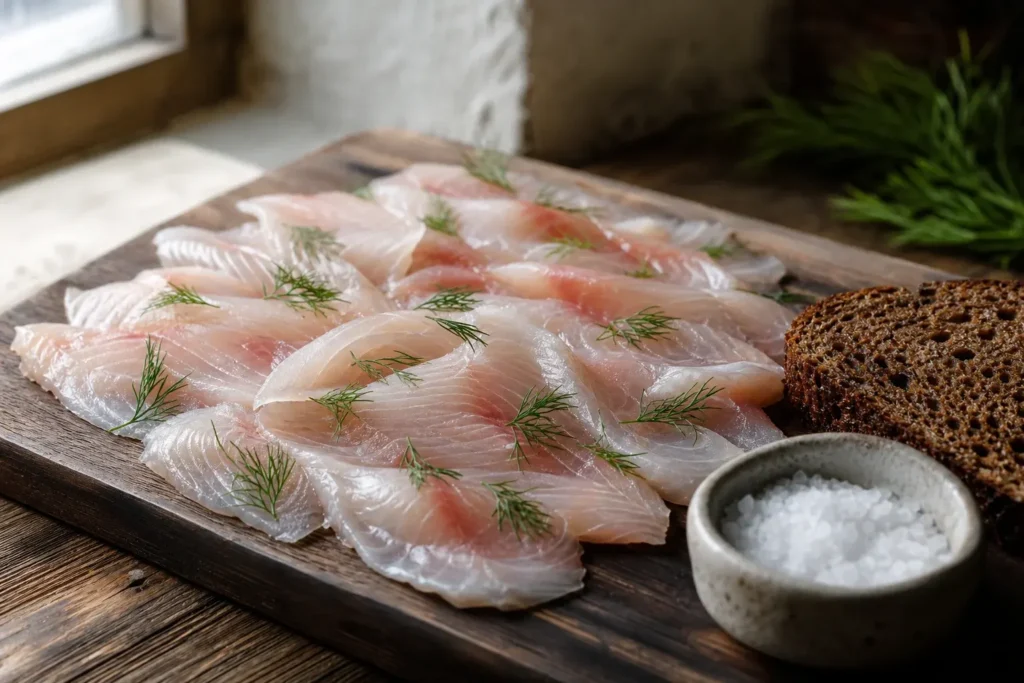
Muksun is a prized whitefish from Siberia’s cold rivers, and visitors to Irkutsk can experience it prepared the traditional way. How to cook muksun fish as locals have for generations: lightly cured, tender, and nearly boneless. This guide shows you the easiest method—light salting—which takes advantage of the fish’s naturally delicate flavour without heavy seasoning.
Muksun’s fine texture and subtle taste make it ideal for simple preparations. The most popular approach in Siberia is gentle curing, which locals say brings out the fish’s characteristic freshness without overpowering it.
Quick answer: The traditional light-salting method: clean and fillet the fish, sprinkle salt and sugar evenly, refrigerate under light pressure for 24–36 hours, then slice and serve. Total time: overnight plus 30 minutes for finishing.
At a Glance
| Type | Dishes |
|---|---|
| Local name | муксун |
| Origin | Siberian rivers (Ob, Yenisei, Irtysh basins) |
| Servings | 2–4 people |
| Total time | 24–36 hours (mostly unattended) |
| Difficulty | Easy |
History and Story of Muksun fish, Irkutsk
Muksun has been a staple food for indigenous Siberian peoples of the Ob and Yenisei river basins for centuries. The light-salting method developed as a way to preserve the catch during long winters while maintaining the fish’s delicate character. In Irkutsk and throughout Siberia, cured muksun became a mark of local food identity and a gift item for travellers. The fish is traditionally served at gatherings and special meals, and cured varieties are still sold in Irkutsk markets.
Ingredients
- 600–800 g muksun fillet (or whole fish, about 1 kg)
- 80 g salt
- 40 g sugar
- 1 tsp ground black pepper (optional)
- Fresh dill or parsley (optional)
- Refrigerator with space for a weight
How Muksun fish, Irkutsk Is Made
Step 1: Prepare the fish
Rinse the whole muksun under cold water and pat dry with kitchen paper. Using a sharp knife, remove the head and gut the fish through the belly, taking care not to puncture the delicate flesh. You can leave the skin on; do not scrape off scales. If using fillets, skip to the next step.
Tip: Muksun bones are softer than most fish, so handle gently.
Step 2: Fillet the fish
Lay the fish on a cutting board. Cut along the spine from behind the head toward the tail on both sides, following the backbone. Carefully lift each fillet away from the bones, keeping the fillet intact. You now have two boneless sides. If the fillet has any remaining bones, pull them out with tweezers.
Tip: Save the head and bones for stock if desired.
Step 3: Mix the cure
In a small bowl, combine salt, sugar, and black pepper if using. Stir until evenly mixed. This simple 2:1 salt-to-sugar ratio is traditional in Siberia and does not overpower the fish's delicate taste.
Tip: Avoid adding excessive spices; muksun's subtle flavour is the point.
Step 4: Apply the cure
Place the fillets skin-side down in a clean dish. Sprinkle the salt mixture evenly over both fillets, coating all surfaces, including the edges. Fold the fillets in half if they fit in your container, or lay them flat, one atop the other with skin sides facing outward. Cover with plastic wrap or a plate.
Tip: Use a non-reactive dish: glass or ceramic, not aluminum.
Step 5: Weight and refrigerate
Place a light weight (a smaller plate or cutting board with a can or book on top) on the fish to keep it submerged in its own liquid. Refrigerate for 24–36 hours. You should see a brine form as the salt draws moisture from the flesh.
Tip: Do not over-weight; gentle pressure is all that is needed.
Step 6: Rinse and slice
Remove the fish from the brine and rinse briefly under cold water to remove excess salt. Pat dry. Using a very sharp knife held at a slight angle, slice the fillet into thin pieces, cutting against the grain. The flesh should be translucent and silky.
Tip: A cold knife works better than a warm one; chill it first if needed.
Step 7: Serve
Arrange slices on a plate and serve at once, or cover and refrigerate for a few hours. Drizzle with a little neutral oil if desired, and garnish with fresh dill or a squeeze of lemon. Traditionally served with dark bread, butter, and pickled vegetables on the side.
Tip: Muksun is best enjoyed fresh; consume within 2–3 days.
Variants
- Stroganina: muksun frozen solid, then sliced paper-thin and served raw with salt, pepper, and oil—a traditional preparation among northern indigenous peoples
- Smoked muksun: cold-smoked whole or in fillets, available prepared in Irkutsk shops
- Muksun in cream sauce: gentle oven-baking with sour cream, herbs, and sometimes mushrooms
- Fish soup (ukhá): muksun used as base or ingredient, simmered with root vegetables
Common Mistakes to Avoid
- Using too much salt or seasoning, which masks muksun's delicate flavour. Remember: the fish should taste like itself, not like spices.
- Over-weighting the fish during curing, which can make the flesh mushy instead of tender. A light plate and minimal weight are sufficient.
- Skipping the rinsing step, leaving the fish too salty. A quick rinse removes excess salt on the surface without affecting the cured interior.
- Slicing too thickly, which makes the texture feel coarse. Thin slices showcase the silky texture that makes muksun special.
- Leaving the fish at room temperature instead of refrigerating. Muksun is perishable; keep it cold at every stage.
How to Order and Eat It
Serve sliced cured muksun on dark rye or pumpernickel bread with a thin spread of butter. A piece of pickled cucumber or pickled onion alongside complements the subtle salinity. In Irkutsk restaurants, it may arrive as a snack (zakúska) before the main course, or as part of a cold fish platter. The traditional pairing is with vodka or local beer, though it is equally good with black tea or weak tea.
To order: Муксун слабосолёный [Muksun slabosólyony]
Where to Try Muksun fish, Irkutsk
Irkutsk
 Restoratsiya Kuptsa Nemchinova, Irkutsk Siberian and Russian merchant cuisine with Baikal fish and taiga products
Main image: AI-generated illustration. It may not show the place exactly as it looks.
Russia Vibes Tips
- Buy muksun frozen in Irkutsk markets: fresh and frozen varieties are available year-round. Thaw in the refrigerator overnight, not at room temperature, to preserve texture.
- Do not confuse muksun with omul. Both are Siberian fish, but omul is endemic to Lake Baikal and tastes slightly richer. Muksun is more delicate and has a subtle cucumber-like freshness.
- In winter, some Irkutsk restaurants serve muksun as stroganina—frozen and sliced paper-thin. Ask at local restaurants or the market if you want to try this raw version.
- If you buy pre-cured muksun at a shop, you still may want to rinse it slightly and slice it fresh before serving, as packaged versions are sometimes over-salted.
- Muksun is best eaten the same day it is sliced. If you prepare it at home and have leftovers, store in a sealed container in the coldest part of the refrigerator and consume within 1–2 days.
- Some Siberian cooks add a pinch of ground coriander seed or a bay leaf to the cure, but this is less common. The traditional Irkutsk method is salt, sugar, and nothing else—let the fish speak for itself.
Explore Nearby Muksun fish, Irkutsk
Browse more: All Food & Drink · All Food & Drink in Irkutsk · All Irkutsk · All Other
FAQ
Is muksun the same as omul?
No. Omul is endemic to Lake Baikal and is richer and fattier. Muksun is from Siberian rivers and has a more delicate, subtle taste. Both are cured similarly, but muksun is considered even more refined and is rarer outside Siberia.
Where can I buy muksun in Irkutsk?
Fresh and frozen muksun are sold at central markets (including the Tsentralniy rynok), supermarkets, and specialist fishmongers. Pre-cured and smoked versions are available in most supermarkets and at tourist food shops near the city center.
Why does my muksun taste too salty?
Shop-bought cured muksun is often quite salty. Rinse it under cold water for a few seconds, pat dry, and slice thinly. The outside layer will be fresher than the interior. If you prepare it at home, the 2:1 salt-to-sugar ratio used here produces a gentle cure.
Can I use frozen muksun?
Yes. Frozen muksun is common in Irkutsk and cures beautifully. Thaw it slowly in the refrigerator overnight before preparing. Do not thaw at room temperature, as the delicate flesh will become mushy.
How long can I keep homemade cured muksun?
Once cured, consume within 2–3 days if stored in the coldest part of the refrigerator. It is perishable and not shelf-stable like fully salted or smoked fish.
What is stroganina?
Stroganina is a traditional Siberian and Arctic preparation: frozen fish sliced paper-thin while still solid and served raw with salt, pepper, and oil. Muksun is ideal for this. It is becoming popular in some Irkutsk restaurants; ask locally.
Does muksun have many bones?
Muksun has very few intramuscular bones, which is one reason it is prized. When you fillet it, the bones come out easily. Some small pin bones may remain; remove them with tweezers before curing or serving.
Can I cook muksun instead of curing it?
Yes. Muksun is excellent gently baked in the oven with lemon and herbs, or pan-fried in butter for just 2 minutes per side. However, curing is the traditional Siberian method and is the easiest preparation for a visitor without a kitchen.
Russia Vibes is a one-person project. A coffee keeps it going
How we research and update our guides
About this guide: AI assistance and accuracy
This guide is created with the help of AI and is based on official sources where available. Mistakes can still happen. Opening hours, prices, rules and other details are given to the best of our knowledge as of the date shown and can change without notice. It offers general recommendations only, not professional, legal or travel advice. Please confirm important details with the official source before you travel; you are responsible for your own plans and decisions.

Take this guide with you
Get a free PDF of this guide to print or read offline: key facts, tips and a map link on a few clean pages.
Report an issue on this page
Paying for your trip: please read
International sanctions affect payments between Russia and many other countries. In practice, cards issued in the EU, the UK, the US and several other countries often do not work in Russia, Russian cards usually do not work abroad, and some booking platforms, airlines and payment providers limit or suspend their services for Russia. The situation changes frequently.
We do not give legal or financial advice, and this site does not encourage anyone to break or circumvent sanctions. Whatever you plan, you are responsible for following the laws and regulations that apply to you, including those of your country of residence and citizenship.
Many travelers still organise their stay lawfully. It is worth asking your bank or payment provider what is currently permitted, contacting hotels, tour operators and carriers directly about the payment methods they accept, and checking which services are open to customers from your country. Clarify payment, cancellation and refund terms before you commit to a booking, and keep your plans flexible.
Partner links on this site may not be available in every country, and prices, availability and rules in our guides can differ from what you see when you book.