
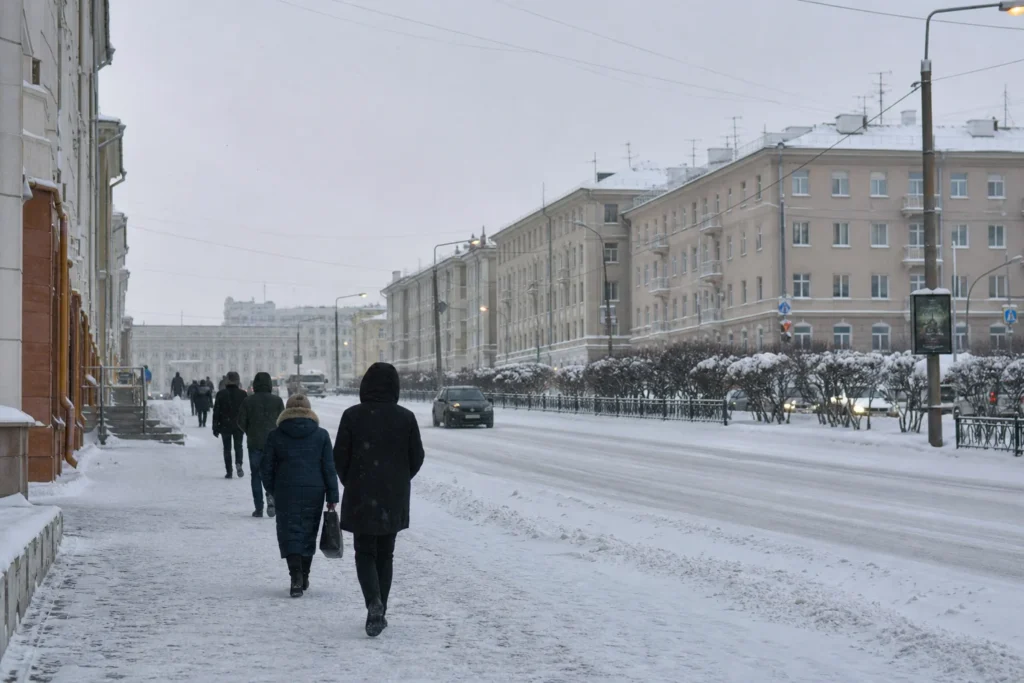
Visitors to Murmansk often notice Russians are formal and reserved in public, which can feel distant at first. Understanding Russian customs helps you navigate social interactions, avoid misunderstandings, and show genuine respect for the culture.
This guide covers the key etiquette rules that matter in Murmansk and across Russia: how to greet people properly, what happens when you visit a home, how to behave in public, dining conventions, and the superstitions that many Russians still observe. The practical takeaway: Russians value respect, formality with strangers, and generosity with friends. Following these rules signals that you care about their culture.
Quick answer: Russians do not expect foreigners to know everything, so honest effort counts. The key rules are: a firm handshake between men is the norm, wearing shoes indoors is considered unclean and disrespectful, and hosts may be visibly surprised or upset if you ignore it, silence is expected in public spaces—no loud phone calls, music without headphones, or group laughter, and bring flowers in an odd number, as even numbers are for funerals.
At a Glance
| Total time | Varies by situation; learning key phrases takes 10–15 minutes, but mastering context-dependent behavior develops through observation |
|---|---|
| Typical cost | Free |
What You Need Before You Start
- Basic Russian phrases (formal greeting 'Zdravstvuyte,' casual 'Privet')
- Small gift if visiting a Russian home (flowers, chocolates, wine, or spirits)
- Understanding of formal vs. informal address
- Awareness of superstitions (avoiding certain gifts, actions)
- Respectful attitude toward religious sites and monuments
Compare Your Options
| Option | Duration | Price | Notes |
|---|---|---|---|
| Learning through observation and conversation | Ongoing; pick up context naturally as you interact | Free | The most organic approach; Russians appreciate genuine interest and will guide you if you signal willingness to learn. Listen before speaking in new social situations. |
| Using basic Russian phrases to show effort | 15–30 minutes to memorize key greetings and polite words | Free | Even broken Russian earns respect and makes people warmer. Saying 'Спасибо' (Spasibo, thank you) and 'Пожалуйста' (Pozhaluysta, please) goes a long way. |
| Reading cultural guides before arrival | 30–60 minutes | Free | Books or online articles about Russian culture help you anticipate situations and avoid common mistakes. Murmansk tourist information centers sometimes have brochures. |
| Taking a guided cultural tour | 2–4 hours | ₽₽ | Local guides in Murmansk can explain customs in context as you visit sites. This combines learning with sightseeing. |
| Joining a local community meal or event | 2–3 hours | ₽₽ | Dining clubs, cultural events, or language meetups in Murmansk offer immersive learning. You'll experience Russian hospitality directly and practice etiquette in a low-pressure setting. |
₽ budget · ₽₽ moderate · ₽₽₽ upscale · ₽₽₽₽ splurge. Price levels are estimates compared with typical prices for visitors.
Step-by-Step Instructions
Step 1: Master the Formal Greeting
When you greet strangers, elders, or in business meetings and other formal settings, use a formal greeting: 'Здравствуйте' (Zdrastvuite), which shows respect and is the right way to greet someone formally. A firm handshake between men is the norm and lasts longer than in Western Europe; skipping it reads as deliberate distance, even an affront. Maintain direct eye contact while giving the appropriate greeting for the time of day.
Tip: In Russia, you must take off your gloves before you shake hands, even in winter.
Step 2: Understand Handshake Rules
Between women, handshakes are less systematic but expected in professional settings. Between a man and a woman in a formal setting, the woman extends her hand first—the man waits for the gesture. Cheek kissing is not a typical greeting between strangers in Russia. A handshake or a simple verbal greeting is more common, while close friends may greet each other with a brief hug.
Tip: When meeting a Russian for the first time, good etiquette is shaking hands firmly while retaining eye contact; looking away is rude and shows indifference.
Step 3: Avoid the Threshold Mistake
In Russian tradition, it is considered bad luck or improper to shake hands, kiss, hug, or pass important items across a threshold; the doorway is symbolically a boundary between outside and inside, public and private, departure and arrival. Always step fully inside a doorway before greeting someone.
Tip: This applies to your own home as well as a host's house—respect the threshold as a meaningful boundary.
Step 4: Prepare a Thoughtful Gift for Home Visits
Never arrive at a Russian home empty-handed; the minimum acceptable offering is a box of chocolates, a cake, or a bottle of wine. Bring flowers (always an odd number—even numbers are for funerals), a box of chocolates, a good bottle (wine or cognac), or a small object from your country; avoid pointed objects (knives, scissors) traditionally associated with cutting ties.
Tip: Avoid yellow flowers, as they symbolize separation.
Step 5: Remove Your Shoes Indoors
Remove your shoes upon entering a Russian home—this is non-negotiable; Russian apartments are kept scrupulously clean, and outdoor shoes are considered contaminated by principle; your host will offer you tapochki (house slippers), which you should accept.
Tip: Attempting to walk through a flat in street shoes will produce an immediate and firm correction.
Step 6: Practice Public Restraint
Silence is expected in public and transit—no loud phone calls, no music without headphones, no group laughter; Russians on the street and in transit smile little at strangers, and a spontaneous smile at a stranger may be read as mockery or unwanted advance. Talking to someone while keeping your hands in your pockets is rude.
Tip: Murmansk's Arctic climate means people are often focused on staying warm and reaching their destination; silence and purposeful movement are respected.
Step 7: Follow Dining Etiquette
Do not refuse to eat; the Russian table is generous, laden with hearty traditional dishes, and refusing dishes systematically reads badly; it is better to take a small amount of everything than nothing at all. Toasts are given standing, glass raised, looking each guest in the eye; the first toast usually goes to the host, the second to the women.
Tip: Don't put your elbows on the table.
Step 8: Show Respect for Age and Gender
Always show heightened respect to those who are older than you; it's common to adopt a more formal demeanor. Offer your seat to an elderly person, pregnant woman or woman with a small child if they do not have one.
Tip: In Murmansk, many locals are hardy Arctic residents; showing respect to elders is particularly valued in this close-knit northern community.
Step 9: Respect Sacred Sites and Monuments
For visiting monasteries, churches, and mosques, wear closed clothing; women should wear skirts below the knee, clothing covering the shoulders, and headscarves (often available at the entrance); men should avoid wearing shorts and remove hats when entering a church or mosque; inside, silence should be maintained to avoid disturbing worshippers. Respect military monuments—the memory of the Great Patriotic War is sacred to many Russians.
Tip: Don't photograph military facilities or personnel, which is particularly relevant in Murmansk, a strategic Arctic naval city.
Common Mistakes to Avoid
- Smiling too much at strangers: In many English-speaking cultures, especially the United States, smiling at strangers is often considered polite; in Russia, smiling has a different social meaning. A constant smile can seem insincere or mocking. Save your warmth for people you know.
- Shaking hands across a doorway: This is one of the classic Russian etiquette rules foreigners often hear about only after they have already made the mistake; in Russian tradition, it is considered bad luck or improper to shake hands across a threshold. Always step inside first.
- Bringing even-numbered flowers: Flowers in an even number are traditionally for funerals. Always bring odd numbers (1, 3, 5, 7) to a home visit.
- Using informal names without permission: The diminutive form (Vanya for Ivan, Masha for Maria) is reserved for close circles; never diminutivize a stranger's name, even if they introduce themselves by their diminutive—wait for tacit or explicit permission.
- Refusing food or drink at a meal: Food is the centerpiece of Russian hospitality; expect to be offered a full meal, often with several courses. Accepting at least a little shows respect for the host's effort.
- Whistling indoors: Don't whistle indoors (brings bad luck). This superstition is taken seriously, especially in older homes.
- Wearing outdoor shoes inside: Wearing shoes indoors is considered unclean and disrespectful; this rule is non-negotiable, and your host may be visibly surprised or upset if you ignore it.
Tickets, Payment and Booking
No booking is needed to learn and practice Russian customs. However, if you want structured guidance:
- Language apps: Duolingo, Babbel, or Rosetta Stone offer Russian phrases and cultural context (available free or by subscription)
- Tourist information centers in Murmansk: The city’s official tourism website and local visitor centers provide free cultural orientation materials and can recommend cultural guides
- Cultural guides: Book through local tour operators in Murmansk (available via hotel concierge or tourism websites) for personalized etiquette coaching
- Language meetups: Search for free or low-cost conversation groups or language exchanges in Murmansk; these often include cultural discussion
Russia Vibes Tips
- If you forget something after leaving a Russian home, sit for a moment when you return before heading out again. This tradition is believed to bring safe travels.
- Learn to distinguish formal and informal address: Russian society is more formal than expected and moving to first-name terms in Russian requires explicit permission. Always start with formal 'Вы' (vy) unless invited to use the informal 'ты' (ty).
- Russians commonly take a brief pause to silently reflect and recall whether they have everything before leaving on a trip. This is often misread as forgetfulness; it's actually a cultural ritual.
- Murmansk is a military city with a strong Arctic heritage. Don't photograph military facilities or personnel, and be respectful when visiting war memorials—locals take these sites very seriously.
- In winter, Murmansk's harsh climate creates a community spirit. Locals expect visitors to be prepared (warm clothes) and to move with purpose. Casual, leisurely behavior in extreme cold reads as disrespectful to people struggling with the weather.
- If invited to a celebration, ask whether you should bring anything specific. One of the biggest mistakes foreigners make is becoming so afraid of etiquette mistakes that they stop trying; Russian culture has many customs, but Russians do not expect foreigners to know everything.
Explore Nearby Understand Russian Customs and Etiquette in Murmansk
Sights near Understand Russian Customs and Etiquette in Murmansk
 Alyosha Monument, Murmansk · typical visit: 1–2 hours
Main image: AI-generated illustration. It may not show the place exactly as it looks.
Browse more: All Etiquette and Safety · All How-To · All How-To in Murmansk · All Murmansk
FAQ
Is it really rude to smile at strangers in Russia?
Unlike many Western cultures, Russians don't typically smile at strangers in public; a smile is often reserved for genuine warmth or amusement among people who know each other; don't mistake a serious expression for unfriendliness—it's simply a cultural norm.
What should I do if I'm invited to a Russian home?
Bring a small gift (flowers in odd numbers, chocolates, wine, or spirits). Remove your shoes upon entering—this is non-negotiable. Your host will offer slippers. Dress neatly, try the food, and participate in toasts. If you need to leave and forgot something, return and sit briefly before leaving again.
How firm should my handshake be?
A firm, almost bone-crushing handshake is typical Russian greeting etiquette when meeting someone (although the handshake between women and men is less firm). Eye contact is essential—looking away is rude and shows indifference.
Can I use a person's first name when we meet?
The diminutive form is reserved for close circles; never diminutivize a stranger's name, even if they introduce themselves by their diminutive—wait for tacit or explicit permission. Use formal address until invited to be informal.
What flowers should I never give?
Flowers should always be an odd number—even numbers are for funerals. Avoid yellow flowers, as they symbolize separation.
Is it okay to photograph war memorials in Murmansk?
Respect military monuments—the memory of the Great Patriotic War is sacred to many Russians. Taking respectful photos of memorials is acceptable, but don't photograph military facilities or personnel.
What should I avoid giving as a gift?
Avoid pointed objects (knives, scissors) traditionally associated with cutting ties. Avoid even numbers of flowers, yellow flowers, and anything that might symbolize bad luck.
Do I have to drink vodka at a toast?
Toasts are frequent, especially with vodka; it's considered rude to refuse a toast entirely, though you can politely decline alcohol if necessary. You can participate in the toast with juice or water if you prefer.
Russia Vibes is a one-person project. A coffee keeps it going
How we research and update our guides
About this guide: AI assistance and accuracy
This guide is created with the help of AI and is based on official sources where available. Mistakes can still happen. Opening hours, prices, rules and other details are given to the best of our knowledge as of the date shown and can change without notice. It offers general recommendations only, not professional, legal or travel advice. Please confirm important details with the official source before you travel; you are responsible for your own plans and decisions.

Take this guide with you
Get a free PDF of this guide to print or read offline: key facts, tips and a map link on a few clean pages.
Report an issue on this page
Paying for your trip: please read
International sanctions affect payments between Russia and many other countries. In practice, cards issued in the EU, the UK, the US and several other countries often do not work in Russia, Russian cards usually do not work abroad, and some booking platforms, airlines and payment providers limit or suspend their services for Russia. The situation changes frequently.
We do not give legal or financial advice, and this site does not encourage anyone to break or circumvent sanctions. Whatever you plan, you are responsible for following the laws and regulations that apply to you, including those of your country of residence and citizenship.
Many travelers still organise their stay lawfully. It is worth asking your bank or payment provider what is currently permitted, contacting hotels, tour operators and carriers directly about the payment methods they accept, and checking which services are open to customers from your country. Clarify payment, cancellation and refund terms before you commit to a booking, and keep your plans flexible.
Partner links on this site may not be available in every country, and prices, availability and rules in our guides can differ from what you see when you book.