
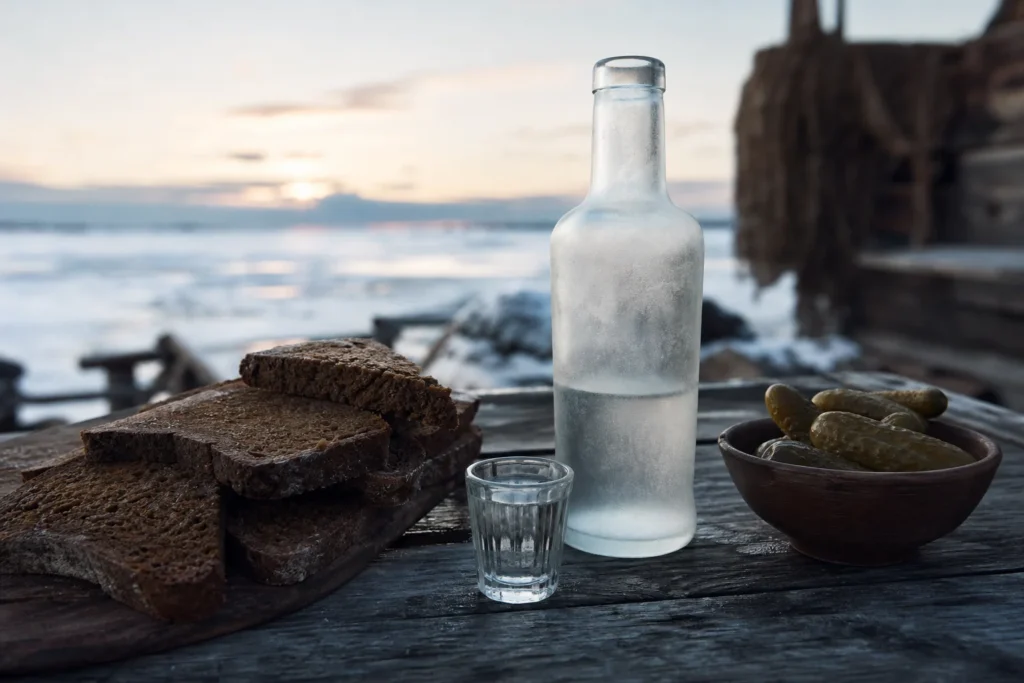
Russian vodka is not just a drink in Russia—it is a refined tradition that shaped global spirits production. This guide is for travellers and food enthusiasts who want to understand what makes Russian vodka distinctive, how it is made, and how to experience it properly when visiting.
You will learn the essential ingredients, the distillation process that defines quality, regional variations, and the cultural customs around serving and drinking vodka. The recommended approach is to taste vodka neat at the right temperature, paired with traditional chasers like black bread and pickles.
Quick answer: Russian vodka is made by fermenting grain (wheat or rye) or potatoes, distilling the liquid multiple times, filtering it through charcoal, and diluting it with pure water to 40% alcohol by volume. Traditional production takes several weeks from grain to bottled spirit.
At a Glance
| Type | Alcoholic drinks |
|---|---|
| Local name | Водка |
| Origin | Vodka arrived in Russia in the late 14th century and Russian monks adapted wine distillation techniques, with monk Isidore's first recipe for 'bread wine' recorded in 1430. The term 'vodka' was not officially recorded in Russia until the mid-1700s, when Catherine II issued a formal decree to regulate vodka distillation. |
| Servings | 2–4 servings (as shots or mixed drinks from one batch) |
| Total time | 3–4 weeks |
| Difficulty | Medium |
History and Story of Russian Vodka, Vladivostok
Vodka arrived in Russia in the late 14th century, introduced by Genoese ambassadors as ‘aqua vitae’ (water of life). Grains (rye, wheat and barley) were the principal ingredients from early times. Early vodka was often impure, with makers adding fruits and spices to mask imperfections. Traditionally made from rye, Russian vodka was notably influenced by chemist Theodore Lowitz’s introduction of charcoal filtration in the 18th century, which made vodka cleaner and more appealing, helping it become Russia’s national drink by the 19th century.
Ingredients
- 1–2 kg wheat or rye grain, or 9 kg potatoes
- Pure water (preferably soft or mineral-rich spring water)
- Distiller's yeast (wine yeast or ale yeast)
- Activated birch charcoal or other filtration medium
- Fermentation vessel (glass or food-grade container)
- Distillation equipment (copper pot still or home still)
How Russian Vodka, Vladivostok Is Made
Step 1: Prepare the mash
If using grain, mill it coarsely and mix with hot water (around 65–70°C) to activate enzymes that convert starches into fermentable sugars. If using potatoes, peel, boil until soft, and mash them, then mix with hot water. Allow the mixture to cool to room temperature.
Tip: Grain produces a cleaner, more traditional vodka; potatoes create a slightly heavier, earthier spirit.
Step 2: Add yeast and ferment
Pitch the yeast into the cooled mash and stir well. Transfer to a clean fermentation vessel and seal loosely with an airlock or cloth to allow gas to escape. Keep at a steady temperature (18–25°C). Fermentation typically takes 5–10 days and produces a liquid called 'wash' containing 6–8% alcohol.
Tip: Monitor the airlock or cloth daily; if fermentation stops prematurely, the mash may have been contaminated.
Step 3: Distil the first time
After fermentation, the 'wash' is distilled and Russian vodka makers traditionally emphasize purity through numerous distillations and often a subsequent filtration process using activated charcoal. Separate the liquid from solids, heat gently in a pot still, and collect the vapour that condenses. This first distillation yields a cloudy spirit of roughly 20–30% alcohol.
Tip: Discard the first and last portions ('heads' and 'tails') as they contain harsh compounds; keep only the 'heart' of the distillation.
Step 4: Distil a second or third time
Multiple distillations (with dilutions in between) lead to purer vodkas, less burdened by congeners and odorous elements; by the 1700s, triple-distilling together with birch-charcoal filtering became the standard for finer vodkas. Dilute the first distillate with water and distil again to increase purity and alcohol content.
Tip: Each distillation removes more impurities but also reduces yield; premium vodkas typically undergo three passes.
Step 5: Filter through charcoal
Russian vodka was notably influenced by chemist Theodore Lowitz's introduction of charcoal filtration in the 18th century. Pour the distilled spirit slowly through a column packed with activated birch charcoal (or a mixture of charcoal and sand). This removes remaining impurities and harsh flavours.
Tip: Birch charcoal is traditional and preferred; avoid oak or pine charcoal as they impart unwanted flavours.
Step 6: Dilute to bottling strength
The neutral spirit is then diluted with pure, often mineral-rich, water to reach bottling strength, typically 40% ABV. Measure your distilled spirit and pure water, then blend them together slowly while stirring. Allow the blend to rest for a few hours before tasting.
Tip: The mineral content of the water influences the final character; soft spring water produces a clean taste, while mineral-rich water adds subtle complexity.
Variants
- Wheat-based vodka: smooth and slightly creamy, produced from winter wheat in regions like Siberia and southern Russia
- Rye-based vodka: peppery and spicy with a richer character, historically the most common base
- Potato vodka: earthier and heavier mouthfeel, traditional in some regions especially during grain shortages
- Infused vodka: traditional Russian-style infusions use horseradish, lemon peel, chilli, or ginger added during fermentation or after distillation
- Flavoured variants: modern producers create fruit, herb, and spice infusions
Common Mistakes to Avoid
- Using impure or chlorinated tap water: This masks the clean spirit and affects the final flavour. Always use filtered, spring, or distilled water.
- Skipping the charcoal filtration step: Without proper filtration, harsh compounds remain, making the vodka unpleasant to drink. Filtration is not optional.
- Distilling only once: A single distillation produces a rough spirit. Russian tradition requires at least two distillations to achieve purity.
- Collecting the entire distillate without separating heads and tails: The first and last portions contain toxic and unpleasant compounds. Always discard them.
- Fermenting at the wrong temperature: Temperatures below 15°C or above 30°C slow fermentation or kill yeast, leaving partially fermented sugar in the wash.
- Not allowing resting time between steps: Rushing the process prevents proper fermentation and maturation. Each stage should be given adequate time.
How to Order and Eat It
Russian vodka is traditionally served neat, chilled to near-freezing temperature, and drunk as a shot followed by a chaser. The classic accompaniments are thick slices of black bread, pickled vegetables (especially cucumbers), or pickled herring. This pairing tradition has roots in older vodka-drinking customs where strong chasers masked the harsh taste of less-refined spirits. Today, even premium vodka is often enjoyed this way as a cultural practice. The chilled spirit should be sipped or shot quickly, and the chaser eaten immediately after to cleanse the palate. In modern Russia, vodka is also served in cocktails, though traditionalists prefer it neat.
To order: Водку, пожалуйста [Vodka, please]
Diet and Allergens
- Contains alcohol
Contains alcohol. Please drink responsibly and follow local rules.
Russia Vibes Tips
- Chill the vodka in the freezer for at least 2–3 hours before serving. Russian vodka should be served near-freezing (around −5 to −15°C) to heighten the contrast and numb slight impurities on the palate, making even mid-range vodka taste smoother.
- Buy regional varieties when travelling within Russia. Different regions produce distinctive styles—Siberian vodka tends to be fuller and more complex, while Moscow and Saint Petersburg versions are often lighter. Look for distillery names and regions on the label.
- Avoid confusing Russian Standard (a modern premium brand created in 1998 for export) with actual traditional vodka. Stolichnaya, despite its famous name, is now bottled in Latvia. Authentic Russian-distilled brands include Beluga (Siberia), and regional distillery products.
- Do not sip vodka like whisky or brandy. The tradition is to drink it quickly as a shot, then follow immediately with a chaser. Slow sipping is not how vodka is meant to be enjoyed in Russian culture.
- Understand the alcohol content variation. Standard Russian vodka is 40% ABV, but premium versions may be 45%, 50%, or even 56%. Higher proof requires smaller shots and more forceful chasers.
Explore Nearby Russian Vodka, Vladivostok
Browse more: All Food & Drink · All Food & Drink in Vladivostok · All Other · All Vladivostok
FAQ
Is Russian vodka really made from potatoes?
A common misconception, particularly outside of Eastern Europe, is that vodka is primarily made from potatoes. While potatoes can and are used to make vodka in some regions, they are not the traditional or dominant base for Russian vodka. Traditional and premium Russian vodka is made primarily from grain, most often wheat and rye, and Russia's heritage is firmly rooted in these specific agricultural products.
What is the difference between Russian vodka and vodka from other countries?
While it's difficult to say who made vodka first, there's no doubt that Russia played a pivotal role in shaping vodka as we know it today. Russian vodka emphasizes multiple distillations and charcoal filtration for exceptional purity. There are many vodka varieties depending on the region and the types of grains used, but they basically all follow the same method, with small variations.
Why is birch charcoal so important in Russian vodka production?
The Russians found that the best vodka resulted from filtering with birch charcoal; not oak or pine, but birch, the tree of the Russian taiga. Birch charcoal removes impurities more effectively than other materials and does not impart undesirable flavours, making it essential to the Russian vodka tradition.
How do I drink vodka the Russian way?
Russian vodka is traditionally served very cold and drunk as a quick shot, not sipped slowly. After the shot, immediately consume a chaser such as black bread, pickled cucumber, or herring. This practice neutralizes the burn and cleanses the palate. Serving temperature should be near-freezing, around −5 to −15°C.
What is the standard alcohol content of Russian vodka?
The standard strength for Russian vodka is 40% alcohol by volume (ABV). Premium and luxury versions may be bottled at 45%, 50%, or 56% ABV. Always check the label to confirm the strength of the bottle you are purchasing.
Can I buy authentic Russian vodka outside Russia?
Yes, but availability and authenticity vary. Brands like Stolichnaya are now bottled outside Russia. Seek out brands marked as distilled within Russia, such as Beluga (Siberia), Russian Standard (Saint Petersburg), or regional distillery products. Many specialty liquor stores carry authentic Russian-distilled vodka.
Why is Dmitry Mendeleev credited with inventing 40% vodka?
This is a persistent myth. There is a myth that Dmitry Mendeleev, the creator of the periodic table, brewed the first batch of 40 percent proof, standard strength vodka in 1894 and has subsequently been praised as the drink's father, but this is not true. Vodka has been around far longer.
What is the difference between premium and standard Russian vodka brands?
Premium Russian vodka brands differ in the number of distillations (typically three or more versus two), the quality of filtration materials (silver or quartz versus activated charcoal alone), and the source and purity of the water used. Brands like Beluga differentiate on process transparency (resting periods between distillation runs, specific filtration media) rather than on flavour distinctiveness.
Russia Vibes is a one-person project. A coffee keeps it going
How we research and update our guides
About this guide: AI assistance and accuracy
This guide is created with the help of AI and is based on official sources where available. Mistakes can still happen. Opening hours, prices, rules and other details are given to the best of our knowledge as of the date shown and can change without notice. It offers general recommendations only, not professional, legal or travel advice. Please confirm important details with the official source before you travel; you are responsible for your own plans and decisions.

Take this guide with you
Get a free PDF of this guide to print or read offline: key facts, tips and a map link on a few clean pages.
Report an issue on this page
Paying for your trip: please read
International sanctions affect payments between Russia and many other countries. In practice, cards issued in the EU, the UK, the US and several other countries often do not work in Russia, Russian cards usually do not work abroad, and some booking platforms, airlines and payment providers limit or suspend their services for Russia. The situation changes frequently.
We do not give legal or financial advice, and this site does not encourage anyone to break or circumvent sanctions. Whatever you plan, you are responsible for following the laws and regulations that apply to you, including those of your country of residence and citizenship.
Many travelers still organise their stay lawfully. It is worth asking your bank or payment provider what is currently permitted, contacting hotels, tour operators and carriers directly about the payment methods they accept, and checking which services are open to customers from your country. Clarify payment, cancellation and refund terms before you commit to a booking, and keep your plans flexible.
Partner links on this site may not be available in every country, and prices, availability and rules in our guides can differ from what you see when you book.