
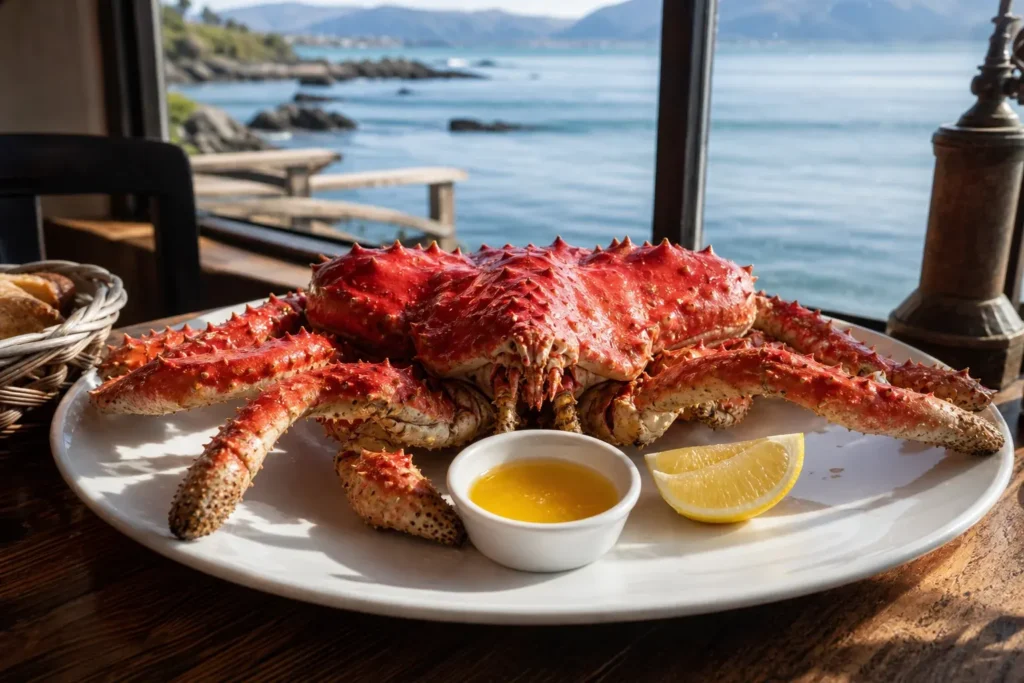
Kamchatka crab is a signature dish for visitors to Vladivostok and a culinary emblem of Russia’s Pacific coast. Also known as red king crab, this enormous shellfish from the cold waters of the Sea of Japan and Bering Sea reaches leg spans of up to 1.5 metres and yields dense, sweet white-pink meat that tastes unlike any other crab species.
This guide shows you how to cook Kamchatka crab at home or order it fresh in restaurants across the city. Most cooks—whether professionals or home cooks—favour the simplest methods: steaming or boiling the whole fresh crab in salted water, then dipping the meat in melted butter and lemon. The beauty of this ingredient lies in its natural flavour; it requires no complex seasoning.
Quick answer: Steam or boil a whole fresh Kamchatka crab in salted water for 15–20 minutes until the shell turns fully red and the meat is opaque. Serve with melted butter and lemon. Total time: 20–25 minutes including prep.
At a Glance
| Type | Dishes |
|---|---|
| Local name | Краб камчатский |
| Origin | Kamchatka Peninsula and Far Eastern Russia |
| Servings | 2–4 |
| Total time | 20–25 minutes |
| Difficulty | Easy |
History and Story of Kamchatka Crab, Vladivostok
The world famous Kamchatka red crab is considered as Russia’s “other caviar” and fetches high prices in foreign markets. The type specimen for red king crab was collected off the Kamchatka Peninsula in 1812 and named Lithodes camtschatica. While for many people king crab is synonymous with Alaska, where the iconic fishery was developed in the Gulf of Alaska in the early 1950s, the main supplier to the global market today is Russia, where the product is also known as the ‘Kamchatka crab’. Also known as the red king crabs native to the Bering Sea, these creatures are commonly found along the Vladivostok shores of the Sea of Japan.
Ingredients
- 1 whole fresh Kamchatka crab, 2–4 kg
- 250 ml water or light stock
- 15 ml salt (about 1 tablespoon)
- 100 g butter
- 1 lemon
How Kamchatka Crab, Vladivostok Is Made
Step 1: Rinse and prepare the crab
Place the whole fresh crab under cold running water and rinse away any sand or debris from the shell and legs. Pat dry with a cloth. If the crab is large (over 3 kg), you may wish to cut it in half lengthwise using a sharp knife or kitchen shears to fit it better in the pot, though whole crabs are traditional. Remove any visible gills or intestines from the body cavity if cutting it open.
Tip: Work quickly and keep the crab cool; many Vladivostok restaurants receive crabs live from the tank and cook them immediately.
Step 2: Fill the pot with salted water
In a large pot, bring water to a rolling boil. Add salt at a ratio of about 1 tablespoon per 250 ml of water. The water should taste like the sea. Stir to dissolve the salt completely before adding the crab.
Tip: Use seawater if you have access to it—many coastal restaurants do this. If not, regular salted water works perfectly.
Step 3: Add the crab to boiling water
Carefully place the whole crab into the boiling salted water. The shell will immediately begin turning a deeper red. Return to a boil, then reduce heat to a gentle simmer. Ensure the crab is fully submerged by placing a plate or lid on top if necessary.
Tip: Some cooks add a whole lemon or a splash of white vinegar to the water for extra flavour, but this is optional.
Step 4: Simmer for 15–20 minutes
Keep the water at a steady simmer. For a crab weighing 2–3 kg, simmer for about 15 minutes; for larger specimens (3–4 kg), cook for 18–20 minutes. The shell should turn deep red and the meat inside will be opaque and white with a slight pink tinge when done.
Tip: Do not over-cook; crab meat becomes tough and rubbery if cooked too long. Test by piercing a leg joint with a skewer; if the meat flakes easily, it is done.
Step 5: Remove and drain
Using long tongs or a slotted spoon, carefully lift the crab from the water and place it on a clean cloth or cutting board to cool slightly and drain. Let it rest for 2–3 minutes before serving so the meat sets.
Step 6: Prepare melted butter and lemon
While the crab cooks, cut the butter into a small saucepan and melt over low heat. You may add 1–2 cloves of minced garlic or a pinch of fresh dill if desired, though butter and lemon alone are classic. Cut the lemon into wedges for squeezing over the meat.
Tip: Some cooks warm a small ramekin of butter for each diner; this is the traditional restaurant presentation in Vladivostok.
Step 7: Crack and serve
Place the cooked crab on a large serving platter. Using a mallet, kitchen shears, or sturdy crab crackers, break open the legs and claws. Pull or dig out the white-pink meat from the shell and body cavity. Arrange on a plate with a ramekin of warm melted butter and lemon wedges nearby for dipping.
Tip: The sweetest meat is inside the legs and claws; the body also holds delicate meat. Take your time cracking—it's part of the ritual of eating crab in Vladivostok.
Variants
- Grilled Kamchatka crab legs: Brush crab legs with oil and grill for about 5 minutes on each side, or until heated through.
- Baked crab with garlic butter: Place crab halves on a baking sheet, brush with garlic-infused butter, and bake at 180 °C for 16–18 minutes.
- Crab salad: Boil the crab, crack open the shell, remove the meat, and mix with mayonnaise, boiled eggs, diced cucumber, corn, and fresh dill.
- Crab legs in drawn butter: Remove legs before cooking, cut in half lengthwise, and sauté the exposed meat in a hot pan with butter and herbs for 5 minutes on each side.
Common Mistakes to Avoid
- Cooking frozen crab directly: In Vladivostok restaurants, fresh crab is always preferred. Frozen crabs lose flavour and texture. Always thaw at room temperature for 1–2 hours if frozen, or buy fresh from the tank.
- Over-cooking the meat: Many first-time cooks boil crab for too long, turning the meat tough and fibrous. Fifteen to twenty minutes is sufficient; use a timer to avoid this mistake.
- Using complex sauces: Kamchatka crab has delicate, sweet meat that needs no masking. Resist the urge to add heavy sauces, vinegars, or spices. Butter and lemon are all you need.
- Skipping the salt water: Boiling crab in plain water dilutes flavour. Always use properly salted water—aim for sea-salt strength. This is not optional.
- Cutting the crab into tiny pieces before cooking: Some cooks cut crab into many small segments, which causes the meat to dry out and lose flavour as it cooks. Cook the whole crab (or in halves only if too large) to keep the meat juicy and tender.
- Serving crab cold: Kamchatka crab is best enjoyed warm or at room temperature, with warm melted butter. Serving it cold dulls the delicate flavour that makes it famous.
How to Order and Eat It
Crabs are cooked in salt water directly in shells for 15-20 minutes. After that, delicate white with a reddish film meat, located in the claws, legs and shell, can be eaten. The traditional way to eat Kamchatka crab is to crack the shell with a mallet or crab crackers and dig the meat from the legs and body cavity using a small fork or pick. The best preparation is steaming or boiling lightly in salted water, then dipping in warm melted butter. Each piece of meat is pulled from the shell, dipped in warm melted butter, squeezed with lemon juice, and eaten. In Vladivostok, this ritual is social and leisurely—eating crab is meant to be savoured, not rushed.
To order: Краб камчатский [Krab kamchatskiy]
Diet and Allergens
- Gluten-free
Where to Try Kamchatka Crab, Vladivostok
Vladivostok
 Moloko & Med, Vladivostok European, Russian, Italian, Mediterranean
Main image: AI-generated illustration. It may not show the place exactly as it looks.
 Ogonyok Farm Restaurant, Vladivostok Russian, Seafood, European
Main image: AI-generated illustration. It may not show the place exactly as it looks.
 Zuma, Vladivostok Pan-Asian, Japanese, Seafood
Main image: AI-generated illustration. It may not show the place exactly as it looks.
Russia Vibes Tips
- Buy your crab fresh from the tank if eating in a Vladivostok restaurant, never frozen. Ask the waiter to confirm it is fresh—restaurants take pride in this. Fresh crabs have a noticeably sweeter, more delicate flavour.
- Order a whole crab rather than just legs. The body cavity holds some of the finest meat, and cracking a whole crab is part of the authentic Vladivostok experience. Legs alone miss half the pleasure.
- Bring a small towel or napkins. Eating crab is messy and that is normal. Vladivostok restaurants know this and often provide bibs or wet towel service at the table.
- Time your meal off-season if possible. Late autumn and winter are when crab is freshest and most abundant in Vladivostok; early summer can be leaner.
- Learn to use your hands. Proper technique makes cracking easier: use the heel of a mallet on the thickest parts of the legs, and leverage with a crab cracker on the joints. Most locals crack crab with surprising speed and grace.
Explore Nearby Kamchatka Crab, Vladivostok
Browse more: All Food & Drink · All Food & Drink in Vladivostok · All Other · All Vladivostok
FAQ
Is Kamchatka crab the same as Alaskan king crab?
Yes, they are the same species (Paralithodes camtschaticus). The crab is named after the Kamchatka Peninsula in Russia's Far East, where it originates, but it is also caught in Alaskan waters. In English, both are called red king crab or Kamchatka crab; in Vladivostok restaurants, you will hear it called by its Russian name, краб камчатский.
Can I cook Kamchatka crab at home in Vladivostok?
Yes. Fresh crab is sold at markets and seafood shops across Vladivostok. You will need a large pot, salted water, and access to a stove. Boiling or steaming takes 15–20 minutes. If you are staying in a hotel or apartment with a kitchen, this is a realistic option. Ask your accommodation for access to cooking equipment.
How big is a whole Kamchatka crab and can one person eat it?
Kamchatka king crab from Russia's Far East cold waters grows enormous — leg spans can reach 1.5 metres — with dense, sweet, juicy white-pink meat unlike any other crab on the planet. A whole crab typically weighs 2–4 kg and yields enough meat for 2–3 adults at a leisurely meal. One hungry person can finish a smaller specimen.
What does Kamchatka crab taste like compared to other crabs?
The meat is sweeter, more delicate, and less "fishy" than most other crabs. It has a buttery texture and a subtle brininess from the cold Far Eastern waters. Many visitors say it is noticeably richer and more tender than Atlantic or Mediterranean crabs. The flavour justifies its global reputation and high price.
Can I eat Kamchatka crab if I have shellfish allergies?
No. Kamchatka crab is a shellfish and will trigger the same allergic reaction as other crustaceans. If you have a shellfish allergy, you must avoid it entirely. Always inform restaurant staff of any allergies.
Is the red roe inside the female crab edible?
Yes. Female crabs sometimes carry bright orange or reddish roe inside the body cavity. This is edible and considered a delicacy—it has a rich, briny flavour. Some diners mix it with butter and eat it on bread. Ask your restaurant if the crab available is female and whether roe is present before ordering.
What is the best season to eat Kamchatka crab in Vladivostok?
Crab is available year-round in Vladivostok restaurants, but it is freshest and most abundant in late autumn and winter (October–February). During these months, the catch is largest, prices are typically lower, and flavour is at its peak. Summer can see leaner availability.
How much does Kamchatka crab cost in a Vladivostok restaurant?
Prices vary widely depending on the restaurant and the size of the crab. A whole fresh crab in a seafood restaurant typically costs in the moderate-to-upscale range. Prices are higher in luxury establishments and during peak tourist season. Market stalls and casual eateries tend to be more affordable. Check prices with your server before ordering if budget is a concern.
Russia Vibes is a one-person project. A coffee keeps it going
How we research and update our guides
About this guide: AI assistance and accuracy
This guide is created with the help of AI and is based on official sources where available. Mistakes can still happen. Opening hours, prices, rules and other details are given to the best of our knowledge as of the date shown and can change without notice. It offers general recommendations only, not professional, legal or travel advice. Please confirm important details with the official source before you travel; you are responsible for your own plans and decisions.

Take this guide with you
Get a free PDF of this guide to print or read offline: key facts, tips and a map link on a few clean pages.
Report an issue on this page
Paying for your trip: please read
International sanctions affect payments between Russia and many other countries. In practice, cards issued in the EU, the UK, the US and several other countries often do not work in Russia, Russian cards usually do not work abroad, and some booking platforms, airlines and payment providers limit or suspend their services for Russia. The situation changes frequently.
We do not give legal or financial advice, and this site does not encourage anyone to break or circumvent sanctions. Whatever you plan, you are responsible for following the laws and regulations that apply to you, including those of your country of residence and citizenship.
Many travelers still organise their stay lawfully. It is worth asking your bank or payment provider what is currently permitted, contacting hotels, tour operators and carriers directly about the payment methods they accept, and checking which services are open to customers from your country. Clarify payment, cancellation and refund terms before you commit to a booking, and keep your plans flexible.
Partner links on this site may not be available in every country, and prices, availability and rules in our guides can differ from what you see when you book.