
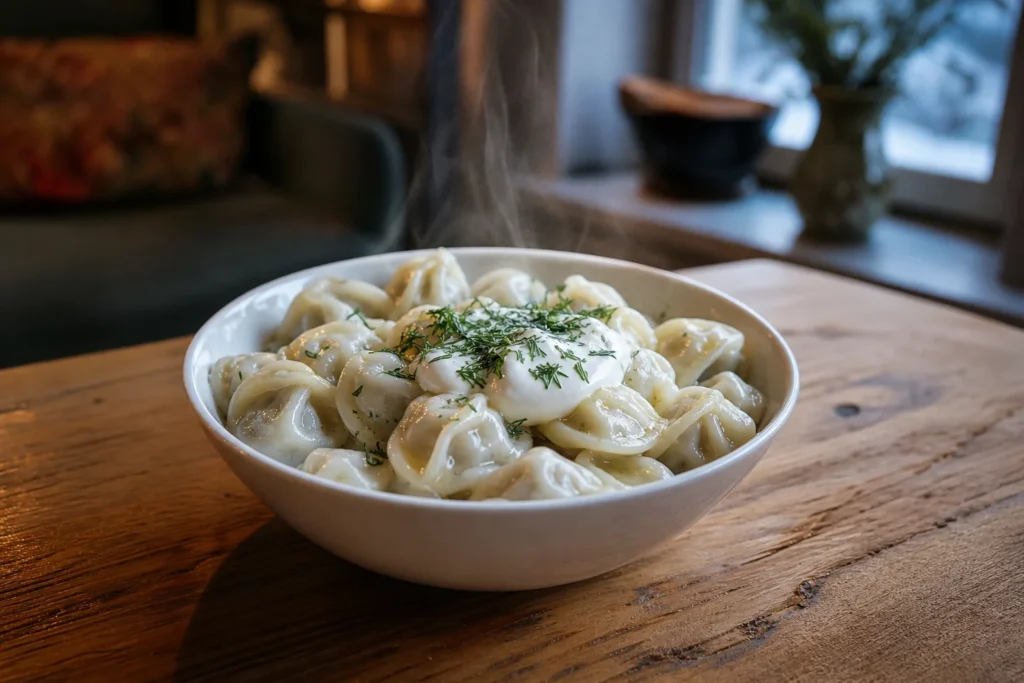
Pelmeni are Russian dumplings that visitors and home cooks alike can prepare from scratch with basic ingredients. This how-to guides you through shaping and cooking homemade pelmeni, a traditional dish that takes 60–90 minutes from start to finish. We recommend making a full batch and freezing extras, so you have them ready to boil on cold evenings.
The dough is simple—just flour, water, egg and salt—and the filling is ground meat seasoned with onion, salt and pepper. The shape is iconic: each dumpling starts as a circle of dough, gets filled, folded into a half-moon, then pinched at the ends to form a small pouch.
Quick answer: Mix a stiff dough and let it rest for 20–30 minutes. While it rests, combine ground beef and pork with finely chopped onion, salt and pepper. Roll out the dough thin, cut into circles, fill each one with a teaspoon of meat, fold and pinch into shape. Boil until the dumplings float and cook 5 minutes more. Serve hot with sour cream, melted butter and fresh dill. Total time: 60–90 minutes.
At a Glance
| Type | Dishes |
|---|---|
| Local name | пельмени |
| Origin | Siberia and the Ural Mountains of Russia |
| Servings | 2–4 servings (approximately 40 dumplings) |
| Total time | 60–90 minutes |
| Difficulty | Medium |
History and Story of Pelmeni, Vladivostok
Pelmeni originated in Siberia and the Ural Mountains of Russia, becoming a staple during the period of Russian expansion eastward. The dish is considered a national dish of Russia and has been part of the cuisine for centuries. Traditionally, Siberians would prepare large batches at once, freeze them in the snow, and boil them as needed throughout the winter—a practical solution to long, cold seasons before modern refrigeration.
Ingredients
- 280 grams all-purpose flour
- 125 millilitres lukewarm water
- 1 large egg
- 5 grams salt (for dough)
- 300 grams ground beef
- 300 grams ground pork
- 1 medium onion, finely chopped or grated
- 3 grams salt (for filling)
- 2 grams black pepper
- Water for boiling
How Pelmeni, Vladivostok Is Made
Step 1: Make the dough
Mix the flour and salt in a large bowl. Make a well in the centre and crack in the egg. Stir with a fork to break up the yolk. Begin adding the lukewarm water a little at a time, stirring as you go, until a shaggy dough forms. Transfer to a floured work surface and knead for 8–10 minutes until smooth and soft but not sticky. The dough should feel similar to soft pasta dough. Form into a ball, cover with a damp cloth, and let rest for 20–30 minutes.
Tip: A stiffer dough than bread dough makes thinner, more delicate dumpling skins. Do not skip the resting step—it relaxes the gluten and makes rolling much easier.
Step 2: Prepare the filling
While the dough rests, combine the ground beef, ground pork, finely chopped onion, salt and pepper in a large bowl. Mix well with your hands until everything is evenly distributed. The mixture should be moist but not wet. If you have time, chill it in the refrigerator—this makes it easier to handle when filling.
Tip: Some cooks add a tablespoon or two of cold water to the filling to keep the cooked dumplings juicy and create an internal broth.
Step 3: Roll and cut the dough
Dust a clean work surface lightly with flour. Take the rested dough and roll it out to about 2 millimetres thick—thin enough that light passes through, but thick enough not to tear. Using a small glass or cookie cutter about 8 centimetres in diameter, cut out circles. Stack unused dough and cover it so it does not dry out.
Tip: Work quickly so the dough does not dry out as you cut. If circles start to stick, dust the surface again with flour.
Step 4: Fill and seal each dumpling
Place a small circle of dough on your work surface. Dip a finger in water and trace around the edge of the circle—this helps seal it. Place about one teaspoon of meat filling in the centre. Fold the circle in half to make a half-moon and press the edges firmly to seal, working out any air bubbles. Then bring the two pointed ends of the half-moon together and pinch them to seal, creating a small round pouch or ear-like shape.
Tip: Work steadily but not in a rush. If you get stuck, set aside a few circles and practice the shape with a few dumplings first. Flouring your hands lightly prevents sticking without drying the dough.
Step 5: Freeze or cook the dumplings
Place finished dumplings on a lightly floured tray without touching. If cooking immediately, bring a large pot of salted water to a rolling boil. If freezing, place the tray in the freezer uncovered for at least 30 minutes, then transfer to a sealed container or bag and keep frozen for up to 2 months. Frozen dumplings can go straight into boiling water without thawing.
Tip: Freezing dumplings without crowding them prevents them from sticking together. Once frozen solid, you can transfer them to a bag and save space.
Step 6: Cook and serve
Bring a large pot of lightly salted water to a boil. Add a few bay leaves and peppercorns if you like. Carefully lower the dumplings into the water and stir gently to prevent them from sticking to the bottom. After about 5 minutes, they will float to the surface. Let them boil for another 5 minutes after floating. Using a slotted spoon, transfer them to a serving bowl. Toss with melted butter, top with sour cream and fresh dill, and serve at once while hot.
Tip: Do not overcrowd the pot—cook in batches if needed. The dough is delicate and benefits from space to move freely.
Variants
- Pork and beef filling: the most common traditional mixture in Siberia and eastern Russia
- Beef only: a leaner variation when pork is not available or preferred
- Pork and lamb: a historical Siberian version mentioned in 19th-century Russian cookbooks
- Fish and shrimp: a Far Eastern variation reflecting the coastal regions
- Mushroom filling: a vegetarian version using finely minced mushrooms with onion, salt and pepper
Common Mistakes to Avoid
- Using hot water instead of lukewarm water for the dough makes it tough and difficult to roll thin. Lukewarm water is key to a tender, flexible dough.
- Skipping the dough rest. Twenty to thirty minutes allows the gluten to relax, making the dough much easier to roll without tearing.
- Overfilling each dumpling causes the filling to burst out during boiling. One teaspoon per dumpling is the right amount—more will not seal properly.
- Cutting circles too thick. Thin, delicate skins (2 millimetres) are the signature of good pelmeni. Thick dough makes them dense and chewy.
- Cooking the dumplings at a low boil. They need a rolling boil to cook through quickly and develop the right texture. A gentle simmer leaves them undercooked or gluey.
- Removing them too early. They must float and cook 5 more minutes after floating for the meat inside to be fully cooked.
How to Order and Eat It
Serve pelmeni hot in a shallow bowl, topped with melted butter, a dollop of sour cream, and fresh dill or parsley. Some people enjoy them with a splash of vinegar or in a warm broth with bay leaves and peppercorns. They are often eaten on cold days as a comforting, filling meal, but are enjoyed year-round. The combination of soft dough, savoury filling, and cool sour cream is meant to contrast in temperature and texture.
To order: пельмени [pel-MEH-nee]
Diet and Allergens
- Contains gluten
- Contains eggs
- Contains pork and beef
Russia Vibes Tips
- Freeze extra dumplings in a single layer on a tray before bagging them. This way they stay separate and you can cook exactly the portion you want without defrosting the whole batch.
- If the dough feels sticky as you work, dust your hands and work surface with flour, but do not add flour to the dough itself—it will make them tough.
- Test the cooking time by removing one dumpling with a slotted spoon after they float. Cut it open—the meat inside should be fully cooked with no pink, and the dough should be tender but not mushy.
- A pelmeni mold (pelmenitsa in Russian) is a small wooden or plastic press that shapes dumplings quickly if you plan to make large batches. This tool is optional but can speed up assembly.
- Fresh dill is the most common garnish, but flat parsley, chives, or even a sprinkle of black pepper work well. Sour cream is essential—it cools and richens each bite.
- The dough must rest before rolling. Trying to roll it immediately creates tears and frustration. This 20–30 minute pause is not wasted time; it makes the entire process much easier.
Explore Nearby Pelmeni, Vladivostok
Browse more: All Food & Drink · All Food & Drink in Vladivostok · All Other · All Vladivostok
FAQ
Are pelmeni the same as ravioli or momo?
They are similar boiled dumplings but not the same. Pelmeni are shaped differently—folded into a pouch with pinched ends—and traditionally contain only ground meat, onion and spices. Ravioli are usually flat and square. Momo (Tibetan and Nepali dumplings) have a different shape and often different fillings. All are boiled dumplings, but each has its own tradition and technique.
Can I make pelmeni without eggs?
Yes. Eggs make the dough slightly more tender, but a basic dough of flour, water and salt works. Add the water gradually—you may need less without the egg to achieve the same consistency. The result will be slightly firmer but still delicious.
How long do frozen pelmeni keep?
Frozen pelmeni keep for up to 2 months in an airtight container or freezer bag. Do not thaw them before cooking—boil them straight from the freezer, adding 1–2 minutes to the cooking time.
What if my dumplings burst while boiling?
This usually means the filling was too generous, the seal was not tight enough, or the dough was rolled too thin. For the next batch, use less filling, seal more carefully by pressing the edges firmly, and roll the dough slightly thicker (about 2–3 millimetres). Practice the sealing motion a few times before filling all the circles.
Can I boil pelmeni in broth instead of water?
Yes. Meat broth, beef stock, or chicken stock adds flavour. Simply boil the broth, add the pelmeni, and cook as you would in water. Some cooks serve them in the broth like a soup rather than draining them.
Why does my dough tear when I roll it?
Can I use a food processor to make the dough?
Yes. Pulse the flour and salt, then add the egg and water gradually while pulsing until a ball forms. Be careful not to overwork it. A few turns with a knife to finish kneading by hand is fine.
What is the best way to store leftover cooked pelmeni?
Refrigerate cooked pelmeni in a covered container for up to 3 days. Reheat by placing them in a pot of simmering water for 2–3 minutes until warmed through, or pan-fry them in butter until golden. Do not reheat in a microwave, as the dough can become rubbery.
Russia Vibes is a one-person project. A coffee keeps it going
How we research and update our guides
About this guide: AI assistance and accuracy
This guide is created with the help of AI and is based on official sources where available. Mistakes can still happen. Opening hours, prices, rules and other details are given to the best of our knowledge as of the date shown and can change without notice. It offers general recommendations only, not professional, legal or travel advice. Please confirm important details with the official source before you travel; you are responsible for your own plans and decisions.

Take this guide with you
Get a free PDF of this guide to print or read offline: key facts, tips and a map link on a few clean pages.
Report an issue on this page
Paying for your trip: please read
International sanctions affect payments between Russia and many other countries. In practice, cards issued in the EU, the UK, the US and several other countries often do not work in Russia, Russian cards usually do not work abroad, and some booking platforms, airlines and payment providers limit or suspend their services for Russia. The situation changes frequently.
We do not give legal or financial advice, and this site does not encourage anyone to break or circumvent sanctions. Whatever you plan, you are responsible for following the laws and regulations that apply to you, including those of your country of residence and citizenship.
Many travelers still organise their stay lawfully. It is worth asking your bank or payment provider what is currently permitted, contacting hotels, tour operators and carriers directly about the payment methods they accept, and checking which services are open to customers from your country. Clarify payment, cancellation and refund terms before you commit to a booking, and keep your plans flexible.
Partner links on this site may not be available in every country, and prices, availability and rules in our guides can differ from what you see when you book.