
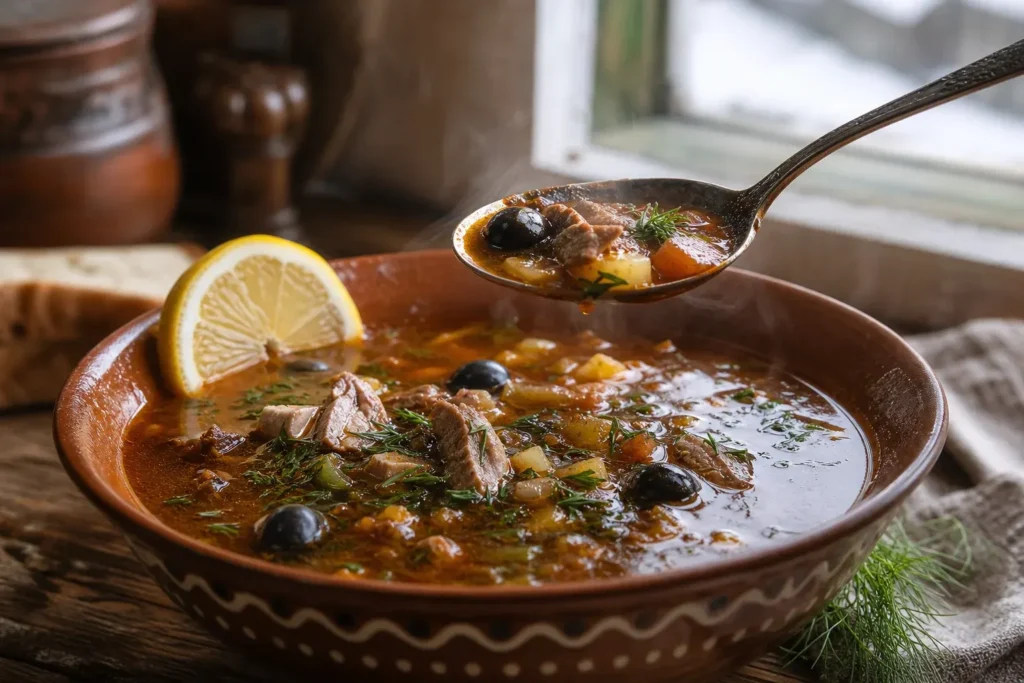
Solyanka is a traditional Russian soup enjoyed across Russia and Eastern Europe. This article teaches you how to make solyanka at home with straightforward techniques and accessible ingredients. Visitors and home cooks alike appreciate this soup for its bold combination of flavors: smoked and fresh meats layered with tart pickled vegetables, olives and capers in a rich broth. The result is warming, complex and distinctly satisfying.
The beauty of solyanka lies in flexibility. You can use whatever meats you have on hand—ham, bacon, sausages, beef—and adjust the sourness to your taste by controlling the amount of pickled cucumber brine. Expect to spend 2–3 hours total, mostly simmering time.
Quick answer: Build a strong meat broth by simmering beef or pork for about 90 minutes, then layer in cured meats, pickled cucumbers, olives and capers. Simmer everything together for 30 minutes. Total time: 2.5 to 3 hours. Cost is moderate.
At a Glance
| Type | Dishes |
|---|---|
| Local name | Солянка |
| Origin | First recorded in Russian texts from the 17th century, solyanka was originally not a soup but a hot dish of cabbage, salted cucumbers, meat, poultry, fish, mushrooms or other products. A soup version of solyanka emerged in the 1830s. Its name is derived from the Russian word "solyony," which means salty. |
| Servings | 4 servings |
| Total time | 2.5 to 3 hours |
| Difficulty | Medium |
History and Story of Solyanka, Sochi
Initially, this dish was popular among peasants: it was made with meat broth, cabbage, meat, onions, and pickles. Over the years, the recipe became more refined: ingredients like capers, pickled mushrooms, lemon, olives, and sometimes even kvass were added. In this form, solyanka was already served in the restaurants of large cities by the 19th century.
Ingredients
- 400 g (14 oz) beef chuck or stew meat, cubed
- 250 g (8.8 oz) ham or cooked pork, cubed or sliced
- 150 g (5 oz) smoked sausage, diced
- 100 g (3.5 oz) bacon or salt pork, chopped
- 180 g (6.3 oz) dill pickles (brined, not vinegared), diced
- 120 ml (½ cup) pickle brine or juice
- 120 g (¾ cup) black or green olives, pitted and sliced
- 1 large onion, halved (for broth) plus 1 large onion, diced (for soup)
- 1 large carrot, halved (for broth)
- 270 g (9 oz) sieved tomatoes or tomato passata
- 2 bay leaves
- 10 black peppercorns
- 1 tbsp olive oil or other cooking oil
- 1 tsp paprika
- 1 tsp dried Italian herbs or dill
- Salt and black pepper to taste
- 1 lemon, cut into slices (for serving)
- Fresh parsley or dill (for garnish)
- Sour cream (for serving, optional)
How Solyanka, Sochi Is Made
Step 1: Make the broth
In a large pot, combine the beef chuck, one halved onion, one halved carrot, bay leaves, peppercorns and enough cold water to cover (about 2 litres or 8 cups). Bring to a boil over high heat, then skim away any foam that rises to the surface. Reduce heat to low and simmer gently for 90 minutes, until the meat is very tender and the broth is rich and flavorful. Strain the broth through a fine sieve, discarding the vegetables and peppercorns but reserving the cooked beef.
Tip: Taste the broth at this stage. It should taste distinctly meaty and strong enough to carry the final soup's flavors. If it seems weak, simmer a bit longer.
Step 2: Prepare the remaining meats
While the broth simmers, cut the ham, sausage and bacon into bite-sized pieces. Dice the pickles. Heat the oil in a large skillet or the same pot (after removing the broth) over medium-high heat and briefly cook the bacon pieces until they begin to render fat, about 2–3 minutes. Do not brown them completely; you want them tender.
Tip: Use brined (salt-cured) pickles rather than vinegared ones; they give the authentic tangy flavor without excessive sharpness.
Step 3: Build the soup base
Add the diced onion to the bacon fat and cook until softened and translucent, about 5 minutes. Stir in the tomato passata and paprika, then cook gently for 2–3 minutes, stirring occasionally, to soften the raw tomato taste. Add the ham, sausage and any reserved cooked beef from the broth.
Tip: This step develops the base flavors. Don't rush it or they may taste thin and one-dimensional.
Step 4: Combine and simmer
Pour the reserved broth into the pot with the meat and tomato base. Bring to a gentle simmer over medium heat. Add the diced pickles, pickle brine, sliced olives, and dried herbs. Stir well. Taste and adjust salt and pepper—remember that the brine, olives and capers are already salty, so add carefully. Simmer together for 20–30 minutes, allowing the flavors to meld.
Tip: The soup is ready when the flavors taste balanced: salty, sour and savory in equal measure. If it tastes too sour, add a pinch of sugar or a little sour cream. If too bland, add more pickle brine.
Step 5: Serve and garnish
Ladle the soup into bowls. Garnish each serving with a slice of fresh lemon, a small dollop of sour cream if desired, and a sprinkle of fresh parsley or dill. The lemon slice should be squeezed into the soup just before eating to brighten and sharpen the flavors.
Tip: Solyanka is best eaten hot, in deep bowls. The lemon is essential; never skip it.
Variants
- Fish solyanka: replaces meat with salt-cured or smoked fish such as salmon or trout
- Mushroom solyanka: uses sautéed mushrooms instead of meat, often with sauerkraut
- Georgian style solyanka: cooked with spices and sometimes served with adjika (spicy red sauce from the Caucasus)
- Vegetarian solyanka: made from vegetable broth with pickled cabbage, mushrooms and vegetables
Common Mistakes to Avoid
- Using vinegared pickles instead of brined ones: vinegar makes the soup sharp and one-note, whereas salt brine gives authentic sourness without harshness.
- Adding all the pickles and brine at once: do this gradually so you can control the sourness. It's easy to over-sour, hard to fix.
- Skipping the long broth-cooking time: a weak broth will result in thin, unsatisfying soup. The 90 minutes is not optional.
- Not tasting and adjusting before serving: solyanka's balance of salt, sour and savory depends on your specific ingredients. Always taste and adjust.
- Omitting the lemon garnish: lemon is not optional decoration but essential to the dish's final taste and balance.
- Using too many types of meat at once: choose 3–4 types and use good quantities of each, rather than adding ten types in tiny amounts.
How to Order and Eat It
It’s commonly served with lemon, and this acidic touch deepens the soup without making it heavy. With a spoonful, you first feel the tartness, then the spice, and finally the richness of the meat, leaving a lasting impression on your palate. Solyanka is traditionally eaten hot, in deep bowls, as a main course. Squeeze the lemon slice into the soup just before eating. A spoonful of sour cream stirred in at the table adds creaminess and cooling contrast. Solyanka is best eaten with light and fresh Georgian lavash.
To order: Солянку мясную, пожалуйста [Solyannku myasnuyu, pozhaluysta]
Diet and Allergens
- contains gluten (if pearl barley is used)
- contains pork
Russia Vibes Tips
- Make solyanka the day before: the flavors deepen and marry overnight. Reheat gently before serving. It also freezes well for up to three months.
- Don't be afraid to adjust for your ingredients. If your pickles are very salty, use less brine. If your olives are mild, add capers for extra piquancy. The soup should taste bold and complex but not unpalatable.
- For a less time-intensive version, use high-quality store-bought beef broth instead of making your own, then build the soup directly. You'll lose some depth but save 90 minutes.
- If serving to guests who dislike pickled vegetables or olives, mention them beforehand. Some people find the flavor too assertive. Warn about potential dairy sensitivity if you add sour cream.
- Solyanka is a good winter dinner but also works year-round. In summer, serve it at room temperature as a chilled soup, though it's less traditional. Tradition holds that it's best eaten hot on cold nights.
- The soup often tastes better on day two after the spices and flavors have settled. If you're cooking for an important meal, make it the day before.
Explore Nearby Solyanka, Sochi
Browse more: All Food & Drink · All Food & Drink in Sochi · All Other · All Sochi
FAQ
Is solyanka a soup or a main course?
One of the first recipes of selyanka in Russian culinary literature comes from Nikolai Osipov's book Ancient Russian Housewives, Housekeepers and Troublemakers (1794). In the Dictionary of the Russian Academy (1822), solyanka is still described as a main course, rather than a soup. A soup version of solyanka emerged in the 1830s. Today it is universally eaten as a soup.
What's the difference between solyanka and borscht?
Borscht is built on beets, vinegar and a lighter broth. Solyanka is built on cured meats, pickled cucumbers, olives and capers, with little to no beets. Both are sour, but solyanka is meatier and more complex in flavor, while borscht is earthier and sweeter.
Does solyanka really cure hangovers?
Because of its astringent/sour qualities it earned the nickname "hangover soup" because it was thought to help alleviate hangovers, though it really isn't "that" sour, at least not the way it's made today. The salty, savory broth and rich meat may offer comfort, but there is no proven medicinal effect.
Can I make solyanka without meat?
Yes. Mushroom or vegetarian solyanka uses sautéed mushrooms, pickled cabbage, potatoes and vegetables in a vegetable broth. The technique is the same: build a flavorful base, add pickled elements and olives, simmer gently. It will taste different—less rich—but still satisfying.
Why use brined pickles instead of vinegared?
The most important thing here is to pick brined, not pickled cucumbers. Brining uses salt water, whereas pickling uses vinegar. Brined cucumbers create that tart, sour taste that solyanka is famous for, without adding acidity.
What meats work best?
Traditionally, meat solyanka calls for the usage of smoked meats and sausages. Ham, bacon, kielbasa and salami are classic. Fresh beef or pork in the broth adds body. Mix 2–3 types for depth; using too many types dilutes the flavor.
Is solyanka gluten-free?
If made without pearl barley or bread, yes. The basic recipe—meats, vegetables, pickles, broth—contains no gluten. Some regional versions add pearl barley or grains, so check your specific recipe or ask when ordering in a restaurant.
How sour should solyanka taste?
Solyanka should taste noticeably tangy from the pickles and olives, but not mouth-puckeringly sour. It should taste balanced: salty, sour, savory and meaty in equal measure. If too sour, add a pinch of sugar or sour cream. If bland, add more pickle brine.
Russia Vibes is a one-person project. A coffee keeps it going
How we research and update our guides
About this guide: AI assistance and accuracy
This guide is created with the help of AI and is based on official sources where available. Mistakes can still happen. Opening hours, prices, rules and other details are given to the best of our knowledge as of the date shown and can change without notice. It offers general recommendations only, not professional, legal or travel advice. Please confirm important details with the official source before you travel; you are responsible for your own plans and decisions.

Take this guide with you
Get a free PDF of this guide to print or read offline: key facts, tips and a map link on a few clean pages.
Report an issue on this page
Paying for your trip: please read
International sanctions affect payments between Russia and many other countries. In practice, cards issued in the EU, the UK, the US and several other countries often do not work in Russia, Russian cards usually do not work abroad, and some booking platforms, airlines and payment providers limit or suspend their services for Russia. The situation changes frequently.
We do not give legal or financial advice, and this site does not encourage anyone to break or circumvent sanctions. Whatever you plan, you are responsible for following the laws and regulations that apply to you, including those of your country of residence and citizenship.
Many travelers still organise their stay lawfully. It is worth asking your bank or payment provider what is currently permitted, contacting hotels, tour operators and carriers directly about the payment methods they accept, and checking which services are open to customers from your country. Clarify payment, cancellation and refund terms before you commit to a booking, and keep your plans flexible.
Partner links on this site may not be available in every country, and prices, availability and rules in our guides can differ from what you see when you book.