
Updated
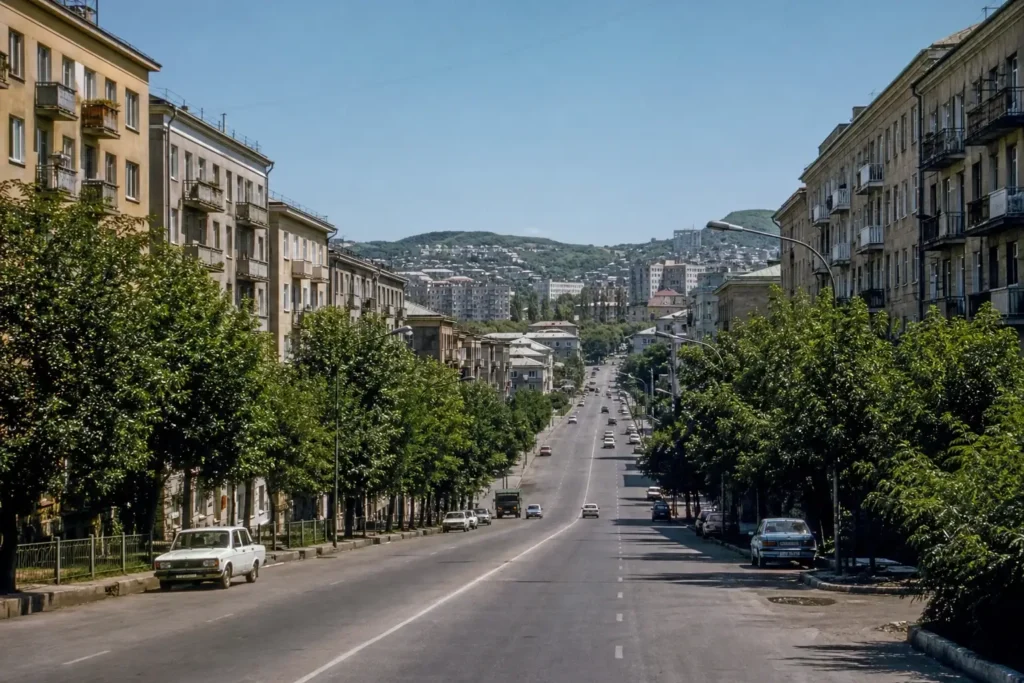
Sovietsky district (also known as the “Soviet” district) is one of five administrative divisions that make up Vladivostok, Russia’s major Pacific port city. The neighborhood emerged during the Soviet era as part of the city’s rapid expansion, with its centerpiece being Centennial Avenue, which stretches from north to south as the longest street in Vladivostok.
Built in 1960 to commemorate the city’s centenary, the avenue and surrounding district represent the urban development priorities of the Soviet period—residential blocks, public buildings, and transport infrastructure designed for a growing military and commercial hub on the Far East.
Quick Facts
| Russian name | Советский |
|---|---|
| District | Vladivostok |
| Best time to visit | Any season offers a view of the district's Soviet-era character. Summer (June–August) provides the most pleasant conditions for walking and exploring the neighborhood. Late autumn and winter reveal the stark, functional aesthetic of the Soviet architecture more clearly, with fewer distractions. Spring is attractive when trees along Centennial Avenue begin to leaf out. Weekdays showcase the neighborhood as locals experience it; weekends are quieter. |
Why Visit Sovietsky, Vladivostok?
Sovietsky offers visitors insight into how Vladivostok evolved beyond its 19th-century colonial core. The district reveals authentic Soviet-era urban planning and architecture, with wide avenues and mid-century residential blocks that shaped daily life for thousands. Centennial Avenue itself is notable as an engineering project from an era when the city was being deliberately expanded to strengthen Russia’s Pacific presence. The district also serves as a practical base for exploring Vladivostok’s broader geography, with access to transport connections and local amenities.
Atmosphere
Sovietsky feels distinctly different from Vladivostok’s preserved downtown, which clusters ornate pre-1917 buildings at the waterfront. Here, the landscape opens up: wider streets, lower building density, and the characteristic Soviet apartment blocks in various states of upkeep. The district is quieter and more residential than the city center, with tree-lined streets and a practical, everyday character. During weekdays, the area is busy with commuters and locals going about their routines; weekends bring families to parks and local shops. The Soviet-era infrastructure remains visible in functional details—utility poles, street furniture, building facades—that document a particular era of Russian urban development.
History of Sovietsky, Vladivostok
Vladivostok was founded in 1860 as a Russian military outpost following the Treaty of Aigun with China. For decades, the city remained relatively compact, concentrated around its harbor and early colonial-era streets. Growth was steady but limited by geography and Russia’s focus on other regions.
The turning point came during the Soviet period. In January 1960, the Council of Ministers of the Soviet Union issued a decree prioritizing accelerated development of Vladivostok, recognizing it as strategically vital to Soviet interests in the Far East. This decision transformed the city’s physical form. During the 1960s, as part of this expansion program, new residential neighborhoods were erected on the city’s outskirts, and public buildings rose in the center. Centennial Avenue was built in 1960 specifically to mark the city’s 100th anniversary, becoming a symbol of this modernization push.
The new tram line was established, trolleybuses were launched, and the city became a vast construction site. Soviet planners laid out rational, grid-based neighborhoods with standardized apartment blocks, schools, shops, and communal facilities. Sovietsky district embodies this mid-century urban vision—functional, planned, and reflective of state priorities. The district’s name itself speaks to its origins: it was consciously created during the Soviet era as part of a deliberate state project to build a major city in Russia’s remote Pacific region.
Plan and Book
Advertisement: these are partner links. If you book or buy through them, we may earn a commission at no extra cost to you.
How to Get to Sovietsky, Vladivostok
Sovietsky district is accessible by local transport throughout Vladivostok. Centennial Avenue, the neighborhood’s main thoroughfare, can be reached by marshrutka (shared minibus) or private taxi. From the Vladivostok Railway Station (located in the city center), it is approximately 15–20 minutes by vehicle northward. The district also connects to Vladivostok’s remaining tram line, which provides another way to traverse the area. Walking is feasible within the district itself, though distances are significant due to the wide street layouts typical of Soviet-era planning.
Accessibility
Sidewalks and streets are generally available for walking, though surface conditions vary. Soviet-era infrastructure may not always meet modern accessibility standards. Public benches can be found along Centennial Avenue. No specific accessibility information is officially published for the district itself; check locally for current conditions of specific locations.
Food Nearby
Sovietsky is primarily residential, so dining options include local cafes and small restaurants serving Russian cuisine, situated throughout the neighborhood and along Centennial Avenue. These range from casual cafeterias (stolovayas) to more formal establishments. Convenience stores and small supermarkets are scattered across the district for snacks and supplies.
What to Bring
Comfortable walking shoes, as the district's wide avenues and sidewalks encourage exploration on foot. In summer, bring sun protection (hat, sunscreen). In winter (November–March), bundle warmly—temperatures can drop well below freezing. A camera to document Soviet-era architecture. Local currency for small purchases and meals at neighborhood establishments.
Photography Rules
Photography is unrestricted in public areas throughout the district. Soviet-era buildings and Centennial Avenue's urban landscape provide strong subjects for architectural and street photography. No special permits are required for standard photography; check locally if filming for commercial purposes.
Family Suitability
Sovietsky is family-friendly as a neighborhood to walk through and explore. The wide streets are relatively safe for children, and parks and green spaces are available. The district lacks major museums or attractions specifically designed for children, so it works best as part of a broader Vladivostok visit. Strollers function well on maintained sidewalks; rougher areas may be challenging. The neighborhood offers a genuine glimpse into everyday Russian life, which families may find educational.
Russia Vibes Tips
- Centennial Avenue (Prospekt Stoletiya Vladivostoka) is the must-see element of the district. Walk its length north to south to understand how it organizes the neighborhood, and pay attention to how Soviet planners used width and alignment to create a sense of grand urban design.
- Visit on a weekday morning or afternoon to see the district as it functions for residents—schools letting out, shops busy, people moving through their daily routines. This reveals the authentic character that weekend emptiness would hide.
- Compare Sovietsky's planned, linear design to the organic, hilly layout of Vladivostok's downtown near the harbor. The contrast shows two eras of the city's development side by side.
- Look up at the buildings. Soviet residential architecture often hides details in proportions, window arrangements, and decorative elements that reward closer attention. Many blocks are nearly identical, which was a feature, not a bug, of Soviet planning philosophy.
- The district is not designed for a short visit—there are no 'sights' to tick off. Plan to spend 2–3 hours wandering, and approach it as an urban landscape study rather than a tourist itinerary.
Explore Nearby Sovietsky, Vladivostok
Related guides
 Pervomaysky, Vladivostok: Historic District and Railway Gateway
Main image: AI-generated illustration. It may not show the place exactly as it looks.
 Pervorechensky, Vladivostok: A Residential District Guide
Main image: AI-generated illustration. It may not show the place exactly as it looks.
 Victory Day, Vladivostok: Parades, Ceremonies and War Remembrance
Main image: AI-generated illustration. It may not show the place exactly as it looks.
 Primorsky Monsoon Festival: Vladivostok’s Waterfront Cultural Celebration
Main image: AI-generated illustration. It may not show the place exactly as it looks.
 Peter the Great Gulf Cup: Russia’s Premier Offshore Sailing Regatta
Main image: AI-generated illustration. It may not show the place exactly as it looks.
Browse more: More in Vladivostok · All Neighborhoods · All Neighborhoods · All Neighborhoods in Vladivostok · All Vladivostok
FAQ: Sovietsky, Vladivostok
Is Sovietsky the only residential neighborhood in Vladivostok?
No. Vladivostok is divided into five administrative districts: Leninsky, Pervomaisky, Pervorechensky, Sovietsky, and Frunzensky. All contain residential areas. Sovietsky is notable for its deliberate Soviet-era planning and Centennial Avenue, but other districts also have residential neighborhoods, some older and some newer.
What is Centennial Avenue and why is it important?
Centennial Avenue (Prospekt Stoletiya Vladivostoka) is the main north-to-south street in Sovietsky district, built in 1960 to commemorate Vladivostok's 100th anniversary. It is the longest street in the city and serves as the organizing spine of the Soviet-era neighborhood. Its construction was part of a major state expansion program that transformed Vladivostok during the 1960s.
Are there museums or attractions in Sovietsky district?
Sovietsky is primarily residential and lacks major museums or tourist attractions in the conventional sense. Its appeal lies in experiencing Soviet urban planning and architecture firsthand. The district works best as part of a broader exploration of Vladivostok, not as a destination with specific 'must-see' sites.
How do I get to Sovietsky from the city center?
From Vladivostok's downtown (near the railway station), take a marshrutka (shared minibus) heading north, or hire a taxi. Centennial Avenue is accessible by public transport. The journey takes 15–20 minutes by vehicle from the city center.
What is the best way to explore Sovietsky?
Walking is the best way to explore the district and appreciate its urban design. Start at one end of Centennial Avenue and walk its length, observing the buildings, streets, and public spaces. Plan for 2–3 hours. The district is not crowded with tourist infrastructure, so bring water and comfortable shoes.
Is Sovietsky safe for visitors?
Sovietsky is a residential neighborhood used by thousands of locals daily. Standard urban precautions apply: be aware of your surroundings, stick to well-used areas, and avoid walking alone late at night. During daytime hours, the district is a normal part of Vladivostok's functioning city.
Why is it called 'Sovietsky' if the Soviet Union has ended?
The district was named during the Soviet era (likely in reference to its creation as part of Soviet state planning). The name persists as the official administrative designation. It reflects the neighborhood's historical origins, not current political status.
Can I eat or shop in Sovietsky?
Yes. The district has local cafes, small restaurants serving Russian cuisine, and convenience stores and supermarkets scattered throughout. These are geared toward residents rather than tourists, which can offer authentic local experiences. Options are less concentrated and less tourist-oriented than in the city center.
Russia Vibes is a one-person project. A coffee keeps it going
How we research and update our guides
About this guide: AI assistance and accuracy
This guide is created with the help of AI and is based on official sources where available. Mistakes can still happen. Opening hours, prices, rules and other details are given to the best of our knowledge as of the date shown and can change without notice. It offers general recommendations only, not professional, legal or travel advice. Please confirm important details with the official source before you travel; you are responsible for your own plans and decisions.

Take this guide with you
Get a free PDF of this guide to print or read offline: key facts, tips and a map link on a few clean pages.
Report an issue on this page
Paying for your trip: please read
International sanctions affect payments between Russia and many other countries. In practice, cards issued in the EU, the UK, the US and several other countries often do not work in Russia, Russian cards usually do not work abroad, and some booking platforms, airlines and payment providers limit or suspend their services for Russia. The situation changes frequently.
We do not give legal or financial advice, and this site does not encourage anyone to break or circumvent sanctions. Whatever you plan, you are responsible for following the laws and regulations that apply to you, including those of your country of residence and citizenship.
Many travelers still organise their stay lawfully. It is worth asking your bank or payment provider what is currently permitted, contacting hotels, tour operators and carriers directly about the payment methods they accept, and checking which services are open to customers from your country. Clarify payment, cancellation and refund terms before you commit to a booking, and keep your plans flexible.
Partner links on this site may not be available in every country, and prices, availability and rules in our guides can differ from what you see when you book.