
Updated
Millionka is Vladivostok‘s most atmospheric historic neighborhood and a window into the city’s cosmopolitan past. Built around the turn of the 19th and 20th centuries, this district was home to tens of thousands of Chinese laborers, merchants, and refugees who arrived seeking opportunity in Russia’s Far East.
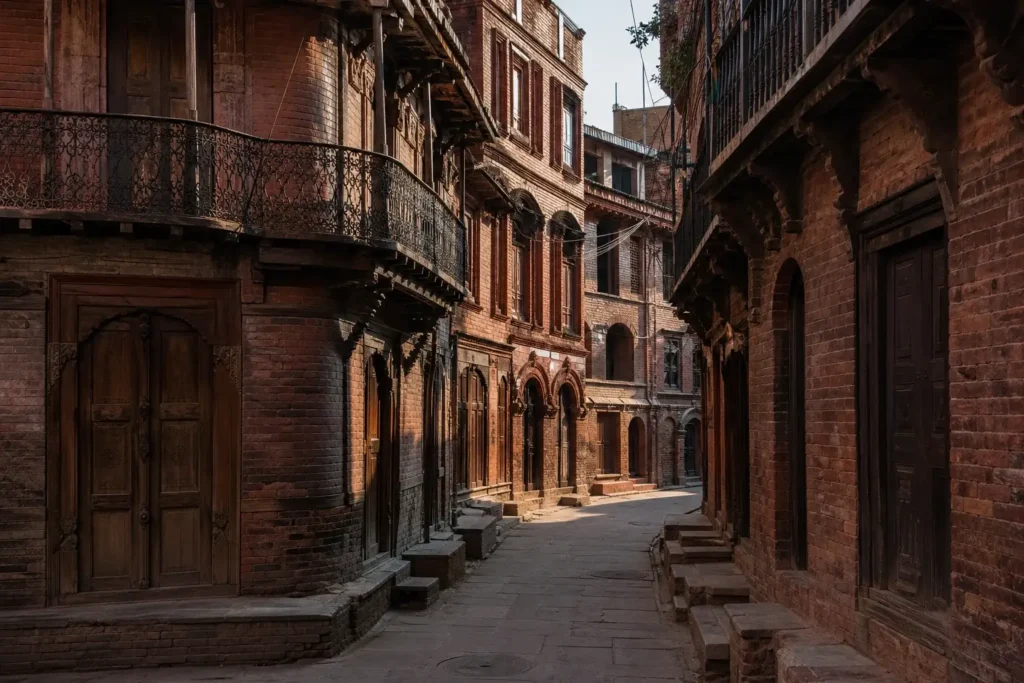
The neighborhood’s distinctive red-brick buildings with arched doorways, hidden courtyards, and winding alleyways remain largely intact today. Bounded by Admiral Fokina, Semyonovskaya, Pogranichnaya, and Aleutskaya streets, Millionka has been revitalized into a cultural hub with cafes, galleries, and street art while retaining its gritty, layered character.
Quick Facts
| Russian name | Миллионка |
|---|---|
| Address | Admiral Fokina Street area, Vladivostok Google MapsApple MapsYandex Maps2GISOpenStreetMap |
| Admission | free |
| Best time to visit | Millionka can be visited any time of year. Spring (April–May) and autumn (September–October) offer moderate temperatures and clear light ideal for photography. Summer (June–August) is warm but may be humid; evening visits are pleasant. Winter (December–February) is cold and dark by afternoon, but the quarter's mood is particularly atmospheric in grey weather. Weekday mornings are quieter than weekends; midday brings more foot traffic and cafe activity. |
| Recommended duration | 1–2 hours |
What Is (and Isn't) Part of a Visit to Millionka, Vladivostok?
| Part | Status | Notes |
|---|---|---|
| Historic quarter buildings and courtyards | Included in the standard ticket | The open streets, alleyways, and building exteriors of Millionka are freely accessible to walk and explore at any time. |
| Building interiors and private courtyards | Outside / not part of it | Most buildings are residential or contain private businesses; interiors are not open to casual visitors. Respect privacy and do not enter without permission. |
| Cafes and restaurants in Millionka | Separate ticket or institution | Cafes and restaurants within Millionka are separate businesses; entry and service depend on patronage; they have individual hours and pricing. |
| Art galleries and studios | Separate ticket or institution | Occasional galleries and artist studios operate in Millionka; they keep variable hours and may require inquiry to visit. |
| Guided tours | Separate ticket or institution | Some tourism operators offer guided walking tours of Millionka; these are separate services with their own fees and schedules. |
| Semenovsky Bazaar | Outside / not part of it | Located at the historical edge of Millionka, the bazaar is a separate destination and market venue. |
Why Visit Millionka, Vladivostok?
Millionka tells the story of Vladivostok’s most formative era. The neighborhood’s claustrophobic alleyways and architectural details preserve the physical reality of early 20th-century immigrant life and city building. Unlike polished museums, Millionka is lived-in and textured, inviting exploration of narrow passageways, courtyards within courtyards, and unexpected shops.
Photography enthusiasts appreciate the building facades with distinctive arches and worn brick. The emerging cafe and restaurant culture offers locally roasted coffee and contemporary takes on regional cuisine. Walking Millionka also provides geographic orientation to central Vladivostok and its relationship to the port and railway that built it.
How Millionka, Vladivostok Is Laid Out
Millionka occupies roughly eight city blocks in central Vladivostok. The neighborhood is not a single attraction but a cluster of historic streets and hidden courtyards. The perimeter is roughly bounded by Admiral Fokina Street to the south, Semyonovskaya Street to the west, Aleutskaya Street to the east, and Pogranichnaya Street to the north, though the precise boundaries shift depending on the source.
Entry points: most visitors enter from Admiral Fokina Street, taking alleys heading north toward the port. Semyonovskaya Street runs roughly east–west through the middle and historically was the commercial heart. Walking the neighborhood requires wandering; there is no single circuit but many interlocking alleys and courtyards to discover. Allow yourself to get slightly lost—the surprise of sudden courtyards and facades is part of the experience.
Highlights of Millionka, Vladivostok
Red-Brick Building Facades
The defining visual element of Millionka is the dense collection of three-story red-brick buildings constructed in the late 1880s and early 1900s. These structures feature distinctive arched gateways, wrought-iron balconies, and decorative brickwork. Originally designed for Vladivostok's expanding merchant class, they were never fully occupied by their intended market and became subdivided into countless small rooms for Chinese workers. The buildings' consistent height and materiality—despite anarchic internal divisions—gives the neighborhood visual cohesion.
Tip: Photograph facades from inside courtyards looking out; the interplay of brick and sky is strongest in afternoon light. Look up at the balconies and arch details often missed from street level.
Semyonovskaya Street
This was the main commercial artery of old Millionka and retains that character today. In the early 1900s, Semyonovskaya housed Chinese shops, restaurants, theaters, and the famous "Million Yard"—a single residential building that reputedly housed thousands of workers in bunk beds, giving the entire district its name. Today the street hosts small businesses, cafes, and galleries, making it a logical starting point for exploration.
Tip: Walk Semyonovskaya in the late afternoon when light angles down the street and cafes are beginning to open. The street feels different from the quiet alleyways surrounding it.
Hidden Courtyards
Millionka's signature feature is the maze of semi-hidden courtyards and passageways tucked between and within buildings. These "wells" (колодцы in Russian) were originally designed as ventilation and light-gathering spaces but became living areas subdivided into cramped quarters. Today many remain as narrow, atmospheric passages with glimpses of upper windows and weathered brick. They reveal the density and layers of the old neighborhood.
Tip: Enter alleyways without hesitation; almost all lead through to the next street or back to your starting point. The neighborhood is too small to truly get lost. Each passage offers different lighting and textures to photograph or sketch.
Admiral Fokina Street Section
Admiral Fokina (historically Pekingskaya Street) forms the southern boundary of Millionka and remains the most accessible entry point. The buildings along this street and the alleyways heading north from it show the architectural transition between Vladivostok's formal streets and the intricate quarter behind them. Several restored buildings and new cafe establishments have opened along this stretch in recent years.
Tip: Start your visit at the intersection of Admiral Fokina and Semyonovskaya to orient yourself; then take alleys northward to explore deeper into the quarter.
Street Art and Murals
In recent years, contemporary street artists have introduced murals and artworks on Millionka's walls, adding visual layers to the historic architecture. These works engage with themes of Chinese immigration, urban transformation, and memory. Unlike graffiti, the murals are generally sanctioned and become part of the neighborhood's identity as a cultural zone. The art changes and evolves, so repeat visits reveal new works.
Tip: Look upward on walls facing alleys and courtyards; some of the most striking pieces are in less obvious locations, not on main streets.
Cafes and Contemporary Life
Millionka is undergoing organic gentrification, with new cafes, small galleries, bookshops, and beauty salons opening in restored ground-floor spaces. These venues bring living activity to the historic quarter and serve as informal gathering points. Establishments come and go, but the neighborhood's appeal to the creative and service sectors is now established. Spending time in a cafe surrounded by period architecture offers a sense of how the space might have felt during its commercial heyday.
Tip: Use a cafe as a base for rest and orientation; locals and visitors meet here, and staff can often suggest good walking routes or upcoming cultural events in the area.
Atmosphere
Millionka feels like stepping into a film set of early 20th-century urban working life, but one that is lived-in rather than preserved. The buildings are worn, the paint faded, the brick weathered—there is no artificial restoration. Narrow alleyways create a sense of enclosure and intimacy; you are walking through the physical remnants of a dense, self-contained community.
In daytime, the quarter is quiet and contemplative, with thin shafts of light falling into courtyards and the occasional sound of voices or cafe activity. The smell of fresh coffee or regional cuisine drifts from cafes. Fewer tourists walk Millionka compared to other Vladivostok sights, so you may feel like an explorer rather than a sightseer. In early evening, when cafes light their interiors and people gather, the quarter takes on warmer energy without losing its edge.
History of Millionka, Vladivostok
Millionka emerged in the late 1880s as Vladivostok transformed from a small garrison town into a major trading port. Russian colonization of the Far East created demand for labor; Chinese workers arrived by the thousands, seeking wages and escaping hardship in China. Unlike other immigrant communities that were confined to specific districts, Vladivostok’s Chinese population grew organically and were initially unwelcome, gradually settling in an area north of the railway station, next to the port where many found work.
In the early 1900s, the city authorities attempted to create an “official” Chinese quarter with proper planning and regulation, but met resistance from the established Chinese community who valued their autonomy. Instead, Millionka developed chaotically: three-story red-brick buildings intended for merchants were subdivided countless times into small rooms, dormitories, and passages. A single residential building on Semyonovskaya Street became so densely packed that it was nicknamed “Million Yard”—the name eventually attached to the entire neighborhood.
By 1910, Millionka housed approximately 50,000 Chinese residents—roughly 30 percent of Vladivostok’s total population at the time. The quarter became a world unto itself, with its own shops, theaters, restaurants, gambling establishments, opium dens, and bathhouses. The Russian Empire’s laws were largely unenforceable here; the district operated according to Chinese social hierarchies and customs. Wealthier Chinese merchants occupied better apartments, while workers lived in crowded bunks on multiple floors of shared dormitories.
The district’s prosperity and autonomy made it a site of fascination, fear, and moral panic among Russian journalists and authorities. Millionka became synonymous with vice, danger, and exoticism—a liminal space at the edge of European civilization. In reality, it was primarily a working-class neighborhood of laborers and small traders, though underground economies certainly existed.
The Soviet period brought gradual change. Stalin’s policies in the 1930s systematically targeted the Chinese community as ideologically suspect and potentially disloyal. Between 1936 and 1938, Millionka was formally “liquidated.” The Chinese population was forcibly evicted and dispersed; many were deported or disappeared. The buildings were repurposed for Soviet workers and administrators. The neighborhood lost its distinctive character but not its architecture, which remained a silent witness to what had been.
From the Soviet era through the 1990s, Millionka was simply an aging, crowded working-class district with little investment or interest from outsiders. In the 21st century, as Vladivostok modernized and became more engaged with international tourism and commerce, the district’s historic significance was gradually recognized. By the 2000s, Millionka began attracting attention from cultural researchers, photographers, and architects. Today, it is officially acknowledged as a cultural heritage site and is undergoing careful revitalization—some buildings are restored, cafes and galleries have opened, and street art has been added—while much remains authentically worn and layered.
Legends and Myths about Millionka, Vladivostok
The Million Yard
Legend – historically unreliable. The origin story of Millionka's name centers on a single residential building on Semyonovskaya Street, built by wealthy Chinese and later subdivided into hundreds of tiny rooms and bunk-bed dormitories. The building reputedly housed between 3,000 and 5,000 people at its peak, each occupant assigned a sleeping space barely large enough to lie down. The building's density inspired the nickname "Million Yard" (in Russian, "Миллионный двор"), because so many people—"millions"—lived there. The name was later applied to the entire quarter.
Chinese Smugglers and Underground Tunnels
Legend – historically unreliable. Local folklore suggests that Millionka's maze of courtyards and basements was connected by underground passages used for smuggling goods between the port and the quarter, and for evading Russian authorities. Some accounts claim secret rooms and hidden routes allowed residents to escape raids and allowed contraband (opium, weapons, stolen goods) to move undetected. Modern visitors sometimes look for tunnel entrances or hidden chambers, though no verified evidence of an organized tunnel system exists.
The Iron Rule of Chinese Gangs
Disputed by historians. Russian and Western observers often depicted Millionka as a lawless territory ruled by Chinese criminal gangs, with tong wars and vendetta killings. Russian newspapers of the era described violent conflicts, while travel writers portrayed the district as more dangerous than it likely was, exoticizing it for readers. Some gang activity certainly occurred, but the narrative was often exaggerated and served colonial anxieties about foreign communities.
Tickets and Booking for Millionka, Vladivostok
Millionka is an open neighborhood and does not require tickets or advance booking. Access is free; you may walk the streets and alleyways at any time of day or night. Cafes, galleries, and shops within the neighborhood have their own hours and pricing; check individual venues or ask locals for current recommendations.
If you wish a guided tour with historical context and stories, tourism offices in central Vladivostok can recommend local guides who specialize in Millionka’s history. Such tours typically require advance booking and vary by provider.
Suggested itineraries Millionka, Vladivostok
1 hour
Enter from Admiral Fokina Street and walk north along Semyonovskaya, observing building facades and arches. Explore one or two side alleys to see hidden courtyards. Grab coffee at a cafe. This captures the essential character without deep exploration.
2 hours
Begin at the Semyonovskaya–Admiral Fokina intersection. Walk Semyonovskaya west to Pogranichnaya, then north to explore the upper section near the historical boundary. Return via different alleyways. Linger in courtyards, photograph details, rest at a cafe. Get a sense of the quarter's extent and layering.
Half day (3–4 hours)
Start early morning for better light. Walk the entire circuit: Admiral Fokina to Semyonovskaya to Pogranichnaya to Aleutskaya and back. Take every alley that tempts you. Sit in different cafes and listen to neighborhood atmosphere. Sketch or photograph extensively. Visit any galleries or cultural spaces that are open. This allows deep exploration and chance encounters.
How to Get to Millionka, Vladivostok
By bus or tram: Vladivostok has no metro, so use the bus or tram network. From the city center, take any bus heading toward the port area or ask locals for the direction to Admiral Fokina Street (Адмирала Фокина). The stop near Admiral Fokina and Semyonovskaya is convenient.
Walking from Vladivostok Railway Station: The railway station is about 15–20 minutes’ walk south of Millionka. Exit the station, head north on any main street toward the port, and look for signs or ask locals for Millionka or Admiral Fokina Street. The route is straightforward.
By taxi or ride-hailing: Give the driver the intersection of Admiral Fokina and Semyonovskaya streets as your destination. This is the most precise way to arrive.
Parking: Street parking is available on Admiral Fokina and surrounding streets, though availability varies. Dedicated parking is limited in the quarter itself.
Accessibility
Millionka's streets and alleyways are paved and navigable on foot for most visitors, but the quarter was built without modern accessibility standards. Sidewalks are narrow and occasionally uneven. Some courtyards require stepping up or down slightly. There are no ramps, accessible restrooms, or services specifically designed for visitors with mobility limitations. Wheelchair navigation is possible on main streets like Admiral Fokina and Semyonovskaya but difficult in narrow alleyways. Visitors with limited mobility may prefer walking main streets and entering a cafe rather than exploring the full extent of courtyards.
Food Nearby
Millionka itself has an expanding number of cafes, restaurants, and small eateries. Options range from coffee shops and sandwich cafes to restaurants serving regional Far Eastern cuisine, Siberian dishes, and contemporary international food. Several establishments focus on locally roasted coffee and homemade pastries. Exact venues change seasonally; ask locals or check current reviews for recommendations. Beyond Millionka, central Vladivostok's main commercial areas (Svetlanskaya Street, near the railway station) have additional restaurants, cafes, and supermarkets.
What to Bring
Comfortable walking shoes are essential; the quarter's cobblestone and uneven surfaces require stable footwear. A camera or phone for photography; Millionka is highly photogenic. A light jacket or sweater, even in summer, as alleyways can be cool and shaded. In winter, warm winter clothing is necessary. A small notebook if you like sketching or taking notes. Water, especially in summer. Street vendors and shops are present, but facilities inside buildings are limited to cafes; plan accordingly.
Best Views and Photo Spots of Millionka, Vladivostok
Semyonovskaya Street, morning light
The street's facades glow in warm morning light from the east. Arched gateways and balconies create layers of shadow. The street perspective recedes northward, drawing the eye. This captures the quarter's architectural heart.
Best time: Early morning (8:00–10:00), May–September for warm light without harsh shadows. Weekdays are quieter.
Courtyard well looking upward
Stand in one of the deep courtyards surrounded by three-story walls and look upward at the sky framed by balconies, washing lines, and window details. The composition is almost abstract, showing the density and intimacy of the space.
Best time: Midday (11:00–14:00) when light falls deepest into the courtyard wells. The contrast between shadows and sky is strongest.
Admiral Fokina Street corner detail
Close-up of arched gateway, distinctive brickwork pattern, or ornate balcony detail. These architectural elements are recognizable symbols of Millionka's historic character.
Best time: Late afternoon when side-lighting reveals texture and age in the brick. Shadow angles are dramatic.
Alley perspective receding northward
Choose a narrow alley and photograph looking north toward the buildings receding into the distance. The converging lines of walls and perspective create visual depth and convey the labyrinthine character.
Best time: Afternoon when the alley is lit by angled light from one side, creating contrast between lit facades and shadowed passages.
Street art or mural detail
Close-up or medium shot of contemporary murals or street art against aged brick. The juxtaposition of new art with old architecture tells the story of the neighborhood's evolution.
Best time: Afternoon to early evening when light is warm and colors in murals are saturated.
Cafe interior framing historic facade view
Photograph through a cafe window or doorway, framing the street and buildings beyond. The warm interior foreground (cafe seating, lighting) contrasts with the cool historic street beyond, suggesting both comfort and history.
Best time: Late afternoon or evening when cafe interiors are lit and the street is quieter and moodier.
Photography Rules
Photography is permitted and encouraged throughout Millionka's public streets and alleyways. No special permits are required for general photography. Respect residents and avoid photographing people without consent. Do not enter private buildings or courtyards without permission. Tripods may be used but should not block pedestrian passage. Interior photography in cafes and galleries depends on the venue's rules; ask staff.
Family Suitability
Millionka is suitable for families with children old enough to walk comfortably for 1–2 hours. The quarter is safe and pedestrian-friendly, and children often enjoy the exploratory aspect of narrow alleyways and courtyards. However, there are few amenities specifically for children (no playgrounds, limited accessible restrooms). Stroller navigation is difficult on uneven surfaces and narrow passages; leave a stroller behind or use a carrier. Cafes are family-friendly and welcome children. The historical and somewhat melancholic mood of the quarter may engage older children interested in history but may bore younger ones with short attention spans. A 30–45 minute focused walk followed by cafe time suits families best.
Russia Vibes Tips
- Don't try to navigate Millionka by compass directions or mental map. Instead, wander with permission to get lost. The quarter is small enough that all paths connect back to main streets. Wandering reveals unexpected courtyards and light angles that planned routes miss.
- Visit outside peak tourist hours (late morning–early evening on weekends). Weekday mornings and late afternoons offer quieter, moodier light and fewer crowds. The neighborhood's contemplative atmosphere is stronger when fewer visitors are present.
- Bring cash. Smaller cafes, galleries, and shops may not accept cards or may offer better prices for cash transactions. ATMs are available on nearby main streets.
- Ask locals in cafes or shops about current art installations, new venues, or interesting courtyards. The neighborhood evolves constantly, and residents and business owners know recent changes and hidden gems. Staff are generally happy to provide directions and tips.
- Photograph details—arches, balconies, weathered paint, window bars—not just overall facades. These details reveal the craftsmanship and care that built Millionka and distinguish images from typical tourist shots.
- Avoid Millionka at night unless you are with a local or experienced visitor. While it is not inherently dangerous, the narrow alleyways have poor lighting, few services are open late, and the solitude can feel eerie. Evening cafe visits are pleasant; late-night wandering is not recommended.
Explore Nearby Millionka, Vladivostok
Browse more: All Hidden Russia · All Neighborhoods · All Neighborhoods in Vladivostok · All Vladivostok
FAQ: Millionka, Vladivostok
What is Millionka's history?
Millionka was Vladivostok's Chinese quarter from the late 1880s until 1936. Built initially for merchants but occupied primarily by Chinese laborers, it housed up to 50,000 residents at its peak. The dense red-brick buildings with hidden courtyards reflect the community's growth and the government's inability to control it. Stalin's policies led to forced eviction and liquidation in the 1930s. Today it is a recognized cultural heritage site undergoing revitalization.
Why is it called Millionka?
A single overcrowded residential building on Semyonovskaya Street was nicknamed "Million Yard" because so many people lived there—crammed into bunks across multiple floors. The nickname was later applied to the entire district. An alternate explanation suggests the poor residents were ironically called "millionchiki" by local authorities, but the building origin is the more widely accepted account.
Is entry free?
Yes, walking Millionka's streets and alleyways is completely free. The neighborhood is an open public area. Cafes, restaurants, galleries, and shops within it are separate businesses with their own hours and pricing.
How long should I spend in Millionka?
A quick walk takes 30–45 minutes; a thorough exploration takes 2–3 hours. Much depends on your pace and how much time you spend in cafes, photographing details, or sitting. There is no "must-see" that requires rushing; the experience is about atmosphere and wandering.
Is Millionka safe to visit?
Yes, Millionka is safe during daylight and early evening. It is a residential and commercial neighborhood frequented by locals and visitors. Avoid walking alone very late at night; as with any urban area, exercise ordinary caution. Petty theft is possible in crowded areas, so keep valuables secure.
Can I take photos?
Photography of public streets, buildings, and alleyways is permitted. Respect residents' privacy and do not photograph people without consent. Do not enter private buildings or courtyards without permission. Cafes and galleries may have their own photo rules; ask staff.
Are there guided tours of Millionka?
Yes, local tourism operators and independent guides offer walking tours of Millionka with historical context. Tours typically include stories about Chinese immigration, the buildings' architecture, and the neighborhood's transformation. They require advance booking and vary in length and price; check with Vladivostok tourism offices for current options.
What can I eat or drink in Millionka?
Millionka has cafes serving coffee, pastries, sandwiches, and full meals. Restaurant options range from local Far Eastern and Siberian cuisine to contemporary international food. Exact venues change seasonally; ask locals or check recent reviews. Prices are moderate and generally more affordable than tourist areas.
Russia Vibes is a one-person project. A coffee keeps it going
How we research and update our guides
About this guide: AI assistance and accuracy
This guide is created with the help of AI and is based on official sources where available. Mistakes can still happen. Opening hours, prices, rules and other details are given to the best of our knowledge as of the date shown and can change without notice. It offers general recommendations only, not professional, legal or travel advice. Please confirm important details with the official source before you travel; you are responsible for your own plans and decisions.

Take this guide with you
Get a free PDF of this guide to print or read offline: key facts, tips and a map link on a few clean pages.
Report an issue on this page
Paying for your trip: please read
International sanctions affect payments between Russia and many other countries. In practice, cards issued in the EU, the UK, the US and several other countries often do not work in Russia, Russian cards usually do not work abroad, and some booking platforms, airlines and payment providers limit or suspend their services for Russia. The situation changes frequently.
We do not give legal or financial advice, and this site does not encourage anyone to break or circumvent sanctions. Whatever you plan, you are responsible for following the laws and regulations that apply to you, including those of your country of residence and citizenship.
Many travelers still organise their stay lawfully. It is worth asking your bank or payment provider what is currently permitted, contacting hotels, tour operators and carriers directly about the payment methods they accept, and checking which services are open to customers from your country. Clarify payment, cancellation and refund terms before you commit to a booking, and keep your plans flexible.
Partner links on this site may not be available in every country, and prices, availability and rules in our guides can differ from what you see when you book.