

Sakhyurta Olkhon Ferry Terminal is the main gateway to Olkhon Island, Lake Baikal‘s largest inhabited island. Located in a small mainland village on Baikal’s western shore, this free state-operated river ferry carries visitors, locals, and vehicles across the narrow Olkhon Gate Strait to the island village of Khuzhir.
Most visitors reach the terminal by a 4–5 hour drive northwest from Irkutsk, either in a rented car or aboard a public bus. The ferry itself takes around 20 minutes to cross the 8-kilometre strait separating the island from the mainland, with departures roughly every 30–40 minutes during summer.
Current access notice: As of October 2026: Ferry service operates May 15–December 15 annually. During freezing periods (mid-December to early February and mid-April to May 14), the strait is inaccessible to vehicles and foot passengers; hovercraft or ice roads may operate in deep winter, but schedules are unreliable. Check current conditions with local operators before planning travel outside the May–December window.
Quick answer: Car Ferry (Private Vehicle) (20 minutes (crossing); queue 30 min–8 hours depending on season, free). 3 more ways compared below.
Quick Facts
| Russian name | Сахюрта (МРС) |
|---|---|
| Type | River pier / station |
| Address | Sakhyurta, Olkhonsky District, Irkutsk Oblast, Russia Google MapsApple MapsYandex Maps2GIS |
| District | Olkhonsky |
| Opening hours | Daily May 15 – December 15; varies by ferry departure schedule |
| Admission | free |
| Best time to visit | Summer, May to September, is the high season. Ferries operate on schedule, the strait is calm, and the surrounding landscape is green. June and September offer fewer tourists and more manageable queues than July–August, which see peak summer tourism. Expect 2–6 hour waits for private vehicles in July weekends.Winter crossings (February–March, via ice road if conditions permit) are possible but risky and require local knowledge and experienced drivers. Fog and sudden weather changes can trap vehicles or stranded passengers. Spring (April–early May) and autumn (late November–December) see ferry disruptions as the strait transitions between liquid and frozen states.The strait can be rough in spring and autumn; late-arriving autumn storms can create waves and delay crossings by hours. |
How to Get to and from Sakhyurta Olkhon Ferry Terminal, Lake Baikal
| Option | Duration | Price | Notes |
|---|---|---|---|
| Car Ferry (Private Vehicle) | 20 minutes (crossing); queue 30 min–8 hours depending on season | Free | Free state ferry for cars and foot passengers. Vehicles queue first-come, first-served, but official shuttle vans and emergency vehicles board first. Summer queues can be substantial, especially July weekends. Buses from Irkutsk get priority, so through-passengers may wait only 30–40 minutes while private vehicles wait hours. Ferry departures roughly every 30–40 minutes. |
| Foot Passenger | 20 minutes (crossing) | Free | Foot passengers board the same ferries as vehicles. No separate ticket required. Board at the marked passenger area near the ferry berth. Queuing is minimal for foot passengers if you are not traveling with a vehicle. |
| Winter Ice Road (February–Early April) | Variable; typically 30–60 minutes crossing | Free | When Baikal's southern basin freezes thick enough (typically mid-February onward), a marked ice road opens across the strait. Vehicles drive directly; pedestrians walk or ride. Conditions depend entirely on freeze depth and weather. Fog and sudden thaws can close the route with little warning. No formal schedule; check with local authorities before attempting. |
| Winter Hovercraft (December–February, Unreliable) | Variable | ₽₽ | During transition periods when ferry operation ends but ice is not yet safe (mid-December to mid-February), occasional hovercraft services may operate, but these are not scheduled or reliable. Local tour operators can advise if service is running. |
₽ budget · ₽₽ moderate · ₽₽₽ upscale · ₽₽₽₽ splurge. Price levels are estimates compared with typical prices for visitors.
Why Visit Sakhyurta Olkhon Ferry Terminal, Lake Baikal?
This ferry is the essential link to Olkhon Island, home to Shamanka Rock (a sacred Buryat site) and dramatic landscapes that include steppe, desert, and taiga forest. There is no alternative access except in winter, when the strait freezes solid enough for vehicles or hovercraft. The crossing itself offers views of Baikal’s deep waters and the island’s rocky shores, making it part of the journey rather than a mere transfer point.
Highlights of Sakhyurta Olkhon Ferry Terminal, Lake Baikal
Olkhon Gate Strait
The 8-kilometre-wide waterway separating Olkhon from the mainland is dramatic in itself. Steep, rocky banks rise from the water on both sides. The strait can be turbulent, with waves reaching 5 metres in height during storms, and the Sarma wind—one of Baikal's fiercest—funnels down from the north. Summer crossings are usually calm, offering unobstructed views of the red-and-grey cliffs that define this corner of the lake.
Tip: Stand on deck if weather permits; the crossing offers the clearest view of Baikal's rocky shoreline you'll see as a passenger.
Sakhyurta Village and Surroundings
The mainland terminal sits in a remote settlement of around 220 people on the western shore of Lake Baikal. The village sits in an open, wind-swept landscape of steppe and scattered birch forest, typical of this region. The tea shop near the pier serves hot drinks and simple snacks while you wait—useful if your ferry queue is long.
Tip: Fuel and supplies are available here before crossing to the island, where prices are higher and selection limited.
Ferry Fleet
Three large car ferries—the Olkhon Gates, the Dorozhnik, and a third vessel—rotate on the route. Each can carry 20–25 vehicles per trip. The vessels are utilitarian metal barges, not scenic; passengers ride on open upper decks or in enclosed cabins. Ferries run in sequence, ensuring departures roughly every 30–40 minutes during peak season, though waits can extend during summer weekends and July tourism surges.
Tip: Buses and official emergency vehicles board first and skip queue delays, so arriving on a through-bus from Irkutsk can save hours of waiting in a private vehicle.
Winter Ice Road
From mid-February through early April, when Baikal's southern reaches freeze thick enough, an ice road opens across the Olkhon Gate Strait. Marked with painted signs and flags, this natural crossing allows vehicles and visitors to drive directly across the frozen strait instead of waiting for ferries. It represents Baikal's winter transformation and is unique to this region.
Tip: Ice road conditions are unpredictable and dependent on freeze depth. Check with local authorities before planning a winter crossing; fog and sudden thaws can close the route with little warning.
Pribaikalsky National Park Access
The terminal sits within the boundaries of Pribaikalsky National Park, the southwestern zone protecting Baikal's coast and islands. Visitors crossing to Olkhon are technically entering a protected area. A small access permit is required, though organized tour groups typically arrange it automatically.
Tip: If traveling independently, obtain your park permit online at baikalpass.ru or at the Olkhon visitor centre on the island; the fee is minimal and processing is quick.
Maloe More (Small Sea) Waters
The ferry crosses the narrow strait called Olkhon Gate, which connects the larger open Baikal to the south with the Maloe More (Small Sea) to the north—a shallower, more enclosed basin between the island and mainland. The water is visibly lighter and warmer than the open lake, and locals fish here year-round.
Tip: In summer, the crossing water is calm and pleasant; in spring and late autumn, weather can be rough and fog can delay departures by an hour or more.
Atmosphere
The terminal feels remote and functional. The queue area is open and windswept, with little shelter except for a small waiting room and the omnipresent wind off the lake. In summer, the atmosphere is busy but orderly: locals, tourists with backpacks and cameras, vehicles of every age and condition, and the constant rumble of diesel engines. The air smells of fuel, water, and wildfire smoke (common in Siberian summer).
The actual crossing is surprisingly calm. Passengers lean on railings watching the rocky shores glide past, or sit in heated cabins if the weather is rough. The ferry’s metal hull groans as it cuts through the lake. Seagulls circle overhead. Once the island’s shore comes into view—tree-covered cliffs and a sandy beach—the crossing feels like arrival rather than transit.
History of Sakhyurta Olkhon Ferry Terminal, Lake Baikal
The Olkhon Gate Strait has been crossed since pre-colonial times by local Buryat peoples in small boats and on ice during winter. The Soviet era saw the construction of the first substantial ferries to link the island, which was increasingly developed for fishing and hunting. The Malomorskaya River Station (MRS in Russian) was formally established as a state transport hub during the Soviet period.
The current ferry service dates to the Soviet era but continues under post-independence Russian management. In 2005, a high-voltage underwater cable was laid along the strait’s bottom to carry electricity to Olkhon Island, marking a significant infrastructure investment. Recent years have seen tension between the growing number of summer tourists and the logistical limits of the current ferry fleet, prompting ongoing discussion of service expansion.
The ferry remains the sole reliable year-round link (via ice in winter) between Olkhon and the mainland. During the Soviet era, a small plane flew daily from Irkutsk to the island, but that service ended with the Soviet collapse, making the ferry the only accessible option for most visitors and island residents.
Tickets and Payment at Sakhyurta Olkhon Ferry Terminal, Lake Baikal
No advance booking is required for the free car ferry. Simply arrive at Sakhyurta village and join the queue. During high season (late June through early August), expect waits of 2–6 hours for private vehicles; foot passengers and bus passengers wait much less. Vehicles board in queue order, though shuttle vans, buses, and emergency vehicles board first.
If traveling by public bus from Irkutsk, you board at the Irkutsk Central Bus Station or local marshrutka hubs. Buses include ferry time in their route and passengers do not wait separately—the bus has priority. Tickets for buses run ₽ (budget) to ₽₽ (moderate) depending on the operator. Tickets can be purchased at bus stations or through local travel agencies.
For current ferry departure times, conditions, and any disruptions, contact the East-Siberian River Shipping Company (VSRP), which operates the service. Information is available through local Irkutsk travel agencies and the official ferry schedule (available online or at the Olkhon visitor centre). Fuel and basic supplies are available in Sakhyurta village but are limited; stock up in Irkutsk or the regional town of Arshan before departing.
Flights, Transfers and Planning
How to Get to Sakhyurta Olkhon Ferry Terminal, Lake Baikal
From Irkutsk: No direct public transport to the ferry terminal. Instead, take a bus or marshrutka from Irkutsk Central Bus Station toward Olkhon Island (destination Khuzhir). The journey covers about 270–300 km, taking 4–5 hours by car or 5–7 hours by public bus, following the western shore of Lake Baikal through open steppe and scattered Buryat settlements.
The route leaves Irkutsk heading northwest along Baikal’s shore, passing through the towns of Listvyanka (1 hour from Irkutsk) and Arshan (3–4 hours from Irkutsk). Buses continue to the village of Sakhyurta, where the ferry terminal is located at the lake’s edge. The terminal is easy to spot: it’s the main structure in the small village, with a parking area and ferry dock.
By private car: Rent a vehicle in Irkutsk and drive to Sakhyurta following regional signs toward Olkhon or Khuzhir. The road is asphalt as far as the terminal, then gravel. Fill your fuel tank in Arshan or Sakhyurta before boarding the ferry, as petrol is scarce and expensive on Olkhon Island.
At the terminal: Park in the designated queue area. A simple building houses toilets and a small tea shop. Boarding is clearly marked; foot passengers walk directly to the boarding gate, while vehicles queue in order.
Accessibility
The terminal and ferry have limited accessibility facilities. The waiting area is open and exposed to wind, with minimal shelter. There is a small indoor waiting room. Public toilets are available but are basic and not wheelchair-accessible. The ferry itself has a raised deck entry (approximately 1 metre above the dock) with no visible ramp; wheelchair users would need to arrange assistance with crew. Once aboard, the open upper deck and enclosed cabin areas are not specifically designed for mobility aids.Visitors with mobility constraints should contact the ferry operator (VSRP) in advance to discuss options. Foot passengers have easier access than vehicle passengers, as they can board without vehicle transfer. Companion tickets are not separately listed but may be available on request.
Food Nearby
A small tea shop at the ferry terminal serves hot tea, coffee, and basic snacks (pastries, biscuits). Food quality and variety are minimal. If you arrive early or anticipate a long queue, bring your own food and water. The village of Sakhyurta has no restaurant; the nearest more substantial food options are in the town of Arshan (30–40 minutes' drive south) or back in Irkutsk (4–5 hours south).Once on Olkhon Island, the main village of Khuzhir has several small cafés and guesthouses offering meals, so it's common to wait out the queue and eat on arrival.
What to Bring
Bring sufficient water and food for the crossing and any potential queue wait (2–6 hours in summer is realistic). Warm layers and a windproof jacket are essential year-round; the exposed terminal and ferry deck are cold and windy, even in summer. In summer, bring sun protection (hat, sunscreen) as the exposed dock offers no shade. In spring and autumn, bring waterproof outerwear; waves can splash the deck. Do not block vehicle exits when queuing, and do not open car doors to wander during the wait unless you are willing to lose your place.
Photography Rules
No restrictions on photography at the terminal or during the crossing. Tripods and drones are not permitted in or near the terminal or on the ferry itself (standard transport security). Flash photography is acceptable outdoors. The best photo opportunities are on deck during the crossing, with views of the rocky strait walls and Olkhon's cliffs. Fog can obscure views in spring and autumn.
Family Suitability
The ferry crossing is suitable for families with children. The 20-minute journey is short and interesting for most ages. However, the waiting experience can be tedious for young children, and the queue area offers no shade or entertainment. Bring activities and snacks for children during waits. The ferry has an enclosed cabin for poor weather, so families can stay dry. Strollers are manageable, though the dock is uneven and the ferry boarding is steep. Older children enjoy watching the water and scenery from the deck.
Russia Vibes Tips
- Arrive early in summer. If you're driving privately, get to the terminal by 7–8 a.m. to avoid the worst queues. Buses from Irkutsk leave early in the morning and get ferry priority, so their passengers board within 30–40 minutes even in peak season.
- Use the tea shop and toilets before boarding. Once on the ferry, toilets are basic and crowded. The tea shop is the only food option at the terminal, so do not skip it if you are hungry and have a long wait ahead.
- Fill your fuel tank in Sakhyurta or Arshan before boarding. Fuel on Olkhon Island is expensive and often in short supply. Once you cross, you cannot easily return to refuel.
- In summer, check ferry conditions before traveling. Major storms or fog can delay departures by hours. Local travel agencies in Irkutsk can advise on current conditions. The ferry operator (VSRP) posts occasional service updates online.
- Do not plan a winter crossing without local advice. Ice roads are marked but require experienced drivers and are unpredictable. Hovercraft service is unreliable and infrequent. Stick to the May–December ferry season unless you hire a specialist winter tour operator.
- Respect the reserved lanes for buses and official vehicles. Attempting to jump the queue or block exit lanes will delay everyone and risks police intervention, which has happened during peak congestion periods.
Explore Nearby Sakhyurta Olkhon Ferry Terminal, Lake Baikal
Sights near Sakhyurta Olkhon Ferry Terminal, Lake Baikal
 Olkhon Island, Lake Baikalabout 35.2 km away · typical visit: 2–3 days
Main image: AI-generated illustration. It may not show the place exactly as it looks.
 Shamanka Rock, Lake Baikal – about 36.8 km away · typical visit: 30–45 minutesOpen 24 hours
Main image: AI-generated illustration. It may not show the place exactly as it looks.
 Cape Khoboy, Lake Baikalabout 74.3 km away · typical visit: 3–4 hours
Main image: AI-generated illustration. It may not show the place exactly as it looks.
 Khuzhir, Lake Baikalabout 36.3 km away · typical visit: 2–3 days
Main image: AI-generated illustration. It may not show the place exactly as it looks.
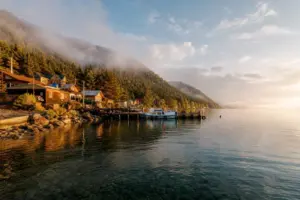 Listvyanka, Lake Baikalabout 188.0 km away · typical visit: 2–3 days
Main image: AI-generated illustration. It may not show the place exactly as it looks.
Related guides
 How to Book Trans-Siberian Railway Tickets, Trans-Siberian Railway: Booking Guide
Main image: AI-generated illustration. It may not show the place exactly as it looks.
Browse more: More in Olkhonsky · All Airports & Transport · All Airports & Transport in Lake Baikal · All Lake Baikal · All Other Hubs
FAQ: Sakhyurta Olkhon Ferry Terminal, Lake Baikal
Is the ferry really free?
Yes, the car ferry to Olkhon Island is a free state-operated service. There is no ticket fee for vehicles or foot passengers. However, buses from Irkutsk charge passengers normally, and private vehicle rental or fuel will cost money.
How long is the queue in summer?
Private vehicles often wait 2–6 hours in July and August, especially on weekends. Buses get priority and usually cross within 30–40 minutes. Foot passengers wait much less (often under an hour). The wait depends on how many vehicles are queued ahead of you and ferry capacity (roughly every 30–40 minutes).
Can I walk onto the ferry without a vehicle?
Yes. Foot passengers board separately from vehicles and do not wait as long. Simply walk to the foot-passenger entrance near the dock and board when the ferry is ready. No ticket is required.
What happens in winter when the ferry stops?
From mid-December to mid-February, the ferry ceases operation. If the ice is thick enough (usually mid-February onward), a marked ice road opens and vehicles can drive across. Hovercraft services may operate sporadically but are not reliable. Most visitors and locals travel between May and December.
Do I need a permit to visit Olkhon Island?
Yes, Olkhon Island is inside Pribaikalsky National Park and requires a small access permit. You can obtain one online at baikalpass.ru or at the Olkhon visitor centre in Khuzhir. Organized tour groups usually arrange it automatically. The fee is minimal.
Is the crossing rough? Will I get seasick?
In summer, the strait is usually calm and the crossing is smooth. In spring and autumn, waves can be larger (up to 5 metres during storms) and the crossing may feel bumpy. The ferry is large and stable. If you are prone to seasickness, take medication before boarding and stay on deck in fresh air during rough crossings.
Can I bring a bicycle or motorcycle on the ferry?
Bicycles are allowed as foot-passenger baggage. Motorcycles are treated as vehicles and must follow the vehicle queue and ticket rules (which are free). Check with ferry staff if you have a large or unusual vehicle.
What if the ferry breaks down or stops during the crossing?
Breakdowns are rare but possible. If the ferry becomes disabled mid-crossing, rescue vessels are typically dispatched within an hour. Stay calm and follow crew instructions. In extreme cases, passengers may be evacuated to rescue boats. This is uncommon, and the service has a reasonable safety record.
Russia Vibes is a one-person project. A coffee keeps it going
How we research and update our guides
About this guide: AI assistance and accuracy
This guide is created with the help of AI and is based on official sources where available. Mistakes can still happen. Opening hours, prices, rules and other details are given to the best of our knowledge as of the date shown and can change without notice. It offers general recommendations only, not professional, legal or travel advice. Please confirm important details with the official source before you travel; you are responsible for your own plans and decisions.
Packing for this trip
* Affiliate link: as an Amazon Associate we earn from qualifying purchases at no extra cost to you.

Take this guide with you
Get a free PDF of this guide to print or read offline: key facts, tips and a map link on a few clean pages.
Report an issue on this page
Paying for your trip: please read
International sanctions affect payments between Russia and many other countries. In practice, cards issued in the EU, the UK, the US and several other countries often do not work in Russia, Russian cards usually do not work abroad, and some booking platforms, airlines and payment providers limit or suspend their services for Russia. The situation changes frequently.
We do not give legal or financial advice, and this site does not encourage anyone to break or circumvent sanctions. Whatever you plan, you are responsible for following the laws and regulations that apply to you, including those of your country of residence and citizenship.
Many travelers still organise their stay lawfully. It is worth asking your bank or payment provider what is currently permitted, contacting hotels, tour operators and carriers directly about the payment methods they accept, and checking which services are open to customers from your country. Clarify payment, cancellation and refund terms before you commit to a booking, and keep your plans flexible.
Partner links on this site may not be available in every country, and prices, availability and rules in our guides can differ from what you see when you book.