
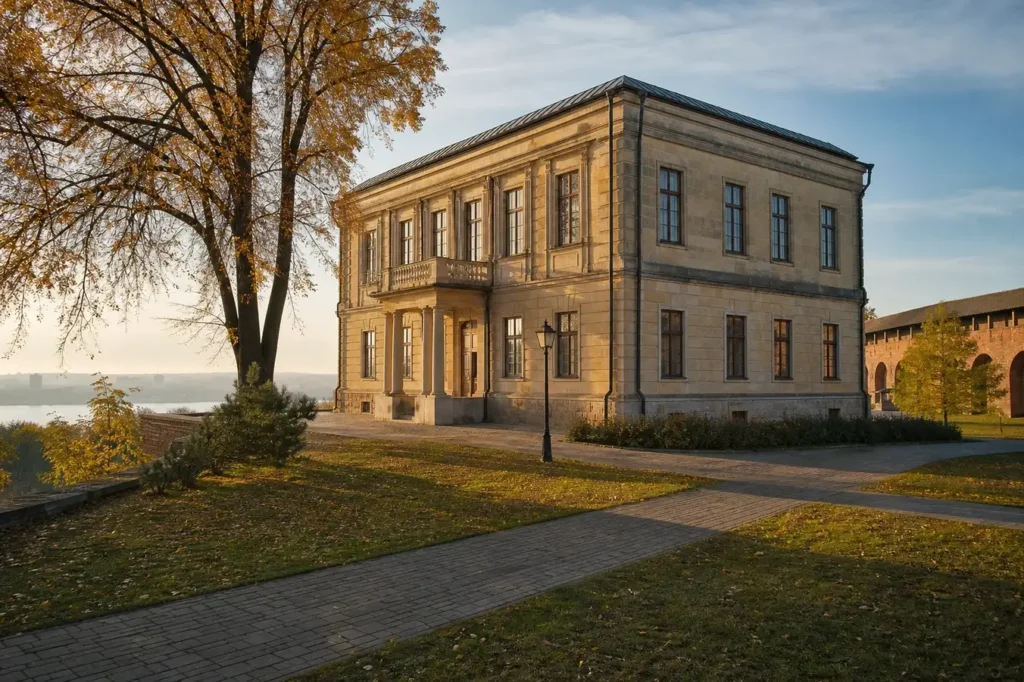
The Nizhny Novgorod State Art Museum is one of the oldest and most important art museums in provincial Russia. Founded in 1896, it opened during the 16th All-Russian Industrial and Arts Exposition, becoming one of the first public art museums in Russia’s regions.
The collection spans over 12,000 artworks, with two main exhibition buildings in Nizhny Novgorod: the Russian art section occupies the historic Military Governor’s House in the Kremlin, while Western European art is displayed at the Sirotkin Merchant’s House nearby on the embankment. The museum preserves masterworks by major Russian painters alongside an important collection of icons, applied and decorative arts.
Quick Facts
| Russian name | Нижегородский государственный художественный музей |
|---|---|
| Built / opened | 1896 |
| Address | Kremlin, 3, Nizhny Novgorod, 603082 OpenStreetMap · Google Maps |
| District | Nizhny Novgorod |
| Opening hours | Tue-Wed 10:00-18:00; Thu 12:00-20:00; Fri-Sun 11:00-19:00; Mon closed |
| Admission | ₽₽ |
| Best time to visit | April to October offers pleasant weather for walking between the two museum buildings and exploring the surrounding Kremlin and embankment. The museum operates year-round. Early mornings or Thursday evenings (the museum stays open until 20:00 on Thursday) offer fewer crowds. Avoid Russian holidays when local tourism peaks. |
| Recommended duration | 2–3 hours |
| Website | artmuseumnn.ru |
What Is (and Isn't) Part of a Visit to Nizhny Novgorod State Art Museum?
| Part | Status | Notes |
|---|---|---|
| Russian art permanent exhibition (14th–20th centuries) | Included in the standard ticket | Main collection in the Military Governor's House at Kremlin, 3; includes icons, paintings, graphics and decorative arts. |
| Western European art permanent exhibition (15th–20th centuries) | Separate ticket or institution | Housed in the Sirotkin Merchant's House at Verkhnevolzhskaya Embankment, 3; requires separate ticket; a 10-minute walk from the main building. |
| Temporary exhibitions | Separate ticket or institution | Special exhibitions held at both locations require additional admission beyond the permanent collection ticket. |
| Guided tour service | Separate ticket or institution | Professional tours available for additional cost; recommended for understanding major works and historical context. |
| Audio guides | Separate ticket or institution | Available for a separate fee; helpful for independent visitors wanting detailed commentary. |
| Adjacent Kremlin structures | Outside / not part of it | Other Kremlin buildings (Dmitrievskaya Tower, Arsenal, Cathedral complexes) are separate institutions not included in art museum admission. |
Why Visit Nizhny Novgorod State Art Museum?
The museum offers a comprehensive survey of Russian art from the 14th to 20th centuries, with works by Repin, Brullov, Vasnetsov, Levitan and other canonical figures. The Russian avant-garde is represented by Kandinsky, Malevich and Larionov, while the Western European galleries contain paintings by Italian, French, German, Dutch and Flemish masters from the 15th century onward.
The collection reveals how art collections were assembled in provincial Russia, shaped by donations from the St. Petersburg Academy of Arts, private collectors, and the writer Maksim Gorky, who donated works by Rerikh, Nesterov and Kustodiev. The historic buildings themselves—housed in 19th-century structures—are part of the museum’s appeal.
How Nizhny Novgorod State Art Museum Is Laid Out
The Nizhny Novgorod State Art Museum operates from two separate buildings connected by a 10-minute walk, each requiring a separate ticket. The main Russian art collection is housed in the Military Governor’s House (Kremlin, 3), located in the upper part of the Kremlin complex overlooking the Volga. This historic building displays Russian paintings, icons, graphics and decorative arts across multiple floors arranged chronologically.
The Western European art collection is located at the Sirotkin Merchant’s House (Verkhnevolzhskaya Embankment, 3), a neoclassical mansion built between 1913 and 1916. This branch showcases European paintings, including a dedicated room for Konstantin Makovsky’s massive canvas ‘The Call to Arms of Kuzma Minin’ (six by seven metres).
Visitors typically start at the Kremlin building, then walk downhill to the embankment location. Both buildings are open on the same schedule and require separate admission.
Highlights of Nizhny Novgorod State Art Museum
Russian Icon Collection
The museum's collection of ancient Russian icons spans from the 14th to 17th centuries, including 'The Prophet Elijah Carried to Heaven in a Chariot of Fire', a late 14th or early 15th-century icon depicting the prophet with sixteen scenes from his life on the margins. This section documents the evolution of Orthodox religious art and represents the museum's most complete artistic chronicle.
Tip: Begin with the icon galleries on the lower floors to establish historical context before moving to later Russian painting.
The Flying Carpet by Victor Vasnetsov
This iconic Russian painting depicts the fantastical journey from Pushkin's poem 'Ruslan and Lyudmila'. Created in 1880, Vasnetsov's image of a maiden and prince soaring through a starlit night has become an emblematic image of Russian Romanticism and fairy-tale tradition. The work showcases the 19th-century Russian fascination with national legend and supernatural themes.
Tip: Look for the painting's rich blues and golds—the canvas's vivid colours are striking in the original.
Russian Realist Paintings
The museum holds major works by Ilya Repin, Ivan Shishkin, Ivan Levitan and Vasily Perov, capturing the 19th-century Russian realist movement's focus on peasant life, landscape and social themes. Works like 'A Shy Peasant' by Repin exemplify the era's humanistic approach to portraiture and genre scenes.
Tip: The realist galleries occupy the central rooms; allow time to read the biographical contexts, which illuminate the movement's social mission.
Russian Avant-Garde Works
The collection includes paintings by Wassily Kandinsky, Kazimir Malevich and Mikhail Larionov, representing early 20th-century abstraction and artistic experiment. These works document Russia's revolutionary art movements before 1920, showing the radical shift from representation to pure form and colour.
Tip: These paintings occupy a dedicated section on the upper floor; ask museum staff for the avant-garde room if you have limited time.
Western European Art at the Sirotkin House
The Sirotkin Mansion houses approximately 200 Western European paintings from the 15th to early 20th centuries, including works by Lucas Cranach the Elder, El Greco and Dutch and Flemish masters. The collection reflects early 20th-century acquisitions from nationalized noble estates and later transfers from the Hermitage and Pushkin Museum.
Tip: This location is less crowded than the main Kremlin building; the neoclassical interior of the merchant's mansion is itself an attraction.
Konstantin Makovsky's The Call to Arms of Kuzma Minin
This monumental canvas, measuring six metres by seven metres, dominates an entire room in the Sirotkin House. The 19th-century historical painting depicts the Nizhny Novgorod merchant Kuzma Minin rallying citizens to join the militia against Polish occupation in 1612. The work was a triumph of academic painting and earned Makovsky international acclaim.
Tip: The painting's scale and dramatic composition require standing back; the room is designed to show it from multiple distances.
Applied and Decorative Arts
The collection includes folk art objects, ceramics, textiles, metalwork and furniture from Russian and European traditions. This section demonstrates the museum's broad mandate beyond canvas and stone, showing how art functioned in daily life and regional craft practices.
Tip: These galleries are often bypassed; they reveal local Nizhny Novgorod traditions like Khokhloma and Gorodets decorative painting.
Atmosphere
The Russian art section in the Kremlin occupies the former Military Governor’s House, a 19th-century official building with high ceilings, period architecture and limited natural light that creates an intimate, contemplative mood. Visitors move through quiet, orderly galleries on multiple floors, with few crowds except weekends. The atmosphere is scholarly and restful—ideal for sustained viewing.
The Western European branch in the Sirotkin House, a wealthy merchant’s mansion, has a more intimate, residential character with period furnishings and finer architectural detail. The embankment location feels more open and connected to the city’s riverfront. Staff are present but unobtrusive. The Thursday late-opening hours attract fewer visitors, making that day ideal for less-crowded viewing.
History of Nizhny Novgorod State Art Museum
The museum was founded by decision of Nizhny Novgorod’s City Duma in 1894 and opened on June 25, 1896, timed to coincide with the 16th All-Russian Industrial and Arts Exposition held in the city. This timing made it one of the first public art museums in provincial Russia, breaking the monopoly of central Moscow and St. Petersburg institutions on major collections.
The museum’s founders were professors Nikolai Koshelev, a historical painter, and Alexander Karelin. Their initial donations formed the core, joined by gifts from St. Petersburg Academy of Arts artists including Ilya Repin, Konstantin Makovsky and Alexei Ryabushkin. The writer Maksim Gorky played a significant role in organizing donations, contributing works by Nicholas Rerikh, Mikhail Nesterov and Boris Kustodiev.
After the 1917 Revolution, the museum expanded rapidly through nationalization of private collections from noble estates throughout Nizhny Novgorod Province—particularly works from the Sheremetev, Orlov-Davydov, and Abamelek-Lazarev families. The museum relocated several times within the Kremlin before settling in the Military Governor’s House. Western European artworks entered the collection gradually from the early 20th century through 1940s acquisitions from the Hermitage and Pushkin Museum.
By the mid-20th century, the museum held approximately 12,000 works arranged across multiple galleries in the Kremlin. The Sirotkin House, built between 1913 and 1916, was adapted to display Western European paintings, creating the dual-venue structure that exists today. The collection has remained substantially unchanged since the Cold War, preserving the institutional vision of provincial Russian art collecting from the early Soviet period.
Tickets and Booking for Nizhny Novgorod State Art Museum
| Ticket | Price | Includes |
|---|---|---|
| Adult single branch | ₽₽ | Access to either Russian art (Kremlin building) or Western European art (Sirotkin House); visitors must purchase separate tickets for both branches. |
| Child, student, pensioner | ₽ | Discounted admission to either branch; ID required. Preschool children enter free. |
| Both branches combined | ₽₽₽ | Access to both the Russian art collection (Military Governor's House) and Western European art collection (Sirotkin House); eliminates need for separate tickets. |
₽ budget · ₽₽ moderate · ₽₽₽ upscale · ₽₽₽₽ splurge. Price levels are estimates compared with typical prices for visitors.
As of October 2026, tickets are sold on-site at both museum locations during opening hours. The official website at artmuseumnn.ru provides updated admission rates, which differ between Russian citizens and international visitors, and between regular and concession categories (students, seniors, children). Rates for Russian citizens and various concessions are regularly updated; check the official ticket page for current pricing and all applicable discounts.
International visitors typically pay standard rates displayed at each entrance. Same-day tickets are available at both the Kremlin building and the Sirotkin House. Visit both branches on the same day if you prefer; both operate on identical schedules and you can move between them freely with your tickets.
Plan and Book
Suggested itineraries Nizhny Novgorod State Art Museum
1.5–2 hours
Visit one branch only. If time is limited, choose the Russian art section in the Kremlin (Military Governor's House): start with icons on the ground floor, move through 19th-century realist painting on the first floor, and finish with 20th-century avant-garde works upstairs. This route covers 600 years of Russian art chronologically.
3–4 hours
Visit both branches in one day. Begin at the Kremlin building with Russian icons and realist works (1.5–2 hours). Descend to the embankment and tour the Sirotkin House Western European galleries (1–1.5 hours). This approach provides context for both traditions side-by-side and allows the walk between buildings to serve as a transition between Russian and European collections.
Half day (4–5 hours)
Spend focused time on your primary interest. For Russian art specialists: Kremlin building with a guided tour (2–3 hours), exploring realist and avant-garde sections in depth. For Western European art enthusiasts: Sirotkin House with attention to Italian and Flemish masters, plus Makovsky's monumental work. Finish with tea or lunch nearby on the embankment.
How to Get to Nizhny Novgorod State Art Museum
The museum’s main building (Russian art) is located inside the Nizhny Novgorod Kremlin at Kremlin, 3. The Kremlin is a 15–20-minute walk from Nizhny Novgorod’s main railway station. From the station, walk northward on Ulitsa Bolshaya Pokrovskaya (the pedestrian shopping street) toward the river, then turn right along the Kremlin wall. Entrances to the Kremlin are clearly marked.
The Western European art section is at Verkhnevolzhskaya Embankment, 3, approximately 10 minutes downhill and westward from the main Kremlin building. Follow the embankment promenade north from the Kremlin’s lower gate.
The city has no underground metro system, but local buses and the light metrotram (electric tram) connect the railway station to central Nizhny Novgorod. Taxis are readily available from the station. Street signs in Cyrillic indicate museum locations; the Kremlin walls are unmistakable.
Accessibility
Both buildings are housed in 19th-century structures with limited modern accessibility features. The Kremlin building (Military Governor's House) has multiple floors connected by stairs; a lift is present but narrow. The Sirotkin House embankment location has ground-level galleries but stairs between floors. Wheelchair access is limited; contact the museum directly at +7 831 439-08-55 to discuss specific accessibility needs. Benches are available in some galleries for visitors needing rest.
Food Nearby
The central Kremlin and embankment area have modest cafés and restaurants within walking distance. Basic refreshments are available at small shops near Minin and Pozharsky Square, adjacent to the Kremlin. The riverside embankment has seasonal outdoor seating with views of the Volga. No food service operates inside the museum; bring water and snacks if visiting for several hours.
What to Bring
Comfortable walking shoes are essential for exploring both museum buildings and the 10-minute walk between them. A light jacket or cardigan is useful indoors, as temperature varies between galleries. Note that large bags may be subject to security checks; a small backpack or shoulder bag is convenient for carrying materials and notes.
Best Views and Photo Spots of Nizhny Novgorod State Art Museum
Military Governor's House main gallery, Russian icon collection
The tall galleries with high ceilings and period architectural details create elegant framing for the icons displayed against neutral walls; north-facing windows provide soft, even light.
Best time: Morning light (10:00–11:30) illuminates the galleries evenly; midday can create harsh shadows.
Sirotkin House, Makovsky's The Call to Arms of Kuzma Minin
The monumental six-by-seven-metre canvas dominates its dedicated gallery space; standing at the far end of the room captures both the painting's immense scale and the ornate merchant's house interior.
Best time: Late afternoon, when the museum is quieter and you can position yourself freely without other visitors.
Kremlin embankment exterior, between the two buildings
The riverside promenade offers views of the Military Governor's House overlooking the Volga, with the river and opposite bank in the background; captures the museum's setting within the city's historic landscape.
Best time: Late afternoon provides warm, directional light and fewer pedestrians.
Photography Rules
Personal photography is generally permitted in the permanent collection galleries without flash, tripod or commercial intent. Flash and studio lighting are prohibited to protect artworks. Temporary exhibitions may have stricter rules; check with staff at the entrance. No aerial or commercial photography is permitted.
Family Suitability
The museum suits families with older children (12+) who can engage with visual art and appreciate historical context. Younger children may find long gallery visits taxing; the quiet, museum-etiquette environment can restrict their movement. Stroller access is limited due to narrow stairways and gallery layouts. The icons and Russian realist paintings of peasant and folk subjects hold some appeal for older children; the Western European galleries may seem less engaging to younger visitors. Consider visiting one building rather than both in a single day with children.
Russia Vibes Tips
- Arrive before noon on weekdays to avoid the modest crowds that build in afternoons. The Sirotkin House (Western European branch) is consistently quieter than the main Kremlin building, making it a peaceful option if you prefer unhurried viewing.
- The museum's strength lies in Russian painting, not comprehensive Western European coverage. If you have limited time, prioritize the Russian collection; the Western European section is solid but smaller and best suited to specialists in that tradition.
- The 10-minute walk between buildings is intentional; the museum offers this as part of the experience. Walk downhill from the Kremlin to the embankment to physically transition between Russian and European contexts, rather than visiting both on separate occasions.
- Thursday evenings are the museum's longest opening hours (until 20:00). This is an excellent time to visit without daytime crowds, and the embankment becomes atmospheric in evening light.
- Do not miss the applied and decorative arts sections—folk ceramics, textiles, and metalwork are often overlooked but reveal regional craft traditions and are displayed in smaller, intimate galleries.
- The museum's collection reflects Soviet-era acquisitions from the 1920s–1950s; later 20th-century work is minimal. If you seek contemporary or recent Russian art, the Centre for Contemporary Art nearby offers changing exhibitions.
Explore Nearby Nizhny Novgorod State Art Museum
Sights near Nizhny Novgorod State Art Museum
 Nizhny Novgorod Kremlin – about 250 m away (~4 min walk) · typical visit: 2–3 hoursOpen daily 06:00–22:00
Main image: AI-generated illustration. It may not show the place exactly as it looks.
 Kazan Cathedral, Saint Petersburg – about 895.4 km away · typical visit: 30–60 minutes4 min on foot from Nevsky Prospekt metro
Main image: AI-generated illustration. It may not show the place exactly as it looks.
 Chkalov Staircase, Nizhny Novgorod – about 250 m away (~4 min walk) · typical visit: 45 minutes to 1.5 hoursOpen 24 hours
Main image: AI-generated illustration. It may not show the place exactly as it looks.
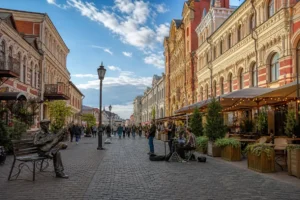 Bolshaya Pokrovskaya Street, Nizhny Novgorod – about 900 m away (~15 min walk) · typical visit: 1.5–2 hoursOpen 24 hours
Main image: AI-generated illustration. It may not show the place exactly as it looks.
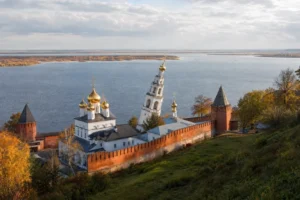 Pechersky Ascension Monastery, Nizhny Novgorodabout 2.8 km away · typical visit: 1–2 hours
Main image: AI-generated illustration. It may not show the place exactly as it looks.
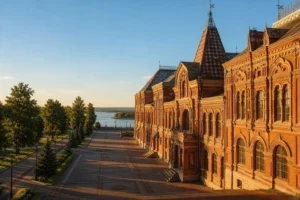 Nizhny Novgorod Fair, Nizhny Novgorod – about 2.8 km away · typical visit: 1–2 hoursOpen daily 10:00–19:00
Main image: AI-generated illustration. It may not show the place exactly as it looks.
Restaurants and cafes near Nizhny Novgorod State Art Museum
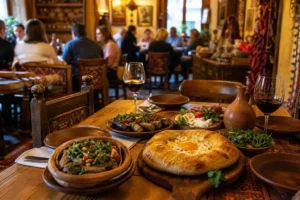 Dzhani Restorani, Nizhny Novgorodabout 500 m away (~8 min walk)
Main image: AI-generated illustration. It may not show the place exactly as it looks.
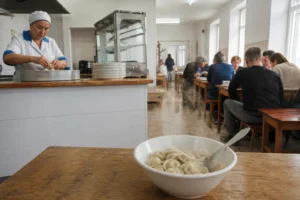 Pelmennaya Lepi Testo, Nizhny Novgorod – about 550 m away (~9 min walk)Open daily 08:00–21:30
Main image: AI-generated illustration. It may not show the place exactly as it looks.
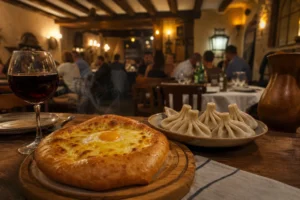 Khachapuriya, Nizhny Novgorodabout 600 m away (~10 min walk)
Main image: AI-generated illustration. It may not show the place exactly as it looks.
 BaklaDzhan, Nizhny Novgorodabout 750 m away (~12 min walk)
Main image: AI-generated illustration. It may not show the place exactly as it looks.
Related guides
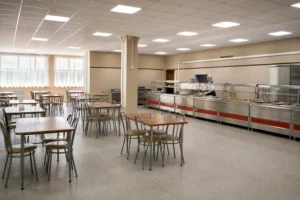 Stolovaya №1, Nizhny Novgorod: Budget Russian Canteen FoodOpen daily 08:00–22:00
Main image: AI-generated illustration. It may not show the place exactly as it looks.
 Mitrich: Nizhny Novgorod’s Premier SteakhouseOpen daily 12:00–00:00
Main image: AI-generated illustration. It may not show the place exactly as it looks.
 Nizhny Novgorod Cableway: 13-Minute Gondola Across the Volga
Main image: AI-generated illustration. It may not show the place exactly as it looks.
Browse more: More in Nizhny Novgorod · All Museums · All Nizhny Novgorod · All Sightseeing · All Sightseeing in Nizhny Novgorod
FAQ: Nizhny Novgorod State Art Museum
Are the Russian and Western European collections in the same building?
No. The Russian art collection occupies the Military Governor's House inside the Kremlin (Kremlin, 3). Western European paintings are displayed at the Sirotkin Merchant's House on the embankment (Verkhnevolzhskaya Embankment, 3), a 10-minute walk away. Both require separate admission tickets.
Can I buy a combined ticket for both branches?
Yes, a combined ticket for both branches is available at a discounted rate compared to buying separate admission. Purchase it at either location. The two buildings operate on identical schedules, allowing visitors to tour both on the same day.
What are the opening hours and when is the museum closed?
The museum is open Tuesday–Wednesday 10:00–18:00, Thursday 12:00–20:00, Friday–Sunday 11:00–19:00. Closed Mondays. Both branches observe the same schedule.
How long should I plan to spend at the museum?
Allow 1.5–2 hours for one branch, 3–4 hours if visiting both on the same day. Time depends on your interest in art history and whether you use a guide or audio guide.
Is there a guided tour available?
Yes, professional guided tours are available for an additional fee. Tours in Russian are more readily scheduled; tours in English should be arranged in advance through the official website or by phone.
Can children enter free or at reduced rates?
Children typically receive reduced admission rates. Preschool children (under 7) often enter free; check the official website for current policies by category. ID may be required.
Is photography allowed inside the museum?
Personal photography without flash or tripods is permitted in most permanent collection galleries. Flash, studio lighting and commercial photography are prohibited. Temporary exhibitions may have different rules; ask staff at the entrance.
What is the closest metro or transit station?
Nizhny Novgorod has no underground metro system. The nearest public transit is the metrotram (light rail) and bus system. The railway station is a 15–20-minute walk from the Kremlin. Taxis are widely available.
Russia Vibes is a one-person project. A coffee keeps it going
How we research and update our guides
About this guide: AI assistance and accuracy
This guide is created with the help of AI and is based on official sources where available. Mistakes can still happen. Opening hours, prices, rules and other details are given to the best of our knowledge as of the date shown and can change without notice. It offers general recommendations only, not professional, legal or travel advice. Please confirm important details with the official source before you travel; you are responsible for your own plans and decisions.

Take this guide with you
Get a free PDF of this guide to print or read offline: key facts, tips and a map link on a few clean pages.
Report an issue on this page
Paying for your trip: please read
International sanctions affect payments between Russia and many other countries. In practice, cards issued in the EU, the UK, the US and several other countries often do not work in Russia, Russian cards usually do not work abroad, and some booking platforms, airlines and payment providers limit or suspend their services for Russia. The situation changes frequently.
We do not give legal or financial advice, and this site does not encourage anyone to break or circumvent sanctions. Whatever you plan, you are responsible for following the laws and regulations that apply to you, including those of your country of residence and citizenship.
Many travelers still organise their stay lawfully. It is worth asking your bank or payment provider what is currently permitted, contacting hotels, tour operators and carriers directly about the payment methods they accept, and checking which services are open to customers from your country. Clarify payment, cancellation and refund terms before you commit to a booking, and keep your plans flexible.
Partner links on this site may not be available in every country, and prices, availability and rules in our guides can differ from what you see when you book.