
Updated
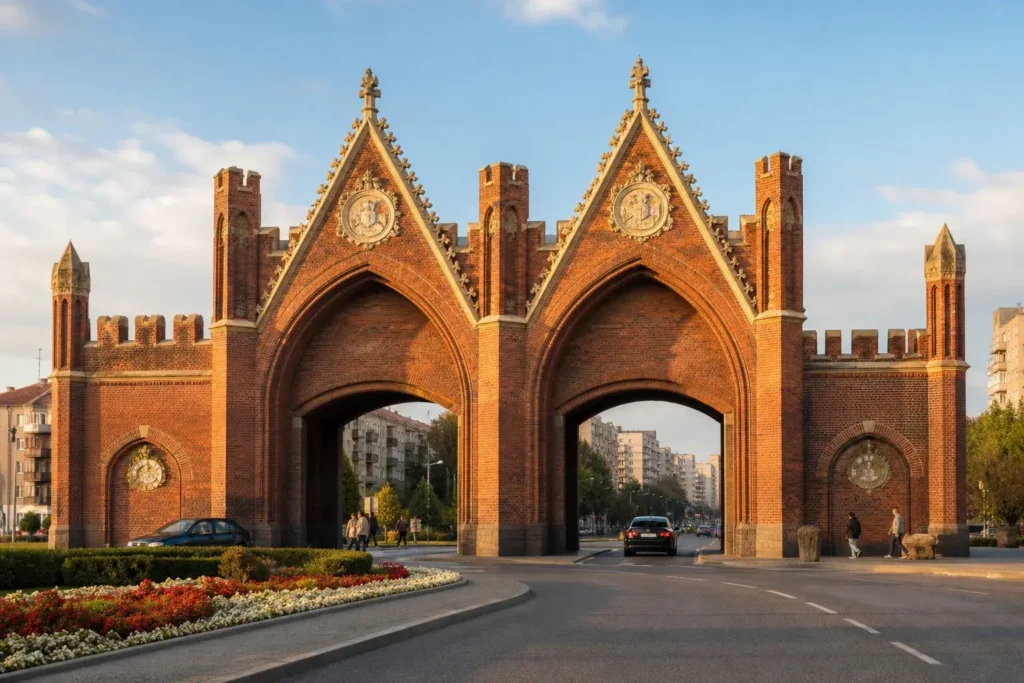
The Brandenburg Gate stands on Bagration Street as one of seven surviving city gates from the former Prussian city of Königsberg, now Kaliningrad. Built originally in 1657 as a wooden structure, the gate was transformed into a monumental brick building with two arched passages roughly a century later by order of King Frederick II of Prussia. Its neogothic style, added during major restoration work in 1843, makes it distinctive among the city’s surviving gates.
Unlike the other historic gates in Kaliningrad, the Brandenburg Gate still functions as it did centuries ago: traffic flows under both arches as a main vehicular route through the city. The gate sits at the intersection of Bagration Street and formerly Berlin Street (now Suvorov Street), on the border of the historic Haberberg district.
Quick Facts
| Russian name | Бранденбургские ворота |
|---|---|
| Built / opened | 1657 |
| Architect(s) | Friedrich August Stüler (1843 renovation design) |
| Address | Улица Багратиона, 137, Калининград OpenStreetMap · Google Maps |
| District | Kaliningrad |
| Admission | free |
| Best time to visit | Visit the Brandenburg Gate early in the morning (before 8 a.m.) or during mid-afternoon (2–4 p.m.) to avoid rush-hour congestion and noise from passing buses and trucks. Weekends are generally quieter than weekdays.Seasonal conditions: The gate is visually striking year-round, though the red brick and stone decoration show best in clear daylight. Overcast days flatten the colors; early morning or late afternoon sun highlights the neogothic stonework and carvings. Rain darkens the brick and may make photography reflective, which can be atmospheric. Winter can bring gray skies but also clears street-level shadows. Spring and autumn are ideal for photography and extended viewing comfort. |
| Recommended duration | 30–45 minutes |
What Is (and Isn't) Part of a Visit to Brandenburg Gate, Kaliningrad?
| Part | Status | Notes |
|---|---|---|
| The two arched passages through the gate | Included in the standard ticket | Free public access as they are part of the active street thoroughfare; open 24 hours. |
| Exterior facades and stonework | Included in the standard ticket | Visible from the street; no ticket required to view and photograph the neogothic decorations, busts, and brick construction. |
| Museum of Marzipan inside the gate | Separate ticket or institution | Housed in one interior chamber; separate entrance and ticket required. Operating hours and admission separate from gate access. |
| Interior casemates and chambers | Not open to visitors | The vaulted chambers built into the flanking walls are not open to public access and not visible from the street. |
| Sackheim Gate and other surviving gates | Outside / not part of it | Different monuments; located at other points around Kaliningrad's perimeter (Sackheim on Lithuanian Wall Street, King's Gate near Southern Railway Station, etc.). |
Why Visit Brandenburg Gate, Kaliningrad?
The Brandenburg Gate offers a tangible connection to Königsberg’s multilayered past—German fortifications, Prussian military history, and Russian present coexist in one structure. The two arched passages remain active thoroughfares rather than museum pieces, allowing visitors to walk or drive through a monument still in daily use. The neogothic styling, with its pointed arches, decorative sandstone flowers, and embedded portrait medallions of Prussian military figures, makes it one of the most architecturally striking surviving gates. Inside, a marzipan museum provides cultural context and a glimpse into what lies behind this monumental red-brick facade.
Highlights of Brandenburg Gate, Kaliningrad
Two Arched Passages
The gate features two symmetrical pointed-arch passages, each carrying one lane of traffic. Originally designed by Frederick II's engineers around 1750, they remain structurally intact after nearly three centuries. The arches are framed in plain red brick, with defensive casemates built into the flanking walls—though these chambers are no longer visible from the street due to later renovations.
Tip: Stand in the traffic break to photograph the arches from street level; the neogothic perspective shows the deliberate height-enhancing design achieved through pointed gables.
1843 Neogothic Facade Decoration
During comprehensive restoration in 1843, the gate received ornamental sandstone elements—stylized flowers, crossed decorative forms, medallions, and coats of arms—that now cover both facades. This Victorian-era embellishment was fashionable across Prussian fortifications and gives the gate its distinctive appearance, transforming a purely defensive structure into an aesthetic landmark.
Tip: Walk around the gate's perimeter to see all facades; the inner side (facing the city) displays the most elaborate stonework and the sculpted busts.
Sculptured Portraits of Prussian Leaders
Two high-relief stone busts adorn the inner face of the gate, facing the city. On the left is Field Marshal Hermann von Boyen (1771–1848), a major reformer of the Prussian military. On the right is Ernst Ludwig von Aster (1778–1855), the engineering officer chiefly responsible for designing and constructing most of Königsberg's remaining gates and fortifications. Both portraits are carved directly into the stone.
Tip: These portraits face inward and are most clearly seen by approaching the gate from inside the city; carving dates and names are inscribed below the busts.
Museum of Marzipan
One chamber inside the gate houses a small museum and shop dedicated to marzipan (German: Marzipan), a traditional almond-based confection. The museum displays historical objects related to marzipan's craftsmanship and cultural significance in the region, along with miniature sculptures and contemporary artworks made from the material. This is a separate ticket and institution from the gate itself.
Tip: The marzipan museum entrance is not obvious from the street; ask at ground level on the city-facing side. Operating hours differ from gate-viewing hours.
Only Active City Gate in Kaliningrad
Seven city gates survive in Kaliningrad, but the Brandenburg Gate is unique: it remains open to its original purpose—daily vehicular traffic. Buses, cars, and motorcycles flow continuously under the arches. The other surviving gates (Sackheim, Rossgarten, King's Gate, Don Tower, Friedrichsburg, and Zakkhaim) no longer function as thoroughfares and are either monuments, museums, or restaurants.
Tip: Watch for traffic and noise when photographing; the gate is loudest during rush hours (approximately 8–9 a.m. and 5–7 p.m.). The flow also provides a living historical continuity rarely found at restored fortifications.
Red Brick Construction and War Scars
The gate's distinctive appearance comes from its thick-walled brick construction, built between 1750 and 1770 under Frederick II. Red brick was the standard material for Prussian military architecture. The surfaces show minor damage and patina accumulated over centuries, including faint scars from World War II—a reminder that the gate survived the 1945 siege and battle of Königsberg.
Tip: Examine the brickwork up close on both sides; the color variation and weathering patterns tell the story of age and restoration.
Atmosphere
The Brandenburg Gate is a working monument embedded in the everyday rhythm of Kaliningrad’s traffic. Buses rumble through the arches, pedestrians cross between the lanes, and the brick carries the hum of an active city. Despite its surrounding urban context—shops, apartment blocks, and a busy intersection—the gate commands presence through its mass and solidity. At ground level, the two arches frame views through to the other side, creating a moment of spatial and temporal transition.
Early mornings are quieter; weekday late afternoons bring congestion. The neogothic styling, though not lavish, has a purposeful formality—this was a gate meant to impress while defending. The inner courtyard (if accessible) feels enclosed and cool, in contrast to the open traffic thoroughfare.
History of Brandenburg Gate, Kaliningrad
The Brandenburg Gate was conceived in 1657 as part of Königsberg’s fortification of its southern approaches. The city was strengthening its defensive walls against attacks during the Polish-Swedish Wars and other regional conflicts. The gate was positioned at the intersection of the road leading south toward Brandenburg Castle (now the village of Ushakovo), which gave it its name. Due to limited funds, the original structure was wooden, built on an earthen rampart and fronted by a water-filled moat for defense. This wooden gate and its defensive ditch served the city for roughly a century.
Around 1750–1770, under the order of King Frederick II of Prussia, the deteriorated wooden gate was demolished and replaced by a substantial brick structure. The new design featured two wide arched passages for vehicle passage and vaulted casemates (defensive chambers) built into the flanking walls to house a garrison and store supplies. This brick reconstruction represented a significant engineering upgrade, giving the gate permanent defensive capability and improved durability. The gate then served as a checkpoint and guard post for the southern approach to the city throughout the late 18th and early 19th centuries.
In 1843, during a comprehensive program to modernize and embellish Königsberg’s surviving fortifications, the Brandenburg Gate underwent its most visible transformation. Engineer Ernst Ludwig von Aster oversaw the restoration, and architect Friedrich August Stüler designed new facade elements. Sandstone flowers, medallions, coats of arms, and other neogothic ornaments were added to both the outer and inner faces. The two portrait medallions of Prussian military figures (Field Marshal Boyen and General von Aster himself) were carved and installed at this time. This 1843 work gave the gate much of its current decorative character, reflecting the mid-19th-century fashion for neogothic style applied to civic and military structures.
The gate survived the 1945 Soviet siege and capture of Königsberg, retaining most of its brick structure despite nearby destruction and urban warfare. After the war, when the city became Kaliningrad and part of the Soviet Union, the gate remained in place as an architectural monument rather than a functional defense structure. The original military and defensive purpose faded, but the thoroughfare function endured. In the decades following, the gate was maintained and restored as a cultural heritage site. In recent years, the interior has been adapted to house a small museum of marzipan and tourist information.
Legends and Myths about Brandenburg Gate, Kaliningrad
Frederick II's Engineering Vision
Disputed by historians. Local tradition holds that King Frederick II of Prussia personally decreed the brick rebuilding of the gate because wooden structures had proven vulnerable to both weather and military attack. Though historians debate the exact extent of the king's personal involvement, the transformation from wood to brick in the mid-18th century did reflect his broader military modernization of Prussia's fortress system. The gate's durability over nearly three centuries lends credence to the notion that this engineering choice was sound.
Ernst von Aster's Monument to Himself
Disputed by historians. Popular accounts suggest that Ernst Ludwig von Aster, the engineer responsible for designing most of Königsberg's gates and fortifications, arranged to have his own portrait sculpted onto the inner face of the Brandenburg Gate during the 1843 restoration as a form of immortalization. While historians confirm that Aster's bust was indeed added to the gate, the claim that he explicitly commissioned his own likeness as vanity is not universally accepted in scholarly sources.
Tickets and Booking for Brandenburg Gate, Kaliningrad
| Ticket | Price | Includes |
|---|---|---|
| Gate viewing (street and exterior) | Free | Access to the gate's arched passages and exterior facades; viewing of the 1843 neogothic stonework and portrait busts from outside. |
| Museum of Marzipan (inside the gate) | ₽ | Entry to the marzipan museum chamber, displays on the history and craft of marzipan, and shop access. |
₽ budget · ₽₽ moderate · ₽₽₽ upscale · ₽₽₽₽ splurge. Price levels are estimates compared with typical prices for visitors.
The Brandenburg Gate itself requires no ticket or reservation. As the gate is a functional traffic thoroughfare on a public street, it is accessible 24 hours a day. Visitors may view and photograph the exterior, walk through the arches, and examine the stonework and busts without charge.
The Museum of Marzipan, housed inside the gate, operates separately. Tickets for the museum are purchased at its entrance inside the gate. No online booking system is typically available; visitors purchase entry on-site. Operating hours, current pricing, and admission policy for the museum should be confirmed at the official Kaliningrad tourism website or by contacting the museum directly, as these details may change seasonally.
Plan and Book
Suggested itineraries Brandenburg Gate, Kaliningrad
15 minutes (exterior view)
Approach the Brandenburg Gate from Bagration Street, walk around the perimeter to observe both the outer and inner facades, examine the sculptured busts and decorative stonework, then photograph from multiple angles. For traffic-free views, visit early morning or late evening.
30–45 minutes (including marzipan museum)
View the exterior first, then locate and enter the Museum of Marzipan to see the interior space and displays. Browse the marzipan shop and purchase samples if desired. Return outside to photograph the gate with new understanding of its interior role and contemporary use.
2 hours (gates tour context)
Visit the Brandenburg Gate first for its overview of Königsberg's defenses. Then walk or take transport to view one or two other surviving gates (King's Gate near the Southern Railway Station is within reach) to understand the wider fortification ring and architectural evolution from this one example.
How to Get to Brandenburg Gate, Kaliningrad
The Brandenburg Gate is located at Ulitsa Bagrationa, 137, at the corner of Bagration Street and Suvorov Street. It is easily accessible by foot from the city center (approximately 15–20 minutes) or a short ride by taxi or bus.
By public transport: The nearest tram and trolleybus stops serve Bagration Street near the gate. Any bus or tram heading south along Bagration will stop near or pass the gate. Consult a local map app for the nearest stop and current route numbers, as they change.
By foot from the center: From Tsentralnaya Square (the central reference point), head south on Bagration Street (or parallel streets toward the south) for roughly 20–25 minutes. The gate is impossible to miss as you approach—look for the distinctive twin red-brick arches spanning the street.
By car or taxi: Ride-hailing apps and taxis will recognize the address. Note that regular vehicle traffic passes through the gate, so taxis may drive directly through it. Ask the driver to drop you on either side if you wish to photograph or approach on foot.
Accessibility
The Brandenburg Gate is built at street level and spans a working roadway. The two arched passages are open to foot traffic at any time, with no physical barriers or stairs. Pedestrians walk on the street alongside vehicles passing through, so it is not traffic-separated or fully safe for those with limited mobility or vision.The Museum of Marzipan is housed in a chamber inside the gate's structure. Access details (elevator, stairs, accessible restrooms) for the museum have not been published officially and should be confirmed directly with the venue before visiting if accessibility is a concern.
Food Nearby
Bagration Street and the surrounding residential area have a mix of casual cafes, tea rooms, and small shops typical of Kaliningrad's outer districts. A few minutes' walk in any direction from the gate will yield local diners and café options, though the area is not a dining destination. For substantial meal choices, consider walking back toward the city center (20–25 minutes) where restaurant options are more abundant and varied.
What to Bring
Bring a camera or smartphone for photography—the neogothic decoration and portrait busts reward close documentation. Comfortable walking shoes are essential as you will be navigating street-level sidewalks next to traffic. Sunscreen and a hat if visiting in sunny weather, as there is minimal shade at the gate itself. Note that the surrounding street is a traffic zone; do not leave bags or valuables unattended.
Best Views and Photo Spots of Brandenburg Gate, Kaliningrad
South side of the gate, from the corner of Suvorov Street
Full frontal view of the gate's facade with both arches symmetrically framed. The neogothic pinnacles and sandstone ornaments are clearly visible. This angle captures the distinctive asymmetrical towers and the sense of height created by the pointed gables.
Best time: Late afternoon (4–6 p.m.), when sun from the west illuminates the red brick and ornamental details. Weekends or after 6 p.m. to avoid heavy traffic in the foreground.
North side, from inside the city, facing outward
The inner facade with the sculptured busts of Boyen and von Aster clearly visible. The portrait medallions and inner courtyard (if any) can be seen from this angle. This view shows the gate's dedication to the military figures who shaped the city's defenses.
Best time: Morning light (8–10 a.m.), when sun from the east illuminates the carved details and busts. The shaded passage interior creates depth.
Close-up of the left arch and surrounding stonework
Detailed view of the sandstone flowers, coats of arms, and decorative relief carving that date from the 1843 restoration. Texture and craftsmanship are visible up close. This spot reveals the mid-Victorian aesthetic applied to a 18th-century brick structure.
Best time: Bright overcast day or direct morning sun, when carved details are not flattened by harsh shadows. Stand back 2–3 meters for optimal depth.
From inside the southern arch, looking north toward the city
Framed view of the city beyond the gate, with the archway creating a natural frame. This perspective emphasizes the gate's role as a threshold between outside and urban space, and shows the traffic flow that continues through it.
Best time: Any clear weather. Midday sun creates depth through the passage. Early morning shows the gate quiet and serene; evening rush shows its active function.
Photography Rules
Photography of the exterior and passage is unrestricted. The gate is on a public street and its architectural features are fair game for any camera. No drones are permitted (general Kaliningrad city restriction). Tripods may draw attention from passing police due to the active traffic; travel with a compact support or shoot handheld. The Museum of Marzipan likely has its own photography policy; confirm at entry. Best light is early morning (7–9 a.m.) when low sun rakes the facade, or late afternoon (4–6 p.m.) from the opposite angle.
Family Suitability
The Brandenburg Gate is suitable for families, though with caution. The gate itself is free and accessible; older children and teenagers will appreciate the historical significance and architectural details. Younger children may find it interesting if framed as "a giant brick tunnel for cars and people." The Museum of Marzipan inside may appeal to children interested in traditional crafts and sweets.However, the gate is located on a busy street with continuous vehicle traffic. The gate arches are not pedestrian-separated from the road, and traffic noise is significant. Strollers are difficult to manage safely through the arches during peak hours; morning visits are safer and quieter. Do not let children wander near the roadway. The external viewing is quick (15–20 minutes); the marzipan museum visit (if undertaken) may hold younger children's interest for another 20–30 minutes.
Russia Vibes Tips
- Arrive between 7–8 a.m. or after 6 p.m. on weekdays for the quietest experience and clearest photographs. The gate is essentially deserted at these times, and you can examine the stonework and busts without traffic noise and exhaust fumes.
- Do not attempt to stand in the roadway to photograph the gate during daylight hours. Buses and cars pass continuously, and pedestrians use a narrow sidewalk. Shoot from the sidewalk or from inside the passage itself, where traffic is slower and more predictable.
- The inner portrait busts of Boyen and von Aster face inward (toward the city). Walk through the passage from the southern approach to the northern side to see them clearly; they are not visible or obvious from outside.
- The Museum of Marzipan entrance is not well signposted. It is located at ground level inside the gate structure, on the city-facing (north) side. Ask a local or inquire at the museum shop at the gate if you cannot locate the entrance.
- Combine this visit with a walk through the historic Haberberg district to the south and east (behind the gate). The residential streets have 19th-century buildings and quieter atmosphere, offering context for the gate's role in the old city's layout.
- If visiting in winter, note that ice can make the brick passages slippery. Wear shoes with good grip. The gate's enclosed passages provide some shelter from wind and rain, making it one of the few fully protected views of a Königsberg landmark.
Explore Nearby Brandenburg Gate, Kaliningrad
Sights near Brandenburg Gate, Kaliningrad
 Bunker Museum, Kaliningrad – about 2.0 km away · typical visit: 1–2 hoursOpen daily 10:00–19:00
Main image: AI-generated illustration. It may not show the place exactly as it looks.
 Museum of the World Ocean, Kaliningrad – about 1.1 km away (~18 min walk) · typical visit: 2–3 hoursOpen 10:00–18:00, closed Mon
Main image: AI-generated illustration. It may not show the place exactly as it looks.
 Fishing Village, Kaliningrad – about 1.4 km away (~23 min walk) · typical visit: 1.5–2 hoursOpen 24 hours
Main image: AI-generated illustration. It may not show the place exactly as it looks.
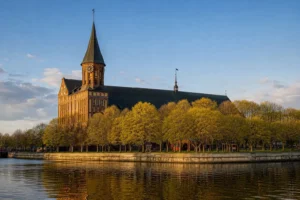 Königsberg Cathedral, Kaliningrad – about 1.5 km away (~24 min walk) · typical visit: 2–3 hoursOpen daily 10:00–19:00
Main image: AI-generated illustration. It may not show the place exactly as it looks.
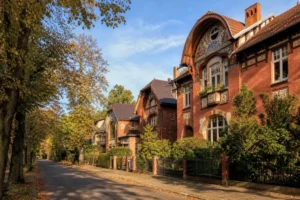 Amalienau District, Kaliningradabout 2.4 km away · typical visit: 2–3 hours
Main image: AI-generated illustration. It may not show the place exactly as it looks.
Restaurants and cafes near Brandenburg Gate, Kaliningrad
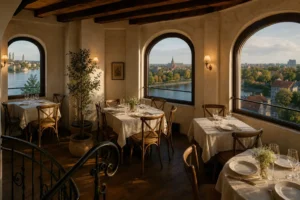 Madame Bushe, Kaliningrad – about 1.5 km away (~24 min walk)Open daily 11:00–23:00
Main image: AI-generated illustration. It may not show the place exactly as it looks.
Hotels near Brandenburg Gate, Kaliningrad
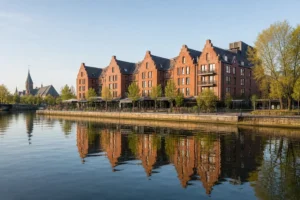 Holiday Inn Kaliningrad, Kaliningradabout 1.4 km away (~23 min walk)
Main image: AI-generated illustration. It may not show the place exactly as it looks.
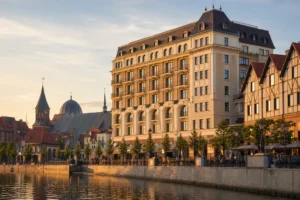 Hotel Kaiserhof, Kaliningradabout 1.5 km away (~25 min walk)
Main image: AI-generated illustration. It may not show the place exactly as it looks.
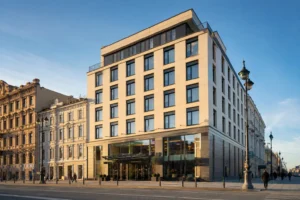 Ibis Kaliningrad Center, Kaliningradabout 1.5 km away (~25 min walk)
Main image: AI-generated illustration. It may not show the place exactly as it looks.
Events and traditions near Brandenburg Gate, Kaliningrad
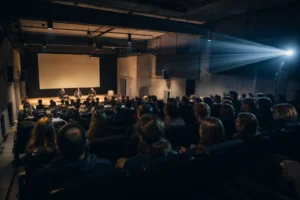 Koroche Film Festival, Kaliningradabout 1.2 km away (~20 min walk)
Main image: AI-generated illustration. It may not show the place exactly as it looks.
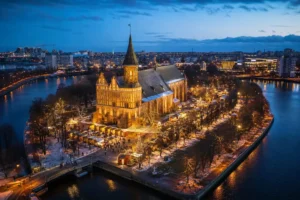 New Year Fair on Kant's Island, Kaliningradabout 1.3 km away (~22 min walk)
Main image: AI-generated illustration. It may not show the place exactly as it looks.
 Kaliningrad City Picnic, Kaliningradabout 1.7 km away (~28 min walk)
Main image: AI-generated illustration. It may not show the place exactly as it looks.
Related guides
 Herring Day, Kaliningrad: Spring Festival and Fishing Heritage
Main image: AI-generated illustration. It may not show the place exactly as it looks.
 Kaliningrad City Day: Fireworks, Concerts and Local Celebrations in Early July
Main image: AI-generated illustration. It may not show the place exactly as it looks.
 Amber Necklace Festival: Kaliningrad’s International Arts Festival
Main image: AI-generated illustration. It may not show the place exactly as it looks.
 Chaika Hotel, Kaliningrad: Historic 1927 Property in Quiet Amalienau
Main image: AI-generated illustration. It may not show the place exactly as it looks.
 Mercure Kaliningrad Center: Lake Views and Modern Comfort
Main image: AI-generated illustration. It may not show the place exactly as it looks.
Browse more: More in Kaliningrad · All Kaliningrad · All Landmarks · All Sightseeing · All Sightseeing in Kaliningrad
FAQ: Brandenburg Gate, Kaliningrad
Is the Brandenburg Gate free to visit?
Yes, viewing the exterior and walking through the gate's arches is completely free. The gate is a public street thoroughfare. The Museum of Marzipan located inside the gate is a separate institution with its own admission fee.
Can I walk through the gate, or is it only for vehicles?
Pedestrians walk freely through the arches alongside vehicle traffic. The gate is a functioning street, so you will encounter buses, cars, and motorcycles, but foot passage is permitted and common.
Is the Brandenburg Gate one of the seven famous gates of Kaliningrad?
Yes, the Brandenburg Gate is one of seven surviving city gates in Kaliningrad, the former German city of Königsberg. The others (Sackheim, Rossgarten, King's Gate, Don Tower, Friedrichsburg, and Zakkhaim) are located at different points around the city.
What do the sculptured busts on the gate show?
Two high-relief portraits are carved on the inner face of the gate, facing the city. The left depicts Field Marshal Hermann von Boyen (1771–1848), a Prussian military reformer; the right shows General Ernst Ludwig von Aster (1778–1855), the engineer who designed most of Königsberg's gates and fortifications.
When was the gate built, and what style is it?
The Brandenburg Gate was built in 1657, originally in wood, and was upgraded to brick under King Frederick II around the mid-18th century. The neogothic ornaments visible today were added during an 1843 restoration.
What is the Museum of Marzipan, and is it worth visiting?
A marzipan museum occupies one chamber inside the gate, displaying historical objects and miniature sculptures made from the traditional almond-based confection. It offers a glimpse into the gate's interior space and local cultural history. A separate ticket is required.
How long does it take to visit the Brandenburg Gate?
Viewing the exterior and walking through takes 15–20 minutes if you examine the stonework and busts. If you enter the marzipan museum as well, add another 20–30 minutes depending on your interest level.
Is the Brandenburg Gate damaged from World War II?
The gate survived the 1945 battle and siege of Königsberg with its brick structure largely intact, though it bears some minor battle scars and weathering. It remains one of the best-preserved surviving gates in the city.
Russia Vibes is a one-person project. A coffee keeps it going
How we research and update our guides
About this guide: AI assistance and accuracy
This guide is created with the help of AI and is based on official sources where available. Mistakes can still happen. Opening hours, prices, rules and other details are given to the best of our knowledge as of the date shown and can change without notice. It offers general recommendations only, not professional, legal or travel advice. Please confirm important details with the official source before you travel; you are responsible for your own plans and decisions.

Take this guide with you
Get a free PDF of this guide to print or read offline: key facts, tips and a map link on a few clean pages.
Report an issue on this page
Paying for your trip: please read
International sanctions affect payments between Russia and many other countries. In practice, cards issued in the EU, the UK, the US and several other countries often do not work in Russia, Russian cards usually do not work abroad, and some booking platforms, airlines and payment providers limit or suspend their services for Russia. The situation changes frequently.
We do not give legal or financial advice, and this site does not encourage anyone to break or circumvent sanctions. Whatever you plan, you are responsible for following the laws and regulations that apply to you, including those of your country of residence and citizenship.
Many travelers still organise their stay lawfully. It is worth asking your bank or payment provider what is currently permitted, contacting hotels, tour operators and carriers directly about the payment methods they accept, and checking which services are open to customers from your country. Clarify payment, cancellation and refund terms before you commit to a booking, and keep your plans flexible.
Partner links on this site may not be available in every country, and prices, availability and rules in our guides can differ from what you see when you book.