
Updated
The Kaliningrad Botanical Garden is a peaceful green space in the city’s Leningrad District, occupying land that was Königsberg’s celebrated horticulture grounds for over a century. Originally established in 1904 by Paul Kaeber, a professor at the University of Königsberg, it serves as both a training facility for students and a public retreat showcasing rare and exotic plants.
Today, the garden spans 13.6 hectares and holds over 3,000 plant species collected from North America, Japan, China, and Europe. Now part of Immanuel Kant Baltic Federal University, it remains a working scientific institution and a pleasant place for visitors to walk among its collections.
Quick Facts
| Russian name | Ботанический сад БФУ имени И. Канта |
|---|---|
| Built / opened | 1904 |
| Architect(s) | Paul Kaeber |
| Address | Улица Лесная, 12, Калининград OpenStreetMap · Google Maps |
| District | Leningrad District |
| Opening hours | Daily 10:00-19:00 |
| Admission | ₽ |
| Best time to visit | Spring (May–June) brings blooming trees, roses, and flowers in full display, with the mildest weather for walking. Summer (July–August) is warm and lush but can be crowded on weekends and warm inside greenhouses. Autumn (September–October) is less crowded, with golden light and colorful foliage in the arboretum. Winter is the quietest season; the garden is sparse but the greenhouse complex is warmest and most welcome. Weekday mornings are less busy than weekends. |
| Recommended duration | 1–2 hours |
| Website | kantiana.ru/garden |
What Is (and Isn't) Part of a Visit to Kaliningrad Botanical Garden, Kaliningrad?
| Part | Status | Notes |
|---|---|---|
| General garden and walking paths | Included in the standard ticket | Free or ticketed access to all open-ground plant collections, arboretum, flower beds, and pond areas. |
| Greenhouse complex | Included in the standard ticket | Tropical and subtropical plant collections in heated and climate-controlled structures; access typically included with garden admission. |
| Guided tours | Separate ticket or institution | Specialized botanical or educational tours may require advance booking; inquire at the entrance or via the official website. |
| Photography and filming | Included in the standard ticket | Personal photography is permitted; commercial or professional filming may require special permission. |
| Picnics and outside food | No information available; check at the entrance or official website for current policy. |
Why Visit Kaliningrad Botanical Garden, Kaliningrad?
The garden offers something rare in Kaliningrad: a direct window into the city’s Prussian heritage and its botanical traditions. On the grounds you’ll find mature trees and shrubs, rose gardens, medicinal plant collections, and a complex of greenhouses where tropical and subtropical species grow year-round. It’s a quiet alternative to the city’s museums, and in spring and summer the gardens are particularly atmospheric. Many plants on display cannot survive outdoors in the Baltic climate and represent decades of cultivation work.
How Kaliningrad Botanical Garden, Kaliningrad Is Laid Out
The garden is laid out across 13.6 hectares in the Leningrad District, with the main entrance on Lesnaya Street (Улица Лесная). Key areas include open-ground plant collections (roses, herbs, trees), a tree nursery, greenhouses for tropical plants, and ponds. The grounds are essentially a collection of themed gardens linked by walking paths, though there is no formal “route.” Allow yourself to wander; the garden feels more like a park than a museum, with signage limited. The best strategy is to explore methodically from the entrance area outward, saving the greenhouses for the end of your visit.
Highlights of Kaliningrad Botanical Garden, Kaliningrad
The Dendrological Collection
The garden's arboretum contains over 700 species and varieties of trees and shrubs from 57 plant families, many of them mature specimens reaching their full height. Notable rarities include English oak varieties and black alder that would not normally survive in the Baltic. This collection alone represents the original purpose of the 1904 horticulture department—to acclimatize plants and recommend suitable species for city planting. Look for the oldest specimens, which date back decades.
Tip: Visit in autumn to see the arboretum at its most colorful, or in late spring when flowering trees are at peak bloom.
Paul Kaeber's Monument
A monument to Paul Kaeber, the garden's founder, stands in the garden itself and was erected in 1919, the year of his death. Kaeber was head of the Higher Plants and Systematics Department at the University of Königsberg and established this horticulture center as a training base for students. The monument is a reminder of the continuous German-to-Russian institutional transition that defines Kaliningrad's 20th-century history.
Tip: The monument is easy to miss among the trees; ask staff for its location or look near the central path areas.
The Greenhouse Complex
The restored greenhouse complex contains tropical and subtropical plants that would perish outdoors. These include heat-loving ornamental plants, medicinal species, and relict plants from warm regions. After World War II, the greenhouses were heavily damaged and later restored. The collection you see today was rebuilt starting in the 1940s from seeds and seedlings exchanged with other botanical gardens. The greenhouses are particularly worth visiting in winter when outdoor gardens are dormant.
Tip: Greenhouses can feel warm and humid; dress in layers you can remove, and bring a water bottle.
Rose and Flower Collections
The garden maintains dedicated rose gardens and seasonal flower collections on open ground, covering approximately 1.5 hectares. These include dahlias, perennials, annuals, and medicinal herb beds. The flower collections are most spectacular in summer (June–August) when everything is in bloom, though the layout is visible year-round. This section fulfills the educational mission that began in 1904—supplying city schools with plants for botany classes.
Tip: Bring a camera and visit in early morning for the best light and fewer crowds, especially in peak summer.
Rare and Conservation-Dependent Plants
The garden maintains a collection of over 150 species and varieties of rare, valuable, and endangered trees and shrubs, some listed in conservation Red Books. Visitors can see plants from Asia, North America, and Central Europe that are difficult or impossible to find elsewhere in Russia. The garden's scientific mission includes preserving and acclimatizing these species for future study and potential cultivation in the region.
Tip: The garden maintains contact with over 150 botanical gardens worldwide for seed and specimen exchange; ask staff about which specimens on display are particularly rare locally.
The Pond and Water Features
Several ponds are distributed across the garden grounds, creating focal points and supporting aquatic plant collections. The main pond was cleaned and restored as part of post-war reconstruction. These water features provide habitat for birds and aquatic plants, and in summer offer peaceful sitting spots among the gardens. They are a working part of the garden's ecological and educational mission.
Tip: Visit the pond areas in late afternoon when birds are most active and the light is most photogenic.
Atmosphere
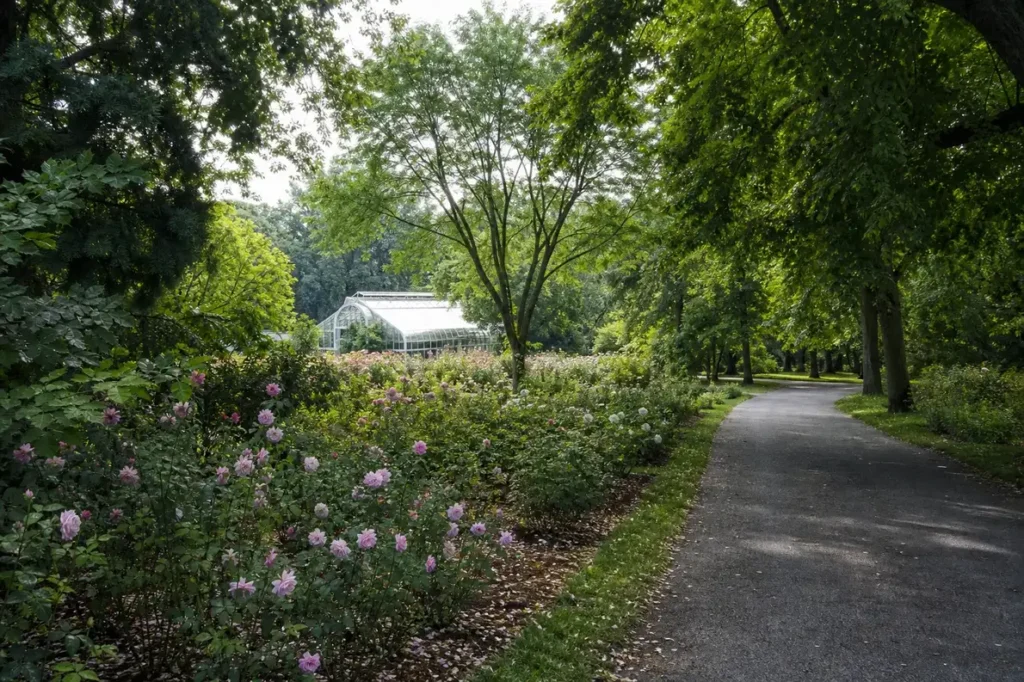
The Kaliningrad Botanical Garden feels quiet and contemplative, quite different from a typical city park. Walking paths curve through mature trees and open beds, and the soundscape is mostly birdsong and rustling leaves. In summer, the air is rich with plant scent, especially near the rose gardens and when greenhouse doors open. Visitors are typically a mix of local families, students, and older couples; international tourists are relatively rare.
The garden has a lived-in, slightly worn quality—not overmaintained or manicured in a formal way. This is partly because it serves university research and education, not only tourism. Signage is minimal, and many plant labels are in Russian only. The overall effect is more “functioning botanical workspace” than “tourist attraction,” which gives it an authentic, unpretentious character. Spring (May–June) brings the most visitors; autumn is quieter and beautifully golden.
History of Kaliningrad Botanical Garden, Kaliningrad
The Kaliningrad Botanical Garden stands on grounds that have served horticultural science for over 120 years. In 1904, Paul Kaeber, a professor of Higher Plants and Systematics at the University of Königsberg, established the Königsberg Gardens (Königsberger Gärten) in the Maraunenhof district, one of the city’s most beautiful areas. Kaeber’s vision was practical: the garden would serve as a training center for university students and supply plants and seeds to Königsberg’s schools for botany classes.
From the start, the garden held extensive collections: dendrological (tree) specimens, vegetable and medicinal crops, ornamental flowers, and experimental varieties. By the 1920s and 1930s, it had grown into a recognized scientific institution with hothouses, a tree nursery, and an herbarium. Paul Kaeber died in 1919, but his monument, erected that same year, remains in the garden today. Under his successors, the collection expanded to nearly 4,000 names of hothouse plants by 1938.
World War II devastated the garden. The greenhouses were destroyed, and most of the living collection was lost. After the war, when Königsberg became Kaliningrad and the city passed under Soviet control, the garden was managed briefly by various Soviet research institutes. In 1948, it became the Kaliningrad Ecology Research Station, and the greenhouses and grounds were restored and reorganized. In the post-war decade, staff began rebuilding the plant collection through exchanges with other botanical gardens across the Soviet Union and Eastern Europe.
In 1967, the garden was transferred to Kaliningrad State University (now Immanuel Kant Baltic Federal University), where it has remained. It is now a scientific subdivision of the University’s Department of Botany and Plant Ecology, serving as a training base for students in bio-ecology, geo-ecology, and education. The garden continues to conduct research on plant introduction and acclimatization, maintains extensive international seed exchanges with over 150 botanical gardens, and develops plant recommendations for landscaping Kaliningrad region towns.
Tickets and Booking for Kaliningrad Botanical Garden, Kaliningrad
| Ticket | Price | Includes |
|---|---|---|
| Adult admission | ₽ | Full access to all open garden areas, arboretum, flower collections, pond areas, and greenhouse complex. |
₽ budget · ₽₽ moderate · ₽₽₽ upscale · ₽₽₽₽ splurge. Price levels are estimates compared with typical prices for visitors.
Tickets are purchased at the entrance on Lesnaya Street. As of October 2026, the garden opens daily at 10:00 and closes at 19:00. Admission is budget-friendly and applies to both Russian and international visitors, though concession rates for students, pensioners, and children may differ. For the most current pricing and any seasonal variations, visit the official website at kantiana.ru/garden or call the garden directly at +7 (4012) 21-44-24. Large groups or specialized botanical tours should contact the administration in advance.
Plan and Book
Suggested itineraries Kaliningrad Botanical Garden, Kaliningrad
45 minutes
Enter from Lesnaya Street and walk directly through the main open-ground collections: flower beds and rose gardens, then into the arboretum to see mature trees. Exit via the same route. This covers the most visually distinctive sections.
1.5–2 hours
Follow the 45-minute route, then explore the greenhouse complex and take time at the pond areas. Wander through the tree nursery sections and specimen collections. This captures the breadth of what the garden offers without rushing.
2–3 hours
Spend time at each section: flowers and roses, arboretum, greenhouses, pond areas, medicinal plant beds, and specialty collections. Sit on a bench in quiet spots. Look for Paul Kaeber's monument. Allow time to read signage and simply observe plant details. This is the pace for botanically interested visitors.
How to Get to Kaliningrad Botanical Garden, Kaliningrad
By public transport: The garden is located at Ulitsa Lesnaya, 12 (Лесная улица, 12) in the Leningrad District. From central Kaliningrad, take a local bus or minibus (marshrutka) heading toward the Leningrad District; the driver can confirm the Lesnaya Street stop. The garden entrance is directly on Lesnaya Street.
By car or taxi: Provide the address to a taxi driver or ride-hailing app. There is limited parking near the entrance.
Walking: If staying in central Kaliningrad, the garden is roughly 2–3 km away, walkable but not immediately adjacent to major tourist areas. Comfortable shoes are essential as the paths inside are unpaved and can be muddy or uneven, especially after rain.
Accessibility
No detailed accessibility information has been published on the official website. The garden's paths are primarily unpaved or graveled, which may present challenges for wheeled mobility. The greenhouse complex and some central buildings may be accessible via paved areas. Visitors requiring specific accessibility arrangements should contact the garden in advance at +7 (4012) 21-44-24 to discuss available routes and facilities.
Food Nearby
The garden itself has no cafes or food vendors inside. Food options are scattered in the surrounding residential areas of the Leningrad District, a few minutes' walk away on nearby streets. Bringing water or a light snack is practical since there are few nearby restaurants within immediate walking distance. Central Kaliningrad has more dining options, but they are 2–3 km away.
What to Bring
Comfortable, sturdy walking shoes with good grip are essential, as paths are unpaved and can be uneven or muddy. Bring water, especially in summer when walking is warm. Sun protection (hat, sunscreen) is useful in summer. In autumn and spring, layers are wise as temperatures can vary throughout the day. An umbrella or light rain jacket is practical as the ground can become slippery.
Best Views and Photo Spots of Kaliningrad Botanical Garden, Kaliningrad
Rose and flower beds in full bloom
The dedicated rose gardens and seasonal flower beds (1.5 hectares) offer color and texture, especially in June–August when everything is in bloom. The bright colors of dahlias and roses against green foliage and sky are highly photogenic and work well for straightforward garden photography.
Best time: Early morning in June–August for the most vibrant colors and soft light without harsh shadows.
Mature arboretum specimens
Ancient and rare trees create striking silhouettes and canopy scenes, particularly in autumn when foliage changes to gold and red. Large, mature specimens like English oak varieties and old spruces dominate the frame and suggest age and permanence.
Best time: Autumn (September–October) for foliage color, or late spring when flowering trees are in bloom.
Greenhouse interiors
The tropical plant collections inside greenhouses create lush, dense scenes with large-leafed plants, vines, and dramatic interior light. The humid microclimate and exotic species photograph dramatically.
Best time: Midday when natural light enters the greenhouse effectively, or overcast days when light is diffused.
Pond and water reflections
The garden's ponds create peaceful reflections of trees and sky, especially effective for moody or contemplative compositions. Water adds foreground interest and creates symmetry.
Best time: Late afternoon in calm weather when water is still and reflections are clear.
Photography Rules
Personal photography is allowed throughout the garden. Tripods are not mentioned in official policy; check with staff if you wish to use one. Flash photography in greenhouses may disturb rare plant specimens; use natural light when possible. Commercial photography, filming, or drone use requires advance permission from the administration.
Family Suitability
The garden is suitable for families with children of all ages. Older children (6+) and teens enjoy the space for running, exploring paths, and looking for plants and insects. The unpaved, uneven paths and many puddles after rain make it less ideal for very young children in strollers—a carrying harness may be more practical. The openness and lack of crowds appeal to children who prefer nature to museums. The garden has benches for rest but few other amenities. No specific children's play areas are evident. Bring snacks and water, as food options are limited.
Russia Vibes Tips
- Arrive early in the day (shortly after 10:00 opening) to avoid the afternoon university student traffic and enjoy quieter paths. Weekday mornings are notably less crowded than weekends.
- Don't assume every plant is labeled in English—most signage is Russian. Bring a plant identification app or focus on observation rather than reading labels. The visual experience is as valuable as botanical knowledge.
- The garden is a working scientific facility, not a manicured tourist park. Some areas may look "unfinished" or have temporary structures. This is intentional and part of its character; embrace the working atmosphere rather than expecting polished presentation.
- Visit the greenhouses toward the end of your walk, not the beginning. You'll want to enjoy the outdoor arboretum while the day is fresher and cooler; greenhouses are warmer and better appreciated later when you're tired.
- Ask staff at the entrance where Paul Kaeber's monument is located—it's an easy miss among the trees, but it's a meaningful landmark connecting you to the garden's 1904 founding.
- The garden is larger and more dispersed than it initially appears. Budget 1.5–2 hours minimum; trying to rush through in under an hour means missing significant areas like the tree nursery and pond sections.
Explore Nearby Kaliningrad Botanical Garden, Kaliningrad
Sights near Kaliningrad Botanical Garden, Kaliningrad
 Amber Museum, Kaliningradabout 1.7 km away (~27 min walk) · typical visit: 2–3 hours
Main image: AI-generated illustration. It may not show the place exactly as it looks.
 Bunker Museum, Kaliningrad – about 2.7 km away · typical visit: 1–2 hoursOpen daily 10:00–19:00
Main image: AI-generated illustration. It may not show the place exactly as it looks.
 King's Gate, Kaliningradabout 2.9 km away · typical visit: 45 minutes to 1 hour
Main image: AI-generated illustration. It may not show the place exactly as it looks.
Hotels near Kaliningrad Botanical Garden, Kaliningrad
 Oberteich Hotel, Kaliningradabout 1.5 km away (~24 min walk)
Main image: AI-generated illustration. It may not show the place exactly as it looks.
 Mercure Kaliningrad Center, Kaliningradabout 1.7 km away (~28 min walk)
Main image: AI-generated illustration. It may not show the place exactly as it looks.
 Radisson Blu Hotel, Kaliningradabout 2.1 km away
Main image: AI-generated illustration. It may not show the place exactly as it looks.
Browse more: More in Leningrad District · All Kaliningrad · All Parks · All Sightseeing · All Sightseeing in Kaliningrad
FAQ: Kaliningrad Botanical Garden, Kaliningrad
Is the Kaliningrad Botanical Garden part of a museum or separate?
The garden is an autonomous scientific unit of Immanuel Kant Baltic Federal University and not affiliated with Kaliningrad's major museums (like the Amber Museum or House of Soviets). It is run by the university's Department of Botany and Plant Ecology and is open to the public as a park and teaching facility, not as a curated museum exhibition.
What is the best season to visit?
Spring (May–June) is ideal for blooming flowers, roses, and trees, with comfortable weather. Summer is warm and lush but crowded. Autumn offers fewer crowds and beautiful foliage in the arboretum. Winter is quiet and the greenhouses offer a warm escape, though outdoor areas are dormant. Weekday mornings are quieter year-round.
Is there food or water available inside?
No cafes, restaurants, or drink stands operate inside the garden. Bring water and snacks. Food vendors are located a few minutes' walk away in the surrounding neighborhood, or visit before or after entering the garden.
Do I need to book tickets in advance?
No advance booking is required for individual visitors. Walk up to the entrance on Lesnaya Street and purchase a ticket. Large groups or specialized guided tours should contact the garden in advance at +7 (4012) 21-44-24.
Can I bring children?
Yes, the garden is family-friendly for children 4 and up. Strollers are impractical due to unpaved, muddy paths; a child carrier is better. There are no playgrounds, so children should enjoy walking and nature observation. Always supervise young children around ponds.
Is photography allowed?
Personal photography is allowed. Tripods, commercial filming, and drone use are not explicitly mentioned in public policy; check with staff or contact the garden in advance if you need special arrangements.
How long does a typical visit last?
Most visitors spend 1–2 hours. Quick walks through the main areas take 45 minutes. Thorough exploration of the arboretum, greenhouses, flower beds, and specimen collections can take 2–3 hours.
Is the garden accessible for people with mobility challenges?
The garden's unpaved, uneven paths and lack of formal accessibility infrastructure suggest limited wheelchair access. Contact the garden directly at +7 (4012) 21-44-24 in advance to discuss available accessible routes and facilities.
Russia Vibes is a one-person project. A coffee keeps it going
How we research and update our guides
About this guide: AI assistance and accuracy
This guide is created with the help of AI and is based on official sources where available. Mistakes can still happen. Opening hours, prices, rules and other details are given to the best of our knowledge as of the date shown and can change without notice. It offers general recommendations only, not professional, legal or travel advice. Please confirm important details with the official source before you travel; you are responsible for your own plans and decisions.

Take this guide with you
Get a free PDF of this guide to print or read offline: key facts, tips and a map link on a few clean pages.
Report an issue on this page
Paying for your trip: please read
International sanctions affect payments between Russia and many other countries. In practice, cards issued in the EU, the UK, the US and several other countries often do not work in Russia, Russian cards usually do not work abroad, and some booking platforms, airlines and payment providers limit or suspend their services for Russia. The situation changes frequently.
We do not give legal or financial advice, and this site does not encourage anyone to break or circumvent sanctions. Whatever you plan, you are responsible for following the laws and regulations that apply to you, including those of your country of residence and citizenship.
Many travelers still organise their stay lawfully. It is worth asking your bank or payment provider what is currently permitted, contacting hotels, tour operators and carriers directly about the payment methods they accept, and checking which services are open to customers from your country. Clarify payment, cancellation and refund terms before you commit to a booking, and keep your plans flexible.
Partner links on this site may not be available in every country, and prices, availability and rules in our guides can differ from what you see when you book.