
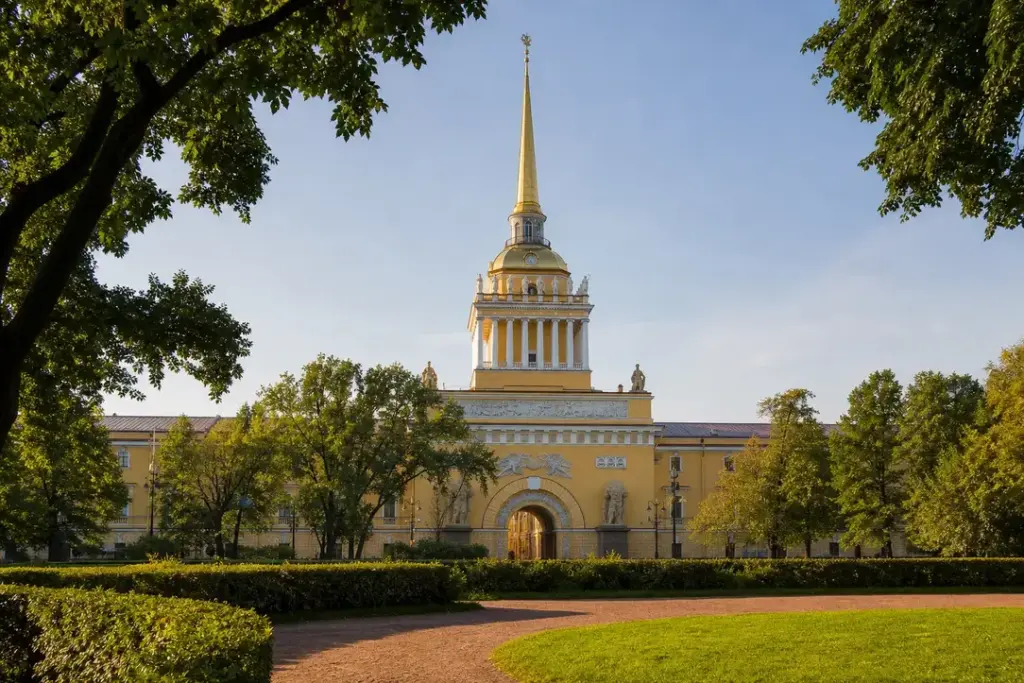
Admiralty, Saint Petersburg, is one of the defining landmarks of Russia’s northern capital. Its long yellow-and-white facade, monumental entrance tower and slender gilded spire form a striking architectural composition near the Neva River. At the top, a small golden sailing ship catches the light above the historic centre. The building occupies a position between Palace Square and Senate Square, immediately recognizable to visitors exploring the city’s central monuments.
Unlike a palace or conventional museum, the Admiralty is primarily appreciated from outside. The historic complex occupies the site of Saint Petersburg’s original naval shipyard and remains an active institutional building rather than a public exhibition venue. Visitors come to admire its classical architecture, study the sculptures around the central arch and follow the remarkable street perspectives leading towards its spire. Its position beside Alexander Garden also makes it an excellent starting point for exploring the Winter Palace, Saint Isaac’s Cathedral and the Neva waterfront.
Quick Facts
| Russian name | Главное Адмиралтейство |
|---|---|
| Built / opened | 1823 |
| Architect(s) | Andreyan Zakharov; earlier building by Ivan Korobov |
| Address | Санкт-Петербург, Адмиралтейский проезд, д. 1 Google MapsApple MapsYandex Maps2GIS |
| District | Admiralteysky District |
| Metro | Admiralteyskaya (Line 5, Exit onto Malaya Morskaya Street, walk towards Nevsky Prospekt and continue west towards the Admiralty's central tower. Approximately 5–8 minutes on foot.) |
| Admission | Exterior viewing from public streets and squares: free. The Admiralty building is not open for ordinary tourist visits. |
| Best time to visit | Late spring through early autumn offers comfortable conditions for viewing the Admiralty's exterior and walking through Alexander Garden. Summer brings long daylight hours and greenery around the historic facades, while autumn offers changing foliage and softer light.
Winter is worthwhile for visitors interested in architectural photography. Snow can emphasize the building's classical lines, although cold temperatures, wind and slippery pavements may make an extended outdoor visit less comfortable. For exterior photography, morning and late afternoon offer opportunities to work with changing sunlight and shadows. The building can also be appreciated after dark when the surrounding area is illuminated. Because the Admiralty is primarily an exterior attraction for tourists, visits can be planned around the weather rather than museum opening schedules. Weekday mornings are a practical choice for a leisurely walk. |
| Recommended duration | 30–45 minutes for the exterior; 1–2 hours with Alexander Garden and the surrounding architectural landmarks |
| Website | visit-petersburg.ru/en/leisure/places/tp-194700-zdanie-glavnogo-admiralteystva |
What Is (and Isn't) Part of a Visit to Admiralty, Saint Petersburg?
| Part | Status | Notes |
|---|---|---|
| Admiralty exterior facades | Included in the standard ticket | The historic exterior can be viewed free from surrounding public streets, squares and accessible garden paths. |
| Central tower and gilded spire | Not open to visitors | The tower, spire and upper architectural areas are not available as public observation spaces. |
| Admiralty interior rooms | Not open to visitors | The working interiors do not operate as a regular public museum with general admission. |
| Internal courtyards | Not open to visitors | The enclosed courtyards belong to the working Admiralty complex and are not ordinary sightseeing areas. |
| Alexander Garden | Outside / not part of it | The landscaped garden is a separate public space immediately south of the Admiralty. |
| Admiralty Embankment | Outside / not part of it | The neighbouring riverfront promenade is separate from the Admiralty building and provides views towards the Neva. |
| Palace Square | Outside / not part of it | The famous public square lies near the eastern side of the Admiralty and is not part of its interior complex. |
| State Hermitage Museum | Separate ticket or institution | The neighbouring museum occupies its own buildings and has independent admission arrangements. |
| Saint Isaac's Cathedral | Separate ticket or institution | The cathedral is a distinct attraction southwest of the Admiralty with its own visitor arrangements. |
| Bronze Horseman Monument | Outside / not part of it | The monument stands on Senate Square and can be viewed independently of the Admiralty. |
Why Visit Admiralty, Saint Petersburg?
The Admiralty reveals how Saint Petersburg was planned around architecture, water and carefully organized streets. The golden ship above the central tower is among the city’s most recognizable symbols, while the extensive facades demonstrate the monumental style developed by architect Andreyan Zakharov.
Visitors can examine sculptural figures, naval imagery and classical columns without entering the building. The monument’s significance becomes even clearer when viewed from Nevsky Prospekt, Gorokhovaya Street or Voznesensky Prospekt, the three major streets traditionally described as radiating from the Admiralty.
Its surroundings are equally rewarding. Alexander Garden provides greenery beside the formal facades, while the nearby Neva embankment offers broader river views. The entire area can be explored on foot, making the Admiralty particularly useful for understanding the layout of central Saint Petersburg.
How Admiralty, Saint Petersburg Is Laid Out
The Main Admiralty occupies a large architectural complex between the Neva River and Alexander Garden. Its buildings form an extensive arrangement around internal courtyards, with long exterior wings extending from the central composition. The principal public view is from the south, where the central tower rises above the former entrance arch.
The tower is the most recognizable element. It carries the gilded spire and ship-shaped weather vane, while the lower section features columns and elaborate sculptural decoration. Long, relatively restrained facades stretch towards the eastern and western ends of the complex, creating a deliberate contrast with the richer central section.
On the garden side, visitors can follow public paths parallel to the building and examine its architecture from several angles. The river-facing side is associated with Admiralty Embankment and the historic waterfront.
The inner courtyards and working interiors are not ordinary sightseeing areas. Alexander Garden, Palace Square, Senate Square and the nearby churches and museums are separate public spaces or institutions.
A practical walking route begins near Admiralteyskaya metro station, continues to the central tower, follows the garden-side facade and finishes towards the Neva or Senate Square.
Highlights of Admiralty, Saint Petersburg
The Golden Admiralty Spire
The Admiralty's gilded spire is the feature that first attracts attention from across central Saint Petersburg. Rising above the building's central tower, it ends in a sailing-ship weather vane that has become a familiar emblem of the city. The vertical silhouette contrasts sharply with the building's long horizontal facades. Its position also makes it a useful landmark when navigating the surrounding streets. The spire is best appreciated from a little distance, where its full height can be seen above the columns and sculptural decoration. The tower itself is not a public observation deck.
Tip: Look towards the spire from the western end of Nevsky Prospekt to understand how it anchors the surrounding street perspective.
The Central Tower and Entrance Arch
The central tower forms the architectural heart of the Admiralty's principal facade. Zakharov arranged the composition around a monumental arch, framed by columns and crowned by the progressively narrower upper tower. Its elaborate decoration contrasts with the simpler architectural treatment of the building's long wings. Visitors approaching from Alexander Garden can appreciate the way the central section creates an unmistakable focal point. Although the historic arch resembles a ceremonial entrance, it should not be mistaken for an ordinary visitor entrance. The building remains a working institution without a regular tourist route through its interior.
Tip: Stand near the central garden approach and compare the proportions of the arch with the tower rising above it.
The Ship-Shaped Weather Vane
At the summit of the spire sits the small gilded sailing ship often called the Admiralty Ship. Its silhouette reflects the building's original association with shipbuilding and maritime activity. Despite appearing tiny from street level, the figure remains recognizable because of its distinctive sails and position against the sky. The ship is one of the most frequently reproduced architectural symbols of Saint Petersburg. Visitors should distinguish the actual weather vane from decorative naval sculptures elsewhere on the facade. It is an exterior architectural feature, not an object displayed inside a visitor exhibition.
Tip: A modest telephoto lens or binoculars can reveal the ship's silhouette more clearly than an ordinary wide-angle photograph.
The Sculptures Around the Admiralty Tower
The central facade incorporates classical sculptures and reliefs connected with maritime themes. Allegorical figures, naval imagery and decorative compositions reinforce the building's historical identity as a centre of shipbuilding and naval administration. The sculptural programme is closely integrated with the columns, arch and upper tower rather than arranged as a separate display. Visitors can recognize standing figures and relief panels by looking carefully above the principal entrance and around the central architectural composition. Individual details may be difficult to distinguish from the opposite side of the garden, so a closer public viewpoint is useful.
Tip: Examine the sculptures in sections, moving your attention from the lower arch upwards rather than trying to identify every figure from one distant position.
The Monumental Yellow-and-White Facades
The Admiralty's long facades are essential to its architectural effect. The pale yellow walls, white columns and carefully spaced windows create an impression of order and scale, while the principal tower introduces a strong vertical accent. Zakharov's design is associated with the Russian Empire style, which emphasized monumental classical forms and balanced compositions. The building's wings are not simply secondary structures: they help define the neighbouring urban spaces and give the central tower visual prominence. Walking beside the garden allows visitors to appreciate the length and rhythm of the facades more effectively than a single photograph.
Tip: Walk along the building rather than viewing it only from the front; the repeated columns and windows reveal how the composition is organized.
The Three Radiating Streets
One of the Admiralty's most significant features is its relationship with Saint Petersburg's street plan. Nevsky Prospekt, Gorokhovaya Street and Voznesensky Prospekt form the famous three-rayed pattern associated with the building's spire. These routes establish long perspectives towards the historic centre and help explain why the Admiralty functions as an architectural landmark far beyond its immediate surroundings. The street pattern can be appreciated independently, without entering any building. Looking towards the spire from different approaches shows how a single monumental structure can organize the experience of an entire urban district.
Tip: Compare the views from Nevsky Prospekt and Gorokhovaya Street to see how the same spire appears within different street proportions.
The Neva-Side Admiralty Facade
The Admiralty's northern side faces the Neva River, recalling the historical relationship between the shipyard and the waterfront. This side of the complex has a different setting from the garden-facing principal facade. The broad river, embankment and nearby bridges create views that connect the building with Saint Petersburg's maritime geography. The riverfront is especially useful for understanding why the original shipbuilding site occupied this location. Visitors exploring the embankment should remain on public routes rather than treating the building's adjoining service areas and gateways as sightseeing entrances.
Tip: Combine the river-facing exterior with a walk towards Palace Bridge to appreciate the Admiralty's position between the historic city and the Neva.
Alexander Garden Beside the Admiralty
Alexander Garden occupies the public green space immediately south of the Admiralty. Its paths, trees and landscaped areas soften the monumental architectural setting and provide several places from which to examine the facade. The garden developed from the earlier open space surrounding the Admiralty and became a landscaped public area in the nineteenth century. It is a separate attraction rather than a courtyard inside the Admiralty complex. Visitors can use its paths to move between the central tower, Senate Square and other nearby landmarks while enjoying changing perspectives on the gilded spire.
Tip: Use the garden paths for both wide architectural views and quieter compositions with trees framing the tower.
Atmosphere
The Admiralty feels different from the surrounding palaces and museums. Its enormous facade forms a quiet architectural boundary along the gardens, while the golden spire remains visible above the rooftops and trees. From the open square near the central tower, the building appears formal and symmetrical. A few steps into Alexander Garden introduce winding paths, benches and softer views through the foliage.
During daylight hours, the area is crossed by pedestrians moving between Nevsky Prospekt, the Neva and nearby cultural attractions. The sound of traffic along the larger streets contrasts with quieter parts of the garden.
In the evening, the changing light emphasizes the pale facade and the gilded tower. The Admiralty is particularly atmospheric when approached on foot, allowing its familiar silhouette to emerge gradually between the surrounding buildings.
History of Admiralty, Saint Petersburg
The original shipyard
The history of the Admiralty begins in 1704, shortly after the founding of Saint Petersburg. Peter the Great established a shipbuilding yard on the left bank of the Neva, choosing a site with direct access to the river. The first Admiralty was both an industrial complex and a fortified installation. Its workshops, storage areas and surrounding defenses reflected the practical requirements of ship construction during the city’s earliest years.
The shipyard became central to the development of Saint Petersburg as a maritime city. Wooden vessels were constructed and launched into the Neva, while the surrounding settlement expanded rapidly. The original buildings were primarily functional and differed considerably from the classical monument visible today.
The eighteenth-century Admiralty
As the city developed, the shipyard acquired a more permanent architectural character. During the 1720s and 1730s, architect Ivan Korobov worked on the reconstruction of the complex, introducing a prominent tower and spire that helped establish the Admiralty’s recognizable silhouette.
The tower became increasingly important as a visual landmark. The Admiralty also influenced the surrounding city plan, with major streets arranged to create perspectives towards its central position.
Throughout the eighteenth century, shipbuilding and naval administration remained closely associated with the site. At the same time, Saint Petersburg expanded from a developing port into a city of monumental squares and carefully planned streets.
Zakharov’s neoclassical reconstruction
The most important architectural transformation began in 1806 under Andreyan Zakharov. His project replaced much of the earlier appearance with a monumental neoclassical composition while retaining the Admiralty’s established role as a dominant feature of the city skyline.
The reconstruction introduced long facades, imposing columned porticoes and an elaborate sculptural programme. The central tower became the most visually prominent element, rising above the entrance arch and ending in the gilded ship-topped spire.
Zakharov died in 1811 before the project was completed. Construction continued under other architects, and the building reached its completed classical form in 1823. The result became a defining example of the architectural style associated with Saint Petersburg’s monumental nineteenth-century centre.
Changes in maritime activity
During the nineteenth century, the Admiralty’s role changed as shipbuilding increasingly moved to facilities better suited to the requirements of larger vessels and industrial production. The complex remained associated with naval institutions, education and administration.
The surrounding urban environment also evolved. Former open spaces and defensive areas were transformed into more formal public settings. The creation of Alexander Garden provided a landscaped foreground to the building’s garden-facing facade.
The Admiralty’s architecture influenced the appearance of the surrounding district through its monumental scale, carefully organized facades and its relationship with nearby streets.
The twentieth century and later conservation
During the twentieth century, the building continued to serve maritime institutions while its historical and architectural importance received increasing attention. The golden spire remained an instantly recognizable feature of the Saint Petersburg skyline.
Conservation work over different periods helped maintain the building’s exterior appearance, sculptural decoration and historic architectural details. The monument remained closely associated with the identity of the city even as the functions of its interiors changed.
The Admiralty in the contemporary city
In 2012, the complex became the headquarters of the Russian Navy. It continues to function as an institutional building rather than an ordinary public museum.
For visitors, its importance lies primarily in the surviving architectural composition and its relationship with the surrounding historic centre. The spire, monumental tower and extensive classical facades preserve a visible connection between the city’s maritime origins and its later architectural development.
Legends and Myths about Admiralty, Saint Petersburg
The Ship That Inspired the Golden Weather Vane
Legend – historically unreliable. A traditional story connects the golden sailing ship on the Admiralty spire with the first vessel to enter Saint Petersburg's harbour after the city's foundation. The idea gives the weather vane a direct connection with the city's earliest maritime history. However, this identification belongs to local legend rather than securely documented design history. The figure should be understood primarily as a maritime symbol associated with the Admiralty and the shipbuilding traditions of the city.
The Secret Treasure Inside the Golden Sphere
Legend – historically unreliable. A popular Saint Petersburg story claims that a hidden treasure was placed inside the gilded sphere beneath the ship-shaped weather vane. Versions of the tale describe coins or other valuable objects concealed high above the city. The story has not been established as historical fact. Accounts of documents and materials associated with maintenance of the spire have helped sustain public curiosity about what might be hidden inside the architectural feature.
Tickets and Booking for Admiralty, Saint Petersburg
Ordinary exterior visit: No admission ticket is needed to view the Admiralty from surrounding public streets, squares and garden paths. There is no standard tourist ticket for entering the Admiralty building, and the spire is not operated as a public viewing platform.
As of November 2026, the Admiralty functions as an institutional headquarters rather than a conventional museum. A general online booking calendar, public ticket categories or a regular same-day visitor entrance for its interiors cannot be confirmed.
Independent travellers can therefore plan their visit around the exterior architecture and neighbouring public spaces. Guided city walks may include the Admiralty as an outdoor stop, but such arrangements do not imply access inside the building.
There are no ordinary museum voucher-exchange or admission procedures for an exterior visit. Ticket rates for Russian citizens and concessions are not applicable to the free exterior viewing experience. Consult the official Saint Petersburg tourism information at visit-petersburg.ru for updated visitor guidance.
Suggested itineraries Admiralty, Saint Petersburg
30 minutes
Start near Admiralteyskaya metro station and walk towards the Admiralty's central tower. Examine the columned entrance, sculptural decoration and golden ship above the spire. Move into Alexander Garden for a broader view of the long classical facade. Finish by walking towards the western end of Nevsky Prospekt, where the alignment of the street provides another view of the tower.
1 hour
Begin at the Admiralty's central facade and take time to study the sculptural decoration around the tower. Continue along the public paths of Alexander Garden, observing the building's wings from different positions. Walk towards Admiralty Embankment to understand the connection with the Neva River. End near Palace Bridge, where the surrounding waterfront architecture creates a wider impression of historic Saint Petersburg.
2 hours
Combine the Admiralty with nearby architectural landmarks. Begin with the golden spire and monumental facade, then continue through Alexander Garden towards Senate Square and the Bronze Horseman. Walk towards Saint Isaac's Cathedral for another example of monumental architecture. Return through the surrounding historic streets and finish near the Admiralty's eastern side, with views towards Palace Square.
Half day
Begin at the Admiralty and examine its central tower before exploring Alexander Garden. Continue towards Senate Square, the Bronze Horseman and Saint Isaac's Cathedral. Walk back towards the Neva and follow the waterfront towards Palace Bridge. Complete the route at Palace Square, where the Winter Palace and General Staff Building introduce another major architectural ensemble. Allow additional time if entering any neighbouring museums or monuments.
How to Get to Admiralty, Saint Petersburg
By metro: Admiralteyskaya station on Line 5 is the most convenient station for visiting the Admiralty. Exit onto Malaya Morskaya Street, follow the direction of Nevsky Prospekt and continue towards the golden spire. The walk to the central tower takes approximately 5–8 minutes.
From Nevsky Prospekt: The western section of Nevsky Prospekt leads towards the Admiralty. The spire serves as a prominent landmark, although surrounding buildings may temporarily interrupt the view.
From Palace Square: Walk towards the western side of the square and continue in the direction of Alexander Garden and the Admiralty. This is a convenient approach for visitors combining the landmark with the Winter Palace.
By surface transport: Bus and trolleybus services run through the central streets near Admiralteysky Prospekt and Palace Square. Check the current routes and stops before travelling.
By taxi: Use the official street address at Admiralteysky Proyezd, 1, and arrange a drop-off on a suitable public street rather than assuming direct vehicle access to the central arch.
Accessibility
The Admiralty's exterior can be viewed from public streets and paths around Alexander Garden. Visitors using wheelchairs can appreciate the principal facade without entering the historic building, provided their chosen approach uses accessible pavements and crossings.
The surrounding district contains broad pedestrian areas, but individual routes may include kerbs, uneven paving, road crossings and seasonal obstacles. Snow and ice can make winter movement more difficult.
Benches are available in parts of Alexander Garden, providing opportunities to rest while exploring the area.
Public wheelchair access, lifts, adapted visitor toilets and companion admission arrangements inside the Admiralty building have not been independently verified. As the building does not offer ordinary tourist admission, visitors requiring an accessible interior experience should choose a nearby attraction with confirmed visitor facilities.
Food Nearby
The Admiralty stands near several central streets with cafés, restaurants and casual dining options. Nevsky Prospekt and the adjoining streets provide the broadest choice for visitors looking for a meal before or after an architectural walk.
Around Malaya Morskaya Street, Bolshaya Morskaya Street and the streets leading towards Saint Isaac's Cathedral, travellers can find coffee shops, bakeries and restaurants serving Russian and international food.
The area is especially convenient for combining sightseeing with a lunch stop, as many dining options are within walking distance of the surrounding landmarks.
For a quieter break, visitors may prefer a café away from the busiest sections of Nevsky Prospekt. Individual venue opening hours should be checked before planning an evening meal.
What to Bring
Comfortable walking shoes are the most useful item for an Admiralty visit because the experience is centred on outdoor architecture and the surrounding historic district. In summer, bring water and protection from strong sunlight. In autumn and spring, a light waterproof layer is sensible because Saint Petersburg weather can change quickly.
Winter visitors should bring warm clothing, gloves and shoes with reliable grip for potentially icy pavements. A small camera or phone with a suitable zoom is helpful for photographing the ship-shaped weather vane.
Keep a downloaded city map available for navigating between the garden, waterfront and surrounding squares. There is no need to prepare for an indoor museum visit.
Best Views and Photo Spots of Admiralty, Saint Petersburg
Central Approach from Alexander Garden
This position offers the classic frontal composition of the Admiralty tower, central arch and golden spire. The surrounding garden gives enough space to capture the building's vertical proportions while retaining part of its long classical facade.
Best time: Late afternoon for changing light across the facade.
Western End of Nevsky Prospekt
The view towards the Admiralty along Nevsky Prospekt demonstrates how the golden spire functions as an architectural focal point. The surrounding buildings and street perspective create a sense of scale that cannot be achieved from directly beneath the tower.
Best time: Morning or late afternoon, when directional light adds depth to the street perspective.
Alexander Garden Paths
Several garden paths provide opportunities to frame the Admiralty with trees and landscaped surroundings. The combination of classical architecture and greenery creates more varied compositions than a photograph taken directly from the adjoining pavement.
Best time: Late spring and summer for greenery; autumn for colourful foliage.
Admiralty Embankment
The Neva-side surroundings show the Admiralty's relationship with the river and nearby historic waterfront. Photographs from this area can combine architectural details with the broader setting of central Saint Petersburg and its bridges.
Best time: Early morning or the long evening light of summer.
Gorokhovaya Street Perspective
Gorokhovaya Street provides another historic approach towards the Admiralty spire. Its long urban perspective offers an alternative to the better-known Nevsky Prospekt view and helps illustrate the three-rayed street arrangement associated with the monument.
Best time: Clear daylight when the golden spire stands out against the sky.
Senate Square Approach
The public approach from Senate Square offers a broader architectural context, linking the Admiralty with the surrounding monumental cityscape. It is particularly useful for photographs showing the transition between open public spaces, formal facades and the nearby garden.
Best time: Late afternoon or early evening for softer shadows and atmospheric light.
Photography Rules
Photography of the Admiralty's exterior from ordinary public areas is generally possible. Respect any posted restrictions around the working building and avoid photographing restricted interior or service areas. Do not assume that tripods, commercial shoots or drone flights are permitted without authorization. Follow local instructions and applicable rules for the surrounding public spaces.
Family Suitability
The Admiralty is suitable for families because its principal attractions can be appreciated outdoors without committing to a long museum visit. Children may enjoy identifying the golden sailing ship, looking for sculptures around the tower and exploring the paths of Alexander Garden.
A short visit is generally more engaging for younger children than an extended architectural explanation. Families can combine the monument with nearby public spaces and rest stops in the garden.
Strollers can be used on suitable public paths, although kerbs, road crossings and seasonal surface conditions require attention. The surrounding streets carry substantial traffic, so children should be supervised when moving between landmarks.
Families looking for indoor activities should plan a separate visit to one of the nearby museums or cultural attractions.
Russia Vibes Tips
- Do not stop at the first view of the golden spire. Moving farther into Alexander Garden reveals how the central tower balances the immense horizontal length of the facade.
- Use the Admiralty as an orientation point for exploring the historic centre. Its relationship with Nevsky Prospekt, Gorokhovaya Street and Voznesensky Prospekt becomes much clearer when approached from different directions.
- For detailed photographs of the ship-shaped weather vane, bring a zoom lens or binoculars. The figure appears much smaller from street level than its fame might suggest.
- Combine the Admiralty with the Bronze Horseman and Saint Isaac's Cathedral to compare three very different forms of monumental architecture within a compact central area.
- Visit the garden-facing side first and the Neva-facing surroundings afterwards. The change in perspective explains the site's original maritime purpose more effectively than viewing the main facade alone.
- In summer, take advantage of the long evening light for photographs of the golden spire. The changing sky can provide a more interesting background than the harsher contrast of midday.
Explore Nearby Admiralty, Saint Petersburg
Sights near Admiralty, Saint Petersburg
 State Hermitage Museum, Saint Petersburg – about 300 m away (~5 min walk) · typical visit: 3-5 hours for the main highlights7 min on foot from Admiralteyskaya metro
Main image: AI-generated illustration. It may not show the place exactly as it looks.
 Saint Isaac's Cathedral, Saint Petersburg – about 650 m away (~10 min walk) · typical visit: 1.5–2 hours for the cathedral interior; allow another 45–60 minutes for the colonnade.9 min on foot from Admiralteyskaya metro
Main image: AI-generated illustration. It may not show the place exactly as it looks.
 Palace Bridge, Saint Petersburg – about 200 m away (~3 min walk) · typical visit: 30–45 minutes; allow 1.5–2 hours if you wait for the night raising11 min on foot from Admiralteyskaya metro, Open 24 hours
Main image: AI-generated illustration. It may not show the place exactly as it looks.
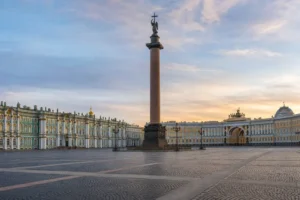 Palace Square, Saint Petersburg – about 350 m away (~6 min walk) · typical visit: 30–60 minutes, more with the Hermitage5 min on foot from Admiralteyskaya metro, Open 24 hours
Main image: AI-generated illustration. It may not show the place exactly as it looks.
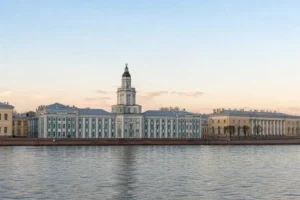 Kunstkamera, Saint Petersburg – about 350 m away (~6 min walk) · typical visit: 2 hours14 min on foot from Admiralteyskaya metro, Open 10:00–18:00, closed Mon
Main image: AI-generated illustration. It may not show the place exactly as it looks.
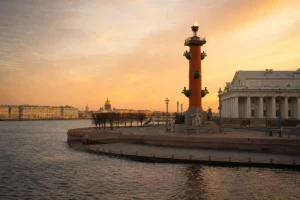 Spit of Vasilyevsky Island, Saint Petersburg – about 500 m away (~9 min walk) · typical visit: 1–2 hours, plus time for any museumOpen daily 01:10–02:50
Main image: AI-generated illustration. It may not show the place exactly as it looks.
Metro stations near Admiralty, Saint Petersburg
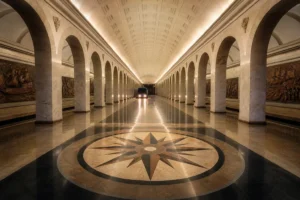 Admiralteyskaya Metro Station, Saint Petersburgabout 500 m away (~8 min walk)
Main image: AI-generated illustration. It may not show the place exactly as it looks.
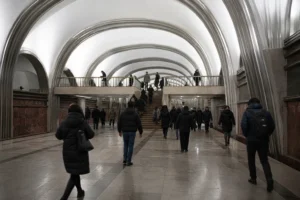 Nevsky Prospekt Metro Station, Saint Petersburgabout 1.2 km away (~19 min walk)
Main image: AI-generated illustration. It may not show the place exactly as it looks.
Restaurants and cafes near Admiralty, Saint Petersburg
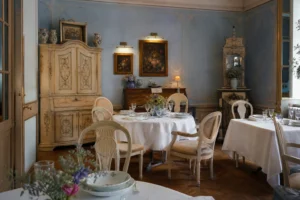 Gogol, Saint Petersburg – about 500 m away (~8 min walk)1 min on foot from Admiralteyskaya metro, Open daily 12:00–23:00
Main image: AI-generated illustration. It may not show the place exactly as it looks.
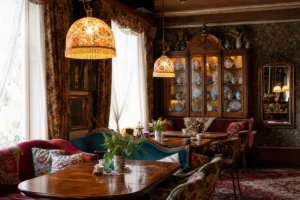 Katyusha, Saint Petersburg – about 900 m away (~15 min walk)4 min on foot from Nevsky Prospekt metro
Main image: AI-generated illustration. It may not show the place exactly as it looks.
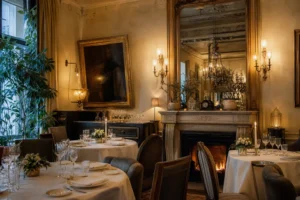 Severyanin, Saint Petersburg – about 1.5 km away (~24 min walk)4 min on foot from Spasskaya metro
Main image: AI-generated illustration. It may not show the place exactly as it looks.
Nightlife near Admiralty, Saint Petersburg
 Daiquiri Bar, Saint Petersburg – about 850 m away (~14 min walk)5 min on foot from Nevsky Prospekt metro
Main image: AI-generated illustration. It may not show the place exactly as it looks.
 Ruki Vverkh! Bar on Griboyedov Canal, Saint Petersburg – about 1.3 km away (~21 min walk)4 min on foot from Nevsky Prospekt metro, Open daily 18:00–06:00
Main image: AI-generated illustration. It may not show the place exactly as it looks.
Train stations and river piers near Admiralty, Saint Petersburg
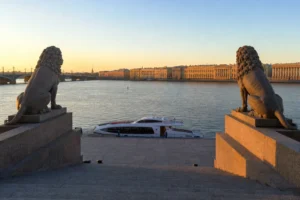 Lions' Descent Pier, Saint Petersburgabout 50 m away (~1 min walk)
Main image: AI-generated illustration. It may not show the place exactly as it looks.
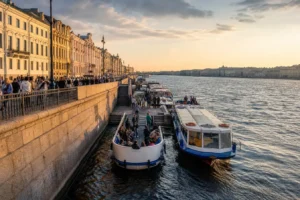 Rumyantsev Descent Pier, Saint Petersburgabout 900 m away (~14 min walk)
Main image: AI-generated illustration. It may not show the place exactly as it looks.
Events and traditions near Admiralty, Saint Petersburg
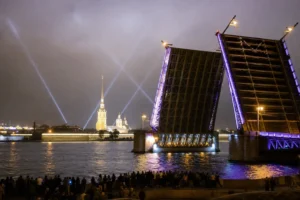 Singing Bridges Show, Saint Petersburgabout 200 m away (~3 min walk)
Main image: AI-generated illustration. It may not show the place exactly as it looks.
 Victory Day Celebrations, Saint Petersburgabout 350 m away (~6 min walk)
Main image: AI-generated illustration. It may not show the place exactly as it looks.
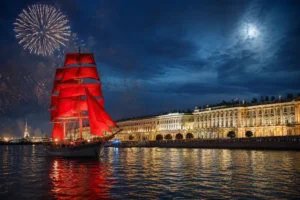 Scarlet Sails Festival, Saint Petersburgabout 350 m away (~6 min walk)
Main image: AI-generated illustration. It may not show the place exactly as it looks.
Related guides
 Palace Square and Admiralty Walking Itinerary, Saint Petersburg: Loop
Main image: AI-generated illustration. It may not show the place exactly as it looks.
 One-Week Itinerary, Saint Petersburg: Seven Days, Day Trips Included
Main image: AI-generated illustration. It may not show the place exactly as it looks.
 Best Bridges and Drawbridge Viewing Spots, Saint Petersburg: 9 Picks
Main image: AI-generated illustration. It may not show the place exactly as it looks.
 Grand Choral Synagogue, Saint Petersburg: What to See and How to Visit
Main image: AI-generated illustration. It may not show the place exactly as it looks.
 Wonder of Light Festival, Saint Petersburg: Where to Watch
Main image: AI-generated illustration. It may not show the place exactly as it looks.
Browse more: More in Admiralteysky District · All Landmarks · All Saint Petersburg · All Sightseeing · All Sightseeing in Saint Petersburg
FAQ: Admiralty, Saint Petersburg
Can tourists go inside the Admiralty in Saint Petersburg?
The Admiralty is not operated as an ordinary public museum, and visitors should not expect general admission to its interiors. Its principal appeal for travellers is the exterior architecture, particularly the central tower, golden spire and sculptural decoration. The surrounding public streets and garden paths provide several viewpoints without requiring entry to the building.
Is the Admiralty the same building as the Winter Palace?
No. The Admiralty and Winter Palace are separate historic buildings located close to each other in central Saint Petersburg. The Admiralty is associated with the city's maritime history, while the Winter Palace forms part of the State Hermitage Museum complex. Visitors can appreciate both exteriors during one walking route, but the buildings have different functions and access arrangements.
What is the golden ship on the Admiralty spire?
The golden ship is a sailing-vessel weather vane positioned above the Admiralty's central tower. It symbolizes the building's historical connection with shipbuilding and maritime activity. The figure has become one of Saint Petersburg's most recognizable architectural emblems. Its distinctive silhouette can be seen from several streets leading towards the monument.
Does the Admiralty have an observation deck?
No public observation deck operates in the Admiralty's historic tower. The spire is an architectural feature rather than an attraction designed for visitors to climb. Travellers seeking elevated views of central Saint Petersburg should consider separate attractions with established viewing facilities. The Admiralty itself is best appreciated from street level and the surrounding public spaces.
How much time should visitors spend at the Admiralty?
A short exterior visit can be completed in approximately half an hour. Visitors interested in architectural photography, the surrounding gardens and the nearby waterfront may prefer one to two hours. The duration depends on how carefully the facades are examined and whether the walk continues towards Senate Square, Palace Square or Saint Isaac's Cathedral.
Is Alexander Garden part of the Admiralty?
Alexander Garden is a separate landscaped public space immediately beside the Admiralty. Its historical development is closely connected with the former open areas surrounding the complex, but it is not an interior courtyard or a museum section of the Admiralty. The garden provides some of the best public viewpoints of the building's central facade and long wings.
Why do several Saint Petersburg streets point towards the Admiralty?
The Admiralty became a central reference point in Saint Petersburg's historical street planning. Nevsky Prospekt, Gorokhovaya Street and Voznesensky Prospekt are traditionally described as three rays extending from the area of the Admiralty spire. This arrangement gives the monument an important role in the city's visual geography and explains why the tower appears in so many long street views.
Do visitors need a guide to see the Admiralty?
A guide is not necessary for viewing the building's exterior, identifying its main architectural features or exploring the surrounding streets. However, an architectural walking tour can provide additional explanation of the shipyard's history, Zakharov's design and the surrounding street plan. Such tours normally focus on the monument from outside rather than offering access to its working interiors.
Russia Vibes is a one-person project. A coffee keeps it going
Hotels near Admiralty, Saint Petersburg
Distances are straight-line, from OpenStreetMap data.

Take this guide with you
Get a free PDF of this guide to print or read offline: key facts, tips and a map link on a few clean pages.
Report an issue on this page
Paying for your trip: please read
Payments and bookings between Russia and many other countries are currently restricted. In practice, cards issued in the EU, the UK, the US and several other countries often cannot be used in Russia, Russian cards usually cannot be used abroad, and some booking platforms, airlines and payment providers limit or pause their services for Russia. The situation changes frequently.
We do not give legal or financial advice, and this site does not encourage anyone to break any rule that applies to them. Whatever you plan, you are responsible for following the laws and regulations that apply to you, including those of your country of residence and citizenship.
Many travelers still organise their stay without problems. It is worth asking your bank or payment provider what is currently possible, contacting hotels, tour operators and carriers directly about the payment methods they accept, and checking which services are open to customers from your country. Clarify payment, cancellation and refund terms before you commit to a booking, and keep your plans flexible.
Partner links on this site may not be available in every country, and prices, availability and rules in our guides can differ from what you see when you book.
How we research and update our guides
About this guide: AI assistance and accuracy
This guide is created with the help of AI and is based on official sources where available. Mistakes can still happen. Opening hours, prices, rules and other details are given to the best of our knowledge as of the date shown and can change without notice. It offers general recommendations only, not professional, legal or travel advice. Please confirm important details with the official source before you travel; you are responsible for your own plans and decisions.
* Affiliate link: as an Amazon Associate we earn from qualifying purchases at no extra cost to you.