
Last updated
The Volgograd Metrotram is a light rail surface/subway line operating in Volgograd, Russia. The line consists of 22 stations along the Volga River on a route from the northern suburbs of Volgograd to the city center, with a total length of 17.3 kilometres.
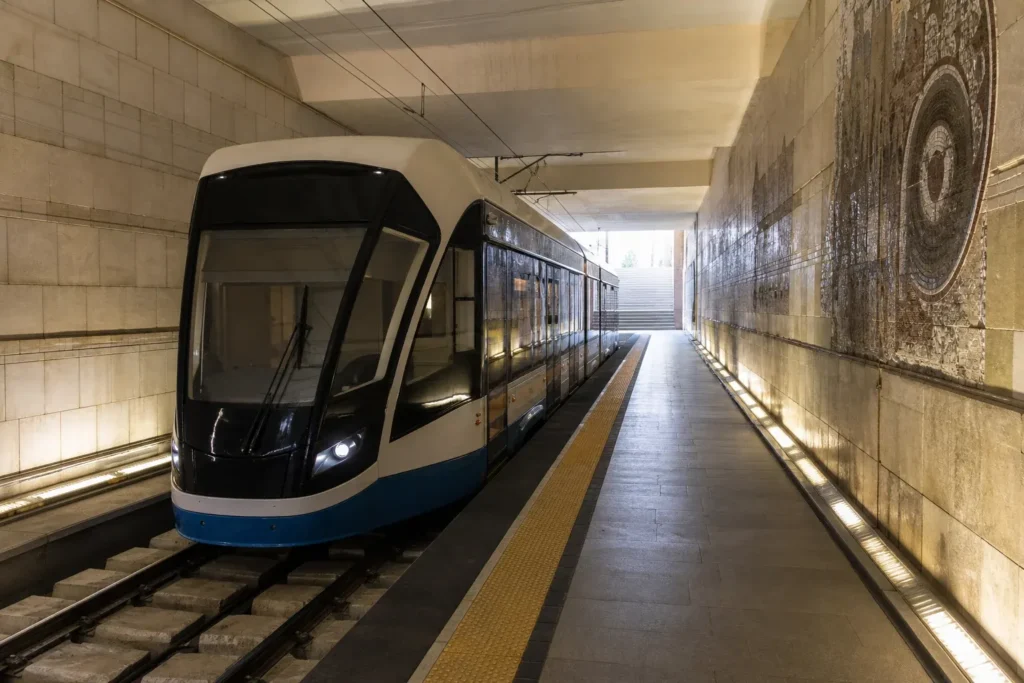
The Volgograd Metrotram officially known as Skorostnoy Tramvay combines surface sections with an underground metro-style stretch through the city centre and south, operating two routes: ST and ST-2, with services from 05:48 to 22:42. It is not a conventional metro even though it has underground stations. It is not an ordinary tram even though it uses tram vehicles. It is a rapid tram that runs at surface level through most of its route, then dives underground in the city centre to achieve higher speeds, capacity and full traffic segregation.
Quick Facts
| Russian name | Волгоградский скоростной трамвай |
|---|---|
| Type | Transport hub |
| Built / opened | 1984 |
| District | Volgograd |
| Opening hours | Daily 05:48-22:42 |
| Best time to visit | The city stretches for kilometres along the Volga river from north to south. Spring and autumn offer mild temperatures ideal for the surface sections of the line. Summer heat can make the non-air-conditioned older trams uncomfortable. Winter travel is feasible but very cold. Avoid rush hours (07:00–09:00 and 17:00–19:00 weekdays) for a more comfortable journey with better window views. Weekends are quieter. |
| Recommended duration | 30–40 minutes full route |
| Website | gortransvolga.ru |
| Last updated | October 18, 2026 |
How to Get to and from Volgograd Metrotram, a light rail system with 22 stations
| Option | Duration | Price | Notes |
|---|---|---|---|
| Route ST (VGTZ to Ploshchad Chekistov) | approximately 30 minutes full route | ₽ | Serves 19 stations. Runs from Traktornyy Zavod (northern factory district) through central underground section to Ploshchad Chekistov. This is the original 1984 route and remains the main north-south corridor. |
| Route ST-2 (VGTZ to Yelshanka) | approximately 40 minutes full route | ₽ | Serves 21 stations, extending further south than ST. Includes the full southern underground extension that opened in 2011. Recommended for the complete Metrotram experience and access to Mamayev Kurgan station. |
| Single journey ticket (cash) | valid for one journey | ₽ | Purchase onboard from the conductor or at kiosks. Most tourist-friendly option. |
| Volna transport card | rechargeable card | ₽ | Reloadable contactless card used by regular commuters. Offers the lowest per-journey fare. Can be purchased and topped up at station kiosks. |
₽ budget · ₽₽ moderate · ₽₽₽ upscale · ₽₽₽₽ splurge. Price levels are estimates compared with typical prices for visitors.
Why Visit Volgograd Metrotram, a light rail system with 22 stations?
The Metrotram is a direct response to the shape of Volgograd. The city stretches for kilometres along the Volga river from north to south, and its neighbourhoods, factories, monuments and public spaces are strung along that axis. To connect that urban strip, there was no need for a complex metro network — just a fast, reliable, segregated backbone. It takes 5 minutes from the central station to the station at the Mamayev Kurgan. Most of the line shares a surface-level right of way with existing tram lines for 10.2 kilometres, while a subway section in the south has five underground stations and an elevated station spanning 6.8 kilometres.
Highlights of Volgograd Metrotram, a light rail system with 22 stations
Underground City Centre Section
The underground part of the line, built according to the standards of metro with tunnels and stations, has a length of 7.1 km and is located in the city centre including 6 stations. The metrotram normally uses right-hand running, with left-hand traffic on the underground section between TRK Europa City Mall and Pionerskaya to enable unidirectional vehicles to use island platforms. This distinctive engineering feature makes the Metrotram unique among Russian transit systems.
Tip: The underground section provides fast, traffic-free passage through the busiest parts of Volgograd. Watch for the transition from surface level when entering the tunnels near Ploshchad Lenina.
Mamayev Kurgan Station
Mamayev Kurgan station provides direct access to the Stalingrad battle memorial. It takes 5 minutes from the central station to the station at the Mamayev Kurgan. The station serves as a gateway to one of the city's most important historical monuments, making it a key stop for visitors interested in World War II history.
Tip: Plan your visit to Mamayev Kurgan for late morning or early afternoon to avoid midday crowds and to get better light for photographs.
Surface Tram Section in Northern Districts
Most of the line shares a surface-level right of way with existing tram lines; this section spans a total of 10.2 kilometres. The ground part of the line, rebuilt from a usual tram line, connects the city centre and northern parts, running through 5 city districts. This section winds through industrial neighborhoods and along the Volga, showing the real fabric of modern Volgograd.
Tip: The surface section offers views of the Volga River and insight into Volgograd's industrial heritage. Board early from Traktornyy Zavod (Tractor Factory) to get a window seat.
Hybrid Engineering Design
As industrial population grew through the 1960s and 70s, the existing tram network fell short. The solution was to upgrade the main tram corridor with metro characteristics where they mattered most: segregated sections, higher speeds and an underground section in the densest areas. Rather than building a costly full metro, engineers created a practical hybrid system that has served the city for four decades.
Tip: Look for the different track types and infrastructure along your journey—the transition from street-level to tunnel-ready rails shows the engineering decisions made in real time.
Two Routes with Different Endpoints
There are two routes, ST and ST-2. ST route runs from Traktornyy Zavod to Ploshchad Chekistov with 19 stations, while ST-2 runs from Traktornyy Zavod to Yel'shanka with 21 stations. If you want the full Metrotram experience — including the southern underground section (Ploshchad Chekistov, Profsoyuznaya, TYuZ and Yelshanka) — take the ST-2.
Tip: Check which route your tram is before boarding at the terminal. ST-2 is longer but covers more of the distinctive underground southern extension.
Modern Fleet and Recent Upgrades
2024-2025 brought significant renewal: modern low-floor trams, track upgrades, and in March 2026 journey times dropped by 8% following completion of track repairs. The system continues to evolve, combining historical significance with modern efficiency improvements that make it easier to use.
Tip: The newer trams have better accessibility and air conditioning. If you see a low-floor modern vehicle, it's likely to be more comfortable than the older Tatra models still in use.
Atmosphere
The Volgograd Metrotram is a light rail surface/subway line operating in Volgograd, Russia. By day, the surface sections feel like a working tram line—you see the Volga River, industrial neighbourhoods, and ordinary people commuting to work. The cars are functional, not luxurious, and the stops are simple platforms. Once underground near the city centre, the mood shifts entirely: proper metro-style stations with tiled walls and better lighting create a sense of being in a real urban transit system.
Rush hours (mornings 07:00–09:00 and evenings 17:00–19:00) see crowded cars, especially on ST-2. Off-peak hours are calm. Visitors are mixed with workers, schoolchildren, and elderly passengers. The trams run smoothly but make noise—it is still a tram, after all, not a silent metro. Weekends are less busy and offer better views from the window.
History of Volgograd Metrotram, a light rail system with 22 stations
The idea of the Metrotram as a kind of new transport appeared at the beginning of the 1970s. There is a unique length of Volgograd along the Volga River and that’s why the only high-speed tram in the country was built here in 1984. As industrial population grew through the 1960s and 70s, the existing tram network fell short. The solution was to upgrade the main tram corridor with metro characteristics where they mattered most: segregated sections, higher speeds and an underground section in the densest areas.
The system was inaugurated on 5 November 1984 and had served 50 million passengers per year at the time the 2011 extension was opened. The original line included a 3.3 km long tunnel section which was built to metro standards with two underground stations with island platforms. The subway section opened in two stages in 1984 and 2011, spanning 6.8 kilometres.
The Skorostnoy Tramvay was planned in the USSR during the 1970s with the aim to develop an efficient rapid urban mass transport system to be applied in other middle-rank urban agglomerations, responding better than traditional trams to the needs of rapid displacements. From the moment it opened in 1984 to the present, Tatra T3 trams have been used as trains. 2024-2025 brought significant renewal: modern low-floor trams, track upgrades, and in March 2026 journey times dropped by 8% following completion of track repairs.
Tickets and Payment at Volgograd Metrotram, a light rail system with 22 stations
The Metrotram operates with services from 05:48 to 22:42. Tickets can be purchased onboard from the conductor or at station kiosks before travel. Travel time from the central station to Mamayev Kurgan is 5 minutes. The average time for a full route is 30 minutes.
Fares are affordable; most visitors buy a single cash ticket onboard, though the Volna rechargeable transport card offers the lowest fare and is available for purchase at station kiosks. No advance booking is required—simply board at any station. For official schedules and route information, visit gortransvolga.ru (site in Russian; use a browser translation tool for English).
Flights, Transfers and Planning
How to Get to Volgograd Metrotram, a light rail system with 22 stations
The Metrotram operates with services from 05:48 to 22:42 daily. The system is integrated into Volgograd’s public transport network, so any major city bus or trolleybus transfer point will be near a Metrotram station.
Northern terminus (Traktornyy Zavod / VGTZ): Located in the industrial northern suburbs, accessible by connecting city buses.
Central stations: Mamayev Kurgan station is in the city centre and is the most common stop for visitors accessing the World War II memorial. The underground section makes entry clear and marked.
Southern terminus (Yelshanka on ST-2): Located in the southern residential suburbs, useful for onward connections to other city zones.
Accessibility
2024-2025 brought modern low-floor trams which improve wheelchair and stroller access on newer vehicles. The underground stations are built to metro standards but some older surface platforms may have gaps or require steps. Check with station staff for assistance if needed.
Food Nearby
The Metrotram connects to Volgograd's city centre, where restaurants and cafés cluster around Ploshchad Lenina (Lenin Square) and along Prospekt Lenina (main avenue). Market and convenience stores are located near major stations.
What to Bring
Comfortable shoes for walking between stations. In summer, bring water—surface cars can get warm. In winter, warm clothing is essential as waiting on exposed platforms is cold. Keep belongings secure in crowded cars during peak hours.
Photography Rules
The metrotram uses left-hand traffic on the underground section between TRK Europa City Mall and Pionerskaya to enable unidirectional vehicles to use island platforms. Photography is permitted throughout the system. Bring a camera or smartphone to capture the contrast between surface and underground sections, and the industrial landscape along the Volga corridor.
Family Suitability
Modern low-floor trams make boarding with strollers easier on newer vehicles. The 30-minute full journey is manageable with children, though the underground section has echoing noise that may disturb sensitive toddlers. Older Tatra vehicles have higher steps and fewer amenities. Best for families with children aged 5 and older who can manage the boarding process and appreciate the historical and engineering interest.
Russia Vibes Tips
- Board at Traktornyy Zavod (northern terminus) early in the day if you want a seat and a window on the right side for Volga River views on the surface section.
- Take ST-2, not ST, if you want to experience the full southern underground extension and visit Mamayev Kurgan with minimal walking.
- Watch for the track transition from street-level to tunnel-ready engineering—look at the rails and sleepers as the tram enters the underground section near Ploshchad Lenina.
- The left-hand traffic on the underground section (opposite to surface) can feel disorienting. This unusual design allowed the engineers to fit island platforms in the tunnel. It is normal and safe.
- Carry small change or have a Volna card; many conductors prefer cards and some older trams may not have change for large bills.
- Download the gortransvolga.ru timetable or take a screenshot before travelling, as real-time displays at stops may not be reliable.
Explore Nearby Volgograd Metrotram, a light rail system with 22 stations
Related guides
 Volgograd Bus Station: Routes, Hours and How to Get There
Main image: AI-generated illustration. It may not show the place exactly as it looks.
 Volgograd International Airport: Getting to the City and Onward Travel
Main image: AI-generated illustration. It may not show the place exactly as it looks.
 Kirovsky District: Volgograd’s Quiet Residential Neighborhood
Main image: AI-generated illustration. It may not show the place exactly as it looks.
 Tsentralny District: Historic Heart of Volgograd
Main image: AI-generated illustration. It may not show the place exactly as it looks.
 Maslenitsa in Volgograd: Pancakes, Folklore and the Burning of Winter
Main image: AI-generated illustration. It may not show the place exactly as it looks.
Browse more: More in Volgograd · All Airports & Transport · All Airports & Transport in Volgograd · All Other Hubs · All Volgograd
FAQ: Volgograd Metrotram, a light rail system with 22 stations
Is the Metrotram the same as the Moscow Metro?
The Metrotram is not a conventional metro even though it has underground stations. It is not an ordinary tram even though it uses tram vehicles. It is a rapid tram that runs at surface level through most of its route, then dives underground in the city centre. It is unique to Volgograd.
Can I use my Moscow Metro card on the Volgograd Metrotram?
No. The Metrotram uses the separate Volna card system. Moscow Metro cards are not accepted. Purchase a Volna card at station kiosks or buy individual tickets onboard.
What is the difference between route ST and ST-2?
ST route runs from Traktornyy Zavod to Ploshchad Chekistov with 19 stations, while ST-2 runs from Traktornyy Zavod to Yel'shanka with 21 stations. If you want the full Metrotram experience including the southern underground section, take the ST-2.
How long does a full ride take?
The average time for a full route is 30 minutes. It takes 5 minutes from the central station to the station at the Mamayev Kurgan.
Does the Metrotram go to the airport?
The Metrotram does not serve the airport directly. You will need to transfer to a bus or taxi to reach Volgograd International Airport.
Are the underground stations accessible with a wheelchair?
2024-2025 brought modern low-floor trams which improve accessibility. Underground stations are built to metro standards with proper platforms. Check with station staff for assistance if needed; older surface platforms may have gaps or steps.
When was the Metrotram built?
The system was inaugurated on 5 November 1984. The subway section opened in two stages in 1984 and 2011.
Why does the Metrotram run underground when Volgograd does not have a metro?
As industrial population grew through the 1960s and 70s, the existing tram network fell short. The solution was to upgrade the main tram corridor with metro characteristics where they mattered most: segregated sections, higher speeds and an underground section in the densest areas. It was a practical middle ground between a full metro and a street tram.
Russia Vibes is a one-person project. A coffee keeps it going
How we research and update our guides
About this guide: AI assistance and accuracy
This guide is created with the help of AI and is based on official sources where available. Mistakes can still happen. Opening hours, prices, rules and other details are given to the best of our knowledge as of the date shown and can change without notice. It offers general recommendations only, not professional, legal or travel advice. Please confirm important details with the official source before you travel; you are responsible for your own plans and decisions.
International sanctions affect payments between Russia and many other countries. In practice, cards issued in the EU, the UK, the US and several other countries often do not work in Russia, Russian cards usually do not work abroad, and some booking platforms, airlines and payment providers limit or suspend their services for Russia. The situation changes frequently. We do not give legal or financial advice, and this site does not encourage anyone to break or circumvent sanctions. Whatever you plan, you are responsible for following the laws and regulations that apply to you, including those of your country of residence and citizenship. Many travelers still organise their stay lawfully. It is worth asking your bank or payment provider what is currently permitted, contacting hotels, tour operators and carriers directly about the payment methods they accept, and checking which services are open to customers from your country. Clarify payment, cancellation and refund terms before you commit to a booking, and keep your plans flexible. Partner links on this site may not be available in every country, and prices, availability and rules in our guides can differ from what you see when you book.Paying for your trip: please read
Report an issue on this page

Take this guide with you
Get a free PDF of this guide to print or read offline: key facts, tips and a map link on a few clean pages.