
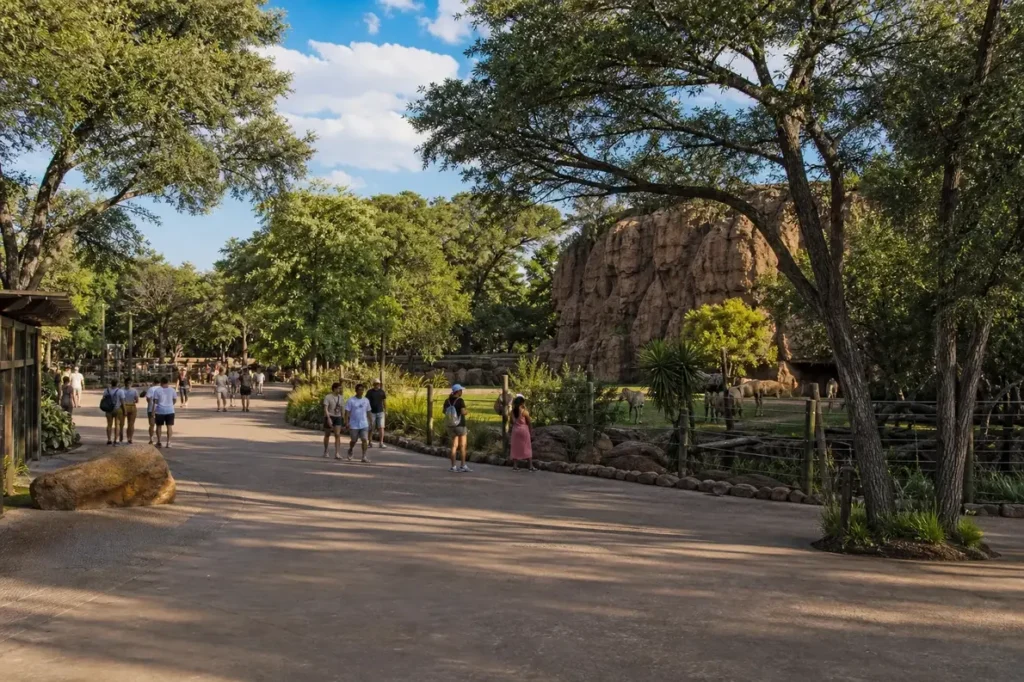
Limpopo Zoo stands as Russia’s pioneering private zoo, opened in 2003 in Nizhny Novgorod‘s Sormovskiy district. Spread across 7 hectares in Sormovskiy Park, it holds over 230 species and more than 1,500 animals drawn from multiple continents.
Beyond the main enclosures, the zoo encompasses the Amazonia Complex—a tropical botanical garden with 260 plant species—plus five on-site museums covering Soviet history, military artifacts, samovars and musical instruments. It’s one of Russia’s most visited family attractions, combining wildlife viewing with interactive experiences and carnival rides.
Quick Facts
| Russian name | Зоопарк Лимпопо |
|---|---|
| Built / opened | 2003 |
| Address | ул. Ярошенко, 7Б, Нижний Новгород, 603035 OpenStreetMap · Google Maps |
| District | Sormovskiy |
| Metro | Burevestnik (Nizhny Novgorod Metro, 15–20 min walk or marshtrutka taxi from Burevestnik station) |
| Opening hours | Daily 09:00–18:00 |
| Admission | ₽₽ (Ticket office opens 09:00–17:00; Amazonia Complex 09:00–18:00) |
| Best time to visit | Late spring through early autumn (May–September) offers comfortable outdoor conditions for multi-hour visits; most animals are active during mild weather. Weekday mornings are far less crowded than weekends and school holidays. Early morning (09:00–11:00) sees maximum animal activity before midday heat causes predators to rest. Late afternoon (15:00–17:00) brings secondary activity bursts before zoo closing. Avoid summer midday heat if you are heat-sensitive or visiting with young children. Winter visits are possible but shorter daylight hours reduce viewing time. |
| Recommended duration | 2–3 hours |
| Website | nnzoo.ru |
What Is (and Isn't) Part of a Visit to Limpopo Zoo, Nizhny Novgorod?
| Part | Status | Notes |
|---|---|---|
| Zoo main enclosures (predators, primates, ungulates, birds, reptiles) | Included in the standard ticket | Standard admission covers all outdoor and semi-outdoor animal viewing areas. |
| Amazonia Botanical Complex and Night World Exhibition | Separate ticket or institution | Requires a separate combo ticket; cannot be visited with zoo-only admission. |
| Back in the USSR Museum (Soviet domestic life exhibition) | Separate ticket or institution | Small museum with separate entrance fee; budget 20–30 minutes. |
| Weapons of Victory Military Museum | Separate ticket or institution | Separate ticket required; focuses on Soviet and Russian military history. |
| Samovar Museum | Separate ticket or institution | Separate admission; brief exhibition of traditional Russian tea vessels. |
| Musical Instruments Museum | Separate ticket or institution | Separate ticket; small collection of traditional and historic instruments. |
| Contact farm and hand-feeding zones | Included in the standard ticket | Accessible with zoo admission, but animal feed (cups) must be purchased separately for cash. |
| Amusement park rides | Separate ticket or institution | Rides operate seasonally; each ride has its own cost. |
| Cafés and food venues | Outside / not part of it | Privately operated concessions; food must be purchased separately. |
| Sormovskiy Park (surrounding greenspace outside zoo boundaries) | Outside / not part of it | The zoo occupies a section of this larger municipal park; you may enter the park free but zoo grounds require a ticket. |
Why Visit Limpopo Zoo, Nizhny Novgorod?
The zoo offers varied attractions beyond traditional viewing. You can hand-feed llamas and alpacas in designated interactive zones, and a contact farm section lets children approach friendly animals like goats. The Amazonia Complex immerses visitors in tropical vegetation rarely seen in Russia’s climate.
The ensemble of museums adds educational depth: the Soviet-era museum transports you through domestic life circa 1960–1990, while the Weapons of Victory museum presents military history from WWII. For families, on-site rides and cafés with Russian and fast-food options make it a full-day outing.
How Limpopo Zoo, Nizhny Novgorod Is Laid Out
The 7-hectare site is divided into two main zones. The primary zoo section occupies the central and southern areas, where large predators (polar bears, tigers, lions), primates, hoofed animals, birds and reptiles occupy naturalistic or semi-naturalistic enclosures arranged by geography and species type.
The Amazonia Complex lies in the northern section, enclosed in a climate-controlled pavilion containing tropical trees, orchids and ferns that create a humid jungle atmosphere. The contact farm operates as a semi-open grazing area. Five museums, an amusement park with rides and seating areas are distributed throughout the grounds. Enter at the main gate (Yaroshenko Street); the ticket office and cafés cluster near the entrance.
Highlights of Limpopo Zoo, Nizhny Novgorod
Polar Bear Enclosure
The zoo's most iconic attraction is its recently modernized polar bear habitat, featuring a three-metre-deep pool, multi-level terrain with natural vegetation including birch and spruce trees, and soft substrates of sand and pebbles. This enclosure was specifically designed to meet contemporary animal welfare standards when polar bear Nikolai arrived. The setting offers visitors excellent sightlines for observing the bears in and out of water.
Tip: Visit early morning when bears are most active. The enclosure design keeps trees protected, so focus on observing swimming behaviour.
Amazonia Botanical Complex
A separate paid section housing over 260 tropical plant species in a heated pavilion—rare to experience in Nizhny Novgorod's continental climate. The complex includes jungle-like plantings, a dedicated Night World exhibition, and walkways that let you move through layered vegetation. The experience resembles a conservatory rather than a traditional outdoor zoo section.
Tip: Entry requires a separate combo ticket (Zoo + Amazonia). Go in the afternoon when the humid air feels most tropical. Bring a camera for the lush canopy photography.
Contact Farm and Feeding Zones
Unlike most zoo sections where viewing is passive, the farm area permits hands-on interaction. Visitors buy cups of grain and hand-feed llamas, alpacas, goats and other domesticated animals. Staff monitor interactions to ensure both visitor and animal safety. This direct contact is memorable for children and adults unfamiliar with these creatures.
Tip: Feed cups cost extra cash; bring small bills. Be prepared for goats' enthusiasm—they will follow you for more food. Feeding is most interactive mid-morning.
Back in the USSR Museum
One of five on-site museums, this collection recreates Soviet domestic life from the 1960s–1990s with original furniture, household items, kitchen appliances, and period décor. It offers international visitors a tangible sense of Soviet-era domesticity without requiring a visit to a separate city location. Entry requires a small separate ticket (prices vary but are modest).
Tip: The museum is modest in size; plan 20–30 minutes. It works well as a break between viewing large outdoor sections. Russian speakers gain more from informational displays.
Weapons of Victory Military Museum
Housed in a dedicated space, this museum presents Soviet and Russian military equipment, uniforms, weapons and historical artefacts from World War II through modern conflicts. It appeals to military history enthusiasts and provides context for Russia's historical narrative. A separate ticket is required.
Tip: Combine with a walk through the zoo's wolf and bear enclosures, which are positioned nearby and thematically connect to Russian wilderness imagery.
Large Predator Viewing—Tigers and Lions
The zoo houses multiple tiger subspecies and African lions in naturalistic but partially open enclosures allowing close observation. Unlike polar bears, these cats are often less active in midday heat but rest visibly in shaded sections of their habitat. Their large size is especially striking when viewed at relatively close range across barriers.
Tip: Early morning and late afternoon (approaching closing time) see more movement. Photographs are best when cats approach the viewing barrier.
Primate Section
Lemurs, monkeys, marmosets and lesser apes occupy interconnected or semi-open spaces arranged to mimic group social structures. The black-and-white ruffed lemurs and ring-tailed lemurs are visually distinctive; smaller species like pygmy marmosets delight visitors seeking to spot tiny animals. Primate behaviour is often active and engaging to observe.
Tip: Bring binoculars for spotting smaller primates in upper areas of enclosures. The primate zone is less crowded in early afternoon.
Samovars and Musical Instruments Museums
Two additional small museums focus on traditional Russian material culture. The Samovar Museum displays the ornate tea-brewing vessels central to Russian hospitality; the Musical Instruments Museum houses traditional and historic instruments. Both offer brief cultural immersion and break up extended outdoor viewing.
Tip: These museums are best visited as 15-minute stops rather than destinations in themselves. They become more interesting if you speak Russian or are specifically researching Russian domestic history.
Reptile and Bird Sections
The zoo houses snakes, lizards, caimans, and numerous bird species in naturalistic mixed-species or species-specific settings. Reptiles appeal to visitors interested in biodiversity often overlooked in favour of large mammals. Tropical birds provide colour and sound, creating vivid photo opportunities.
Tip: Reptile viewing is temperature-dependent; they are more visible on warm afternoons. Photography of birds is rewarding near open-air aviaries during the golden hour (late afternoon).
Atmosphere
The zoo bustles on weekends and school holidays, particularly mid-morning when families arrive. Weekday visits are noticeably quieter, especially late afternoon. The grounds are well-maintained and clean; paved paths wind through wooded and open areas, creating a park-like setting beyond the usual zoo feel.
Sounds vary by zone: the predator areas are often silent except for distant animal calls, while the primate section erupts with chatter and movement. The Amazonia pavilion is humid and enclosed, creating an artificial jungle atmosphere that contrasts with the outdoor sections. The amusement park zone echoes with ride sounds and children’s voices, while museum areas are calm and contemplative.
Most visitors are families with young children, though couples and older adults explore seriously. The on-site cafés hum with conversation over Russian comfort food and fast food. A blend of education and leisure defines the atmosphere—not purely focused on animal observation like major Western zoos, but rather a mixed-use recreation space where wildlife is one element among many.
History of Limpopo Zoo, Nizhny Novgorod
Limpopo Zoo was founded on July 27, 2003, making it the first private zoo in Russia. Its creation is attributed to Vladimir Gerasichkin, who conceived the idea after rescuing an owl from a flock of crows; that symbolic owl became the zoo’s emblem and inspired his vision for a comprehensive animal collection and recreation space.
The zoo began modestly but expanded rapidly over the 2000s and 2010s. By the early 2010s, it housed multiple museums and attractions beyond traditional zoo functions, reflecting a Russian business model of bundled entertainment venues rather than pure zoological institutions. The site grew to encompass Sormovskiy Park, a pre-existing green space, adding to its recreational appeal.
Significant infrastructure improvements occurred in the late 2010s and early 2020s, including modernization of the polar bear enclosure (built specifically to accommodate polar bear Nikolai in 2021) with contemporary animal welfare design featuring pools and varied terrain. The Amazonia Complex represents a more recent investment in creating an immersive tropical environment impossible to achieve outdoors in Nizhny Novgorod’s continental climate.
The zoo gained membership in the Eurasian Association of Zoos and Aquariums and has received civic recognition including the Nizhny Novgorod City Prize and a city honour badge. Today, it operates year-round and maintains both living animal collections and the bundle of museums and rides established over the past two decades.
Legends and Myths about Limpopo Zoo, Nizhny Novgorod
The Owl That Started It All
Legend – historically unreliable. Vladimir Gerasichkin, the zoo's founder, decided to create a private zoo after rescuing an owl from a flock of crows attacking it. He took this action as a sign and established Limpopo Zoo around the symbolic rescue, using the owl as the zoo's emblem. Whether the exact circumstances were as dramatic is unclear, but the story underscores Russian entrepreneurship born from a moment of compassion rather than commercial calculation.
Tickets and Booking for Limpopo Zoo, Nizhny Novgorod
| Ticket | Price | Includes |
|---|---|---|
| Adult admission (standard) | ₽₽ | All main zoo enclosures, primate areas, bird and reptile sections, and contact farm access. |
| Discounted admission (children 5–13, pensioners, select concessions) | ₽ | Same as adult admission with valid ID or documentation. Requires proof at ticket office. |
| Combo ticket: Zoo + Amazonia Complex (Botanical Garden and Night World) | ₽₽ | All standard zoo admission plus access to tropical plant collection and Night World exhibition. |
| Combo discounted: Zoo + Amazonia (with valid discount eligibility) | ₽ | Same combined access at discounted rate with proof of eligibility. |
| Museum entrance (individual or bundled) | ₽ | Separate tickets for USSR Museum, Weapons of Victory, Samovars, or Musical Instruments (₽–₽ each depending on museum). |
₽ budget · ₽₽ moderate · ₽₽₽ upscale · ₽₽₽₽ splurge. Price levels are estimates compared with typical prices for visitors.
Tickets are sold on-site at the main ticket office (open 09:00–17:00) or by phone at +7 (831) 416-14-14. The zoo has no online ticketing system; advance reservation is not available. Arrive before 17:00 to purchase tickets; the zoo itself closes at 18:00, but visitors may remain inside until closing time if admitted before the office closes.
Same-day walk-up purchase is standard. No ID or advance notice is required for foreign adult visitors, though Russian citizens and those claiming discounts must present valid documentation (passport, pension book, military service certificate) at the ticket window. Animal feed cups for the contact farm must be purchased separately with cash.
Rates differ for Russian residents and concession holders (children, seniors, military personnel, participants in special military operations). See the official website at nnzoo.ru for all categories and current rates, which may change seasonally or by government decree.
Plan and Book
Suggested itineraries Limpopo Zoo, Nizhny Novgorod
2 hours
Enter via main gate and proceed directly to polar bears and large predators (tigers, lions) in the central zone. Spend 30–40 minutes here. Move to the primate section (20–25 min), then view birds and reptiles (15–20 min). Finish with the contact farm if energy permits (10–15 min). This pace prioritizes large animals and avoids museums.
3 hours
Start as above with predators and primates (1 hour total). Spend 30 minutes in the Amazonia Complex to experience tropical vegetation. Dedicate 20 minutes to the Back in the USSR Museum (easily accessed near the entrance). Spend remaining 40 minutes on reptiles, birds, and contact farm. Rest at a café before leaving.
Half day (4–5 hours)
Complete the main zoo systematically: large predators (45 min), primates (30 min), reptiles and birds (40 min), Amazonia Complex (45 min). Visit two of the five museums (USSR and Weapons of Victory, 45 min combined). Use 30 minutes for contact farm interaction and animal feeding. Take lunch at an on-site café (30–45 min). This itinerary covers the core attractions without time pressure.
Full day (6–8 hours)
Explore all zoo sections methodically. Morning: large predators and special viewing areas (1 hour). Mid-morning: primates and birds (1 hour). Late morning: reptiles and aquatic species (30 min). Lunch at café (45 min). Afternoon: Amazonia Complex (1 hour). Late afternoon: all five museums (1.5 hours combined, with particular focus on personal interests). Finish with contact farm and remaining time in preferred zones. Depart before closing.
How to Get to Limpopo Zoo, Nizhny Novgorod
By Metro and Marshtrutka: Exit Burevestnik station (sole metro station serving the zoo) and take marshtrutka taxi (route 21) to the stop ‘Зоопарк Лимпопо’ (Limpopo Zoo). Journey time approximately 15–20 minutes depending on traffic. Ask the driver to confirm the stop.
By Bus and Trolleybus: From Moscow Station area, take buses 45, 3, or 57, or trolleybus 15 to the stop ‘Сормовский парк культуры’ (Sormovskiy Park of Culture). Walking time from this stop to the main zoo gate is approximately 5–10 minutes.
By Taxi or Ride-Share: Use Yandex.Taxi or local apps and specify the address: ул. Ярошенко, 7Б (Yaroshenko Street, 7B). Fare is typically moderate from central Nizhny Novgorod (10–15 minutes by car from the city centre).
Parking: Limited on-site parking is available near the main entrance for a small fee.
Accessibility
The official website confirms that the zoo has accessibility features for visitors with reduced mobility, including ramps and toilets designed for people with disabilities. Paved pathways wind throughout the grounds, though some sections contain inclines. Contact the zoo in advance at +7 (831) 416-14-14 to discuss specific access needs; staff can advise on route planning within the 7-hectare site. Strollers are manageable on main paths but may be difficult in certain sections.
Food Nearby
On-site cafés serve Russian comfort food (soups, grilled meats, pastries) and fast-food items (pizza, sandwiches, hot dogs). Prices are moderate. No external restaurants are immediately adjacent to the zoo, though the surrounding Sormovskiy Park area and nearby residential streets contain small cafés and bakeries typical of Russian neighbourhoods. Bringing a packed lunch is practical and cost-effective for full-day visits.
What to Bring
Comfortable walking shoes are essential for navigating 7 hectares on paved and partly gravel paths. Bring sun protection (hat, sunscreen, sunglasses) for outdoor sections; the Amazonia Complex is cooler and humid. A camera or smartphone for wildlife photography is useful, but move slowly near enclosures and avoid sudden movements that startle animals. Carry small bills and coins for animal feed, ride tickets, and café purchases (some concessions prefer cash). In summer, bring water; in spring and autumn, a light jacket for temperature variations.
Best Views and Photo Spots of Limpopo Zoo, Nizhny Novgorod
Polar bear enclosure front viewing area
The recently modernized three-metre pool and natural-looking terrain with birch and spruce trees create scenic backdrops. Bears swimming in blue water and resting on sandy banks are visually striking, especially when contrasted against the green vegetation and pale sky.
Best time: Early morning (09:30–11:00) when bears are most active and light is soft and directional. Avoid midday harsh shadows.
Amazonia Complex interior jungle canopy views
Towering tropical palms, dense green foliage, orchids and exotic flowers create a lush frame for photographs. The controlled humid environment and enclosed space produce diffused, even lighting that flatters plant photography.
Best time: Mid-morning to early afternoon when interior humidity peaks and colours are saturated. The greenhouse effect creates warm, golden tones.
Tiger and lion enclosure viewing barriers
Large predators at rest or stalking create powerful images. The natural rock and vegetation within enclosures frame subjects well; close proximity across barriers produces intimate portraits.
Best time: Early morning (09:00–10:30) and late afternoon (16:00–17:30) when cats are most mobile. Midday rest periods offer silhouette and composition opportunities.
Contact farm with hand-feeding alpacas and llamas
Intimate moments of animal interaction with visitors create candid, engaging photographs. Animals' distinctive faces and the informal interaction setting produce warm, personable images unlike formal zoo enclosure shots.
Best time: Mid-morning when the farm is active but not overcrowded. Soft morning light illuminates animal coats and facial details.
Primate section with ring-tailed lemurs
Distinctive black-and-white striped tails and social primate behaviour create dynamic compositions. Viewing platforms allow varied angles; lemurs' expressive faces and interactive behaviour are photographer-friendly.
Best time: Early to mid-morning when lemurs are active and social. Avoid harsh midday backlighting.
Zoo entrance gate and surrounding Sormovskiy Park greenery
The zoo's main gate, landscaping and wooded park surroundings create atmospheric wide-angle shots of the location and context. Good for establishing shots or farewell photos at day's end.
Best time: Late afternoon (16:30–17:45) when golden hour light rakes across trees and grass, creating warm, nostalgic tones.
Photography Rules
Photography for personal use is permitted in all outdoor and zoo-specific areas. Drones are not allowed. Tripods are generally not permitted in crowded sections but may be acceptable in less busy areas—ask staff for clarification. Flash is allowed but discourage its use near animal enclosures as it can stress animals. Indoor museums prohibit photography or permit it only without flash; check with staff at each venue. Avoid photographing other visitors without consent.
Family Suitability
Limpopo Zoo is highly family-friendly and caters explicitly to children. The contact farm and hand-feeding zones engage young visitors interactively. The on-site amusement park with rides suits children aged 3–12 particularly well. Museums are accessible to children but may hold attention only if they have specific interests in Soviet history or military topics. Stroller access is viable on main paved paths but becomes challenging on gravel or steep sections; a carrier may be preferable for very small children. The zoo is not intensive or overwhelming, allowing flexible pacing. Refreshment points and shaded rest areas are distributed throughout. All-day visits are realistic for families with children aged 4–12; younger or very young toddlers may tire after 2–3 hours.
Russia Vibes Tips
- Arrive at opening (09:00) to beat weekend crowds and capture animals at their most active before midday heat causes them to rest or hide. An early start also ensures all ticket office and museum staff are fresh and less rushed.
- The contact farm requires cash for both admission and animal feed cups; the zoo accepts card payment at the main ticket office but animal-feeding transactions are cash-only. Plan accordingly or withdraw cash from a nearby ATM before entering.
- The Amazonia Complex is best experienced mid-visit when you are warmed up but not yet tired; its humid, enclosed environment is a pleasant physical contrast to extended outdoor viewing. Do not leave it as a final stop when energy is depleted.
- The five museums are genuinely optional and serve as rest breaks rather than primary attractions. Do not attempt to visit all of them in a single day unless you have 7–8 hours; prioritize based on personal interest (USSR nostalgia, military history) rather than completeness.
- Large predators (polar bears, tigers, lions) occupy different zones; establish a mental map at entry to avoid backtracking. Staff at the ticket office can provide a physical map showing which species are in which direction.
- Avoid visiting on school holidays (especially summer weeks and New Year period) when the zoo reaches capacity; weekday mornings are vastly more pleasant for photography and observation of animals not stressed by crowds.
Explore Nearby Limpopo Zoo, Nizhny Novgorod
Browse more: More in Sormovskiy · All Nizhny Novgorod · All Parks · All Sightseeing · All Sightseeing in Nizhny Novgorod
FAQ: Limpopo Zoo, Nizhny Novgorod
Is the Amazonia Complex included in the standard zoo ticket?
No. The Amazonia Complex (botanical garden and Night World exhibition) requires a separate combo ticket. You can purchase a combined Zoo + Amazonia ticket at entry, which is discounted compared to paying for each separately. Budget an additional small fee for this upgrade.
Can I feed the animals?
Yes, but only in designated contact farm areas with specific species (llamas, alpacas, goats). Animal feed cups must be purchased separately with cash. Do not attempt to hand-feed animals outside the contact zone; it is prohibited and unsafe.
Are the museums included with zoo admission?
No. Each museum (USSR history, military, samovars, musical instruments) requires a separate ticket. They are optional and brief; most visitors treat them as 15–30 minute breaks rather than primary attractions.
How much time do I need to see the main zoo without museums?
Two to three hours suffices for all main animal areas (predators, primates, birds, reptiles, contact farm). Adding the Amazonia Complex extends this to 3–4 hours. Museums and amusement rides increase the total further.
Can I bring a stroller or wheelchair?
Strollers are manageable on main paved paths but difficult on gravel sections. The zoo has ramps and disabled-access toilets; contact the zoo at +7 (831) 416-14-14 in advance to discuss specific accessibility needs and optimal routing within the 7-hectare grounds.
Is online ticket purchase available?
No. Tickets are sold only at the on-site ticket office (09:00–17:00). There is no advance online booking or pre-purchase system. Arrive before 17:00 to buy tickets; the zoo closes at 18:00.
What is the best time to visit to see active animals?
Early morning (09:00–11:00) is ideal; most animals are active before midday heat sets in. Late afternoon (16:00–17:30) brings a secondary activity burst. Avoid summer midday when predators rest.
Do I need a guide, or is the zoo self-navigable?
The zoo is easily navigable independently. Physical maps are available at the ticket office; clear signage marks major sections. A guide is not necessary unless you seek specific educational commentary or want to optimize a visit for particular species or interests.
Russia Vibes is a one-person project. A coffee keeps it going
How we research and update our guides
About this guide: AI assistance and accuracy
This guide is created with the help of AI and is based on official sources where available. Mistakes can still happen. Opening hours, prices, rules and other details are given to the best of our knowledge as of the date shown and can change without notice. It offers general recommendations only, not professional, legal or travel advice. Please confirm important details with the official source before you travel; you are responsible for your own plans and decisions.

Take this guide with you
Get a free PDF of this guide to print or read offline: key facts, tips and a map link on a few clean pages.
Report an issue on this page
Paying for your trip: please read
International sanctions affect payments between Russia and many other countries. In practice, cards issued in the EU, the UK, the US and several other countries often do not work in Russia, Russian cards usually do not work abroad, and some booking platforms, airlines and payment providers limit or suspend their services for Russia. The situation changes frequently.
We do not give legal or financial advice, and this site does not encourage anyone to break or circumvent sanctions. Whatever you plan, you are responsible for following the laws and regulations that apply to you, including those of your country of residence and citizenship.
Many travelers still organise their stay lawfully. It is worth asking your bank or payment provider what is currently permitted, contacting hotels, tour operators and carriers directly about the payment methods they accept, and checking which services are open to customers from your country. Clarify payment, cancellation and refund terms before you commit to a booking, and keep your plans flexible.
Partner links on this site may not be available in every country, and prices, availability and rules in our guides can differ from what you see when you book.