
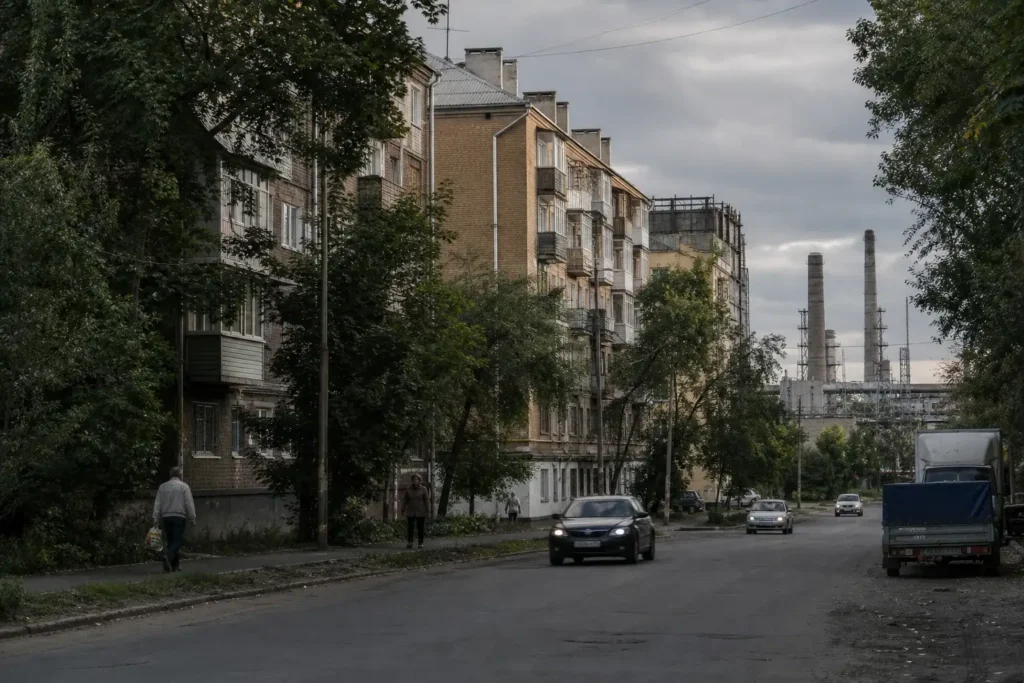
Sormovo is one of Nizhny Novgorod‘s eight city districts, occupying the northwestern corner of the city along the Volga River. What began as a village became one of Russia’s most important industrial centers after 1849, when the Sormovsky factory (now Krasnoye Sormovo shipyard) was established and transformed Sormovo into a major workers’ settlement. The district carries deep historical weight: it was a flashpoint for labor unrest, including the May Day demonstration of 1902 immortalized in Maxim Gorky’s novel The Mother, and revolutionary battles during the 1905 uprising.
Today, Sormovo remains an industrial district with a distinctly Soviet character, far quieter than central Nizhny Novgorod but with genuine historical texture for visitors interested in Russia’s industrial heritage and early revolutionary history.
Quick Facts
| Russian name | Сормово |
|---|---|
| Address | OpenStreetMap · Google Maps |
| District | Sormovsky |
| Metro | Sormovskaya (Line 2 (Sormovskaya-Meshcherskaya), towards Kominterna Street) |
| Admission | free |
| Best time to visit | Spring (May–June) and autumn (September–October) offer pleasant weather for walking and exploring outdoor industrial sites and neighborhoods. Summer can be warm but is suitable. Winter is cold and less inviting for long walking tours. Weekday afternoons (after 14:00) and early evenings are quieter than midday for photography. Soviet-era architecture photographs well in soft overcast light. |
| Recommended duration | Half day to full day |
What Is (and Isn't) Part of a Visit to Sormovo, Nizhny Novgorod?
| Part | Status | Notes |
|---|---|---|
| Sormovsky City District (the whole neighborhood) | Included in the standard ticket | The entire district is freely accessible to visitors; walk streets, observe buildings and monuments, and explore publicly visible industrial sites. |
| Krasnoye Sormovo Shipyard | Separate ticket or institution | An active industrial facility; the exterior and heritage building (1905) are visible from nearby streets, but entry to the complex requires advance arrangement with the facility. |
| Volga Shipyard | Not open to visitors | A working industrial complex not open to casual visitors; observable from surrounding streets but entry is restricted. |
| Church of the Transfiguration (Sormovo Transfiguration Cathedral) | Included in the standard ticket | A pre-revolutionary landmark and UNESCO-recognized heritage site; religious services and public visiting may vary; confirm hours before visiting. |
| Sormovo Airfield | Outside / not part of it | Located south of Sormovsky District in neighboring Moskovsky District; commonly associated with Sormovo by name but not part of the district proper. |
| Revolutionary monuments and plaques | Included in the standard ticket | Scattered throughout the district on streets and at historical sites; freely visible and photographable. |
Why Visit Sormovo, Nizhny Novgorod?
Sormovo offers a window into Russian industrial history and the world of Soviet manufacturing that shaped the country’s 20th century. The Krasnoye Sormovo shipyard, still operating today, is one of Russia’s oldest and most significant enterprises; its Art Nouveau management building (designed in 1905 by architect K. Dulin) stands as a cultural heritage site. The district is home to revolutionary monuments and sites connected to early-20th-century labor movements.
Walking Sormovo’s tree-lined streets—particularly Kominterna Street—reveals blocks of Soviet-era housing and industrial buildings. The experience is urban and unglamorous, but authentic: this is where ordinary Russians lived and worked, not a heritage theme park.
Highlights of Sormovo, Nizhny Novgorod
Krasnoye Sormovo Shipyard
Established in 1849 as the Nizhny Novgorod Machine Factory, this shipyard is one of Russia's oldest industrial enterprises. Since 1850, it has built river steamships, railway cars, locomotives, motor ships, and trams; the factory constructed 489 ships between 1849 and 1918 alone. From 1898, it became a major producer of steam locomotives. The headquarters building (1905, architect K. Dulin) exemplifies Art Nouveau industrial design and is now a protected heritage site. The shipyard remains active and is still one of the district's primary employers.
Tip: The shipyard occupies a large riverside complex; tours may be possible but require advance arrangement through official channels. The exterior and heritage building are visible from nearby streets.
Kominterna Street
The main commercial and social spine of Sormovo, Kominterna Street runs through the heart of the district with Soviet-era buildings, small shops, and local cafés. The street reflects the texture of industrial Sormovo: practical, busy, and historically layered. This is where residents gather and where the district's everyday life unfolds.
Tip: Walk Kominterna Street during midday or early evening to see the neighborhood at its most lively. The Sormovskaya metro station is a central access point.
Church of the Transfiguration (Sormovo Transfiguration Cathedral)
A notable pre-revolutionary landmark in the district, the Transfiguration Cathedral is included in the UNESCO-recognized historic centre of Nizhny Novgorod as a significant architectural and cultural site. This building predates the main Soviet-era construction and represents the religious life of Sormovo before the revolution.
Tip: The church is visible from Kominterna Street area; confirm opening hours before visiting, as access may vary.
Revolutionary Monument Sites
Sormovo was a center of revolutionary activity in early 20th-century Russia. The May Day demonstration in 1902, organized by workers at the Sormovo factory, was later immortalized in Maxim Gorky's novel The Mother. In December 1905, an uprising of Sormovo plant workers took place, organized by local groups of several political parties. Many revolutionary monuments and plaques are scattered throughout the district.
Tip: Seek out local plaques and monuments on street corners; they often provide dates and context in Russian. Some sites may require local guidance to locate.
Volga Shipyard
Spun off from Krasnoye Sormovo in 1970 and located geographically adjacent to its parent plant, the Volga Shipyard is the district's other major industrial enterprise. Like Krasnoye Sormovo, it represents the continuous shipbuilding legacy of Sormovo along the Volga River.
Tip: The shipyard is an active industrial facility and not open to casual visitors, but its presence shapes the district's landscape and history.
Soviet Residential Blocks
Sormovo is dominated by Soviet-era apartment buildings (khrushchyovka and later panel blocks) built to house factory workers. These residential clusters represent typical Soviet urban planning and domestic architecture from the 1950s onwards. Microdistricts like Korabli (Ships) and Daryino reflect the industrial logic of the era.
Tip: Photography of residential blocks is straightforward; walking tours on foot reveal the texture and scale of Soviet working-class housing.
Atmosphere
Sormovo feels like industrial Russia: gray and green, practical and worn. Tree-lined residential streets contrast with massive factory complexes and Soviet apartment blocks of varying heights. On weekday mornings, you see workers heading to shifts; in the afternoon, pensioners sit on benches under birch trees, and schoolchildren clatter home. The Volga River runs along the northwestern edge, but much of the shoreline is occupied by shipyards and industrial infrastructure, not public beaches.
The air carries a sense of historical weight without fanfare. Revolutionary plaques mark street corners; architectural details from 1905 stand alongside 1960s prefab housing. Kominterna Street buzzes with small shops and cafés where locals meet, but there is no tourism industry. The district is quiet compared to central Nizhny Novgorod, and that quietness is the point: this is everyday Russia, shaped by industry and labor, not designed for visitors.
History of Sormovo, Nizhny Novgorod
The founding of industry (1849–1900). Sormovo began as a village in Balakhna Uyezd (county). In 1849, two companies—the Nizhny Novgorod Machine Factory and Volga Steam Navigation—established a large industrial enterprise that would transform the settlement. Originally called the Nizhny Novgorod Machine Factory, it began constructing solid metal steamers in 1851 and screw schooners three years later. By 1858, it had built the first Russian steam dredger. The factory’s technical ambition grew: in 1870, it constructed the first Russian open hearth furnace, and in 1871, produced the two-decked steamship Perevorot.
Railway cars and locomotives (1898–1918). From 1898 onwards, locomotive production became a chief focus. The factory advertised widely in industrial magazines and maintained close connections with Krauss Locomotive Works in Munich, Germany, until World War I. Between 1849 and 1918, the factory built 489 ships. The growth of industry drew workers from across the region, and Sormovo evolved into a large working village surrounding the factory.
Revolutionary fervor (1902–1905). Industrial Sormovo became a center of labor unrest and revolutionary organizing. The May Day demonstration of 1902, organized by workers at the Sormovo plant, gained lasting cultural resonance when Maxim Gorky immortalized it in his 1906 novel The Mother. In December 1905, during the broader Russian Revolution, an uprising of Sormovo plant workers erupted in the districts of Sormovo and Kanavino, organized by local groups of several political parties. The uprising flooded Rozhdestvenskaya Street, Kazansky Railway Station, and several mills and factories.
Soviet transformation and city status (1920–1929). By 1922, Sormovo had grown large enough to be formally designated a city in its own right. The Sormovsky factory was renamed Krasnoye Sormovo (Red Sormovo) in 1922 to reflect the new Soviet order. On 1 September 1929, Sormovo was amalgamated into Nizhny Novgorod as one of its eight districts, ending its brief period as an independent city.
Soviet years (1929 onwards). Under Soviet rule, Sormovo remained an industrial hub. The district was officially established in 1924 and expanded as a center of shipbuilding and manufacturing. Soviet-era apartment blocks rose to house workers, creating the residential landscape visible today. The Volga Shipyard, spun off from Krasnoye Sormovo in 1970, became an adjacent enterprise. The Sormovo Confectionery Factory added to the district’s economic base. Throughout the Soviet period, Sormovo maintained its identity as a working-class neighborhood shaped by labor and industry.
Legends and Myths about Sormovo, Nizhny Novgorod
The May Day Demonstration in Gorky's The Mother
Legend – historically unreliable. In 1902, workers at the Sormovo plant organized a May Day demonstration that became legendary in Russian revolutionary culture. The event was so significant that it inspired a scene in Maxim Gorky's novel The Mother, published in 1906. The demonstration symbolized the growing power of the working class and the revolutionary consciousness emerging among factory workers. While Gorky's fictional account added drama, the historical event itself marked Sormovo as a flashpoint of labor activism.
First Russian Steam Dredger and Industrial Innovation
In 1858, the Nizhny Novgorod Machine Factory (Sormovo) produced the first Russian steam dredger—a technological feat that placed the small industrial settlement at the forefront of Russian engineering. This achievement, followed by the first Russian open hearth furnace in 1870, established Sormovo as a center of industrial innovation, not merely production. The factory's technical ambitions matched its scale, attracting skilled workers and engineers to the Volga.
Tickets and Booking for Sormovo, Nizhny Novgorod
Sormovo district is freely accessible for walking and exploration. No tickets are required to visit neighborhoods, streets, or view buildings from public areas. The Church of the Transfiguration may have specific visiting hours; check locally or contact the church directly. Access to the Krasnoye Sormovo shipyard complex requires advance arrangement through the facility’s official channels. The metro station Sormovskaya provides central access to the district.
Plan and Book
Advertisement: these are partner links. If you book or buy through them, we may earn a commission at no extra cost to you.
Suggested itineraries Sormovo, Nizhny Novgorod
2 hours
Start at Sormovskaya metro station and walk Kominterna Street to absorb the district's everyday texture. Pause at small cafés or shops. Continue to the Church of the Transfiguration area. Look for revolutionary plaques and monuments along the way. End at a vantage point near the Volga to see the industrial landscape along the river and the Krasnoye Sormovo complex from outside.
Half day (4–5 hours)
From Sormovskaya station, spend time on Kominterna Street. Visit the Church of the Transfiguration. Walk through different Soviet residential microdistricts (Korabli, Daryino) to see housing from different eras. Seek out revolutionary monuments and historical plaques. End with a late afternoon or early evening stroll along accessible Volga embankment areas to see the shipyards at their busiest.
Full day
Combine the half-day itinerary with a guided tour (if arranged in advance) near the Krasnoye Sormovo shipyard exterior to learn about the factory's architecture and history. Eat lunch at a local café on Kominterna Street. Visit any temporary exhibitions or cultural events in the district (confirm in advance). Spend time photographing industrial architecture, Soviet blocks, and street scenes. End the day with a visit to the Nizhny Novgorod City Rail Sormovskaya station (a UNESCO heritage site) to see the connection between district and transport history.
How to Get to Sormovo, Nizhny Novgorod
By Metro: Sormovskaya station (Line 2, Sormovskaya-Meshcherskaya line) is the main entry point to the district. Exit towards Kominterna Street, which runs through the heart of Sormovo.
Walking: From Sormovskaya station, Kominterna Street is a 2–3 minute walk. The district is pedestrian-friendly with sidewalks throughout; however, distances between microdistricts are substantial (0.5–1.5 km on foot), so plan your route.
By City Rail: Nizhny Novgorod City Rail serves Sormovskaya station (Sormovskaya line); this connects to the broader suburban rail network and offers an alternative to the metro.
By Bus: Several local bus routes serve the district; however, the metro and city rail are more direct for most visitors.
Accessibility
Sormovo district is a working-class neighborhood with Soviet-era infrastructure. Sidewalks vary in condition; some streets are well-maintained while others are uneven. Soviet apartment blocks typically have staircases without lifts (elevators), but ground-level cafés and shops are accessible. Public transport (metro, city rail) is accessible with ramps and elevators at stations. The Church of the Transfiguration may have steps; confirm accessibility before visiting. No specific accessible beaches or recreational facilities are designed for visitors with mobility constraints.
Food Nearby
Kominterna Street has local cafés and small restaurants serving traditional Russian cuisine and Soviet-style comfort food. Options are modest but authentic. Supermarkets (Magnit, Perekrestok) are scattered throughout the district for groceries. The district lacks tourist-oriented restaurants; dining is functional and inexpensive, focused on local workers and residents. Eating locally is part of experiencing everyday Sormovo.
What to Bring
Comfortable walking shoes are essential; sidewalks vary in condition. Bring a map or GPS (cellular coverage is reliable). A camera for industrial architecture and street scenes. In winter, warm clothing and sturdy boots. Binoculars may be useful for observing distant shipyard details across the Volga. Water and snacks, as amenities are not concentrated in any one area.
Best Views and Photo Spots of Sormovo, Nizhny Novgorod
Kominterna Street at midday
The street's everyday Soviet character unfolds: apartment blocks with varied architectural details, small shops, pedestrians, trees. The mixture of Stalinist buildings and later prefab blocks tells the district's timeline through architecture.
Best time: Midday (11:00–14:00) when light is even and street life is active. Overcast days work well for architectural detail.
Volga embankment near the shipyards (viewing from public access areas)
A sweeping view of the industrial landscape: Krasnoye Sormovo and Volga Shipyard complexes along the river, with cranes and maritime infrastructure visible. The scale and historical layering of the industrial scene are apparent.
Best time: Late afternoon (16:00–18:00) when light rakes across structures and factory activity peaks. Spring and autumn light is particularly clear.
Soviet residential microdistrict (Korabli area)
A cluster of uniform Soviet apartment blocks from the 1960s–1980s, with central courtyards, communal spaces, and birch trees. The architecture exemplifies Soviet mass housing and urban planning.
Best time: Morning or overcast afternoon to avoid harsh shadows and emphasize the repetitive geometry of the blocks.
Church of the Transfiguration exterior
A pre-revolutionary landmark with distinctive architecture distinct from surrounding Soviet buildings. The contrast between the church's older style and modern surroundings is historically significant.
Best time: Morning light illuminates the façade. Early or late afternoon creates dramatic shadows.
Kominterna Street near Sormovskaya metro station
The junction where public transport meets the district's main commercial street; captures the busy pedestrian flow, street commerce, and metro entrance architecture.
Best time: Weekday late morning (10:00–12:00) or early evening (16:00–18:00) when pedestrian traffic peaks.
Photography Rules
Photography of streets, buildings, monuments, and exterior views is freely permitted in public areas. Industrial sites (Krasnoye Sormovo, Volga Shipyard) should not be photographed from inside their perimeters. Avoid photographing people without consent. Tripods and drones are not recommended in busy residential areas; check local regulations if using specialized equipment.
Family Suitability
Sormovo is suitable for older children and teenagers interested in industrial history and authentic Russian urban life. Young children may find the district less engaging than central Nizhny Novgorod due to limited dedicated attractions; however, the district is safe for families to walk and explore. Soviet-era apartment blocks offer visual learning about Soviet urbanism. Strollers are manageable on main streets like Kominterna, but uneven sidewalks in some areas require care. No playgrounds or child-specific venues are concentrated in tourist areas. The district appeals to families seeking to understand ordinary Russia rather than theme-park experiences.
Russia Vibes Tips
- Visit in the late afternoon or early evening to catch factory shift changes and see the district at its liveliest. Workers move through streets, cafés fill, and the industrial rhythm becomes visible.
- Kominterna Street is the backbone; if you get lost, return to this street and reorient. Most significant sites and public facilities are within 10 minutes' walk of it.
- Revolutionary plaques and monuments require attention to spot; many are modest and easy to miss. Walk slowly and look at street corners, building walls, and small alcoves. Guides or local knowledge help locate major sites.
- Do not attempt to enter or photograph the interior of active shipyards. Photography from public streets is fine; trespassing on industrial facilities is illegal and unsafe.
- Sormovo has no major 'sights' to check off like central Nizhny Novgorod. The appeal is textural and historical—the experience of walking an authentic working neighborhood shaped by Soviet industry and early-20th-century labor history.
- Casual conversations with locals yield rich context. Residents are accustomed to life here and can point out historical details or recommend local cafés. Simple Russian or translation app helps bridge language gaps.
Explore Nearby Sormovo, Nizhny Novgorod
Sights near Sormovo, Nizhny Novgorod
 Nizhny Novgorod Kremlin – about 8.5 km away · typical visit: 2–3 hoursOpen daily 06:00–22:00
Main image: AI-generated illustration. It may not show the place exactly as it looks.
 Limpopo Zoo, Nizhny Novgorod – about 1.9 km away (~31 min walk) · typical visit: 2–3 hoursOpen daily 09:00–18:00
Main image: AI-generated illustration. It may not show the place exactly as it looks.
Browse more: More in Sormovsky · All Hidden Russia · All Neighborhoods · All Neighborhoods in Nizhny Novgorod · All Nizhny Novgorod
FAQ: Sormovo, Nizhny Novgorod
Is Sormovo a single site or an entire neighborhood?
Sormovo is one of Nizhny Novgorod's eight city districts—an entire neighborhood, not a single building or monument. It covers 100 square kilometers and is home to approximately 167,000 residents. Visitors explore streets, neighborhoods, historical sites, and industrial landmarks scattered throughout the district.
Can I visit the Krasnoye Sormovo shipyard?
Krasnoye Sormovo is an active industrial facility and not open to casual visitors. The exterior and heritage management building (1905) are visible from surrounding streets and are historically significant. Organized tours may be arranged in advance through official channels, though these are not standard tourist offerings.
How do I get to Sormovo?
The easiest access is via Sormovskaya station on Line 2 (Sormovskaya-Meshcherskaya line) of the Nizhny Novgorod Metro. Exit towards Kominterna Street, the district's main thoroughfare. The journey from central Nizhny Novgorod takes about 15–20 minutes on the metro.
What is the best time of day to visit?
Late afternoon and early evening (16:00–18:00) capture the district at its liveliest, with workers heading home, cafés active, and good light for photography. Midday is quieter. Avoid very early morning unless you specifically want to photograph shift changes.
Is Sormovo safe for visitors?
Yes. Sormovo is a working-class residential district with no particular safety concerns for visitors. It is not a tourist area, so you may be the only foreigner visible, but that is not unusual or unsafe. Standard urban caution applies (avoid isolated areas at night, be aware of surroundings), but the neighborhood is safe to explore on foot during the day.
What is the connection to Maxim Gorky and revolutionary history?
The 1902 May Day demonstration at the Sormovo factory, organized by workers, was immortalized in Gorky's novel The Mother (published 1906). Sormovo was a major center of labor activism and revolutionary organizing in the early 1900s. In December 1905, workers at Sormovo participated in an armed uprising. Many revolutionary monuments and plaques throughout the district commemorate this history.
Can I photograph the industrial architecture and Soviet apartment blocks?
Yes, photography of streets, exterior buildings, and public spaces is freely permitted. Avoid photographing inside active factory complexes or trespassing on industrial property. Do not photograph people without consent. Soviet residential blocks and street scenes are fair game for photography from public areas.
Is there English signage or tours available?
Sormovo does not have tourist infrastructure or English-language signage. Historical plaques are in Russian. Organized English-language tours are not standard. A translation app helps decipher signs. Local residents may not speak English, but a phrasebook or app allows basic communication. Self-guided exploration is feasible with a map and patience.
Russia Vibes is a one-person project. A coffee keeps it going
How we research and update our guides
About this guide: AI assistance and accuracy
This guide is created with the help of AI and is based on official sources where available. Mistakes can still happen. Opening hours, prices, rules and other details are given to the best of our knowledge as of the date shown and can change without notice. It offers general recommendations only, not professional, legal or travel advice. Please confirm important details with the official source before you travel; you are responsible for your own plans and decisions.

Take this guide with you
Get a free PDF of this guide to print or read offline: key facts, tips and a map link on a few clean pages.
Report an issue on this page
Paying for your trip: please read
International sanctions affect payments between Russia and many other countries. In practice, cards issued in the EU, the UK, the US and several other countries often do not work in Russia, Russian cards usually do not work abroad, and some booking platforms, airlines and payment providers limit or suspend their services for Russia. The situation changes frequently.
We do not give legal or financial advice, and this site does not encourage anyone to break or circumvent sanctions. Whatever you plan, you are responsible for following the laws and regulations that apply to you, including those of your country of residence and citizenship.
Many travelers still organise their stay lawfully. It is worth asking your bank or payment provider what is currently permitted, contacting hotels, tour operators and carriers directly about the payment methods they accept, and checking which services are open to customers from your country. Clarify payment, cancellation and refund terms before you commit to a booking, and keep your plans flexible.
Partner links on this site may not be available in every country, and prices, availability and rules in our guides can differ from what you see when you book.