
Traveling through the Altai Mountains without a car demands flexibility and careful planning. How to get around the Altai Mountains without a car relies on three interconnected strategies: marshrutkas (shared minibuses) link towns and trailheads, organized day and multi-day tours handle remote terrain, and hiking on foot covers the distances that transport cannot.
This guide works for travelers heading to Lake Teletskoye, Mount Belukha, and the Chuysky Highway corridor. Most independent visitors combine town-to-trailhead marshrutka travel with guided mountain tours, since wilderness areas lack regular public transport. The recommended approach: base yourself in Gorno-Altaysk or nearby towns, use marshrutkas for accessible routes, and book organized treks for high peaks and remote valleys.
Quick answer: Use marshrutkas to travel between Gorno-Altaysk, villages, and lower trailheads (1–8 hours, ₽–₽₽). For wilderness areas, hire a local driver or join a guided tour (typically ₽₽–₽₽₽ per day). Hike between established points once you reach the mountains.
At a Glance
| Total time | Varies widely: 1–2 hours for town shuttles, 4–8 hours for marshrutka journeys to villages, 2–6 hours for guided day hikes |
|---|---|
| Typical cost | ₽–₽₽ |
What You Need Before You Start
- Marshrutka routes map or local information from your accommodation
- Cash in rubles (marshrutkas prefer cash)
- Realistic timeline (services are infrequent; allow buffer days)
- Adequate fitness level for mountain hiking
- Booking confirmation for any organized tours arranged in advance
- Basic Russian language phrases or translation app for drivers
Compare Your Options
| Option | Duration | Price | Notes |
|---|---|---|---|
| Marshrutka to base village + self-guided day hikes | 1–3 days per destination | ₽–₽₽ | Best for fit, independent hikers comfortable with minimal trails and basic map reading. Use marshrutkas to reach larger villages (Chemal, Oust-Sema, Belokurikha), then hike to nearby attractions. Inexpensive but requires flexibility—marshrutkas may be full or delayed. Suitable for Lake Teletskoye lower shores, Chuysky Highway day trips, and accessible valleys. No English speakers on transport; consider a Russian-speaking travel companion. |
| Hired driver with or without a guide for multi-day trek | 3–8 days | ₽₽–₽₽₽ | Driver + guide covers logistics, navigation, and safety for high peaks, glaciers, and remote areas (Mount Belukha, Aktru Gorge, northern valleys). Driver-only is cheaper if you have navigation skills. Book through tour operators or hotels. Guides speak basic English; many private drivers do not. Best for hikers seeking cultural connection with locals and flexible scheduling. Most common option for independent non-Russian speakers. |
| Organized group or private tour from Gorno-Altaysk or Barnaul | 2–7 days | ₽₽₽ | All-in packages: transport, meals, camping, English-speaking guide, itinerary planned. Departs fixed dates or customizable dates for private tours. Handles permits, navigation, equipment. Best for first-time visitors, those uncomfortable with logistics, and photographers seeking access to scenic viewpoints. Less flexibility than hiring your own driver; more social if group-based. |
| Horseback trekking with local outfitters | 3–5 days | ₽₽–₽₽₽ | Horses carry luggage; you hike or ride across remote valleys and alpine meadows. Slower pace than on foot. Available through tour operators. Offers connection to Altai nomadic culture. Requires comfort around animals and basic riding skills. Best for those seeking cultural immersion and lighter packing. |
| Combination: marshrutka + hired driver for part of journey | 4–10 days | ₽₽ | Marshrutka to mid-size village (e.g., Tungur), then hire a driver for final approach and high-mountain section. Reduces costs by using cheap public transport where it exists. Requires flexible itinerary and Russian language ability. Good for budget travelers with time to spare and navigation skills. |
₽ budget · ₽₽ moderate · ₽₽₽ upscale · ₽₽₽₽ splurge. Price levels are estimates compared with typical prices for visitors.
Step-by-Step Instructions
Step 1: Start in Gorno-Altaysk
Arrive at Gorno-Altaysk, the capital of the Altai Republic and the main transport hub. The city sits at the northern gateway to the mountains. From here, marshrutkas and local taxis radiate to villages and trailheads. The central bus station (avtovokzal) is the place to book long-distance routes to Barnaul, Biysk, or Belokurikha; for mountain routes, go to the marshrutka stands in the same area or ask your hotel or hostel staff for current schedules.
Tip: Gorno-Altaysk has no train station; buses and flights are your arrival points. If you fly in, use the airport shuttle bus to reach the city center in about 30 minutes.
Step 2: Check marshrutka routes to your destination
Ask at your accommodation or the bus station for marshrutka schedules to villages near your chosen trailhead or attraction. Common destinations from Gorno-Altaysk include Tungur (for Mount Belukha approaches, 8–10 hours), Ust-Sema, Chemal, and Oust-Sibir (for Lake Teletskoye). Marshrutkas are shared vans that depart when full, usually in early morning, and stop frequently. Confirm the destination and estimated journey time with the driver or staff before boarding.
Tip: Marshrutka schedules are flexible—what runs today may not run tomorrow. Arrive early (6–7 am) at the departure point to secure a seat and learn actual departure times.
Step 3: Travel by marshrutka to your base village
Board the marshrutka; bring cash, a full water bottle, and snacks, as stops are infrequent. The ride is bumpy on mountain roads, often gravel or potholed. Bring a small bag for valuables and keep your main luggage accessible on the roof rack. The driver will announce your destination when approaching; ask locals or the driver to point out your stop. Marshrutkas stop at village centers or bus stations, not always at trailheads—you may need to walk 20 minutes to reach the actual hiking trail.
Tip: Sitting near the driver or with locals may help you understand your stop. Bring motion sickness medication if prone to car sickness on winding roads.
Step 4: Hire a local driver or book a guided tour for remote areas
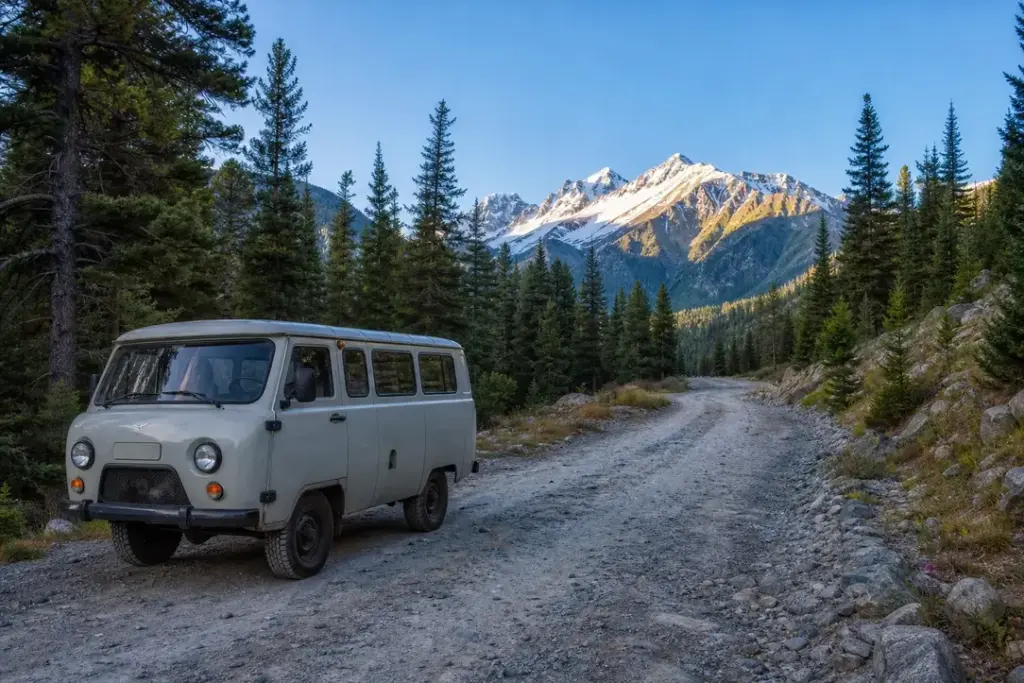
For areas beyond where marshrutkas go—high valleys, glaciers, Mount Belukha approaches—hire a local driver with a UAZ (Soviet-era 4×4 minibus) or join an organized multi-day tour. UAZ drivers can be found through tour operators in Gorno-Altaysk, your hotel, or tourist information centers. Negotiating a driver-only arrangement (without a guide) costs roughly 4000–8000₽ per day; organized tours with guides, camping, and meals cost significantly more (₽₽–₽₽₽ per day). Confirm what is included: fuel, meals, camping equipment, or just driving.
Tip: Book tours 1–2 weeks in advance during peak season (June–August). Major tour operators have English-speaking staff and online booking; independent drivers may have no internet presence—ask locals or tour offices for recommendations.
Step 5: Hike between established trail junctions and camping sites
Once dropped at a trailhead, most travel is on foot. The Altai has few marked trails; use a GPS app with offline maps (e.g., Komoot, maps.me) or paper topographic maps available in Gorno-Altaysk. Major routes like the trail to Mount Belukha or around Lake Teletskoye are recognizable in good weather, but stream crossings, forest sections, and alpine meadows can be confusing. Hiking times between established points (e.g., Tungur to a mountain hut = 5–6 hours) vary with terrain, fitness, and load.
Tip: Do not rely on trail blazes or signage; they are sparse or absent. Download offline maps before leaving towns with internet. Travel with a tent and camping stove.
Step 6: Return by marshrutka or arrange a pickup
To exit the mountains, reverse the process: hike back to the village where the marshrutka dropped you, or arrange a driver to pick you up at a set time and place. If using a hired driver, confirm pickup date and location before you set off into the wilderness. For marshrutkas, return to the village bus stop in early morning; services are less frequent going back, so allow a buffer day in case you miss the expected departure.
Tip: Exchange phone numbers with your driver when departing; you can message or call to confirm pickup. Marshrutka timing can slip—be at the stop 30 minutes early.
Common Mistakes to Avoid
- Expecting reliable public transport to high-altitude or remote areas. There are no buses beyond villages; even marshrutka service to villages can be infrequent or canceled without notice. Plan 1–2 buffer days and have backup accommodation options.
- Underestimating journey times and hiking difficulty. Mountain roads are rough and winding; a marshrutka to Tungur takes 8–10 hours, not 5. Trails are steep, often unmarked, and altitude gain is significant. A 'short' day hike of 6 hours takes 8–10 hours for most visitors. Allow extra time.
- Attempting high-altitude routes (Mount Belukha, Aktru Glacier) without a guide and GPS. Terrain is complex, weather changes rapidly, and getting lost in wilderness with few escape routes is dangerous. Hire a guide or experienced driver, even if you've hiked elsewhere.
- Arriving in peak season (July–August) without booking tours or drivers in advance. Marshrutkas fill quickly; popular treks book out. Book at least 1–2 weeks ahead during summer. Winter travel (November–March) is possible but requires specialized knowledge and equipment.
- Not carrying enough cash. Most drivers, marshrutka operators, and mountain guides do not accept cards; some small villages have no ATMs. Bring rubles and assume cards won't work.
- Hiking alone on unfamiliar trails. If you're not fluent in Russian and lack navigation skills, solo hiking increases risk of getting lost or unable to communicate with locals if injured. Join a tour or hike with a guide.
Tickets, Payment and Booking
Marshrutkas: Buy tickets at local bus stations or through your accommodation (for village routes). No online booking; cash only. Arrive early on departure day; drivers leave when the van is full. Schedules are not published online and change seasonally.
Guided tours and drivers: Book through tour operators based in Gorno-Altaysk or Barnaul (search online for ‘Altai Mountains tour’ or ‘Altai trekking’). Major operators accept foreign payment methods and have English-speaking staff. Independent drivers do not accept advance payments; negotiate on arrival or through a local contact. Guides and drivers are hired locally; no international online bookings.
Note: Some border areas (near Kazakhstan, China, Mongolia) require special permits. Ask your tour operator if permits are needed for your destination.
Helpful Links
Advertisement: these are partner links. If you book or buy through them, we may earn a commission at no extra cost to you.
Russia Vibes Tips
- Travel with locals on marshrutkas. Sit near Russian speakers—they often know routes, road conditions, and gossip about which services are actually running today. Many travelers miss marshrutkas because they waited for a published schedule that doesn't exist.
- Keep a printed map and offline GPS downloaded. Internet is unreliable outside towns. Komoot, maps.me, and Russia-specific apps (Yandex Maps offline mode) work without signal. Ask locals to point out landmarks when you board a marshrutka so you know your stop.
- Late June through early August is peak hiking season and marshrutka season. Outside these months (May, September), services are reduced or weather closes higher passes. Plan accordingly.
- Hire drivers through reputable tour operators rather than random offers at bus stations. Operators vet drivers, handle disputes, and speak English. Private drivers may overcharge foreigners or lack experience with tourists.
- Ask locals about daily marshrutka times; they change. Your hotel staff will have more current info than any website. Call or message the next morning if planning to take a marshrutka in the afternoon.
- Winter marshrutka travel (October–April) is possible but dangerous on high passes; roads freeze and services cut back. Stick to lower-altitude routes (Chuysky Highway) or skip this season if inexperienced with mountain driving.
Explore Nearby How to Get Around the Altai Mountains Without a Car, Altai Mountains
Related guides
 Altai Mountains: Best Places, Scenic Routes and Travel Tips
Main image: AI-generated illustration. It may not show the place exactly as it looks.
Browse more: All Altai Mountains · All Day Trips · All How-To · All How-To in Altai Mountains
FAQ
Is public transport available to Mount Belukha or Lake Teletskoye?
Only partially. Marshrutkas reach villages like Tungur (for Belukha) and Chemal (for Teletskoye), but the last 2–8 hours of travel to high trailheads or remote lake shores requires a hired driver or organized tour. Lake Teletskoye has some boat tours from larger settlements, reducing the need for hiking access.
Can I visit the Altai Mountains on a day trip from Gorno-Altaysk without a car?
Only if you're visiting lower, nearby areas. The Chuysky Highway (scenic road) can be accessed by marshrutka or tour-bus day trips from Gorno-Altaysk. Higher elevations, glaciers, and remote peaks require overnight stays and hired transport. Allow at least 2–3 days for a meaningful mountain experience.
How much does it cost to hire a driver or join a tour?
A private UAZ driver with you alone costs roughly 4000–8000₽ per day. Organized tours with meals and guides are ₽₽–₽₽₽ per day. Group tours are often cheaper per person than private driver arrangements. Exact prices fluctuate; check with operators in Gorno-Altaysk for current rates.
Do I need a special permit to visit the Altai Mountains?
A standard Russian visa is sufficient for most areas. However, zones near the borders with Kazakhstan, China, and Mongolia are restricted and require special border permits. Your tour operator or accommodation can advise which areas need permits and how to obtain them.
What if my marshrutka is delayed or canceled?
Delays and cancellations happen; services leave only when full and may skip days if few passengers book. Build a 1–2 day buffer into your schedule. If stranded, stay in the village, eat at local cafes, explore walks nearby, or negotiate with a driver or tour operator to take you to the next destination.
Do drivers and guides speak English?
Tour operator staff and guides usually speak basic to fluent English. Independent marshrutka drivers and private hired drivers rarely speak English. Download a translation app (Google Translate offline mode works) and learn basic Russian phrases. This is one reason organized tours are popular with English speakers.
What's the best season for getting around the Altai without a car?
June through early September. Marshrutkas run regularly, mountain passes are open, hiking trails are snow-free, and weather is stable. May and September are shoulder season: fewer services, lingering snow at altitude, and unpredictable weather. October through April: reduced schedules, dangerous road conditions in winter, and cold.
Can I use ride-share apps like Uber or Yandex in the Altai Mountains?
Ride-share apps work in Gorno-Altaysk and larger towns but not in villages or mountain areas. For remote travel, hire drivers through tour operators or negotiate directly with local taxis at bus stations. Many remote areas have no cellular coverage for app-based services anyway.
Russia Vibes is a one-person project. A coffee keeps it going
How we research and update our guides
About this guide: AI assistance and accuracy
This guide is created with the help of AI and is based on official sources where available. Mistakes can still happen. Opening hours, prices, rules and other details are given to the best of our knowledge as of the date shown and can change without notice. It offers general recommendations only, not professional, legal or travel advice. Please confirm important details with the official source before you travel; you are responsible for your own plans and decisions.
Packing for this trip
* Affiliate link: as an Amazon Associate we earn from qualifying purchases at no extra cost to you.

Take this guide with you
Get a free PDF of this guide to print or read offline: key facts, tips and a map link on a few clean pages.
Report an issue on this page
Paying for your trip: please read
International sanctions affect payments between Russia and many other countries. In practice, cards issued in the EU, the UK, the US and several other countries often do not work in Russia, Russian cards usually do not work abroad, and some booking platforms, airlines and payment providers limit or suspend their services for Russia. The situation changes frequently.
We do not give legal or financial advice, and this site does not encourage anyone to break or circumvent sanctions. Whatever you plan, you are responsible for following the laws and regulations that apply to you, including those of your country of residence and citizenship.
Many travelers still organise their stay lawfully. It is worth asking your bank or payment provider what is currently permitted, contacting hotels, tour operators and carriers directly about the payment methods they accept, and checking which services are open to customers from your country. Clarify payment, cancellation and refund terms before you commit to a booking, and keep your plans flexible.
Partner links on this site may not be available in every country, and prices, availability and rules in our guides can differ from what you see when you book.