
Updated
Svetlogorsk, Kaliningrad day trip offers a world apart from the urban energy of the regional capital. This historic resort town sits on the Sambia Peninsula, accessible by train in less than an hour from Kaliningrad. Perched on a steep coastal cliff nearly 40 meters above the Baltic Sea, Svetlogorsk retains the character of its past as a Prussian health resort, with winding streets lined by ornate wooden buildings and red-tiled roofs.
The town developed as a fashionable Baltic resort beginning in the 1820s, gaining prestige after King Frederick William IV visited in 1840. A railway arrived in 1900, a seaside promenade was built in 1908, and a funicular railway connected the upper town to the beach in 1912. By the eve of World War II, Rauschen boasted 20 hotels and 3,000 beach cabins. Captured by Soviet forces in 1945, the town was renamed Svetlogorsk in 1947 and developed into a spa and health resort.
Quick Facts
| Russian name | Светлогорск |
|---|---|
| Distance from the nearest major city | 1,500 km |
| Travel time from the nearest major city | 2–3 hours by flight; 30+ hours by train |
| Built / opened | 1820 |
| Address | Svetlogorsk, Kaliningrad Oblast, Russia Google MapsApple MapsYandex Maps2GISOpenStreetMap |
| Admission | free |
| Best time to visit | Late May through early September offers the warmest weather, longest daylight, and most visitors. Water temperature reaches 17–22°C in July–August, suitable for hardy swimmers. June and September are ideal for fewer crowds and pleasant conditions. Summer weekends are busiest; weekdays in June and September are more peaceful.
Autumn (September–October) brings cool, crisp weather, dramatic light, and turning forest colors. Winter (November–February) is cold and dark (only 7 hours of daylight in December), with many cafés and services closed. A winter visit is best for solitude rather than beach recreation. Spring (March–May) is unpredictable but increasingly pleasant from late April onward. |
| Recommended duration | 4–6 hours |
| Website | svetlogorsk-tourism.ru/en |
What Is (and Isn't) Part of a Visit to Svetlogorsk, Kaliningrad?
| Part | Status | Notes |
|---|---|---|
| Svetlogorsk town (upper town and promenade) | Included in the standard ticket | All public streets, parks, and promenades are accessible with free entry; walking is the primary activity. |
| Beach access via cable car | Separate ticket or institution | The beach is free, but the cable car down from the cliff requires a one-way ticket. Forest path access is free but steep. |
| Svetlogorsk railway stations (Svetlogorsk-I and Svetlogorsk-II) | Included in the standard ticket | The stations themselves are open to visitors and contain architectural interest; entry is free if you are traveling by train. |
| Water Tower and surrounding streets | Included in the standard ticket | The water tower is a working facility and cannot be entered, but it is visible from many streets and serves as a landmark. |
| Cafés and restaurants | Separate ticket or institution | Food and drink require separate payment; many venues close outside the main summer season. |
| Yantarny (amber mining town) | Outside / not part of it | A separate destination 14 km south; reachable by bus but requires additional time and transport. |
| Curonian Spit National Park | Outside / not part of it | Located further north; requires separate transport and a full day or overnight stay. |
How to Get from the nearest major city to Svetlogorsk, Kaliningrad
| Option | Duration | Price | Notes |
|---|---|---|---|
| Train from Kaliningrad South Station (Yuzhny Vokzal) | 50 minutes to 1 hour | ₽ | Electric trains depart multiple times daily from Kaliningrad South Station. The suburban train (Lastochka ES1 or ES2G) arrives at Svetlogorsk-II, the main town-center station. Fewer than 10 trains operate daily in each direction. Return trains run until evening. This is the fastest and most convenient option for a day trip. |
| Bus from Kaliningrad Central Bus Station | 1–1.5 hours | ₽ | Buses 593 and 596 run regularly from Kaliningrad Central Bus Station. The journey takes longer than the train due to stops and road conditions but is reliable. Return buses operate throughout the day. This option suits travelers who prefer flexibility over speed. |
| Private car or taxi from Kaliningrad | 45 minutes to 1 hour | ₽₽ | A taxi or private hire covers the 38–39 km distance in good weather. This option is most convenient for groups or travelers with luggage but offers no cost advantage over train or bus for individuals. Return arrangements must be planned in advance. |
| Guided tour from Kaliningrad | 4–7 hours on site | ₽₽–₽₽₽ | Tour operators in Kaliningrad offer half-day or full-day trips combining Svetlogorsk with nearby attractions such as Yantarny (amber mining village). Tours include transport, entry if needed, and sometimes a guide. These suit travelers preferring structure and background information. |
₽ budget · ₽₽ moderate · ₽₽₽ upscale · ₽₽₽₽ splurge. Price levels are estimates compared with typical prices for visitors.
Why Visit Svetlogorsk, Kaliningrad?
Svetlogorsk offers a slow-paced Baltic coastal experience unlike anywhere else in the Kaliningrad region. The town’s most distinctive feature is its steep geography: the elevation difference of 35–43 meters between the upper town and the beach means you descend and ascend through forest paths, staircases, or via the historic cable car—a yellow funicular system that has operated continuously since 1912.
The architecture tells a story of East Prussian heritage. Half-timbered villas, wooden buildings with carved details, and the iconic alpine-style water tower survive from the German era. A full day allows you to explore the historic promenade, visit local cafés, and experience the slower pace of a traditional seaside spa town.
Highlights of Svetlogorsk, Kaliningrad
Rauschener Wasserturm (Water Tower)
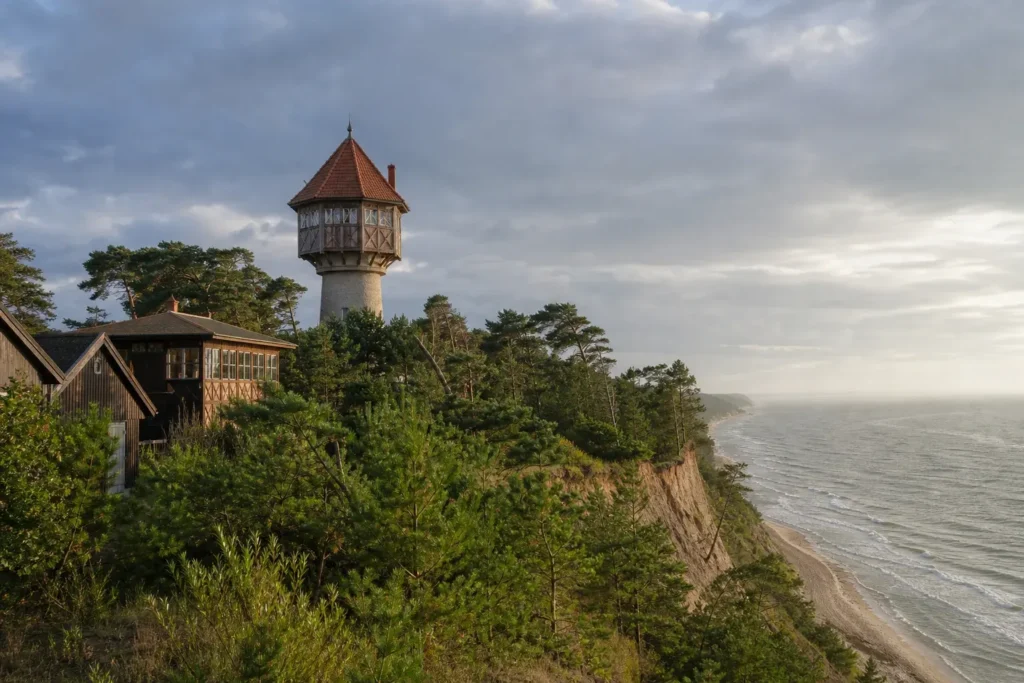
This iconic alpine-style tower is Svetlogorsk's most recognizable landmark, visible from across the town. Built during the German era, the distinctive structure with its red-tiled roof stands as a symbol of the town's Prussian heritage and resort history. The tower is a working water supply facility and a focal point for photos. Look for it from the main streets and the promenade—its height and style make it unmistakable among the surrounding wooden architecture.
Tip: Photograph the water tower from the promenade level at different times of day for changing light and perspectives.
Beach Cable Car (Funicular Railway)
This unique 90-meter funicular system has carried visitors down the steep cliff to the beach since 1912. The original yellow cabin design has been preserved and restored, making it one of Europe's oldest continuously operating cable cars. It descends from near Svetlogorsk-II station to the beach level, covering the 35–43 meter elevation difference. The ride itself is an experience: you pass through forest and witness the dramatic cliff-to-sea drop.
Tip: Ride the cable car both ways to experience the mechanical system and the dramatic approach to the beach. Check operating hours before your visit, as services may be suspended in severe weather.
Svetlogorsk Promenade
The seaside promenade, built in 1908, stretches along the clifftop offering sweeping views of the Baltic. The path is lined with wooden benches, small sculptures, and winding routes through pine forest. The atmosphere changes dramatically with season: in summer, the promenade bustles with day-trippers and locals; in autumn and winter, it becomes a peaceful place for solitary walks. The pine-scented air and fresh sea breeze define the spa town experience.
Tip: Visit the promenade early morning or late afternoon to avoid crowds and experience the town as locals do. The forested paths are perfect for photography during golden hour.
Historic Wooden Architecture
Scattered throughout the upper town are surviving examples of German-era wooden villas and residential buildings dating from the late 1800s and early 1900s. These houses feature half-timbered walls, ornate carved details, and red-tiled roofs that have survived Soviet era and modern development. Walking the side streets reveals courtyards, gated properties, and architectural details that transport you to the Prussian resort period. Look for buildings with visible timber frames and intricate carved fascias.
Tip: Explore the streets perpendicular to the main shopping avenue rather than sticking to the central route. The quieter residential streets reveal far more authentic architecture.
Baltic Beach and Sandy Shoreline
Unlike many Baltic beaches in the region, Svetlogorsk's beach is narrower due to the steep bluff terrain, but it offers fine sand and access to amber-searching. The beach is fully exposed to the open sea, making the waves and light conditions dramatic. In summer, the beach becomes a social hub; in cooler months, it is excellent for long walks and contemplation. The beach sits approximately 40 meters below the upper town.
Tip: Bring sturdy shoes for descending and ascending the forest paths and staircases. The cable car is easier but also more crowded during peak times. Amber specimens occasionally wash ashore along this coast.
Svetlogorsk-II Railway Station
The elegant 1906 station sits in the town center and marks the terminus of the Kaliningrad–Svetlogorsk line. The station building itself is an architectural landmark, designed during the German era. The cable car terminus is immediately adjacent, and the main streets radiate from this point. The station's position in the town center makes it the natural starting point for exploration.
Tip: Arrive at Svetlogorsk-II rather than Svetlogorsk-I, which is about 1 km away. Svetlogorsk-II places you directly in town with immediate access to attractions.
Pine Forests and Forest Paths
Coniferous and mixed forests blanket the area, reaching to the edge of the cliff. Multiple forest paths with staircases wind downward toward the beach and lateral promenade routes. These paths were developed during the resort's golden age and remain popular walking routes. The air is infused with pine scent, a key feature of the traditional spa experience. Some paths are steep and require careful footing.
Tip: The forest paths offer shade in summer and dramatic autumn colors in September and October. Wear appropriate footwear; paths can be muddy or slippery after rain.
Seaside Cafés and Pavilions
Along the upper-town streets and promenade, you will find small cafés, ice cream stands, and food pavilions serving typical Baltic resort fare. Many close outside summer season. The Grand Palace hotel operates a restaurant year-round. These venues offer pastries, coffee, and light meals in a leisure atmosphere. Sitting outdoors over a long coffee is part of the Svetlogorsk experience.
Tip: Cafés can be limited outside June–August. Pack snacks if visiting in autumn or winter, or check current operating status before you go.
Atmosphere
Svetlogorsk feels removed from the pace of Kaliningrad city. The upper town is unhurried and quiet, with winding streets where you hear birdsong, footsteps, and the distant sound of the sea. In summer, the promenade and beach fill with day-trippers and holidaymakers; the atmosphere becomes social and leisurely. In autumn and winter, the town grows quieter and more introspective, with fewer visitors and muted colors in the forests.
The architecture creates a sense of stepping back in time: timber-framed houses, wooden shutters, and period details from the German resort era remain visible despite Soviet and post-Soviet changes. The combination of forest, cliff, and open Baltic horizon creates a contemplative mood. The air smells distinctly of pine needles and salt spray, a sensory marker of a traditional spa town.
The pace is markedly slower than Kaliningrad. Locals and visitors linger over coffee, take slow walks, sit on benches, and pause to take in views. This is a place for recovery and relaxation, not rushing between attractions.
History of Svetlogorsk, Kaliningrad
Svetlogorsk emerged as a resort destination in the 1820s, taking advantage of its clifftop location, pure sea air, and mineral springs believed to have therapeutic properties. The German name, Rauschen, derives from the sound of the rushing streams in the ravines below the cliff. By the mid-1800s, Rauschen had established itself as a fashionable health resort for Prussian nobility and the wealthy. A visit by King Frederick William IV in 1840 elevated the town’s prestige.
The town’s greatest expansion came in the late 1800s and early 1900s. The railway line reached Rauschen-Ort (now Svetlogorsk-I) in 1900, creating easy access from Königsberg. A branch line to Rauschen-Düne (now Svetlogorsk-II) opened in 1906, placing the station at the town center and proving far more convenient. The elegant iron promenade was constructed in 1908, and the iconic yellow funicular railway system descending to the beach was built in 1912. These infrastructure projects transformed Rauschen into a major Baltic resort.
By 1920–1930, construction boomed. The town acquired 20 hotels, numerous elegant villas, and approximately 3,000 beach cabins serving seasonal visitors. The 1920s saw 12–15 passenger trains arrive on weekends at peak season. Rauschen became known as a pearl of the Baltic and a haven for artists, intellectuals, and the Prussian elite seeking mud baths, sea air cures, and rest. The spa traditions were formalized with mineral springs and health resort facilities.
World War II dramatically altered the town’s trajectory. Rauschen was captured by Soviet forces on April 14, 1945, during the final East Prussian campaign. Following the Second World War, the town and the northern part of East Prussia became part of the Soviet Union and were incorporated into the newly established Kaliningrad Oblast. Rauschen was renamed Svetlogorsk in 1947. The German population was expelled, and the town transitioned into a Soviet sanatorium complex for health tourism and worker rest and recovery.
Post-war Soviet development maintained the spa and resort character, though under new management and ideology. The funicular cable car and many German-era buildings were preserved and restored. The town developed spa centers, sanatoriums, and health facilities catering to Soviet workers and families. Though aging and less glamorous than its pre-war peak, Svetlogorsk retained its identity as a coastal retreat and has continued to function as a beach destination and spa town through the modern Russian period.
Tickets and Booking for Svetlogorsk, Kaliningrad
Svetlogorsk is a free-entry town; no tickets are required to walk the streets, visit the promenade, or explore the beaches. Costs arise only if you use the cable car (one-way descent to beach), eat at cafés or restaurants, or purchase items at local shops.
Cable Car: A one-way fare applies to the historic funicular railway operating from near Svetlogorsk-II station. As of October 2026, tickets are modest in cost. Operating hours vary by season and weather; check locally or ask at the station upon arrival.
Train Tickets: Purchase tickets from Kaliningrad South Station (Yuzhny Vokzal) at the ticket counter or via the Russian Railways app (RZD). Tickets are inexpensive for this short distance. No advance booking is essential for same-day travel, but checking schedule during low-season winter months is advisable.
Bus Tickets: Board at Kaliningrad Central Bus Station; tickets are purchased from the driver or a booth. No pre-booking required.
Rates for Russian citizens and retirees differ from those charged to foreign visitors; current ticket categories, concessions, and pricing appear on the official Russian Railways website (www.rzd.ru).
Plan and Book
Suggested itineraries Svetlogorsk, Kaliningrad
4 hours
Arrive at Svetlogorsk-II by train mid-morning. Walk the main streets and view the water tower (30 minutes). Stroll the clifftop promenade for views and atmosphere (1 hour). Descend via cable car or forest path to the beach (20 minutes). Spend time on the beach and lower promenade (1 hour). Return to upper town via cable car or stairs (20 minutes). Visit a seaside café for a snack before catching a return train in late afternoon.
6–7 hours
Morning train to Svetlogorsk-II. Explore the town center and residential streets to observe architectural details (1 hour). Ride the cable car down to the beach (20 minutes). Walk the beach and lower promenade (1.5 hours). Lunch at a beachside café or upper-town restaurant (1 hour). Return to upper town and revisit favorite spots, shops, or take additional forest walks (1.5 hours). Return to Kaliningrad by early evening train.
Half-day morning trip
Early morning train. Quickly visit the water tower and take photos from the promenade (30 minutes). Descend to the beach via cable car (20 minutes). Walk the beach briefly and collect any amber pieces (30 minutes). Return to upper town and grab a quick coffee (20 minutes). Catch a midday train back to Kaliningrad.
Full day with extended beach time
Morning train to Svetlogorsk-II. Breakfast or coffee in town. Spend 2–3 hours on the beach and lower promenade, swimming in summer or beachcombing year-round. Lunch at a waterfront pavilion. Afternoon walk through residential streets and forest paths. Late-afternoon return to Kaliningrad by train, departing before dark in winter.
How to Get to Svetlogorsk, Kaliningrad
From Kaliningrad: Svetlogorsk is reached by train or bus; the train is recommended for speed and convenience.
By Train (recommended): Depart from Kaliningrad South Station (Yuzhny Vokzal), located at 30 Kaliningradskaya Avenue in the south-central part of Kaliningrad city. Electric suburban trains (Lastochka ES1 or ES2G) depart multiple times daily; journey time is 50 minutes to 1 hour. The train terminates at Svetlogorsk-II railway station, located in the town center at 33 Lenin Street. Upon arrival, exit the station and you are in the main town area; the water tower and promenade are visible and within walking distance. No transfers or additional transport are needed.
By Bus: Depart from Kaliningrad Central Bus Station on Zelenograd Street. Buses 593 and 596 serve the Svetlogorsk route. Journey time is typically 1–1.5 hours depending on stops. The bus terminus in Svetlogorsk varies; ask the driver where the town center stop is. From the center, walking covers all main attractions.
Walking in Svetlogorsk: The town center is compact. From Svetlogorsk-II station, all main attractions are reachable on foot. The promenade and water tower are within 10–15 minutes’ walk. Forest paths and stairways lead downward to the beach; allow 15–20 minutes and wear sturdy shoes. No local buses are necessary for a typical day-trip itinerary.
Accessibility
The town's steep terrain presents challenges for visitors with limited mobility. The upper town (around Svetlogorsk-II station and main streets) is on relatively flat ground and accessible by foot. Forest paths and staircases descending to the beach are steep, uneven, and not wheelchair-accessible. The cable car has a single cabin per trip (one or two passengers) but can accommodate visitors with difficulty walking—though boarding and exiting require steps. No official accessibility information is published by the town authority. Visitors with mobility concerns should allow extra time and consider remaining in the upper town rather than attempting the beach descent. Local taxi drivers can advise on specific routes.
Food Nearby
Cafés, ice cream stands, and small restaurants line the main streets and promenade. Many serve pastries, coffee, light meals, and Baltic specialties. The Grand Palace hotel operates a restaurant year-round. Most venues close November–May. Supermarkets are limited; expect simple fare rather than gourmet options. Plan meals between 11:00–15:00 for reliable food availability. Bring snacks if visiting in autumn or winter. Beachside pavilions operate seasonally with refreshments.
What to Bring
Comfortable walking shoes with grip are essential for forest paths and staircases. In summer, bring swimwear, sunscreen, and a light jacket for cool breezes. In autumn and winter, warm layers and waterproof outerwear are necessary; the coast is windy. A light backpack or bag keeps hands free for forest walking. Binoculars suit birdwatchers in the pine forests. For beach walks, bring a bag to collect small amber pieces if found. Water and snacks are wise if visiting outside summer season when venues are closed.
Best Views and Photo Spots of Svetlogorsk, Kaliningrad
Water Tower and surrounding streets
The iconic red-tiled tower dominates the skyline and is framed by surrounding wooden buildings and pine trees. Photographing from different street angles reveals changing perspectives and the tower's proportions against the sky.
Best time: Midday light shows the tower's colors clearly. Late afternoon creates golden tones on the architecture.
Clifftop Promenade overlooking the Baltic
The promenade offers wide views of the open sea, sandy beach below, and forest edges. The elevation change is dramatic in photographs, and the horizon is often moody with clouds and light.
Best time: Overcast days create interesting skies. Early morning and late afternoon light skims the sea surface.
Cable Car Structure
The yellow funicular cabin against the forest and cliff creates an unusual mechanical element. The track cuts diagonally down the hillside, making a distinctive compositional line.
Best time: Photograph from multiple angles during daylight. The yellow color stands out in forest context.
Forest Path Stairways
The wooden and stone staircases wind through dense pine forest, creating leading lines into the image. The elevation perspective shows the dramatic descent to the beach.
Best time: Autumn (late September–October) shows forest colors. Early morning light filters through trees.
Beach and Sandy Shore
Wide views of the Baltic horizon, sandy beach, and cliff backdrop. Amber-colored sand and occasional driftwood add texture. The narrow beach contrasts with the 40-meter cliff.
Best time: Summer midday for swimming scenes. Autumn and winter offer dramatic moody light and fewer people.
Residential Streets with German Architecture
Half-timbered houses, carved wooden details, and red-tiled roofs create nostalgic scenes. Side streets are quieter and more photogenic than the main avenue.
Best time: Overcast days even out shadows. Early morning or late afternoon creates depth with side lighting.
Photography Rules
No restrictions on photography in public areas. The water tower, promenade, and beach are excellent photo subjects. Forest paths and stairways offer dramatic vertical perspectives. No drones, tripods, or professional filming permits are mentioned in official sources; inquire locally if planning these activities. The golden hour (sunrise and sunset) provides optimal light for architecture and coastal views, though the north-facing coast limits dramatic sunset shots.
Family Suitability
Svetlogorsk suits families with school-age children and active teenagers. The beach and cable car are main draws for kids. The steep terrain and multiple staircases are challenging for toddlers and strollers; the upper town is stroller-friendly but accessing the beach is difficult. Older children enjoy exploring forest paths and collecting amber. Summer offers swimming; winter appeals to families seeking quiet walks and fresh air rather than beach play. Cafés are family-friendly, though limited outside peak season. Expect a calm, slower-paced experience than urban attractions; this suits families seeking rest and nature over action.
Russia Vibes Tips
- Skip Svetlogorsk-I station: always arrive at and depart from Svetlogorsk-II, which sits in the town center. Svetlogorsk-I is about 1 km away and requires additional walking or orientation.
- The cable car is an experience, not just transport: riding the 1912 funicular system is memorable and saves the steep climb back up. The mechanical whir and forest views make it worth the modest fare.
- Visit the residential side streets rather than the main commercial avenue: the quieter streets reveal far more authentic Prussian architecture and wooden details. Wander perpendicular to the main street.
- Autumn and winter visits yield a completely different atmosphere than summer: far fewer visitors, muted forest colors, and a contemplative mood. Services are limited, but the town feels less touristy.
- Bring sturdy shoes: forest paths are steep, often muddy or damp, and uneven. Flip-flops and casual footwear lead to slips. Even on the main streets, the terrain has subtle ups and downs.
- Plan your return train time before exploring: fewer than 10 trains run daily in each direction, and the last afternoon train departs before dark in winter. Check the schedule upon arrival at Svetlogorsk-II.
Explore Nearby Svetlogorsk, Kaliningrad
Related guides
 Kaliningrad: Kant Island, Amber Museum and the Curonian Spit
Main image: AI-generated illustration. It may not show the place exactly as it looks.
 Zelenogradsk: Beach, Promenade and Baltic Escape from Kaliningrad
Main image: AI-generated illustration. It may not show the place exactly as it looks.
Browse more: All Day Trips · All Day Trips · All Day Trips in Kaliningrad · All Kaliningrad
FAQ: Svetlogorsk, Kaliningrad
Is Svetlogorsk free to visit?
Yes, Svetlogorsk itself is free. You can walk the streets, visit the promenade, explore the town center, and view the water tower without paying any admission. Costs arise only if you use the cable car to the beach (modest one-way fare), eat at cafés, or stay overnight. Train or bus fares to reach Svetlogorsk from Kaliningrad apply.
How long does the train take from Kaliningrad?
The suburban electric train from Kaliningrad South Station (Yuzhny Vokzal) takes 50 minutes to 1 hour to reach Svetlogorsk-II. Buses take 1–1.5 hours. Fewer than 10 trains run daily in each direction, so check the schedule to plan your return trip before boarding.
Can I access the beach without using the cable car?
Yes. Forest paths and wooden staircases descend from the upper town to the beach; these routes are free. However, they are steep, uneven, and require sturdy shoes. The cable car is easier and operates from near Svetlogorsk-II station. Allow 15–20 minutes to descend by foot; the climb back up is tiring without the cable car.
What is the cable car and how much does it cost?
The cable car (funicular railway) is a historic 90-meter inclined track system built in 1912 that carries single or double-occupancy yellow cabins down the cliff to the beach. A one-way ticket is modest in cost. The system operates throughout the day but may close in severe weather. It is a unique experience and practical for visiting the beach.
Is Svetlogorsk suitable for families with young children?
The upper town is stroller-friendly and calm, but the main attractions (beach, cable car) involve steep terrain. Older children enjoy forest walks and beach exploration. Toddlers and babies are better suited to the upper-town promenade walk. Summer is best for families; winter attractions are limited and it gets dark early.
When is the best time to visit?
June–August are warmest with the most services open; June and September offer fewer crowds than July–August. Autumn (September–October) is pleasant with cool weather and forest colors. Winter is quiet but dark (7 hours of daylight in December) and many cafés close. Visit for atmosphere in autumn, or for beach swimming in summer.
What is Svetlogorsk's history?
Svetlogorsk, formerly the German spa town of Rauschen, developed from 1820 onward as a health resort for Prussian nobility. Railways arrived in 1900, the promenade in 1908, and the funicular in 1912. By 1940, it had 20 hotels and 3,000 beach cabins. Captured by Soviet forces in 1945 and renamed Svetlogorsk in 1947, it became a Soviet sanatorium. Many German-era buildings survive, blending with Soviet-era development.
Can I find amber on Svetlogorsk beaches?
Yes. The Baltic coast near Svetlogorsk occasionally yields amber washed ashore. However, do not expect to find significant quantities; expect small pieces at best. Beaches further south at Yantarny, an amber-mining town, offer better amber-hunting opportunities. Beachcombing is a pleasant activity but not a primary reason to visit Svetlogorsk.
Russia Vibes is a one-person project. A coffee keeps it going
How we research and update our guides
About this guide: AI assistance and accuracy
This guide is created with the help of AI and is based on official sources where available. Mistakes can still happen. Opening hours, prices, rules and other details are given to the best of our knowledge as of the date shown and can change without notice. It offers general recommendations only, not professional, legal or travel advice. Please confirm important details with the official source before you travel; you are responsible for your own plans and decisions.

Take this guide with you
Get a free PDF of this guide to print or read offline: key facts, tips and a map link on a few clean pages.
Report an issue on this page
Paying for your trip: please read
International sanctions affect payments between Russia and many other countries. In practice, cards issued in the EU, the UK, the US and several other countries often do not work in Russia, Russian cards usually do not work abroad, and some booking platforms, airlines and payment providers limit or suspend their services for Russia. The situation changes frequently.
We do not give legal or financial advice, and this site does not encourage anyone to break or circumvent sanctions. Whatever you plan, you are responsible for following the laws and regulations that apply to you, including those of your country of residence and citizenship.
Many travelers still organise their stay lawfully. It is worth asking your bank or payment provider what is currently permitted, contacting hotels, tour operators and carriers directly about the payment methods they accept, and checking which services are open to customers from your country. Clarify payment, cancellation and refund terms before you commit to a booking, and keep your plans flexible.
Partner links on this site may not be available in every country, and prices, availability and rules in our guides can differ from what you see when you book.