
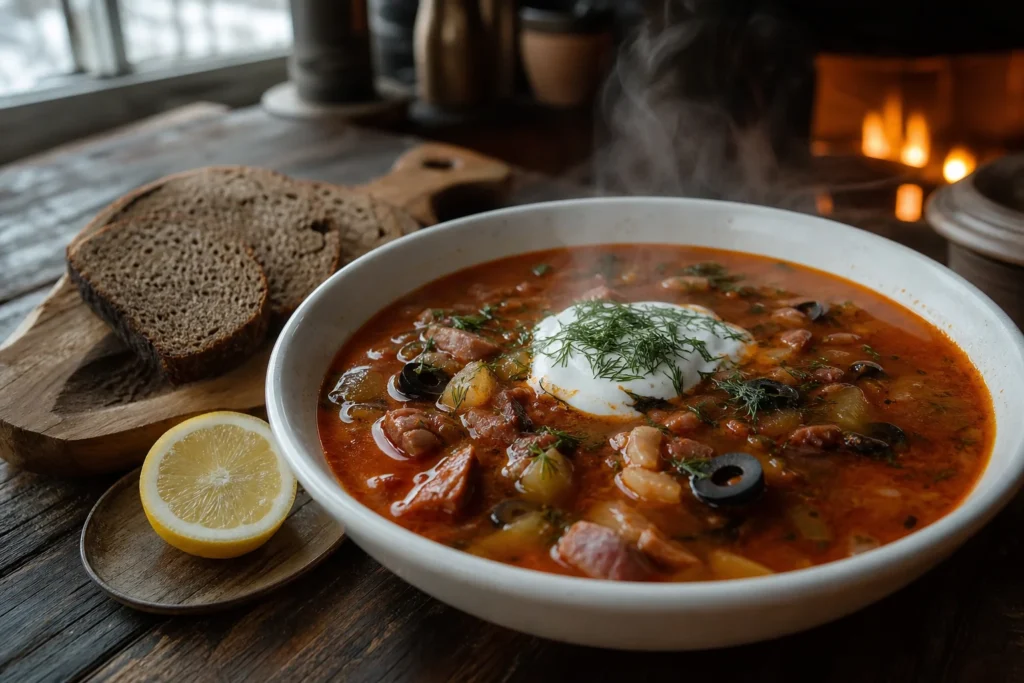
Solyanka is a hearty Russian soup that appears in restaurants and home kitchens throughout Nizhny Novgorod. Learning how to make Solyanka gives you insight into Russian comfort food and the historical role of preserved ingredients in cold climates. This guide walks you through a straightforward meat-based version that serves 2–4 people, with practical tips for getting the salty-sour balance right.
The recommended approach uses store-bought broth and cooked meats to keep preparation manageable, finishing in about 45 minutes. You’ll master the key technique: balancing pickle brine, tomato, and broth to create the distinctive tangy depth that makes this soup distinctive.
Quick answer: Sauté onions with tomato paste, add broth and cured meats, simmer pickles and olives for 20–30 minutes, and finish with a dollop of sour cream. Total time is 40–50 minutes using store-bought broth and pre-cooked meats. Budget to moderate cost.
At a Glance
| Type | Dishes |
|---|---|
| Local name | Солянка |
| Origin | Solyanka originated in Russia, with recipes dating back to the 15th century, initially a dish popular among peasants as a way to use leftover meats and pickled vegetables, with a name meaning 'villager's stew'. By the 19th century, it was embraced by the wider population. Tomatoes or tomato paste became common ingredients from the mid-19th century onward, with the soup then served alongside sour cream. |
| Servings | 2–4 |
| Total time | 40–50 minutes |
| Difficulty | Easy |
History and Story of Solyanka, Nizhny Novgorod
Solyanka originated in Russia during the 15th–17th centuries, initially based on rural cooking practices focused on preservation by salting and pickling, eventually gaining popularity in urban taverns and homes where more cured meats and olives were available, becoming a classic of Russian cuisine by the 19th century. The original name selyanka translates as ‘settler’s soup’. It earned the nickname ‘hangover soup’ because it was thought to help alleviate hangovers.
Ingredients
- 1 litre beef or chicken broth
- 300 g cooked meat (beef, pork or ham), cubed or sliced
- 150 g smoked sausage or cured pork, diced
- 1 medium onion, sliced
- 2 tablespoons tomato paste
- 3–4 dill pickles (fermented, not vinegar-pickled), diced
- 120 ml pickle brine (from the jar)
- 80 g pitted olives, sliced
- 2 tablespoons vegetable oil or butter
- 1 bay leaf
- Salt and black pepper to taste
- Sour cream for serving
- Fresh dill for garnish
How Solyanka, Nizhny Novgorod Is Made
Step 1: Prepare the base
Heat oil or butter in a large pot over medium-high heat. Add sliced onion and cook for 2–3 minutes, stirring occasionally, until soft and lightly golden. Stir in tomato paste and cook for another 1–2 minutes to deepen the colour.
Tip: If the tomato paste sticks to the pan, add a splash of broth to loosen it.
Step 2: Add the broth and meats
Pour in the broth and bring to a simmer. Add the cooked beef or pork and smoked sausage or cured pork. Drop in the bay leaf. Simmer gently for 5 minutes to warm the meats through.
Tip: Use beef broth for a deeper flavour, or chicken broth for something lighter. The meats should already be cooked; this step simply warm them.
Step 3: Add the pickles
Stir in the diced pickles and pour in 80 ml of the pickle brine. Bring the soup to a gentle simmer and cook for 8–10 minutes. Taste and adjust the brine—add more if you want extra sourness, or hold back if the soup feels salty enough.
Tip: Use fermented pickles (brined in salt water), not vinegar-pickled ones, for the authentic sour flavour.
Step 4: Finish with olives
Add the sliced olives and stir well. Simmer for another 5 minutes. Taste and season with salt and pepper as needed. The soup should taste salty, sour, and savoury all at once.
Tip: Solyanka tastes better after it rests; if you have time, make it a few hours or a day ahead and reheat gently.
Variants
- Fish solyanka: prepared with salt-cured and smoked fish such as salmon or trout instead of meat
- Mushroom solyanka: cabbage heated with vinegar, tomatoes, pickles and brine, then layered with sautéed mushrooms and onions, topped with breadcrumbs and butter, and briefly baked
- Vegetarian solyanka: omits meat entirely but keeps the pickles, olives, tomato and broth base
Common Mistakes to Avoid
- Using sweet pickles or vinegar-pickled cucumbers instead of fermented ones: the soup loses its characteristic sour depth and tastes acidic instead of balanced.
- Adding too much pickle brine at once: start with 80 ml, taste, then add more if needed. You can always add more sourness but cannot remove it.
- Skipping the sour cream topping: this is not optional garnish—it cools the heat, softens the saltiness, and is part of how the soup is meant to taste.
- Using water instead of broth: solyanka depends on a rich, savoury broth base; water makes it taste thin and one-dimensional.
- Overcooking the pickles and olives: they lose their firm texture and flavour. Add them late in cooking and simmer only briefly.
- Adding lemon without fresh dill: the herb is essential to the aroma and flavour balance. Never serve solyanka without it.
How to Order and Eat It
Solyanka is served very hot in deep bowls with a large spoonful of sour cream, a slice of lemon, and usually black olives or capers. It is normally consumed as a main meal and not a starter because it is rich. It is a post-celebratory dish in Russian culture and is notoriously known as a restorative soup. It is usually served with dark rye bread.
To order: Солянку, пожалуйста [Solyanka, pozhaluysta]
Diet and Allergens
- Contains pork or cured meat
Russia Vibes Tips
- Make the broth from scratch only if you have time: simmer beef bones with a whole onion, carrot, bay leaf and peppercorns for 1.5–2 hours. For weeknight cooking, use shop-bought broth and pre-cooked meats to reduce the total time to under an hour.
- The balance between salt, sour and richness defines solyanka. After each ingredient goes in, taste and adjust. The soup should never be purely sour or purely salty—it is the combination that makes it distinctive.
- Solyanka improves overnight: if you make it the day before, refrigerise it, then reheat gently. The flavours marry and deepen, and any greasiness rises to the surface (which you can skim off if you prefer).
- Regional variations exist: some add potatoes, cabbage, capers or even mushrooms. Feel free to experiment, but always keep the core trio of pickles, olives and cured meat.
- In Nizhny Novgorod restaurants, solyanka often appears on the menu as a first course, but it is substantial enough to be a main dish with bread. Order it as a full lunch rather than before another dish.
- Lemon juice should be squeezed in by the person eating, not added to the pot: this preserves the brightness and lets each diner control the final acidity.
Explore Nearby Solyanka, Nizhny Novgorod
Browse more: All Food & Drink · All Food & Drink in Nizhny Novgorod · All Nizhny Novgorod · All Other
FAQ
What is the difference between solyanka and rassolnik?
Both are Russian sour soups made with pickle brine, but rassolnik traditionally includes pearl barley and kidneys, while solyanka centres on cured meats and olives. Solyanka is thicker and richer; rassolnik is lighter.
Can I make solyanka without cured meats?
Yes, you can use any cooked meat—chicken, beef or pork—but the soup loses its distinctive smoky depth. For authentic flavour, include at least one smoked sausage or piece of cured ham.
Why does my solyanka taste too salty?
You've likely added too much pickle brine or salt. Add more broth to dilute it, or stir in a raw potato slice and simmer for 10 minutes to absorb excess salt, then remove the potato.
Is solyanka supposed to have potatoes?
Not always. Traditional meat solyanka is often made without potatoes, but many home cooks add diced potatoes for extra substance. Mushroom and cabbage versions sometimes include them.
What type of pickles should I use?
Use fermented dill pickles (brined in salt and water), not vinegar-pickled cucumbers. Check the jar label—fermented pickles should list only salt, water and spices, not vinegar.
Can I freeze solyanka?
Yes, the broth and meat freeze well. The pickles and olives soften slightly after thawing, so it is best to add them fresh when you reheat the soup.
Why is sour cream essential?
Sour cream cools the heat, softens the saltiness, adds richness and is traditional. It changes the flavour and texture—the soup tastes incomplete without it.
How far ahead can I make solyanka?
Make it a day or two in advance. Store covered in the refrigerator. Reheat gently on the stove over medium heat, stirring occasionally. Do not let it boil hard or the meats will toughen.
Russia Vibes is a one-person project. A coffee keeps it going
How we research and update our guides
About this guide: AI assistance and accuracy
This guide is created with the help of AI and is based on official sources where available. Mistakes can still happen. Opening hours, prices, rules and other details are given to the best of our knowledge as of the date shown and can change without notice. It offers general recommendations only, not professional, legal or travel advice. Please confirm important details with the official source before you travel; you are responsible for your own plans and decisions.

Take this guide with you
Get a free PDF of this guide to print or read offline: key facts, tips and a map link on a few clean pages.
Report an issue on this page
Paying for your trip: please read
International sanctions affect payments between Russia and many other countries. In practice, cards issued in the EU, the UK, the US and several other countries often do not work in Russia, Russian cards usually do not work abroad, and some booking platforms, airlines and payment providers limit or suspend their services for Russia. The situation changes frequently.
We do not give legal or financial advice, and this site does not encourage anyone to break or circumvent sanctions. Whatever you plan, you are responsible for following the laws and regulations that apply to you, including those of your country of residence and citizenship.
Many travelers still organise their stay lawfully. It is worth asking your bank or payment provider what is currently permitted, contacting hotels, tour operators and carriers directly about the payment methods they accept, and checking which services are open to customers from your country. Clarify payment, cancellation and refund terms before you commit to a booking, and keep your plans flexible.
Partner links on this site may not be available in every country, and prices, availability and rules in our guides can differ from what you see when you book.