
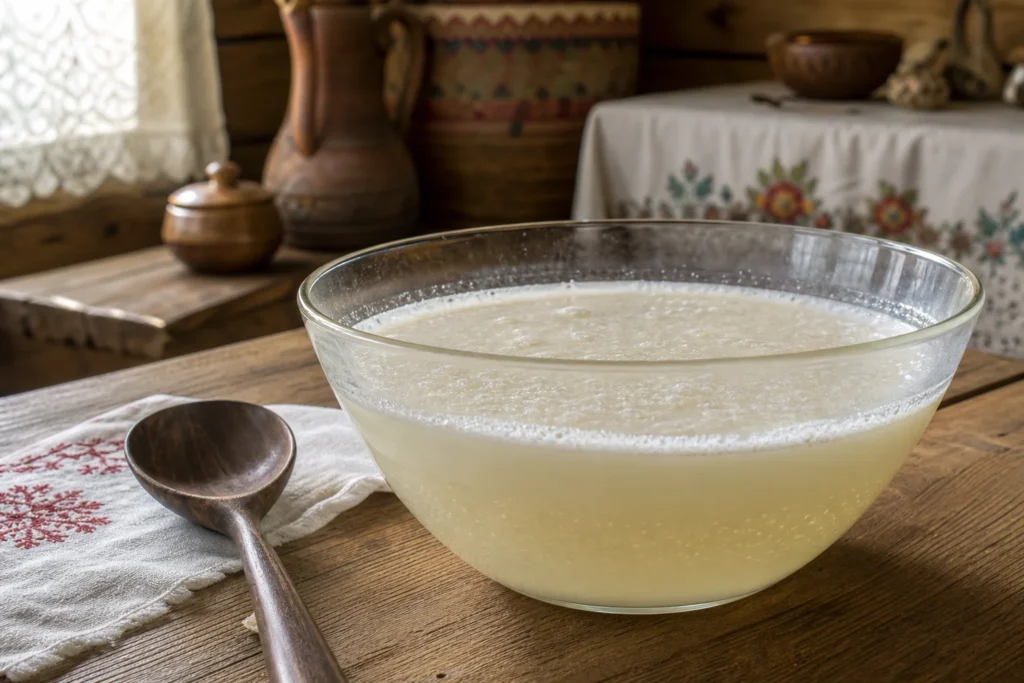
This guide is for visitors to Kazan who want to understand and try kumis, one of the defining drinks of Tatar cuisine. You’ll learn what kumis tastes like, how it’s made, and how to prepare it at home if mare’s milk is available to you. The traditional way is to ferment fresh mare’s milk with a starter culture over several days, stirring regularly to develop carbonation and tanginess.
Kumis remains a living tradition in Kazan and across the steppes of Central Asia. Rather than a tourist novelty, it’s an everyday drink offered to guests as a mark of respect at the table, and available in traditional restaurants and bazaars. Understanding how to make kumis fermented mare milk gives insight into centuries of nomadic food culture.
Quick answer: Warm fresh mare's milk to body temperature, stir in a kumis starter culture or yogurt, then cover and ferment at room temperature for one to three days, stirring once daily. The drink is ready when it develops a sour, fizzy flavour. Total time: 1–3 days plus 10 minutes of active preparation.
At a Glance
| Type | Drinks |
|---|---|
| Local name | кумыс |
| Origin | Central Asian steppes, particularly among Turkic and Mongolic peoples including Tatars, Kazakhs, Kyrgyz, and Bashkirs |
| Servings | 4–5 people (from 2 liters of milk) |
| Total time | 1–3 days (10 minutes active preparation; rest is passive fermentation) |
| Difficulty | Medium |
History and Story of Kumis, Kazan
Kumis is an ancient beverage which Scythian tribes of the Central Asian steppes drank some 25 centuries ago. The drink remains important to peoples of the Central and East Asian steppes of Turkic and Mongolic origin, including Volga Tatars, Kazakhs, Bashkirs, Kalmyks, Kyrgyz, and Mongols. Mares are milked only for part of the year — roughly the warm months, when they’ve foaled — and they don’t give much at a time, so kumis is seasonal and labour-intensive. This history of fermented mare’s milk reflects the nomadic lifestyle of the steppe peoples, for whom horses were central to survival and culture. In Kazan, kumis remains woven into Tatar food traditions alongside tea with milk and traditional pastries.
Ingredients
- 2 liters fresh mare's milk (or cow's milk as a substitute)
- 2–3 tablespoons kumis starter culture or plain yogurt with active cultures
- 2–3 tablespoons sugar (optional, to aid fermentation)
- Clean fermentation vessel (glass jar or ceramic crock)
- Muslin cloth or clean kitchen towel for covering
- Wooden spoon or utensil for stirring
How Kumis, Kazan Is Made
Step 1: Warm the milk gently
Pour fresh mare's milk (or cow's milk) into a clean fermentation vessel. Warm it gently to about body temperature — approximately 30°C (86°F). Do not heat it too high, as excessive heat will damage the fermentation cultures. Use a thermometer if available, or test with your finger: the milk should feel warm but not hot.
Tip: If using cow's milk, the fermentation will still work but may be less traditional; mare's milk has higher sugar content which creates more carbonation and alcohol.
Step 2: Add the starter culture
Stir in the kumis starter culture or plain yogurt containing live bacterial cultures. Use 2–3 tablespoons, stirring vigorously to distribute the culture evenly throughout the milk. Add sugar if using it; this optional ingredient helps feed the fermentation process. Mix thoroughly.
Tip: If you have a previous batch of kumis, you can use some of that as your starter culture instead of yogurt—this creates a continuous fermentation tradition.
Step 3: Cover and let ferment
Cover the container with a clean muslin cloth or kitchen towel. This allows air circulation while protecting the milk from dust and contamination. Leave the vessel at room temperature (around 20–25°C) for the fermentation to proceed. Choose a quiet spot away from direct sunlight and temperature fluctuations.
Tip: Room temperature is essential; too cold and fermentation will be very slow; too warm and the drink may develop off-flavours.
Step 4: Stir once daily
Each day of fermentation, stir the mixture once with a clean spoon or wooden utensil. Use vigorous stirring motions to introduce air and encourage carbonation. This physical agitation mimics the traditional method of churning kumis in leather sacks, which is why stirring is essential to develop the characteristic fizz and tang.
Tip: The more consistently you stir, the more pronounced the carbonation will be in the final drink.
Step 5: Taste for readiness
After 1–2 days, begin tasting the mixture daily. Fermentation is complete when the drink develops a noticeably sour flavour, a slightly fizzy or bubbly texture, and a mild yeasty aroma. It should taste tangy and refreshing, never bitter or spoiled. The exact timing depends on room temperature and the strength of your starter culture.
Tip: If the taste is still too mild after day two, allow another 12–24 hours. You can cover and refrigerate it once ready to slow fermentation.
Step 6: Chill and serve
Once fermentation is complete and the drink tastes right to you, chill it in the refrigerator before serving. Kumis is traditionally served cold in bowls or small cups. The cold temperature brings out the refreshing character of the drink and makes it easier to sip.
Tip: Serve kumis alongside traditional Tatar bread or pastries for an authentic experience.
Variants
- Strong kumis: fermented for a longer period (3+ days) to develop a more pronounced sour and alcoholic taste
- Soft kumis: a fresher version mixed with fresh mare's milk to reduce sourness and alcohol content
- Kumis made with cow's milk: a modern adaptation using pasteurized cow's milk as a substitute when mare's milk is unavailable
- Kumis with added sugar or honey: sweetened versions for those who find pure kumis too sour
Common Mistakes to Avoid
- Using milk that is too hot or too cold for fermentation: the milk must be warmed to around body temperature, no higher. Too hot kills the cultures; too cold slows fermentation dramatically.
- Not stirring frequently enough: traditional kumis requires vigorous stirring to develop carbonation and prevent the drink from separating. Stirring once daily is the minimum.
- Stopping fermentation too early: many people taste kumis after one day and think it is not ready because the flavour is still mild. Give it the full 1–3 days depending on temperature. Taste is the true indicator, not time alone.
- Using expired or low-quality starter culture: make sure your yogurt or kumis starter contains active live cultures. Dead cultures will not ferment the milk properly.
- Contaminating the vessel: any dirt, soap residue or non-sterile utensils can interfere with fermentation or introduce unwanted bacteria. Wash everything thoroughly with clean water.
- Fermenting in an environment that is too warm: if your kitchen is above 30°C, the fermentation may happen too quickly and produce an overly sour or unpleasant taste. Conversely, below 15°C, fermentation will be very slow or may not happen at all.
How to Order and Eat It
Kumis is tangy, lightly sparkling and mildly alcoholic, usually somewhere between 0.7 and 2.5 percent. Serve it well chilled in small bowls or cups. Take small sips to become accustomed to the distinctive sour and yeasty flavour. Sour and bubbly don’t usually go together, but with fermented horse milk, they’re a natural pair. In traditional settings, a single bowl is passed around the table as a sign of hospitality and trust. Kumis pairs naturally with Tatar bread, pastries, and savory meat dishes. It is not an everyday beverage for all palates, but trying it is considered a cultural experience and a mark of respect when offered by hosts.
To order: кумыс пожалуйста [kumis pozhaluysta]
Russia Vibes Tips
- Kumis is seasonal in traditional preparation. Mares are milked only during the warm months, when they've foaled, and they don't give much at a time. If visiting Kazan in summer, you're more likely to find fresh, locally-made kumis at traditional restaurants and bazaars. Winter versions may be industrial or stored from warmer months.
- Many first-time visitors find the sour, yeasty flavour challenging. Kumis is also served in its softer version, which is a slightly less strong-tasting drink that's blended with fresh mare milk. Ask for this milder version if you want a gentler introduction to the drink.
- The alcohol content is very mild—between 0.7 and 2.5 percent. It comes from natural fermentation of the milk's sugars, not from added spirits. This is a casual drink offered to family and guests, not an intoxicant.
- At home, pasteurized cow's milk can substitute for mare's milk if you cannot source fresh mare's milk. The fermentation will work, but the flavour and character will differ slightly. Traditional kumis made from mare's milk has a more distinctive taste and higher natural alcohol content due to the milk's higher sugar.
- Do not use ultra-pasteurized milk or milk that has been sitting open. Make sure your yogurt or starter culture contains live active cultures by checking the package label. Dead cultures will not ferment properly.
- Once fermented and chilled, kumis will continue to ferment slowly in the refrigerator. After a week, it may become more sour. You can extend the life of your batch by reserving 100 ml as a starter for the next batch—this is the traditional continuous fermentation method.
Explore Nearby Kumis, Kazan
Related guides
 Local Food & Market Walk, Yekaterinburg: Central Market, Pelmeni and Street Eats
Main image: AI-generated illustration. It may not show the place exactly as it looks.
 Best Restaurants by Budget, Yekaterinburg: Where to Eat at Every Price Level
Main image: AI-generated illustration. It may not show the place exactly as it looks.
 Best Restaurants for Traditional Russian Cuisine, Nizhny Novgorod: Where to Eat Local
Main image: AI-generated illustration. It may not show the place exactly as it looks.
Browse more: All Food & Drink · All Food & Drink in Kazan · All Kazan · All Other
FAQ
What does kumis taste like?
Kumis is tangy, lightly sparkling and mildly alcoholic. It has a sour, yeasty flavour with a slight fizz, similar in some ways to kefir or sour yogurt, but more pronounced. The taste varies depending on fermentation length and temperature. It is not for every palate, but is a distinctive part of Tatar and Central Asian food culture.
Does kumis contain alcohol?
Kumis is usually somewhere between 0.7 and 2.5 percent alcohol. This comes from natural fermentation of the milk's sugars. The drink isn't boozy enough to worry about the alcohol content. It is a casual beverage, not an intoxicant.
Why is mare's milk used instead of cow's milk?
Mare's milk contains more sugars than cow's or goat's milk fermented into kefir, kumis has a higher, though still mild, alcohol content. This higher sugar creates more carbonation and a more distinctive flavour. However, cow's milk can be used as a substitute, especially in modern industrial production.
How long does kumis take to make at home?
The fermentation takes 1–3 days depending on room temperature and starter strength. Active preparation is only about 10 minutes. The exact timing depends on how sour and fizzy you want the final drink to be. Taste daily to judge readiness.
Can I make kumis with cow's milk if I don't have mare's milk?
Yes. Industrial-scale production of kumis generally uses cow's milk, which is richer in fat and protein but lower in lactose than the milk from a horse. The fermentation will work with pasteurized cow's milk, though the flavour will be less distinctive than traditional mare's milk kumis.
Is kumis safe for people with lactose intolerance?
Mare's milk has more lactose than regular cow's milk, but the fermentation breaks it down. Fermentation almost completely removes the lactose. This makes properly fermented kumis suitable for many people with lactose intolerance, though individual tolerance varies.
What starter culture should I use?
Plain yogurt with active live cultures is the most accessible starter. Look for labels stating 'active cultures' or 'live cultures.' Alternatively, you can use a commercial kumis starter culture if available at specialty shops. Once you have made one batch, reserve 100 ml of finished kumis to use as the starter for your next batch.
Where can I try kumis in Kazan?
Kumis is served at traditional Tatar restaurants in Kazan and sometimes at bazaars. It is a staple of authentic Tatar food culture and is offered to guests at the table. Look for restaurants specializing in traditional Tatar cuisine, particularly during the warmer months when kumis is fresher and more widely available.
Russia Vibes is a one-person project. A coffee keeps it going
How we research and update our guides
About this guide: AI assistance and accuracy
This guide is created with the help of AI and is based on official sources where available. Mistakes can still happen. Opening hours, prices, rules and other details are given to the best of our knowledge as of the date shown and can change without notice. It offers general recommendations only, not professional, legal or travel advice. Please confirm important details with the official source before you travel; you are responsible for your own plans and decisions.

Take this guide with you
Get a free PDF of this guide to print or read offline: key facts, tips and a map link on a few clean pages.
Report an issue on this page
Paying for your trip: please read
International sanctions affect payments between Russia and many other countries. In practice, cards issued in the EU, the UK, the US and several other countries often do not work in Russia, Russian cards usually do not work abroad, and some booking platforms, airlines and payment providers limit or suspend their services for Russia. The situation changes frequently.
We do not give legal or financial advice, and this site does not encourage anyone to break or circumvent sanctions. Whatever you plan, you are responsible for following the laws and regulations that apply to you, including those of your country of residence and citizenship.
Many travelers still organise their stay lawfully. It is worth asking your bank or payment provider what is currently permitted, contacting hotels, tour operators and carriers directly about the payment methods they accept, and checking which services are open to customers from your country. Clarify payment, cancellation and refund terms before you commit to a booking, and keep your plans flexible.
Partner links on this site may not be available in every country, and prices, availability and rules in our guides can differ from what you see when you book.