
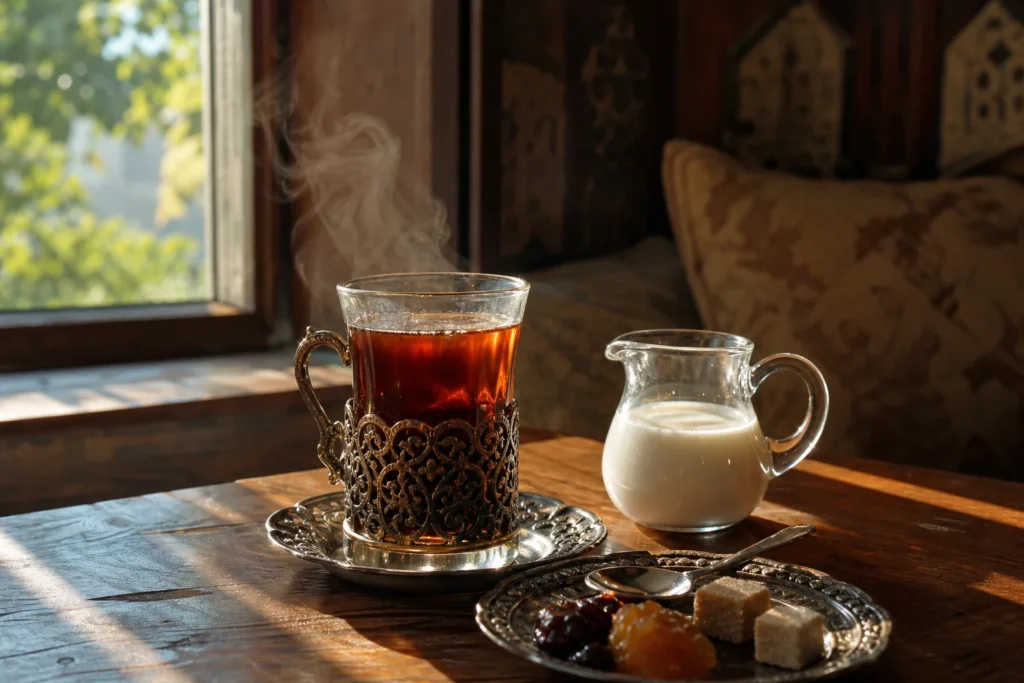
Tea with milk represents one of Central Asia’s most enduring hospitality rituals, and Kazan stands at its historical heart. Tea with Milk, Kazan recipe and tradition connects visitors to the Tatar and Kazakh cultures that shaped Russian tea culture itself. Kazan served as the gateway through which tea entered Russia from the East, and the tradition of serving strong black tea with warm milk remains central to daily life and guest etiquette across Tatarstan.
This guide will show you how to prepare authentic Kazan tea, the story behind its centuries-old practice, and how to honour the customs that accompany it. Whether you are trying this drink for the first time or replicating it at home, understanding both the technique and the cultural significance deepens the experience.
Quick answer: Brew strong black tea in a teapot, pour it into a cup, dilute with hot water to your preference, then add warm milk last. Total time: 10 minutes. Cost: budget-friendly.
At a Glance
| Type | Drinks |
|---|---|
| Local name | Чай с молоком |
| Origin | Kazan, Tatarstan, Russia; the drink reflects Tatar and Kazakh traditions along the historic Tea Road (17th–18th centuries). |
| Servings | 2–3 servings |
| Total time | 10 minutes |
| Difficulty | Easy |
History and Story of Tea with Milk, Kazan
Tea arrived in Russia through Kazan, carried by Tatar merchants from East Turkestan and Bukhara along what historians call the Great Tea Road, established in the 17th–18th centuries. Kazan’s strategic location made it the gateway through which tea entered Russian and European culture. In early centuries, loose-leaf tea was a luxury available only to the wealthy—nobility, clergy, and merchants. Common people drank brick tea (taqta çəy), which was bitter and intense, and naturally called for dilution with milk to make it palatable. Over time, tea with milk became the signature drink of Tatar hospitality, eventually spreading across Russia. The tradition is so embedded in Tatar culture that refusing tea is considered refusing friendship itself. Unlike the English practice of adding milk to protect porcelain, Tatars used milk purely for flavour, since porcelain was not widespread in the region when the custom took root.
Ingredients
- 600 ml water
- 3–4 teaspoons loose black tea leaves
- 150 ml whole milk
- 2 teaspoons sugar or honey, or jam (optional)
- Teapot or small pot
- Cups or glasses
How Tea with Milk, Kazan Is Made
Step 1: Boil water and prepare the teapot
Fill a kettle with water and bring it to a rolling boil. While the water heats, rinse a small teapot with hot water to warm it. This ensures the tea steeps properly. Loose black tea works best—use a strong variety such as Assam or a Russian Caravan blend, which traditionally came through Kazan on the Tea Road.
Tip: A warmed teapot helps maintain the brewing temperature.
Step 2: Add tea leaves and steep
Add 3–4 teaspoons of loose black tea to the warmed teapot. Pour the boiling water over the leaves. Let the tea steep for 5–7 minutes, allowing the leaves to sink to the bottom. This concentrated brew—known in Russian as zavarka—is what gives the drink its characteristic strength.
Tip: The longer you steep, the more intense the flavour; do not leave it sitting more than 10 minutes, or it may become too bitter.
Step 3: Pour tea into a cup and dilute
Pour the brewed tea concentrate into a cup, filling it only one-quarter to one-third full. Add hot water from the kettle to the cup, diluting the tea to your preferred strength. This is the traditional Russian method, allowing each person to control how strong their tea is.
Tip: The glass should be half-filled to ensure it stays hot during drinking.
Step 4: Warm the milk separately
Pour milk into a small pot or microwave it in a separate container until it steams gently—never boil it. Warming the milk before adding it is essential in Tatar tradition, as cold milk would lower the temperature of the tea. This small step preserves the drink's heat and flavour.
Tip: Warm milk should be at least 60°C to keep the tea hot.
Step 5: Add milk last and sweeten
Pour the warm milk into the cup of brewed, diluted tea, stirring gently. Add sugar, honey, or jam (often raspberry or cherry) to taste. In Tatar tradition, jam is preferred over plain sugar, as it adds fruit flavour and authenticity to the drink.
Tip: Add milk last so it doesn't cool the tea; this separates the tradition from English tea culture, where milk was added to protect porcelain.
Variants
- Spiced chai: Adding cardamom pods, cloves, or cinnamon sticks to the brewing tea, popular in Kazakh variations.
- Tea with honey: Substituting honey or buckwheat honey for sugar, creating a richer sweetness.
- Tea with jam: Stirring in a spoonful of fruit jam (raspberry or cherry) instead of using sugar—a traditional Tatar method.
- Tea with lemon: Adding lemon juice instead of (or alongside) milk—less common in Kazan, but sometimes seen in Russian practice.
- Strong concentrate only: In some households, only the concentrated zavarka is served, and each guest dilutes it to their preference with hot water at the table.
Common Mistakes to Avoid
- Adding cold milk: Many visitors add cold milk, which significantly lowers the tea's temperature. Warm your milk before pouring it into the cup.
- Brewing the tea weak: The strong concentrate is essential; if you steep for too short a time, the final drink will lack the characteristic flavour and body of authentic Kazan tea.
- Adding milk first: This is a common mistake from unfamiliar tea traditions. In Tatar culture, milk is added last, after the tea and hot water are already in the cup.
- Skipping the dilution step: Some visitors brew tea directly in the cup instead of making a concentrate first. The Russian method gives you control over strength and allows the tea to be reused throughout the day.
- Using poor-quality tea: Brick tea (taqta çəy) or weak tea bags will not produce the rich, dark liquid that defines this drink. Invest in loose-leaf black tea.
How to Order and Eat It
Tea with milk is not eaten; it is sipped from a glass held in an ornate metal holder called a podstakannik (optional but traditional). The drink is typically served with sweet pastries such as chak-chak (fried dough with honey) or biscuits. In Tatar tradition, tea is offered to all guests as a sign of welcome and hospitality, and it is considered impolite to refuse. Take your time; tea is meant to accompany conversation, not to be rushed. You may refill your cup multiple times by topping up the original concentrate with fresh hot water, as the zavarka can be reused throughout the day.
To order: Чай с молоком [Chay s molokom]
Russia Vibes Tips
- Visit a traditional Tatar home or café during tea time (afternoon) to experience this drink in its proper social context. Tea serves as the focal point of daily gatherings, and the ritual is as important as the drink itself.
- Buy loose black tea from a local market in Kazan rather than tea bags. The city has a long history as a tea trading hub, and local shops stock high-quality loose tea suited to the Tatar tradition.
- If you find the milk version too mild, ask for 'strong tea' (krepkiy chay). Many cafés will serve it without dilution, or with less water, giving you a more intense flavour.
- Jam is often preferred to sugar in Kazan. Look for local varieties such as raspberry, cherry, or apricot jam at markets. A spoonful stirred into the cup is the traditional method.
- Accept a third cup if offered. In Tatar culture, refusing the third cup of tea is considered rejecting friendship. It is a gesture of respect to drink what is offered.
- The Tea Museum (Muzey Chaya) in Kazan offers tea ceremonies with traditional accompaniments, allowing you to learn the history and proper service of this drink from experts.
Explore Nearby Tea with Milk, Kazan
Browse more: All Food & Drink · All Food & Drink in Kazan · All Kazan · All Other
FAQ
Is tea with milk unique to Kazan?
Tea with milk is traditional across Tatar and Kazakh cultures, not unique to Kazan alone. However, Kazan holds special significance as the historical gateway through which tea entered Russia in the 17th–18th centuries, making it the birthplace of this practice in Russian culture.
Why is warm milk important?
Adding warm milk last preserves the tea's heat and flavour. Cold milk would lower the temperature significantly. This practice also distinguishes the Tatar tradition from English tea culture, where milk was added for different reasons (protecting porcelain).
What kind of black tea should I use?
Loose-leaf black tea is preferred. Strong varieties such as Assam work well. In Kazan's history, Russian Caravan tea (originally imported from China via camel caravan) was particularly valued. Avoid weak tea bags or brick tea unless you are specifically seeking the historical experience.
Can I make this without a samovar?
Yes. A samovar is traditional but not necessary. A regular kettle and teapot work perfectly. The key is following the Russian method: brew a strong concentrate in a teapot, then dilute it with hot water in the cup to your preference.
What sweetener should I use?
Sugar, honey, and jam are all traditional. In Tatar practice, jam (especially raspberry or cherry) is preferred over plain sugar, as it adds fruit flavour. Buckwheat honey is another authentic choice.
How is this different from English tea with milk?
In English tradition, milk was added first to protect delicate porcelain cups. In Tatar tradition, milk is added last to flavour the strong tea. The Tatar version uses stronger tea and emphasises hospitality rituals; English tea is often weaker and more casual.
Can I use regular milk or do I need a specific type?
Regular whole milk works perfectly. Some variations use cream or condensed milk, but fresh whole milk is the standard and most authentic choice. Warm it gently—do not boil it.
Is it okay to refuse tea when offered?
In Tatar culture, refusing tea is considered rejecting hospitality and friendship. It is customary to accept at least the first cup, and ideally a second or third. If you must decline, do so politely and explain your reason.
Russia Vibes is a one-person project. A coffee keeps it going
How we research and update our guides
About this guide: AI assistance and accuracy
This guide is created with the help of AI and is based on official sources where available. Mistakes can still happen. Opening hours, prices, rules and other details are given to the best of our knowledge as of the date shown and can change without notice. It offers general recommendations only, not professional, legal or travel advice. Please confirm important details with the official source before you travel; you are responsible for your own plans and decisions.

Take this guide with you
Get a free PDF of this guide to print or read offline: key facts, tips and a map link on a few clean pages.
Report an issue on this page
Paying for your trip: please read
International sanctions affect payments between Russia and many other countries. In practice, cards issued in the EU, the UK, the US and several other countries often do not work in Russia, Russian cards usually do not work abroad, and some booking platforms, airlines and payment providers limit or suspend their services for Russia. The situation changes frequently.
We do not give legal or financial advice, and this site does not encourage anyone to break or circumvent sanctions. Whatever you plan, you are responsible for following the laws and regulations that apply to you, including those of your country of residence and citizenship.
Many travelers still organise their stay lawfully. It is worth asking your bank or payment provider what is currently permitted, contacting hotels, tour operators and carriers directly about the payment methods they accept, and checking which services are open to customers from your country. Clarify payment, cancellation and refund terms before you commit to a booking, and keep your plans flexible.
Partner links on this site may not be available in every country, and prices, availability and rules in our guides can differ from what you see when you book.