
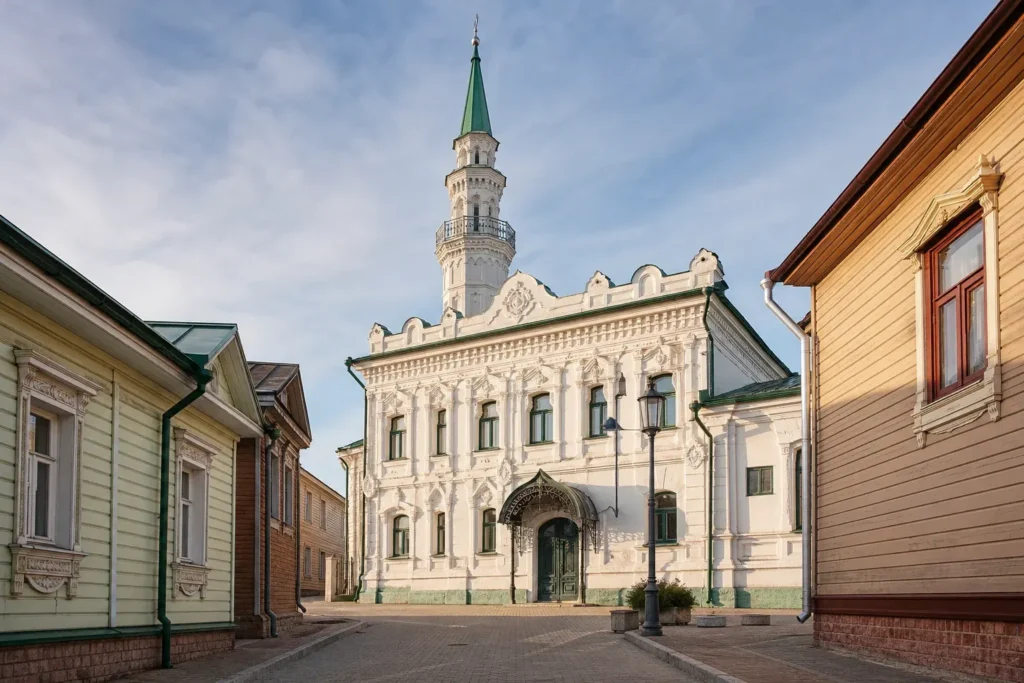
Situated in the Old Tatar Quarter at the bank of Lake Qaban, the Al-Marjani Mosque stands as the oldest active house of worship in Tatarstan. Built in 1766–1770 by Catherine the Great’s authority and on the city’s population’s donations, this mosque marks a turning point in Russian religious tolerance. For international visitors exploring Kazan‘s Muslim heritage, it offers something authentic: not a modern reproduction, but a working community place with more than 250 years of continuous prayer.
It is the only mosque in Kazan that evaded closure during the Soviet period, standing as silent witness to decades when organized religion faced suppression. Visitors can enter during non-prayer times to see the interior, experiencing how Tatars preserved their faith across centuries of political upheaval.
Quick Facts
| Russian name | Мечеть аль-Марджани |
|---|---|
| Built / opened | 1770 |
| Architect(s) | Vasily Kaftyrev |
| Address | Kayuma Nasyri St., 17, Kazan 420021 OpenStreetMap · Google Maps |
| District | Vakhitovsky |
| Metro | Ploshchad Tukaya (Red Line, 20 min walk south through Old Tatar Sloboda) |
| Opening hours | Daily during daytime; closed during prayer times |
| Admission | free |
| Best time to visit | Spring (April–May) and autumn (September–October) offer mild weather and fewer crowds than summer. Morning light is best for photographing the white façade and minaret. Avoid prayer times (early morning, midday, afternoon, sunset, evening). Weekday mornings outside prayer hours are least busy. Winter (December–February) is cold and can bring snow, but the white mosque against white snow creates striking photographs. |
| Recommended duration | 45 minutes to 1 hour |
| Website | mechet-marjani.ru |
| Last updated | October 18, 2026 |
What Is (and Isn't) Part of a Visit to Al-Marjani Mosque, Kazan?
| Part | Status | Notes |
|---|---|---|
| Prayer halls (upper and lower) | Included in the standard ticket | Access during non-prayer times only; remove shoes before entering. |
| Exterior and façade | Included in the standard ticket | Visible from Kayuma Nasyri Street at any time; photography allowed outside. |
| Minaret | Not open to visitors | Closed to visitors; visible from the street only. |
| Kazan Mukhtasibat (Islamic administration) next door | Separate ticket or institution | Separate institution; check if open to visitors before approaching. |
| Kazan Islamic College nearby | Separate ticket or institution | Adjacent educational institution; not part of the mosque visit. |
| Kul Sharif Mosque in the Kremlin | Outside / not part of it | A different, much larger modern mosque 2 km north; requires separate trip. |
Why Visit Al-Marjani Mosque, Kazan?
The mosque blends Tatar medieval architecture with provincial baroque style, creating a distinctive appearance rarely seen in Russia. Its architecture harmoniously combines a minaret, traditional Tatar floral ornamentation and elements of the Petrine Baroque style popular at the time. The interior, with its vaulted ceilings and baroque plasterwork, contrasts sharply with the simpler exterior.
Unlike larger modern mosques elsewhere in Kazan, Al-Marjani belongs to the living quarter it serves. You’ll find it on a pedestrian street amid residential homes, cafes and shops—the spiritual heart of the Old Tatar Sloboda rather than a monumental showpiece. It was the only Islamic house of prayer remaining open in Kazan during the Soviet decades, a fact that carries weight for anyone interested in how faith persisted under authoritarian rule.
Highlights of Al-Marjani Mosque, Kazan
The White Façade and Three-Tier Minaret
The mosque is a two-storey building in the Saint Petersburg Baroque style, with a three-tier minaret. The white walls make it visible across the Old Tatar Quarter. The minaret is modest compared to contemporary European bell towers, yet stands as a symbol of religious identity. When local residents complained that the 30-metre tower was too tall, Catherine II famously replied that she gave them a place on the ground, but they could soar up to the sky as high as they wanted. Look for the intricate lattice work on the minaret's upper sections.
Tip: The mosque is most photogenic in morning light when the white walls glow against the blue sky. Photograph from Kayuma Nasyri Street for the full façade.
Two-Storey Interior and Prayer Halls
The Marjani Mosque is two-storied and has two halls, with the interior designed in the Petersburg Baroque style. The decoration uses vaulted ceilings with baroque plasterwork, a style unusual in Russian mosques. In 1861, merchant I. G. Yunisov donated the addition of stairs, and in 1863 he donated the extension of the mihrab and the breaching of new windows. Visitors can ascend to see both prayer halls during non-prayer periods.
Tip: Ask the caretaker (if present) about the 1861 and 1863 additions—the extra windows and extended mihrab represent merchant patronage important to Tatar history. Remove shoes before entering the upper hall.
Baroque and Tatar Ornamental Fusion
Traditional Tatar floral ornamentation blends with elements of the Petrine Baroque style throughout the interior and façade. Unlike Central Asian mosques with geometric Islamic patterns, Al-Marjani incorporates European motifs alongside Tatar decorative traditions—a visible record of a community navigating between empires. The plasterwork ceiling, a hallmark of Petersburg Baroque, is rare in mosque design elsewhere in Russia.
Tip: Look at the column capitals and window frames—the ornaments mix European scrollwork with Islamic floral themes. The ground-floor windows and doors show cleaner geometric designs than the upper-storey baroque flourishes.
Naming History and Imam Marjani
Initially, the mosque was called First Cathedral. The name changed several times: Efendi (Lords) was associated with wealthy residents, and Yunusovskaya with the Yunusov merchants who were patrons of the mosque. Finally, the name Al-Marjani was settled upon in honor of Imam Shigabutdin Mardzhani, who served at the mosque in the latter half of the 19th century and who made a huge contribution to the development of education in Kazan. The Islamic school he opened taught geometry, history and astronomy, as well as divinity.
Tip: A plaque outside (if present) may explain the naming history. Imam Marjani lived 1818–1889 and is considered a founder of modern Tatar education—his legacy is visible in the Russian Islamic University nearby.
Survival Through Soviet Era
It is the only mosque in Kazan that evaded closure during the Soviet period. From 1939 to 1991, the Mardzhani Mosque was the only working mosque in the city of Kazan. This silence carries meaning: while dozens of other mosques were demolished, converted or sealed, Al-Marjani's congregation maintained continuous prayer through Stalin's terror, World War II, and decades of atheist propaganda. The building you see today bears no obvious scars, yet its survival is a story in itself.
Tip: Ask locals about this history—many grandparents prayed here while religion was officially suppressed. The mosque remains a place of gratitude and spiritual continuity for Tatar families.
Open-Work Fence and 1887 Addition
The mosque was expanded a few times and received an open-work fence in 1887. This decorative boundary, made of cast iron or forged metal in the Petersburg style, separates the prayer space from the surrounding street while remaining visually open. The fence addition reflects late-19th-century confidence in religious practice, as Ottoman-style restrictions began easing.
Tip: Examine the fence design—it's a fine example of 19th-century Russian ornamental metalwork, distinct from both Islamic and purely European patterns.
Atmosphere
The mosque sits on a pedestrian street lined with low Tatar wooden houses painted in soft colors—a residential neighborhood rather than a monumental plaza. On arrival, expect quiet reverence: prayer times are observed strictly, and visitors who enter outside these hours find mostly empty halls filled with filtered light. The smell of old wood and marble, mixed with the faint scent of incense or eau de cologne sometimes left by worshippers, lingers in the air.
Early mornings bring elderly men for dawn prayer; evenings see families before sunset. The caretaker, if present, will usually allow respectful visitors to look around. Photographs are sometimes restricted during prayer times or if services are being held. The atmosphere is one of lived faith rather than museum reverence—this is a working mosque where spirituality matters more than tourism.
Outside, the Old Tatar Sloboda bustles with cafes, halal restaurants, and Islamic bookshops. Inside, silence. The contrast itself tells the story of how Tatar culture survived suppression: prayer spaces that remained active, street life that thrived.
History of Al-Marjani Mosque, Kazan
The Märcani Mosque was built in 1766–1770 by Catherine the Great’s authority and on the city’s population’s donations. The permit for its construction was given by Catherine II herself as part of a new policy of religious tolerance, with residents of Old Tatar Settlement collecting funds to build the house of worship, and in 1767, construction work began. Just three years later, in 1770, the grand opening of the mosque took place.
After several decades of persecution of the Muslims in Imperial Russia the Märcani Mosque was the first mosque built in Kazan under Russian rule. Kazan had been conquered by Ivan the Terrible in 1552, and for over two centuries, Tatars were confined to a separate settlement and forbidden to build stone structures for prayer. Empress Catherine II returned from her 1767 trip to the Kazan Governorate so impressed by what she had seen and by local hospitality that she issued a decree allowing the construction of mosques in stone. She issued another decree in 1773, ‘On the Tolerance of All Faiths,’ which made life much easier for Muslims.
Initially, the mosque was called First Cathedral. In the coming years, the name changed several times depending on the situation: Efendi (Lords) is associated with the predominance of wealthy people among the settlement’s population and Yunusovskaya with the Yunusov merchants who were patrons of the mosque. Finally, the name Al-Marjani was settled upon in honor of Imam Shigabutdin Mardzhani, who served at the mosque in the latter half of the 19th century.
Throughout the 19th century, the mosque received improvements from merchant patrons. In 1861, merchant I. G. Yunisov donated the addition of stairs, and in 1863 he donated the extension of the mihrab and the breaching of new windows. In that period the mosque was called Yunisovs’ Mosque after his family. In 1885, merchant Z. Gosmanov donated the renovation of the minaret. The mosque was expanded a few times and received an open-work fence in 1887.
The Soviet era tested Al-Marjani’s survival. It continued to function even in the Soviet era, at which time it was the only functioning mosque in all Kazan. From 1939 to 1991, Mardzhani Mosque was the only working mosque in the city of Kazan. This exceptional status likely saved the building from demolition. Since the Soviet collapse, the mosque has reopened fully to the faithful and now welcomes respectful visitors during non-prayer times.
Legends and Myths about Al-Marjani Mosque, Kazan
Catherine's Reply to the Minaret Height
Legend – historically unreliable. Legend claims that during construction of the minaret, the mayors of Kazan expressed concern about the height of the building to Catherine II. In response, the empress declared that she had provided the Tatar people with a home on earth, and upward they could rise as high as they wished, since the sky was not a part of her domain.
Soviet Survival Through Hidden Prayer
Disputed by historians. Local lore claims that during Stalin's terror, worshippers kept the mosque functioning by rotating prayer times and disguising the building as a warehouse or community center. The lack of a visible sign and the modest scale helped authorities overlook it. While official closure orders came and went, a core group never stopped praying—a silent act of resistance.
Tickets and Booking for Al-Marjani Mosque, Kazan
Entry is free. The mosque opens during daytime, but when services are not being held, tourists are welcome. Visitors should check prayer times before arriving—five daily prayers mean access is restricted at dawn, midday, afternoon, sunset and evening. Islamic holidays (Eid al-Fitr and Eid al-Adha) may affect visiting hours.
There is no ticket office or advance booking needed. Simply arrive during non-prayer hours and enter respectfully. Dress conservatively: shoulders, knees and hair should be covered. If you are uncertain about prayer times, ask a local or phone ahead (contact details may be available through the official website). No separate concessions apply since entry is free.
Plan and Book
Suggested itineraries Al-Marjani Mosque, Kazan
45 minutes
Arrive during daytime outside prayer times. Walk around the exterior to see the façade and minaret from different angles. If allowed, enter for 10–15 minutes to view the ground-floor hall and observe the baroque plasterwork and window designs. Return outside and photograph the open-work fence. Exit and explore the surrounding Old Tatar Sloboda.
1 hour
Begin with the exterior, then enter for 15–20 minutes to see both prayer halls if allowed. Study the column ornaments, vaulted ceilings and windows. Ask the caretaker (if present) about the 1861 additions and naming history. Exit and spend 30 minutes walking Kayuma Nasyri Street to view neighboring buildings and shops that form the cultural context.
Half day
Start at the mosque in morning light. Explore the exterior and interior. Walk through the Old Tatar Sloboda, visiting nearby cafes or halal restaurants for lunch. Visit the nearby Russian Islamic University or Islamic bookshops to deepen understanding of contemporary Tatar Muslim life. Return to the mosque for afternoon light if photography was incomplete. Optional: take a guided walking tour of the quarter that includes the mosque's history.
How to Get to Al-Marjani Mosque, Kazan
By Metro: Take the Red Line to Ploshchad Tukaya station. Exit and head south down Kayuma Nasyri Street (the main pedestrian thoroughfare of Old Tatar Sloboda). The mosque is on your left after about 20 minutes’ walk, at number 17. Watch for the white façade and three-tier minaret.
By Bus or Tram: Take any bus or trolleybus going to the final stop ‘Rechnoy vokzal’ (River Station), or take tram number 2. Get off at the stop closest to Kayuma Nasyri Street and walk toward the mosque.
By Taxi or Car: Provide the address: Kayuma Nasyri St., 17, Kazan 420021. Note that Kayuma Nasyri is a pedestrian street, so taxis will drop you nearby and you’ll walk the final stretch. Parking is available on surrounding streets.
On Foot: If staying in central Kazan, the Old Tatar Sloboda is walkable. Head toward Lake Qaban, which is south of the city center, and follow signs or maps to Kayuma Nasyri Street.
Accessibility
The mosque is two-storied with two halls and stairs were added in 1861, but no information is available about wheelchair access or accessible facilities. The pedestrian street (Kayuma Nasyri) is relatively level. Visitors with limited mobility should contact the mosque in advance to inquire about access to the upper hall and available assistance. Entrance from street level is standard; no ramp information is available. Photography is generally allowed in the exterior and may be allowed in non-prayer areas, but confirm with staff.
Food Nearby
Kayuma Nasyri Street and the surrounding Old Tatar Sloboda are lined with halal cafes and restaurants serving Tatar cuisine and Middle Eastern specialties. Located next to the mosque are some shops selling halal foods, Islamic literature and symbols. Within walking distance are several small restaurants, teahouses serving traditional Tatar milk tea, and pastry shops. No alcohol is served in these establishments. Casual dress is acceptable in most venues.
What to Bring
Comfortable walking shoes (you will remove them inside the mosque). A headscarf or hat to cover hair is essential for women; men should wear long trousers or a long skirt. Shoulders should be covered. Avoid sleeveless tops. In winter, warm clothing and waterproof shoes; in summer, sunscreen and a water bottle for exploring the surrounding Old Tatar Sloboda. A camera for exterior photography. Binoculars if you want to see minaret details from a distance.
Best Views and Photo Spots of Al-Marjani Mosque, Kazan
Kayuma Nasyri Street, frontal view
The classic approach: the white façade and three-tier minaret framed by surrounding wooden houses on the pedestrian street. Best in morning when sunlight hits the white walls and shadows define the baroque ornaments.
Best time: Early morning (7–9 am) for low-angle light that highlights the minaret; clear autumn or spring days for blue sky contrast.
Side view from Zayni Sultan Street
A perspective of the mosque's profile and minaret against surrounding buildings. Shows the two-storey structure and corner details. Less crowded than the frontal view.
Best time: Midday for even light; afternoon for side-angled shadows.
Open-work fence detail
Close-up of the 1887 decorative ironwork showing the fusion of European and Islamic ornamental styles. An underrated photographic subject that few tourists capture.
Best time: Midday when the fence casts defined shadows; overcast days for even lighting of the metalwork.
Street-level looking up at minaret
The three-tier minaret rising above the surrounding roofline, emphasizing the height that supposedly concerned Kazan's mayors. The minaret tapers as it rises, a graceful silhouette.
Best time: Late afternoon when the minaret catches golden light; clear days for sharp detail.
Evening from across Lake Qaban
Distant view of the illuminated mosque across the water (if floodlit). The white walls glow and the minaret is silhouetted. Requires access to the lake embankment south of the mosque.
Best time: One hour before sunset through dusk for the twilight glow; check if the mosque is illuminated at night (seasonal).
Photography Rules
Exterior and street photography is freely allowed during daytime. Inside the mosque, photography may be restricted during prayer times or active services. Always ask the caretaker before photographing the interior. No tripods, drones or flash photography inside. Respectful photography for personal use is generally welcomed outside prayer times; commercial photography may require permission.
Family Suitability
The mosque is suitable for respectful family visits outside prayer times. Children aged 8+ can appreciate the architecture and history with brief explanation. Younger children may find the quiet interior and strict rules (no shoes, silence) challenging for extended visits; keep visits short (15–20 minutes). Stroller access is uncertain due to steps and narrow interior spaces—inquire ahead. All family members must dress conservatively and remove shoes. The pedestrian street itself is child-friendly with cafes and shops, but the mosque interior is not a playground.
Russia Vibes Tips
- Call or email ahead to confirm prayer times and visitor access hours. Friday and Islamic holidays may have restricted or different hours. This prevents wasted trips, especially if visiting on a Friday (the main prayer day).
- Arrive early morning (7–9 am) on weekdays for the quietest experience and best light. Prayer times are shortest at these hours, and tourists are rare before 10 am. Midday prayer (around 12–1 pm) creates the longest access gap.
- The Old Tatar Sloboda surrounding the mosque is as much part of the visit as the building itself. Spend time walking Kayuma Nasyri Street, exploring the wooden architecture, cafes and shops. This context explains why the mosque matters to the community.
- Avoid photographing other worshippers during prayer times, even if allowed inside. Respect the sanctity of the space and the privacy of the faithful. Stick to architectural details and exterior shots if prayer is occurring.
- Do not confuse Al-Marjani with Kul Sharif Mosque in the Kremlin. Kul Sharif is much larger, modern (opened 2005), and a major tourist attraction. Al-Marjani is older, smaller, authentic, and less crowded. Both deserve a visit, but they are distinct experiences.
- Budget 45 minutes to 1 hour total if visiting only the mosque; 2–3 hours if exploring the Old Tatar Sloboda neighborhood. The mosque itself is modest in size; the real experience is understanding how it survived and shaped Tatar identity.
Explore Nearby Al-Marjani Mosque, Kazan
Sights near Al-Marjani Mosque, Kazan
 Temple of All Religions, Kazan – about 9.2 km away · typical visit: 1–2 hoursOpen daily 09:00–18:00
Main image: AI-generated illustration. It may not show the place exactly as it looks.
 Kul Sharif Mosque, Kazan – about 2.2 km away · typical visit: 1–2 hours6 min on foot from Kremlyovskaya, Kazan metro, Open daily 08:00–20:00
Main image: AI-generated illustration. It may not show the place exactly as it looks.
 Kazan Kremlin – about 2.0 km away (~32 min walk) · typical visit: 2–4 hours2 min on foot from Kremlyovskaya, Kazan metro, Open 24 hours
Main image: AI-generated illustration. It may not show the place exactly as it looks.
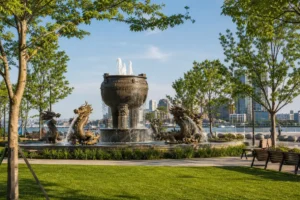 Millennium Park, Kazan – about 550 m away (~9 min walk) · typical visit: 1–2 hours7 min on foot from Ploshchad Tukaya, Kazan metro, Open daily 00:00–23:59
Main image: AI-generated illustration. It may not show the place exactly as it looks.
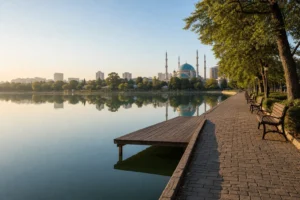 Kaban Lakes, Kazanabout 650 m away (~11 min walk) · typical visit: 2–3 hours
Main image: AI-generated illustration. It may not show the place exactly as it looks.
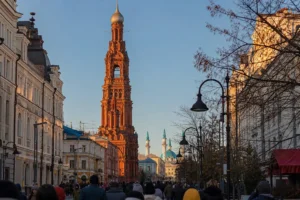 Epiphany Cathedral, Kazan – about 950 m away (~15 min walk) · typical visit: 45 minutes to 1.5 hours4 min on foot from Ploshchad Tukaya, Kazan metro, Open daily 07:00–20:00
Main image: AI-generated illustration. It may not show the place exactly as it looks.
Metro stations near Al-Marjani Mosque, Kazan
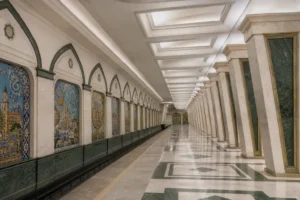 Ploshchad Tukaya, Kazan – about 900 m away (~14 min walk)Open daily 06:00–00:00
Main image: AI-generated illustration. It may not show the place exactly as it looks.
Restaurants and cafes near Al-Marjani Mosque, Kazan
 Tatarskaya Usadba, Kazan – about 150 m away (~2 min walk)12 min on foot from Ploshchad Tukaya, Kazan metro, Open daily 11:00–02:00
Main image: AI-generated illustration. It may not show the place exactly as it looks.
 Pashmir Restaurant, Kazan – about 700 m away (~11 min walk)Open daily 12:00–00:00
Main image: AI-generated illustration. It may not show the place exactly as it looks.
 Rubai, Kazan – about 800 m away (~13 min walk)1 min on foot from Ploshchad Tukaya, Kazan metro, Open daily 11:00–23:00
Main image: AI-generated illustration. It may not show the place exactly as it looks.
 Na Kryshe Loft Restaurant, Kazan – about 900 m away (~14 min walk)2 min on foot from Ploshchad Tukaya, Kazan metro
Main image: AI-generated illustration. It may not show the place exactly as it looks.
Nightlife near Al-Marjani Mosque, Kazan
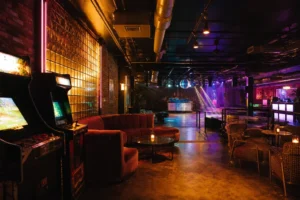 RV Club, Kazan – about 900 m away (~14 min walk)2 min on foot from Ploshchad Tukaya, Kazan metro
Main image: AI-generated illustration. It may not show the place exactly as it looks.
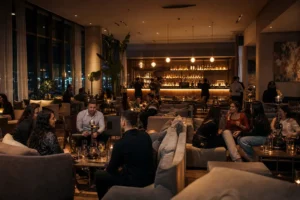 Nashe Mesto, Kazan – about 1.2 km away (~20 min walk)10 min on foot from Ploshchad Tukaya, Kazan metro
Main image: AI-generated illustration. It may not show the place exactly as it looks.
Hotels near Al-Marjani Mosque, Kazan
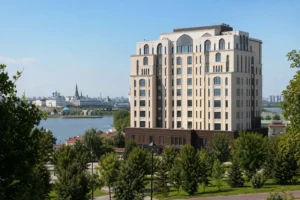 Bilyar Palace Hotel, Kazanabout 650 m away (~11 min walk)
Main image: AI-generated illustration. It may not show the place exactly as it looks.
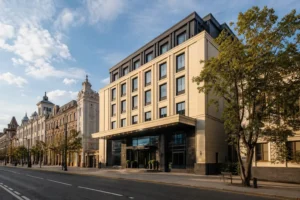 Azimut Hotel Bauman Kazanabout 950 m away (~16 min walk)
Main image: AI-generated illustration. It may not show the place exactly as it looks.
 Green Point Hostel, Kazanabout 1.0 km away (~16 min walk)
Main image: AI-generated illustration. It may not show the place exactly as it looks.
Train stations and river piers near Al-Marjani Mosque, Kazan
 Kazan River Port, Kazanabout 1.2 km away (~20 min walk)
Main image: AI-generated illustration. It may not show the place exactly as it looks.
 Kazan Railway Station, Kazanabout 1.4 km away (~23 min walk)
Main image: AI-generated illustration. It may not show the place exactly as it looks.
Events and traditions near Al-Marjani Mosque, Kazan
 Rudolf Nureyev International Ballet Festival, Kazanabout 650 m away (~10 min walk)
Main image: AI-generated illustration. It may not show the place exactly as it looks.
Related guides
 New Year in Kazan: Russia’s Festive Winter Holiday Celebrated
Main image: AI-generated illustration. It may not show the place exactly as it looks.
 Victory Day in Kazan: Commemoration, Parades and How to Experience May 9
Main image: AI-generated illustration. It may not show the place exactly as it looks.
 Dadiani: Georgian Restaurant in Central Kazan9 min on foot from Kremlyovskaya, Kazan metro, Open daily 11:00–23:00
Main image: AI-generated illustration. It may not show the place exactly as it looks.
 Drevnyaya Buhara: Central Asian Dining Near Kazan’s Kremlin4 min on foot from Kremlyovskaya, Kazan metro
Main image: AI-generated illustration. It may not show the place exactly as it looks.
 Chirem, Kazan: Tatar Fine Dining in the Kremlin6 min on foot from Kremlyovskaya, Kazan metro, Open daily 12:00–23:00
Main image: AI-generated illustration. It may not show the place exactly as it looks.
Browse more: More in Vakhitovsky · All Churches · All Kazan · All Sightseeing · All Sightseeing in Kazan
FAQ: Al-Marjani Mosque, Kazan
Is photography allowed inside the mosque?
Photography in the interior may be restricted during prayer times or active services. Outside prayer hours, respectful photography for personal use is usually allowed, but always ask the caretaker first. No flash, tripods or commercial photography without permission. Exterior photography is freely allowed.
Can I visit during prayer times?
No. The mosque is closed to visitors during the five daily prayer times (dawn, midday, afternoon, sunset, evening). Plan your visit outside these windows. Islamic holidays (Eid al-Fitr, Eid al-Adha) may also restrict access. Call ahead to confirm exact prayer times or check the official website.
What should I wear to visit the mosque?
Dress conservatively: cover shoulders, knees, and hair. Women should wear a headscarf or hat; men should wear long trousers. Avoid sleeveless tops and short skirts. You must remove shoes before entering the prayer halls. Respectful casual wear is acceptable.
How long does it take to visit?
The mosque building itself can be seen in 30–45 minutes: 10–15 minutes inside and 20 minutes exploring the exterior and surroundings. If you explore the Old Tatar Sloboda neighborhood (recommended), allow 2–3 hours total.
Is entry to the mosque free?
Yes, entry is completely free. There are no tickets, fees or required donations. The mosque is a working place of prayer, not a museum. Respectful visitors are welcome outside prayer times.
How do I get there from central Kazan?
Take the Red Line metro to Ploshchad Tukaya station. Exit and walk south down Kayuma Nasyri Street (the main pedestrian street of Old Tatar Sloboda) for about 20 minutes. The mosque is on your left at number 17. Alternatively, take a taxi or bus to the Old Tatar Sloboda area and ask for Kayuma Nasyri Street.
What makes Al-Marjani different from Kul Sharif Mosque?
Al-Marjani (built 1766–1770) is the oldest active mosque in Tatarstan and survived the Soviet era as the only functioning mosque in Kazan. It blends baroque and Tatar styles. Kul Sharif (opened 2005) is a modern, much larger reconstruction in the Kremlin—a tourist landmark. Visit both for different perspectives on Tatar Islam.
Is a guide necessary?
No, but a guide enriches the experience. The mosque's survival through Soviet persecution and its architectural fusion of European and Islamic styles are subtle stories. Many walking tours of Old Tatar Sloboda include the mosque and provide context. Independent visitors can read plaques and ask the caretaker for brief explanations.
Russia Vibes is a one-person project. A coffee keeps it going
Last updated: October 18, 2026.
How we research and update our guides
About this guide: AI assistance and accuracy
This guide is created with the help of AI and is based on official sources where available. Mistakes can still happen. Opening hours, prices, rules and other details are given to the best of our knowledge as of the date shown and can change without notice. It offers general recommendations only, not professional, legal or travel advice. Please confirm important details with the official source before you travel; you are responsible for your own plans and decisions.
International sanctions affect payments between Russia and many other countries. In practice, cards issued in the EU, the UK, the US and several other countries often do not work in Russia, Russian cards usually do not work abroad, and some booking platforms, airlines and payment providers limit or suspend their services for Russia. The situation changes frequently. We do not give legal or financial advice, and this site does not encourage anyone to break or circumvent sanctions. Whatever you plan, you are responsible for following the laws and regulations that apply to you, including those of your country of residence and citizenship. Many travelers still organise their stay lawfully. It is worth asking your bank or payment provider what is currently permitted, contacting hotels, tour operators and carriers directly about the payment methods they accept, and checking which services are open to customers from your country. Clarify payment, cancellation and refund terms before you commit to a booking, and keep your plans flexible. Partner links on this site may not be available in every country, and prices, availability and rules in our guides can differ from what you see when you book.Paying for your trip: please read
Report an issue on this page

Take this guide with you
Get a free PDF of this guide to print or read offline: key facts, tips and a map link on a few clean pages.