
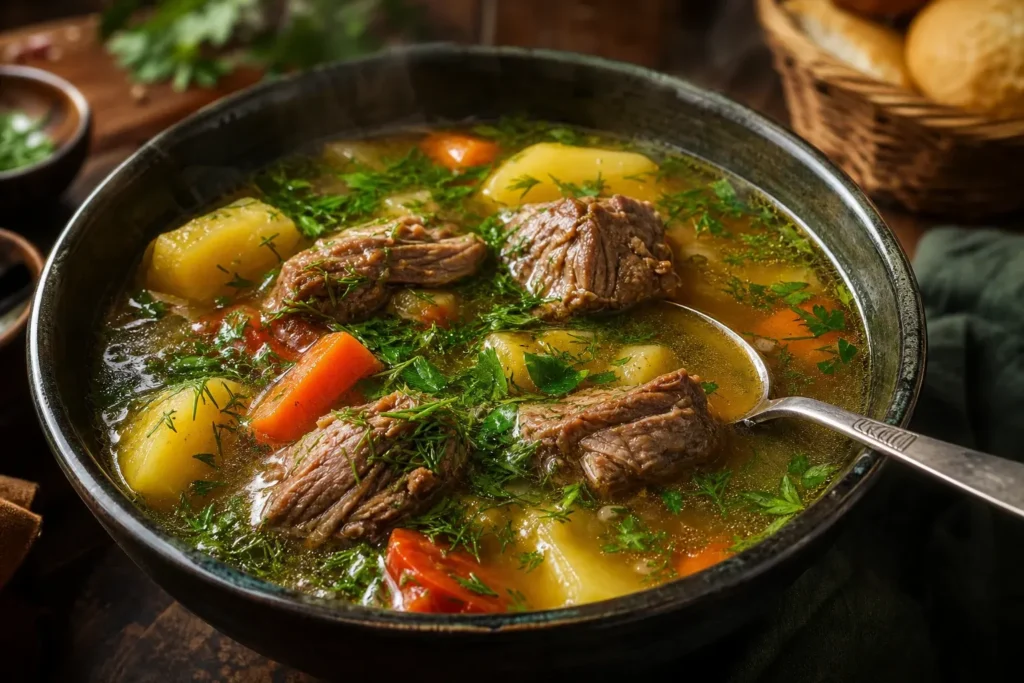
Shurpa is a defining dish of Tatar cuisine from Kazan and remains popular across the Volga region and wider Central Asia. This article teaches you how to cook a traditional Shurpa Kazan traditional Tatar soup recipe at home, starting from raw ingredients and simple technique.
The result is a thick, warming soup that captures centuries of culinary tradition. Unlike delicate broths, shurpa is meant to be substantial—full of chunky meat and vegetables in a richly flavored broth. This recipe serves 2–4 people and requires patience rather than skill; most of the time is spent simmering.
Quick answer: Brown seasoned meat, simmer it for 1.5 hours to create a base broth, then add cut vegetables and herbs and cook for another 30–40 minutes until potatoes are tender. Total cooking time is 2–2.5 hours; the dish is best served hot in deep bowls with the broth.
At a Glance
| Type | Dishes |
|---|---|
| Local name | Шурпа |
| Origin | The word shurpa derives from the Arabic word "shurbah" meaning gravy. According to historic sources, the first shurpa recipe dates back to the first century BC when people living in Central Asia started using clay and stone utensils for cooking. Tatar cuisine is rich in traditions, and main specialties include meat soups with floury dressings and noodles (shurpa). Tatar cuisine was influenced by the surrounding peoples and also peoples of Central Asia, especially Uzbeks. |
| Servings | 2–4 servings |
| Total time | 2–2.5 hours |
| Difficulty | Easy |
History and Story of Shurpa, Kazan
Soups and broths (shurpa) were usually cooked using meat, and meat pulled from the soup was often used as the second course. Because this stew was a perfect fit for nomadic tribes, it became very popular among Arab Nomads in the Middle Ages. It’s also widely accepted that shurpa was the favorite dish of Tamerlane, one of the greatest medieval conquerors. The dish reached Tatarstan and Russia through Central Asian trade routes and cultural exchange, and it remains central to Tatar culinary identity in Kazan.
Ingredients
- 500–600 g lamb or beef (preferably on the bone)
- 2 large onions
- 3 medium potatoes
- 2 medium carrots
- 200 g fresh tomatoes (or 2 tomatoes)
- 2 liters water
- Fresh dill and parsley, handful each
- Salt, black pepper, cumin, coriander (to taste)
- 2 tablespoons oil or meat fat
How Shurpa, Kazan Is Made
Step 1: Prepare the meat
Cut the lamb or beef into large chunks (leaving bones on if present). Rinse under cold water. You can choose rib cuts, shoulder, or leg meat—all work well in shurpa. Pat dry with paper towels.
Tip: Bone-in meat gives a richer, fuller broth; boneless meat cooks faster.
Step 2: Build the broth
Put large pieces of meat and bones into cold water and boil them for 1.5–2 hours. As the water starts to boil, turn down the fire. Then take the meat and bones out and separate the meat from the bones. Cut the meat into small even pieces and put them back into the broth. Skim off any foam that rises to the surface in the first few minutes.
Tip: Starting with cold water helps draw out flavors; keeping the heat low prevents a murky broth.
Step 3: Prepare vegetables
While the broth simmers, peel and cut the potatoes into large chunks (roughly 5 cm each). Cut carrots into thick half-moons about 1 cm thick. Slice onions into half-rings. Chop fresh tomatoes into quarters. Crush or mince garlic cloves.
Tip: Large vegetable pieces stay intact during long cooking and look better in the finished soup.
Step 4: Add vegetables to broth
Add vegetables cut into large pieces and boil the soup on small fire so that the vegetables can gradually become soft. The sour tomatoes may prevent the potatoes from boiling up properly, which is why the tomatoes should be added at the end of the cooking process, together with herbs and spices.
Tip: Do not add tomatoes until the final 10 minutes, or they may make potatoes mushy.
Step 5: Season and finish
Stir in salt, black pepper, cumin, and ground coriander. Add crushed garlic and fresh dill and parsley just before serving. Taste the broth and adjust seasoning. The soup should be savory and warming, never spicy.
Tip: Herbs and spices vary from region, but almost everywhere it is composed of parsley, dill, cilantro, red pepper.
Step 6: Serve hot
Ladle shurpa into deep bowls, making sure each serving has meat, vegetables, and plenty of broth. Shurpa is always served hot, never at room temperature. Accompany with crusty bread if desired.
Tip: Shurpa can be made a day ahead and reheated; flavors deepen overnight.
Variants
- Kaynatma shurpa: boiled version without frying, lighter and less oily
- Kovurma shurpa: meat and vegetables seared in oil first before adding broth
- Shurpa with chickpeas (nohat shurpa): adds soaked chickpeas or beans for texture
- Fish shurpa (Uzbek aces sorpa): uses fish stock and fresh fish instead of meat
- Caucasus shurpa: includes additional garlic, fresh chili, and sometimes dried fruit
Common Mistakes to Avoid
- Adding all vegetables at once: potatoes disintegrate while carrots remain hard. Add them in stages so they cook evenly.
- Cutting vegetables too small: they break apart and make the broth cloudy. Aim for large, sturdy chunks.
- Skipping the initial long simmer: meat cooked quickly becomes tough. The first 1.5–2 hours of gentle simmering makes it tender.
- Over-seasoning with paprika or chili: shurpa from Tatarstan is mild and savory, not spicy. Add heat only if you prefer a Caucasus-style variant.
- Using boiling water: start with cold water so the meat releases gelatin gradually and the broth becomes rich and clear.
- Rushing the cook time: shurpa cannot be hurried. Low heat and time create the signature thick, unctuous texture.
How to Order and Eat It
Shurpa is eaten as a main course, not an appetizer. Each bowl should contain a generous portion of meat, several vegetable pieces, and plenty of broth. In traditional Tatar meals, the soup is followed by bread and sometimes a second course made from leftover meat from the broth. Eat with a spoon, drawing up chunks of meat and vegetable with each spoonful. The broth is the soul of the dish—do not leave it in the bowl.
To order: Шурпа, пожалуйста [Shurpa, pozhaluysta]
Diet and Allergens
- Contains meat
Russia Vibes Tips
- Make a double batch and freeze half in containers. Shurpa freezes well and tastes better on reheating once flavors have melded. It keeps for up to 3 months.
- If you cannot find fresh meat with bone, ask a butcher to cut lamb ribs or beef ribs into chunks. This is cheaper than boneless cuts and gives superior flavor.
- In winter, shurpa is often served with pirozhki (small baked pastries) or fresh bread. In summer, a lighter version with more vegetables and less fat is preferred.
- Fresh herbs matter: dried parsley and dill do not give the same brightness. If fresh are unavailable, add them just before serving so they do not wilt into the broth.
- Skim the broth carefully after the first 10 minutes of boiling meat. This removes impurities and gives a clearer, cleaner-tasting soup.
Explore Nearby Shurpa, Kazan
Related guides
 Local Food & Market Walk, Yekaterinburg: Central Market, Pelmeni and Street Eats
Main image: AI-generated illustration. It may not show the place exactly as it looks.
Browse more: All Food & Drink · All Food & Drink in Kazan · All Kazan · All Other
FAQ
Can I make shurpa with chicken instead of lamb or beef?
While lamb is the most common protein, variations include beef, chicken, or even fish. Chicken shurpa will be lighter and cook faster (about 1 hour total). Use bone-in chicken thighs or a whole bird cut into large pieces for best flavor.
How is shurpa different from regular soup?
Shurpa is a hearty, thick stew that ranks among the most popular main course dishes of Uzbek cuisine. Unlike clear broths, shurpa is meant to be filling with substantial meat and large vegetable pieces. It functions as a complete meal, not a first course.
Can I use a slow cooker or oven instead of stovetop?
Yes. Shurpa can be cooked when you have a few hours to spare, by just putting together all the ingredients in an ovenproof dish with enough water, covering and slow-cooking at 180°C for a couple of hours. This method is gentler and requires no monitoring.
What if I do not have fresh herbs?
If fresh dill and parsley are unavailable, you may omit them or use very small amounts of dried herbs. The core flavors come from the meat, vegetables, and spices like cumin and coriander. Add dried herbs only if you have them; the soup will still be delicious without.
Is shurpa typically spicy?
No. Traditional Tatar shurpa from Kazan is mild and savory with warm spices like cumin. Black pepper is used sparingly. Some Caucasus and Central Asian regional variants include fresh or dried chili, but Tatar shurpa does not.
How much time can I save if I use boneless meat?
Boneless meat cooks 20–30 minutes faster than bone-in pieces. Instead of 1.5–2 hours for the initial broth, boneless meat may be tender in 1–1.5 hours. You lose some depth of flavor from the bones, but the soup is still very good.
Can I add other vegetables like cabbage or bell peppers?
Yes, shurpa is flexible. Cabbage, bell peppers, and zucchini all work well. Add them at the same time as the other vegetables. Avoid adding them too early (they disintegrate) or too late (they may not soften).
What is the white foam that appears when boiling the meat?
This is impurities (proteins and fat) rising to the surface. Skim it off with a spoon or ladle in the first 5–10 minutes of cooking. Removing it gives a clearer, cleaner-tasting broth.
Russia Vibes is a one-person project. A coffee keeps it going
How we research and update our guides
About this guide: AI assistance and accuracy
This guide is created with the help of AI and is based on official sources where available. Mistakes can still happen. Opening hours, prices, rules and other details are given to the best of our knowledge as of the date shown and can change without notice. It offers general recommendations only, not professional, legal or travel advice. Please confirm important details with the official source before you travel; you are responsible for your own plans and decisions.

Take this guide with you
Get a free PDF of this guide to print or read offline: key facts, tips and a map link on a few clean pages.
Report an issue on this page
Paying for your trip: please read
International sanctions affect payments between Russia and many other countries. In practice, cards issued in the EU, the UK, the US and several other countries often do not work in Russia, Russian cards usually do not work abroad, and some booking platforms, airlines and payment providers limit or suspend their services for Russia. The situation changes frequently.
We do not give legal or financial advice, and this site does not encourage anyone to break or circumvent sanctions. Whatever you plan, you are responsible for following the laws and regulations that apply to you, including those of your country of residence and citizenship.
Many travelers still organise their stay lawfully. It is worth asking your bank or payment provider what is currently permitted, contacting hotels, tour operators and carriers directly about the payment methods they accept, and checking which services are open to customers from your country. Clarify payment, cancellation and refund terms before you commit to a booking, and keep your plans flexible.
Partner links on this site may not be available in every country, and prices, availability and rules in our guides can differ from what you see when you book.