
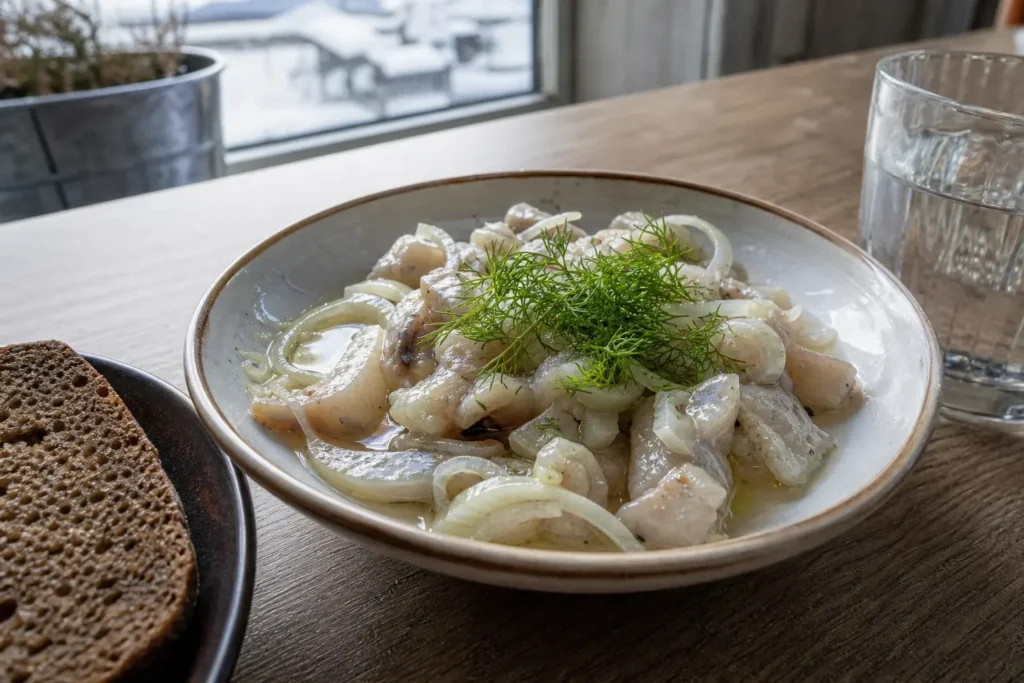
Sagudai is a traditional Buryat dish from the Irkutsk region, built on one simple principle: the freshest cold-water fish needs only onion, vinegar, oil and salt to become something memorable. This appetizer belongs to a global family of cured-fish dishes—think ceviche or crudo—but reflects the specific tastes and ingredients of Lake Baikal and Siberian waters.
This guide walks you through making sagudai at home, using whitefish or omul if you can find it, or substituting salmon, trout or other fresh white fish. The whole process takes 15–30 minutes of hands-on work, depending on marinating time, and produces enough for 2–4 people as a starter or light snack.
Quick answer: Clean fresh white fish (traditionally omul or whitefish from Lake Baikal), cut into bite-sized pieces, and marinate with thinly sliced onion, vinegar, oil, salt and pepper for 15–30 minutes until the flavors meld. No cooking required. Total time: 30–45 minutes including prep.
At a Glance
| Type | Dishes |
|---|---|
| Local name | Сагудай |
| Origin | Buryat tradition, Lake Baikal region, Irkutsk |
| Servings | 2–4 people as a starter |
| Total time | 30–45 minutes |
| Difficulty | Easy |
History and Story of Sagudai, Irkutsk
Sagudai emerges from Buryat fishing traditions around Lake Baikal in Siberia. For centuries, Buryat fishermen preserved their catch with salt, vinegar, and onion—a practical technique that required no fire or extended cooking. The name and method are shared across northern Siberia and among indigenous peoples of the Arctic. It represents both resourcefulness and a deep understanding of how acid and salt can transform fresh fish into a preserved appetizer. Today it remains a signature dish of the Baikal region, served in restaurants alongside other traditional Buryat cuisine.
Ingredients
- 500–700 g fresh white fish fillet (omul, whitefish, trout or salmon)
- 1 large onion, thinly sliced
- 30 ml white wine vinegar or white vinegar
- 30 ml vegetable or olive oil
- Salt and black pepper to taste
- Sharp knife and cutting board
- Glass or ceramic bowl (not metal)
How Sagudai, Irkutsk Is Made
Step 1: Prepare the fish
Choose firm, fresh fish with no off smell. Rinse it under cold water, pat dry with paper towels. Using a sharp knife, remove the skin (you may freeze the fillet for 30 minutes first to make this easier). Carefully remove all bones, working from the thickest part toward the tail. If you are unsure, buy a boneless fillet.
Tip: Ask your fishmonger to fillet the fish and remove the skin if you prefer.
Step 2: Cut the fish
Cut the clean fillet into bite-sized pieces, roughly 1–2 cm cubes or thin strips. Aim for even pieces so they marinate at the same rate. Uneven, ragged cuts will fall apart.
Tip: Partially freeze the fillet for 20 minutes before cutting to get cleaner pieces.
Step 3: Prepare the onion
Peel and slice the onion into thin rings or half-moons, about 2–3 mm thick. Place the sliced onion in a small bowl and pour boiling water over it. Let sit for 1 minute, then drain and pat dry with paper towels. This step softens the bite and removes excess harshness.
Tip: Use a mandoline or sharp knife to get uniformly thin slices.
Step 4: Combine fish and onion
Transfer the fish pieces to a glass or ceramic bowl (avoid metal, which can react with vinegar). Add the drained onion. Gently toss to combine so the onions and fish are evenly mixed.
Tip: Use a wooden spoon or your hands to avoid damaging delicate fish pieces.
Step 5: Add vinegar, oil and seasoning
Pour the vinegar and oil over the fish and onion. Sprinkle with salt and freshly ground black pepper. Stir gently but thoroughly until everything is coated. Taste and adjust seasoning—it should taste sharp from vinegar and balanced by oil.
Step 6: Marinate
Cover the bowl and refrigerate for 15–30 minutes. Taste after 15 minutes; the longer it sits, the more the flavors marry and the acid begins to 'cook' the raw fish slightly. If you prefer a more cured texture, leave it for 30 minutes. Do not marinate longer than 1 hour, or the fish will become too soft.
Tip: Stir gently halfway through marinating for even flavor distribution.
Step 7: Serve
Transfer to a serving bowl or individual small plates. Drain any excess brine if you prefer, or serve with some of the liquid as a dressing. Serve cold, preferably with dark rye bread, fresh dill, or thinly sliced apple on the side.
Tip: Eat within a few hours; this dish is best consumed fresh.
Variants
- With lemon juice instead of vinegar for a brighter, less acidic flavor
- With grated or thinly sliced apple folded in just before serving, adding sweetness and crunch
- With fresh dill or parsley mixed in during marinating
- With salmon or trout fillets for a richer, fattier taste (traditional omul is leaner)
- Cold-smoked fish variant, where fish is briefly cold-smoked before marinating
- With a touch of sugar in the marinade to balance salt and acid
Common Mistakes to Avoid
- Using old or previously frozen-then-thawed fish: sagudai depends entirely on freshness. If the fish smells anything other than clean and briny, do not use it.
- Not removing all bones carefully: small bones left behind will spoil the eating experience. Take extra time when cleaning.
- Marinating too long: over 1 hour and the acid will turn the fish mushy and the flavor too sour. Aim for 15–30 minutes.
- Using metal bowls or utensils: vinegar reacts with metal and can impart an off taste. Always use glass, ceramic, or wood.
- Skipping the blanch of onion: raw onion is sharp and bitter. Briefly blanching with boiling water softens it and makes the final dish more balanced.
- Cutting fish unevenly: large chunks will take longer to marinate than tiny pieces, resulting in inconsistent texture. Aim for uniform 1–2 cm pieces.
How to Order and Eat It
Serve sagudai cold on small plates or in bowls, ideally as a shared starter. Eat with a small fork or wooden spoon directly from the bowl, or place pieces on dark rye bread or thin crackers. In Irkutsk restaurants, it often arrives with a small glass of vodka or a plate of boiled potatoes on the side. The contrast between the cold, briny fish and warm potatoes, or the sharpness of sagudai against the softness of rye bread, is central to the experience. Drink cold water or vodka between bites to cleanse the palate.
To order: Сагудай пожалуйста [Sagudai pozhaluysta]
Diet and Allergens
- gluten-free
- dairy-free
Where to Try Sagudai, Irkutsk
Irkutsk
 Restoratsiya Kuptsa Nemchinova, Irkutsk Siberian and Russian merchant cuisine with Baikal fish and taiga products
Main image: AI-generated illustration. It may not show the place exactly as it looks.
 Pepel, Irkutsk Baikal-region cuisine of the late 19th century, with Siberian, nomadic and French-influenced merchant dishes
Main image: AI-generated illustration. It may not show the place exactly as it looks.
 Lamu, Irkutsk Modern Baikal and Siberian cuisine with local fish, game and wild ingredients
Main image: AI-generated illustration. It may not show the place exactly as it looks.
 Ohotnikov, Irkutsk Siberian cuisine with wild game and fish, steakhouse dishes and open-fire cooking
Main image: AI-generated illustration. It may not show the place exactly as it looks.
 Partizan, Irkutsk Siberian and Russian cuisine, with Baikal fish and local game
Main image: AI-generated illustration. It may not show the place exactly as it looks.
Russia Vibes Tips
- If buying frozen omul or whitefish, thaw it slowly in the refrigerator overnight before using, never at room temperature. This preserves texture and reduces the risk of spoilage.
- The fattier the fish, the better the dish. Omul and whitefish are ideal because their natural oils balance the vinegar's sharpness. Lean white fish can taste too thin.
- Vinegar type matters: white wine vinegar or rice vinegar gives a softer edge than harsh distilled white vinegar. Avoid overly aromatic vinegars like balsamic or red wine vinegar, which overpower the fish.
- If you cannot find fresh fish suitable for raw consumption, do not attempt sagudai with supermarket fish that has been sitting for days. The acidic marinade will not make unsafe fish safe.
- Serve immediately after marinating, or cover and refrigerate for up to 4–6 hours. Sagudai does not improve with long storage; eat it fresh.
Explore Nearby Sagudai, Irkutsk
Browse more: All Food & Drink · All Food & Drink in Irkutsk · All Irkutsk · All Other
FAQ
Is sagudai safe to eat raw?
Sagudai relies on the acid (vinegar or lemon) and salt to partially 'cure' the fish. This is not a true cooking process, so food safety depends entirely on using very fresh fish intended for raw consumption. If in doubt about the fish's origin or age, do not make it. Always buy from a reputable fishmonger.
Can I use frozen fish to make sagudai?
Yes, but thaw it completely and slowly in the refrigerator. Some cooks actually prefer previously frozen fish because freezing kills parasites. Ensure it is labeled 'sushi-grade' or 'suitable for raw consumption' if thawed.
What fish works best if I cannot find omul?
Whitefish, salmon, trout, and grayling are all traditional choices. Salmon and trout are fattier and slightly richer. Whitefish is closer in taste and texture to Lake Baikal omul. Avoid lean white fish like cod, which can taste thin.
How long can sagudai sit in the refrigerator?
Best eaten within 2–4 hours of marinating, while the texture is still firm. After 6 hours, the fish begins to soften too much and flavors become one-note. This is not a dish for long storage.
Can I prepare sagudai ahead of time?
Prepare the fish and have all ingredients ready, but combine them just 30 minutes before serving. Marinating ahead will make the final dish mushy and overly sour.
What should I serve with sagudai?
Dark rye bread, boiled potatoes, thinly sliced fresh apple, fresh dill, or dark leafy greens are traditional accompaniments. In restaurants it often arrives with a shot of vodka or a small plate of vegetables.
Is sagudai the same as ceviche?
Both are marinated raw fish dishes, but sagudai uses vinegar as its primary acid (alongside or instead of citrus), while ceviche typically uses lime or lemon juice. The flavor profiles and traditions are distinct, though the cooking method is similar.
Can I add other ingredients like herbs or spices?
Yes. Fresh dill, parsley, or a pinch of ground coriander complement sagudai well. Some recipes add a touch of sugar to balance salt and acid. Avoid heavy spices that will overpower the delicate fish.
Russia Vibes is a one-person project. A coffee keeps it going
How we research and update our guides
About this guide: AI assistance and accuracy
This guide is created with the help of AI and is based on official sources where available. Mistakes can still happen. Opening hours, prices, rules and other details are given to the best of our knowledge as of the date shown and can change without notice. It offers general recommendations only, not professional, legal or travel advice. Please confirm important details with the official source before you travel; you are responsible for your own plans and decisions.

Take this guide with you
Get a free PDF of this guide to print or read offline: key facts, tips and a map link on a few clean pages.
Report an issue on this page
Paying for your trip: please read
International sanctions affect payments between Russia and many other countries. In practice, cards issued in the EU, the UK, the US and several other countries often do not work in Russia, Russian cards usually do not work abroad, and some booking platforms, airlines and payment providers limit or suspend their services for Russia. The situation changes frequently.
We do not give legal or financial advice, and this site does not encourage anyone to break or circumvent sanctions. Whatever you plan, you are responsible for following the laws and regulations that apply to you, including those of your country of residence and citizenship.
Many travelers still organise their stay lawfully. It is worth asking your bank or payment provider what is currently permitted, contacting hotels, tour operators and carriers directly about the payment methods they accept, and checking which services are open to customers from your country. Clarify payment, cancellation and refund terms before you commit to a booking, and keep your plans flexible.
Partner links on this site may not be available in every country, and prices, availability and rules in our guides can differ from what you see when you book.