
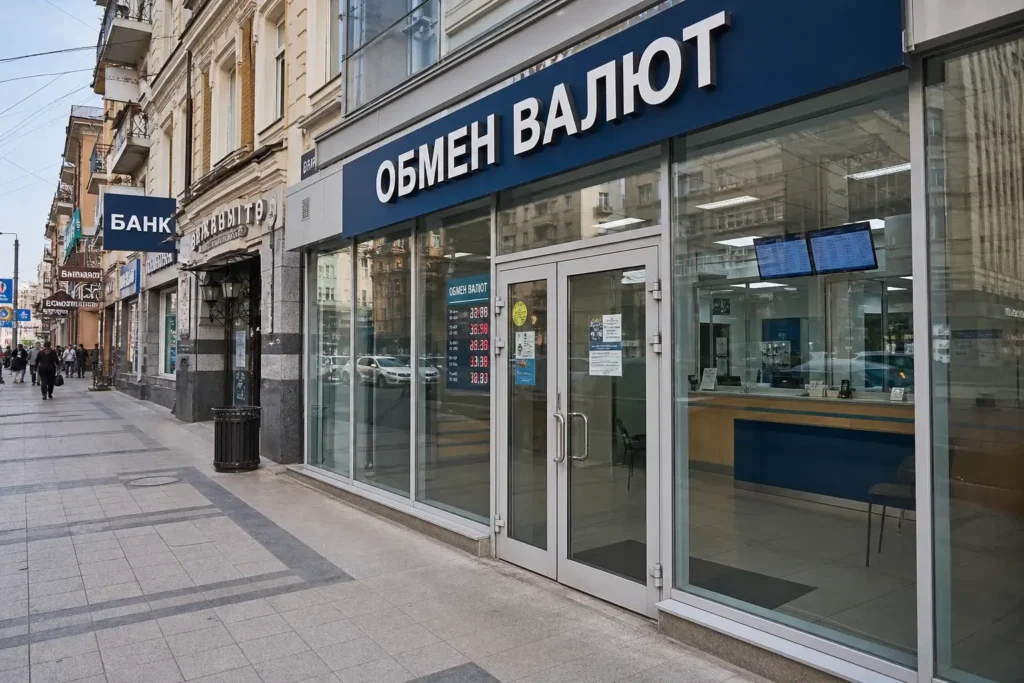
If you’re arriving in Vladivostok with euros, US dollars, or other foreign currency, you’ll need to exchange it for Russian rubles. This guide covers your best options for how to exchange currency in Vladivostok, whether you’re changing money at the airport, the city center, or directly from ATMs.
The recommended approach is to withdraw cash at an ATM after arrival or exchange money at a bank branch in the city center, which offer more reliable rates than airport booths. You’ll need a passport for exchanges exceeding certain amounts.
Quick answer: Visit a bank branch or licensed exchange office in Vladivostok's city center with your foreign currency and passport. Banks such as Sberbank, Primorye Bank, or Alfa-Bank handle exchanges of US dollars, euros, and other major currencies. The process takes 5–15 minutes.Alternatively, use an ATM at the airport or in the city to withdraw rubles directly with your debit or credit card, though check international withdrawal fees with your home bank first.
At a Glance
| Total time | 5–15 minutes at a bank or exchange office; ATM withdrawal takes 2–3 minutes |
|---|---|
| Typical cost | ₽ to ₽₽ (banks may charge 0–3% commission; ATM withdrawals depend on your home bank's fees) |
What You Need Before You Start
- Foreign currency (US dollars, euros, or other major currencies in clean, undamaged notes)
- Passport (required for larger exchanges)
- Debit or credit card (for ATM withdrawals)
- Knowledge of your home bank's international withdrawal fees and policies
Compare Your Options
| Option | Duration | Price | Notes |
|---|---|---|---|
| Bank branches in the city center | 5–15 minutes | ₽₽ | Sberbank, Primorye Bank, Alfa-Bank, and Solid Bank offer reliable rates and transparent pricing. Most banks are open Monday–Friday, 10 a.m.–7 p.m. Safe, official option. Rates vary by bank, so checking multiple locations for large amounts is worthwhile. |
| Licensed exchange offices in the city center | 5–10 minutes | ₽₽ | Found along major streets. Often charge no commission or lower commissions than banks, though rates can vary. Generally open during business hours (roughly 10 a.m.–6 p.m.) but confirm locally. Check the displayed rate before agreeing. |
| ATM withdrawal with debit/credit card | 2–3 minutes | ₽ | Available 24/7 at banks, airport (Terminal A, Level 1), hotels, supermarkets, and train station. Convenient but your home bank may charge international withdrawal fees. Check your bank's policy beforehand. |
| Airport exchange booth | 5–10 minutes | ₽₽₽ | Located at Vladivostok International Airport (Sberbank on Level 3, landside). Limited hours and typically poor exchange rates. Only use if you have no alternative before leaving the airport or have a late arrival. |
₽ budget · ₽₽ moderate · ₽₽₽ upscale · ₽₽₽₽ splurge. Price levels are estimates compared with typical prices for visitors.
Step-by-Step Instructions
Step 1: Locate a bank or exchange office in the city center
Head to one of Vladivostok's main banks such as Sberbank, Primorye Bank (Svetlanskaya Street, 47), Alfa-Bank, or Solid Bank (Aleutskaya Street, 33). Licensed exchange offices are also found along major streets in the city center. Most banks are open Monday to Friday, roughly 10 a.m. to 7 p.m., though hours vary. ATMs are available 24/7 at bank branches, hotels, supermarkets, train station, and airport.
Tip: Bring larger denomination notes (euros and dollars) as they often get better exchange rates than small bills.
Step 2: Check the exchange rate displayed
Look at the rate posted on the board or screen at the counter. Rates vary between banks and exchange offices. Compare rates at a couple of locations if you're exchanging a large sum. The rate should be the same rate you receive when you hand over your currency.
Tip: Licensed exchange offices sometimes offer slightly better rates than banks because they don't charge commission, though this varies.
Step 3: Present your passport if required
If your exchange exceeds a certain threshold (typically around 40,000 rubles' worth), you'll need to show your passport. Have it ready and keep it safe after the transaction. The staff will record your details for compliance purposes.
Tip: Keep your receipt as proof of the exchange in case of issues later.
Step 4: Hand over your foreign currency
Count your notes and hand them to the teller. Ensure all notes are clean and undamaged, as torn or marked banknotes may be refused or discounted. The teller will count and verify the currency before processing.
Tip: Count your money before leaving the counter to make sure the amount is correct.
Step 5: Receive your rubles
The teller will hand you your rubles in cash. Verify the amount matches the agreed rate. Some banks and offices may charge a commission of 0–3%, which should be deducted from the final sum. Take your receipt.
Tip: Check your notes for security features and count one more time before leaving.
Step 6: Alternative: withdraw from an ATM
If you prefer to use a debit or credit card instead, locate an ATM at the airport (Level 1, landside, near the escalator), a bank branch, hotel, or supermarket. Insert your card, select withdrawal in rubles, and confirm the transaction. Your home bank may charge foreign transaction fees.
Tip: Ask your bank before traveling about international withdrawal limits and fees to avoid surprises.
Common Mistakes to Avoid
- Exchanging at the airport: airport booths offer unfavorable rates compared to the city center. Use the airport ATM or exchange minimal cash, then visit a bank in the city for better rates.
- Arriving with damaged or old notes: banks refuse torn, marked, or severely damaged banknotes, or apply discounts. Bring clean notes in good condition; bring large denominations (€100/$100) rather than small bills.
- Not confirming the final rate before handing over cash: rates vary between providers. Confirm the exact ruble amount you'll receive before giving your currency to the teller, and count your money before leaving the counter.
- Trying to exchange at night or on weekends: most banks and licensed offices are closed after 7 p.m. and on weekends. Plan exchanges during business hours (Monday–Friday, roughly 10 a.m.–7 p.m.). Use ATMs for 24/7 access.
- Exchanging money on the street: illegal and dangerous. Street touts and individuals use short-changing and counterfeit notes. Only exchange at official banks or clearly licensed offices.
- Forgetting to notify your home bank: some banks block transactions from Russia if they detect unusual activity. Contact your bank before traveling to avoid your card being frozen during withdrawal.
Tickets, Payment and Booking
Official sources and payment methods:
- Banks: Visit branches of Sberbank (the largest network), Primorye Bank, Alfa-Bank, or Solid Bank directly. Most accept cash in major currencies (US dollars, euros, Japanese yen, Chinese yuan). Bring your passport for compliance.
- Licensed exchange offices: Look for signage saying ‘Обмен валют’ (Currency Exchange). Confirm the rate on the posted board before approaching the counter.
- ATMs: Available 24/7. Insert your debit or credit card (Visa or Mastercard issued by foreign banks). Note that cards issued outside Russia may have withdrawal restrictions; check with your bank beforehand.
- Payment restrictions: Foreign Visa and Mastercard issued outside Russia cannot withdraw cash directly in rubles due to sanctions; ATMs will accept them for some transactions, but check with your card issuer. Cards from Russian payment systems (Mir, UnionPay) work without restrictions.
- Warning: Do not use street changers or unofficial money transfer services. Only exchange at official banks or licensed offices with posted rates. Avoid resellers and touts.
Russia Vibes Tips
- If you arrive after business hours: Use the airport ATM to withdraw enough for a taxi to the city, then exchange the rest at a bank the following day. This avoids unfavorable airport rates and gives you cash without relying on an ATM fee.
- Bring US dollars or euros: These are the most widely accepted currencies and often have the best rates. Japanese yen and Chinese yuan are also accepted but rates may be less favorable.
- Check multiple locations for large amounts: If you're exchanging a significant sum, visit two or three banks to compare rates. The difference between banks can be noticeable.
- Bring your passport: Even for smaller exchanges, have your passport on hand. Banks require it for exchanges above a certain threshold, and presenting it upfront avoids delays.
- Use the city center, not hotels: Hotel exchange rates are typically worse than banks. Always visit a bank branch or licensed office in the city center instead.
Explore Nearby How to Exchange Currency in Vladivostok, Vladivostok
Browse more: All How-To · All How-To in Vladivostok · All Money and Cards · All Vladivostok
FAQ
Can I exchange currency at the airport?
Yes, but avoid it if possible. Sberbank operates an exchange booth on Level 3, landside, but airport rates are significantly higher than in the city center. Use the airport ATM instead to withdraw a small amount for transport, then exchange at a bank in the city.
What currencies can I exchange?
US dollars and euros are most widely accepted and offer the best rates. Japanese yen and Chinese yuan are also accepted at most banks in Vladivostok but may have slightly less favorable rates. Small currencies and damaged notes may be rejected.
Do I need my passport to exchange currency?
You'll need it for exchanges above a certain threshold (roughly 40,000 rubles' worth). Even for smaller amounts, it's wise to carry your passport in case you need to verify your identity. Always keep your passport safe.
Are there any fees or commissions?
Most banks charge 0–3% commission on currency exchanges. Licensed exchange offices may charge no commission or lower fees. ATM withdrawals incur a fee set by your home bank, not the Russian bank. Always ask about fees before exchanging.
What are the bank and exchange office hours?
Most banks are open Monday–Friday, roughly 10 a.m. to 7 p.m., with reduced or no Saturday hours. Licensed exchange offices follow similar schedules. ATMs operate 24/7. Always call or check locally for specific hours, as they vary by location.
Can I use a foreign credit card to withdraw cash?
Debit and credit cards issued outside Russia (Visa, Mastercard) may have withdrawal restrictions due to sanctions; check with your card issuer before traveling. Cards from Russian payment systems (Mir, UnionPay) work without restrictions. ATM availability and terms depend on your bank and the Russian bank operating the ATM.
Where can I find ATMs in Vladivostok?
ATMs are located at the airport (Terminal A, Level 1), train station, bank branches, hotels, supermarkets, and along major streets. Most dispense rubles only; a few offer US dollars. All operate 24/7.
What should I avoid when exchanging currency?
Never exchange money on the street or with individuals—it's illegal and you risk scams. Don't bring damaged or old banknotes; they'll be refused or heavily discounted. Avoid exchanging at hotels or the airport. Count your money before leaving the counter.
Russia Vibes is a one-person project. A coffee keeps it going
Not legal advice. This is general information for visitors. Rules on visas, entry, registration, customs and similar matters change often and can depend on your nationality. Check the official source and, if in doubt, ask your embassy or a qualified adviser.
How we research and update our guides
About this guide: AI assistance and accuracy
This guide is created with the help of AI and is based on official sources where available. Mistakes can still happen. Opening hours, prices, rules and other details are given to the best of our knowledge as of the date shown and can change without notice. It offers general recommendations only, not professional, legal or travel advice. Please confirm important details with the official source before you travel; you are responsible for your own plans and decisions.

Take this guide with you
Get a free PDF of this guide to print or read offline: key facts, tips and a map link on a few clean pages.
Report an issue on this page
Paying for your trip: please read
International sanctions affect payments between Russia and many other countries. In practice, cards issued in the EU, the UK, the US and several other countries often do not work in Russia, Russian cards usually do not work abroad, and some booking platforms, airlines and payment providers limit or suspend their services for Russia. The situation changes frequently.
We do not give legal or financial advice, and this site does not encourage anyone to break or circumvent sanctions. Whatever you plan, you are responsible for following the laws and regulations that apply to you, including those of your country of residence and citizenship.
Many travelers still organise their stay lawfully. It is worth asking your bank or payment provider what is currently permitted, contacting hotels, tour operators and carriers directly about the payment methods they accept, and checking which services are open to customers from your country. Clarify payment, cancellation and refund terms before you commit to a booking, and keep your plans flexible.
Partner links on this site may not be available in every country, and prices, availability and rules in our guides can differ from what you see when you book.