
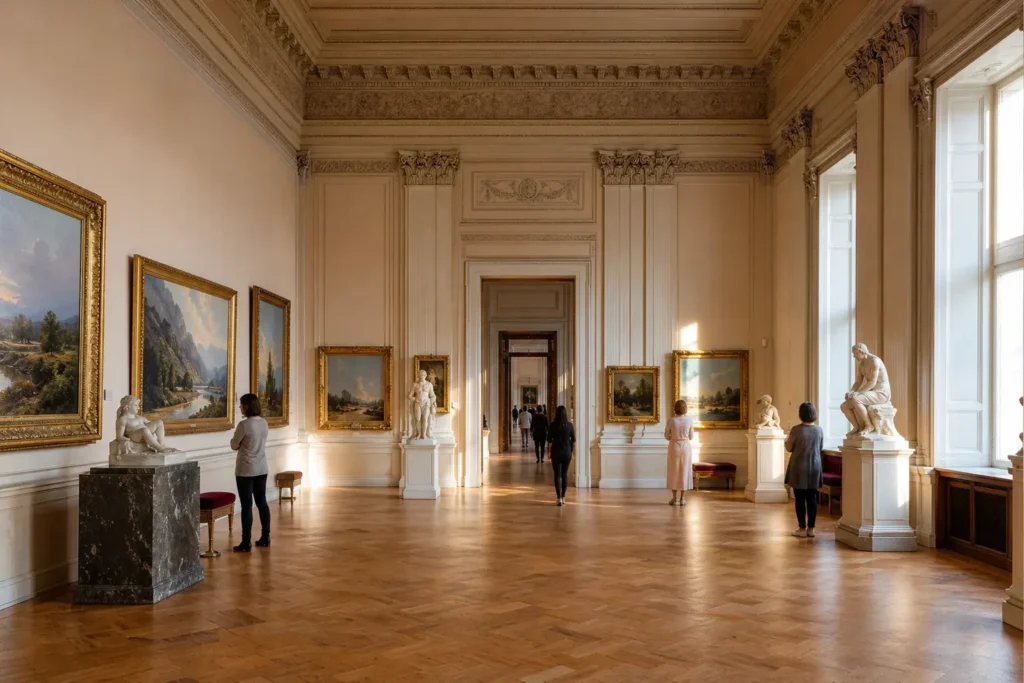
If you’re visiting Nizhny Novgorod for the first time, the city’s museums offer concentrated encounters with Russian art, regional history, and local craftsmanship. This guide covers 10 essential museums chosen for their significance to first-time visitors, mix of art and history, walkable central locations, and proven accessibility.
Most are clustered around the Kremlin or a short walk away on Bolshaya Pokrovskaya Street, allowing you to build a coherent itinerary rather than scatter your time across the city.
At a Glance
| # | Place | Best for | Good to know |
|---|---|---|---|
| 1 | Nizhny Novgorod State Art Museum | Oldest art collection in the region | Kremlin, building 3; or Upper Volga Embankment, building 3. Paid entry. Official website: www.artmuseumnn.ru |
| 2 | Nizhny Novgorod State Museum of History and Architecture | Grand estate and city history | Upper Volga Embankment, 7. Paid entry; guided tours available. Phone: +7-831-422-10-51 |
| 3 | Arsenal National Centre of Contemporary Art | Modern art and cultural events | Kremlin, Nizhny Novgorod. Paid entry (prices vary by exhibition). Check official site for current programming. |
| 4 | Museum of Nizhny Novgorod Arts and Crafts History | Folk traditions and village life | 43 Bolshaya Pokrovskaya Street. Paid entry. Phone: +7-831-282-25-43 |
| 5 | Museum of Folk Architecture and Life of the Peoples of Volga | Wooden buildings and ethnography | Gorbatovskaya Street, 41. Paid entry. Hours: 10:00–17:00 daily. |
| 6 | Kashirin House (Maxim Gorky Childhood Museum) | Literary history and domestic interior | Central location in Nizhny Novgorod. Paid entry. Hours and exact address available from official Nizhny Novgorod tourism information. |
| 7 | Museum of Steam Locomotives (Gorkovskiy Locomotive Museum) | Russian railway heritage | Gorokhovetskaya Street, 12. Paid entry. Weather-dependent; best visited in dry conditions. |
| 8 | The Sakharov Museum | 20th-century Soviet history | Nizhny Novgorod centre. Paid entry. English written guides provided by curators. |
| 9 | Museum of Interactive Science Quarks | Hands-on science exhibits | Nizhny Novgorod centre. Paid entry. Hours: check official site for current schedule. |
| 10 | Russian Museum of Photography | Photography collection and visual culture | Central Nizhny Novgorod location. Paid entry. Hours available from tourism information. |
How We Chose
Entries were selected based on:
- Official status as operating museums in Nizhny Novgorod, verified through institutional websites
- Accessibility to visitors and clear visitor information published by the institutions
- Suitability for first-time visitors: places that convey the city’s artistic heritage, regional identity, and historical significance
- Central location or convenient public transport access
- Clear entry procedures and ticket information available from official sources
1. Nizhny Novgorod State Art Museum – Oldest art collection in the region
Opened in 1896 and housed in two buildings, this is one of Russia's oldest regional art museums. The main collection at the Kremlin building displays Russian paintings, graphics, and decorative arts from the 14th to 20th centuries. The Sirotkin House branch, a 10-minute walk away on the Upper Volga embankment, holds Western European works. The collection totals over 10,000 pieces, including works by major Russian masters.
First-time visitors should know: The museum spans two separate locations. Entry tickets are typically valid for one building; visiting both requires separate tickets or combination tickets when available.
Good to know: Kremlin, building 3; or Upper Volga Embankment, building 3. Paid entry. Official website: www.artmuseumnn.ru
Tip: The Sirotkin House location offers exceptional views of the Volga River confluence and feels less crowded than the Kremlin branch. Both locations have good air quality and comfortable viewing conditions.
2. Nizhny Novgorod State Museum of History and Architecture – Grand estate and city history
Located in the restored Rukavishnikov Estate, this museum serves as the main branch of a network covering Nizhny Novgorod's historical sites. The estate itself is a 19th-century architectural monument with elegant rooms and period furnishings. Inside, exhibits cover the city's development, the Rukavishnikov merchant family, numismatic collections, and themed exhibitions on local history. The museum runs thematic exhibitions with additional fees.
First-time visitors should know: The building's architecture and interior spaces are part of the experience; guided tours offer richer context than self-guided visits.
Good to know: Upper Volga Embankment, 7. Paid entry; guided tours available. Phone: +7-831-422-10-51
Tip: Book a guided tour if possible—the curatorial information about the family and building history is sparse without it. The grounds offer pleasant views over the Volga.
3. Arsenal National Centre of Contemporary Art – Modern art and cultural events
Housed in the former Kremlin arsenal, this is Nizhny Novgorod's dedicated contemporary art venue. Beyond rotating exhibitions focused on modern artistic movements, the centre hosts concerts, film screenings, theatre performances, and lectures. The industrial setting—exposed brick and vaulted ceilings—complements the cutting-edge programming. Exhibitions change every few months.
First-time visitors should know: This is a working cultural centre, not a static collection. Your experience depends on which exhibition or event is on during your visit.
Good to know: Kremlin, Nizhny Novgorod. Paid entry (prices vary by exhibition). Check official site for current programming.
Tip: Look ahead to the current exhibition or event calendar before visiting, so you know what to expect. Evening performances and film nights offer a different atmosphere from daytime viewing.
4. Museum of Nizhny Novgorod Arts and Crafts History – Folk traditions and village life
A compact branch museum on Bolshaya Pokrovskaya Street that specializes in regional folk art and craft from the 17th to 21st centuries. The exhibits include a recreated peasant interior with decorative architraves, carved wooden gates, furniture with traditional symbols, and examples of local textile and ceramic work. The collection showcases the applied arts that defined life in the Volga region.
First-time visitors should know: This is a focused, intimate space rather than a sprawling collection. It complements the larger art museum by showing everyday craft rather than fine art.
Good to know: 43 Bolshaya Pokrovskaya Street. Paid entry. Phone: +7-831-282-25-43
Tip: Located on the city's main pedestrian street; easy to visit between other attractions. Guided tours in English are available and add significant context to the displays.
5. Museum of Folk Architecture and Life of the Peoples of Volga – Wooden buildings and ethnography
An open-air or partially indoor museum showcasing wooden architecture and everyday life of the Volga region peoples from the 17th to 19th centuries. Exhibits include a reconstructed peasant home with pallet beds, household items, and village-style structures. The collection illustrates the domestic material culture and building traditions of the region before industrial development.
First-time visitors should know: This combines indoor exhibits with period structures; dress accordingly if visiting in winter. It offers a tangible sense of pre-modern village life.
Good to know: Gorbatovskaya Street, 41. Paid entry. Hours: 10:00–17:00 daily.
Tip: Best visited in warmer seasons if you want to see the open-air structures comfortably. The museum is at the edge of Shchelkovsky Khutor park, so you can combine it with a walk in green space.
6. Kashirin House (Maxim Gorky Childhood Museum) – Literary history and domestic interior
The childhood home of writer Maxim Gorky, preserved as a period-furnished museum showing domestic life in a merchant family home of the late 19th century. Rooms display furniture, photographs, and personal items from Gorky's youth. The modest interior reveals much about the living conditions and family atmosphere that shaped one of Russia's most important literary figures.
First-time visitors should know: This is a house museum focused on a single biographical period, not a comprehensive literary exhibition. Its appeal lies in the intimate domestic setting and Gorky connection.
Good to know: Central location in Nizhny Novgorod. Paid entry. Hours and exact address available from official Nizhny Novgorod tourism information.
Tip: If you're interested in Russian literature or early 20th-century domestic life, this offers nuanced social history alongside literary biography.
7. Museum of Steam Locomotives (Gorkovskiy Locomotive Museum) – Russian railway heritage
An open-air display of Russian and Soviet-era steam locomotives built before 1950, including engines from various countries. About 15 engines represent different eras of railway development. Visitors can study the mechanical design and industrial craftsmanship of engines that powered the Trans-Siberian and other major routes. Technical plaques explain each locomotive's history and specifications.
First-time visitors should know: This is an outdoor, largely self-guided collection. Interpretive signage is minimal, so prior interest in railway history helps. Comfortable footwear is essential.
Good to know: Gorokhovetskaya Street, 12. Paid entry. Weather-dependent; best visited in dry conditions.
Tip: Visit in daylight to photograph and see the details of the engines. The collection is most rewarding for visitors with an interest in industrial history or engineering.
8. The Sakharov Museum – 20th-century Soviet history
Dedicated to Andrei Sakharov, the Soviet physicist and human rights activist who was exiled to Nizhny Novgorod from 1980 to 1986. The museum documents his scientific work, his dissident activism, and his period in internal exile. Exhibits include photographs, documents, and personal items. The museum provides written guides in English and addresses a significant chapter of Cold War history.
First-time visitors should know: This is a specialist history museum focused on one figure and era; it assumes some familiarity with Soviet history. English-language materials are available.
Good to know: Nizhny Novgorod centre. Paid entry. English written guides provided by curators.
Tip: Allow adequate time to read the English materials provided. This museum offers essential context for understanding Soviet-era Russia and Cold War dissent.
9. Museum of Interactive Science Quarks – Hands-on science exhibits
An interactive science museum with exhibits on physics, mechanics, and natural phenomena designed for hands-on exploration. Visitors can experiment with optical illusions, mechanical systems, and interactive displays demonstrating scientific principles. The museum appeals to curious learners of all ages and offers a different kind of engagement from traditional art and history museums.
First-time visitors should know: This is an activity-based rather than contemplative museum. It works best if you have time to interact with exhibits rather than pass through quickly.
Good to know: Nizhny Novgorod centre. Paid entry. Hours: check official site for current schedule.
Tip: Plan 1–2 hours for unhurried exploration. This museum pairs well with the Art Museum as a contrast in experience.
10. Russian Museum of Photography – Photography collection and visual culture
A specialized museum dedicated to Russian photography from its origins to the present day. The collection includes early photographic techniques, Soviet-era documentary photography, and contemporary work. Exhibitions rotate and explore photography as both technical craft and artistic medium. The venue illuminates how photography shaped Russian visual culture and historical documentation.
First-time visitors should know: Photography museums often offer more contemplative, gallery-like experiences than history museums. This one provides aesthetic and historical context together.
Good to know: Central Nizhny Novgorod location. Paid entry. Hours available from tourism information.
Tip: If you're interested in visual culture or historical documentary practices, this pairs well with the Contemporary Art Centre for a broader view of modern visual arts.
Russia Vibes Tips
- Most museums in central Nizhny Novgorod are closed on Mondays; plan your visit accordingly. Tuesday–Sunday is the standard operating window.
- The Nizhny Novgorod State Art Museum has two separate buildings; a single ticket typically covers only one location. Budget for both if you want to see the full collection.
- English-language information is limited in most museums. Many provide printed English-language materials or guided tours in English by request (sometimes at additional cost). Confirm availability in advance through official websites or by phone.
- The Kremlin area and Bolshaya Pokrovskaya Street are walkable and connect several museums. A half-day itinerary combining the Art Museum, Contemporary Art Centre, and Arts & Crafts History Museum is feasible without rushing.
- Museum entry fees in Nizhny Novgorod are modest, but prices vary by exhibition and special displays. Check the official sites for current rates; combination tickets or museum passes are sometimes available.
- Crowds are typically thinner on weekday mornings; avoid weekends and late afternoons if you prefer quieter viewing.
Explore Nearby Best Museums for First-Time Visitors, Nizhny Novgorod
Sights near Best Museums for First-Time Visitors, Nizhny Novgorod
 Nizhny Novgorod Kremlin · typical visit: 2–3 hoursOpen daily 06:00–22:00
Main image: AI-generated illustration. It may not show the place exactly as it looks.
Browse more: All Culture Lists · All Guides · All Guides in Nizhny Novgorod · All Nizhny Novgorod
FAQ
Can I visit the Nizhny Novgorod State Art Museum in one day?
The museum has two separate buildings that normally require separate visits or tickets. Most visitors explore one building thoroughly in 2–3 hours. Visiting both buildings in a single day is possible but requires prioritization. Check the official website (www.artmuseumnn.ru) for combination ticket options and current opening hours.
Are there English-language guides or tours available?
Some museums offer English-language tours by advance request, particularly the Art Museum, History and Architecture Museum, and the Arts & Crafts History Museum. Others provide printed English materials at the desk. Contact museums directly by phone or email before visiting if English information is important to your experience.
Which museums are best for a short visit if I have only a few hours?
The Museum of Nizhny Novgorod Arts and Crafts History is compact and focused, taking 45 minutes to 1 hour. The Sakharov Museum and Kashirin House are also intimate, single-building experiences (1–1.5 hours each). These are ideal if time is limited.
Are any of these museums closed or undergoing renovation?
Most of the museums listed here are operating regularly. However, museum hours, exhibitions, and occasionally access can change. Always check the official website or call ahead, especially if traveling during less common seasons or if a particular museum is your priority.
Is museum entry free for any groups (children, seniors, students)?
Discount or free entry policies vary by museum. Some offer reduced rates for schoolchildren, pensioners, or students; others provide free entry for young children. Check each museum's official site or contact them directly for current discount policies and required documentation.
Can I take photographs inside the museums?
Photography policies differ by museum and exhibition. Some allow personal photography without flash; others restrict it. Check at the ticket desk or consult the museum's information before photographing. Contemporary art exhibitions sometimes prohibit photography to protect artist rights.
What is the closest metro station or public transport to the museums?
Nizhny Novgorod has a metrotram system (light rail), not a subway. Most central museums are walkable from the Kremlin or Bolshaya Pokrovskaya Street. Specific metrotram stations vary by museum; consult current transport maps or tourism information for the exact nearest stop to your target museum.
Do I need advance booking for museum entry?
Walk-in entry is typically available at most museums. During peak seasons or for group visits, advance booking may be recommended. Guided tours often require booking ahead. Check the official website or contact the museum directly to confirm current booking policies.
Russia Vibes is a one-person project. A coffee keeps it going
How we research and update our guides
About this guide: AI assistance and accuracy
This guide is created with the help of AI and is based on official sources where available. Mistakes can still happen. Opening hours, prices, rules and other details are given to the best of our knowledge as of the date shown and can change without notice. It offers general recommendations only, not professional, legal or travel advice. Please confirm important details with the official source before you travel; you are responsible for your own plans and decisions.

Take this guide with you
Get a free PDF of this guide to print or read offline: key facts, tips and a map link on a few clean pages.
Report an issue on this page
Paying for your trip: please read
International sanctions affect payments between Russia and many other countries. In practice, cards issued in the EU, the UK, the US and several other countries often do not work in Russia, Russian cards usually do not work abroad, and some booking platforms, airlines and payment providers limit or suspend their services for Russia. The situation changes frequently.
We do not give legal or financial advice, and this site does not encourage anyone to break or circumvent sanctions. Whatever you plan, you are responsible for following the laws and regulations that apply to you, including those of your country of residence and citizenship.
Many travelers still organise their stay lawfully. It is worth asking your bank or payment provider what is currently permitted, contacting hotels, tour operators and carriers directly about the payment methods they accept, and checking which services are open to customers from your country. Clarify payment, cancellation and refund terms before you commit to a booking, and keep your plans flexible.
Partner links on this site may not be available in every country, and prices, availability and rules in our guides can differ from what you see when you book.