
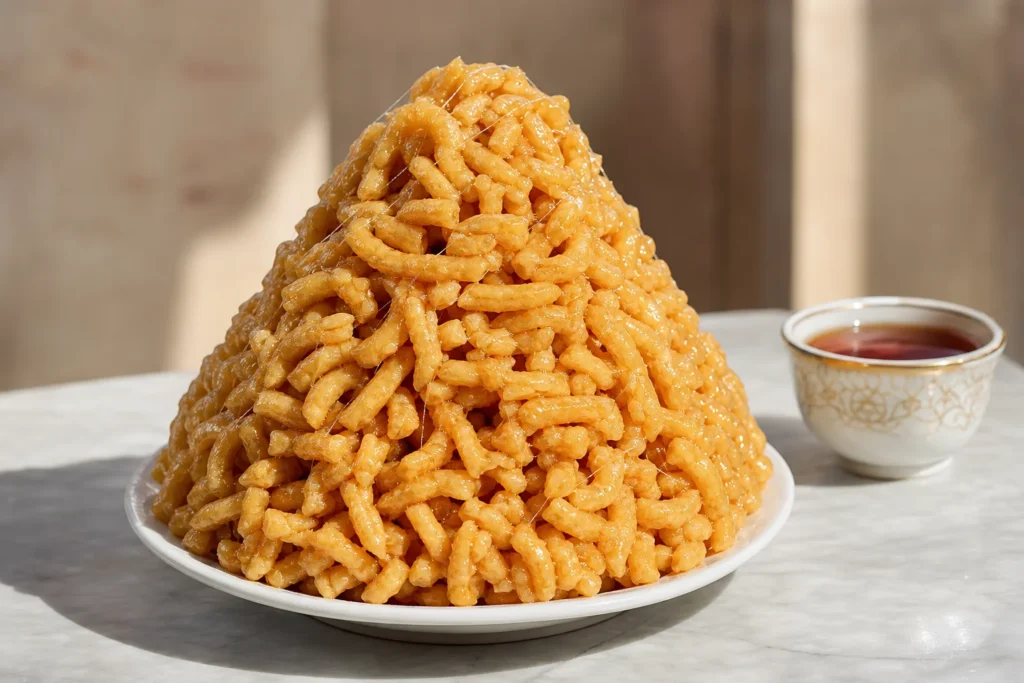
This popular Tatar dessert is incredibly simple to make and requires no special ingredients. If you search for “Chak-chak: Tatar honey dessert recipe,” you will find detailed instructions for making this traditional treat eaten at weddings in central Asia, now the national dessert of Tatarstan.
The finished dessert is a symbol of hospitality and unity among the Tatar people. This guide walks you through the entire process: making the dough, frying it into crispy strands, preparing the honey syrup, and shaping the finished cake before it sets. The result is a crunchy-yet-sticky confection that can be made at home with basic kitchen equipment.
Quick answer: The dough is made from wheat flour and eggs, rolled thin and cut into pieces, deep-fried until golden, then mixed with hot honey syrup and moulded into various shapes such as cones or hearts. It can be stored for up to three months.
At a Glance
| Type | Desserts & sweets |
|---|---|
| Local name | Чак-чак |
| Origin | Tatarstan and Bashkortostan republics, Russia |
| Servings | 2–4 servings (depending on portion size) |
| Total time | Approximately 1 to 1.5 hours total (including resting and cooling time) |
| Difficulty | Medium |
History and Story of Chak-chak, Kazan
The recipe is widely believed to have come from the Volga Bulgaria region, now part of European Russia. Legend says a great Khan asked his chefs to create a new dessert for his son’s wedding that would be storable, nutritious, and impressive. The Khan chose this simple sweet dish after sampling numerous options. Initially, chak-chak was a ritual dessert served at major celebrations and weddings as a symbol of good marriage, love and strong family life. Tatars would bring chak-chak when traveling and offer it as gifts to people in other cities.
Ingredients
- 3 to 5 eggs (room temperature)
- 300 to 500 g all-purpose flour
- 1 teaspoon baking soda
- ½ teaspoon salt
- 150 to 200 g honey (fragrant variety preferred)
- 130 to 150 g sugar
- 1 to 2 tablespoons water
- Vegetable oil for frying (approximately 1 liter)
- Optional: hazelnuts, walnuts or other nuts; dried fruit like raisins or apricots
How Chak-chak, Kazan Is Made
Step 1: Make the dough base
Mix eggs with salt and baking soda quenched with vinegar. Gradually add flour to form a firm dough like dumpling dough. Wrap and let rest for 30 minutes.
Step 2: Roll and cut the dough
Roll the dough thinly and cut into small strips or sticks. Lightly dust with flour and sift off the excess as needed. Separate the pieces so they don't stick together.
Step 3: Fry the dough pieces
Heat oil to 170–180°C. Fry pieces in batches so they rise quickly and puff up. Fry until golden and drain on paper towels. Keep pieces lightly golden, not brown.
Step 4: Prepare the honey syrup
In a heavy saucepan combine honey, sugar, water and salt. Bring to a boil, stirring constantly. Boil for 3–5 minutes until soft-ball stage (115–118°C), or until a drop in cold water forms a soft ball. Add butter, vanilla or cinnamon if desired.
Step 5: Combine and shape quickly
Pour hot syrup over fried dough pieces and mix quickly. You must work very fast as the honey sets quickly. Form into a hill or pyramid with wet hands to prevent sticking.
Step 6: Cool and set
Allow the assembled chak-chak to cool completely (about 1–2 hours) so the honey syrup sets firmly. Some prefer to let it sit at room temperature for several hours or refrigerate if serving cold.
Variants
- Short noodles form is common in Tajikistan and Uzbekistan; balls are common among Tatars and Kazakhs
- Hazelnuts or dried fruits such as apricots and raisins may be added to the mixture
- Traditional wedding chak-chak is larger and often covered with candies and dragées
Common Mistakes to Avoid
- Overheating the honey syrup: Heat honey over very low heat until smooth; it should not boil. If it boils too vigorously, the texture will be hard and brittle instead of sticky.
- Not working fast enough when mixing with the hot syrup: The honey sets very quickly, so have all equipment ready and work immediately after pouring the syrup.
- Using too much flour when rolling: If you dust heavily with flour, the pieces won't stick to the honey as well. Shake off excess carefully.
- Frying at the wrong temperature: If oil is too cool, pieces will absorb too much oil and become greasy. If too hot, they will brown before puffing up.
- Burning your hands during shaping: Use water on your hands to make shaping less sticky and prevent burns from the hot syrup.
- Storing improperly: Wrap chak-chak with foil and store in a dark, cold place (not in the fridge) to keep it from absorbing moisture.
How to Order and Eat It
Enjoy with black tea. Chak-chak is typically served as a whole cake that is broken into pieces at the table. It can be eaten as is—the exterior is crispy while the interior remains somewhat soft and sticky. Some prefer to eat it at room temperature; others refrigerate it for a firmer texture. Some believe chak-chak needs to sit for several days before eating, but it is often impossible to resist for so long.
To order: Чак-чак, пожалуйста [Chak-chak, pozhaluysta]
Diet and Allergens
- Contains gluten
- Contains eggs
Russia Vibes Tips
- Choose fragrant honey for better flavor: Select mountain linden honey or another fragrant variety for extra aroma
- Prepare all ingredients before you start: Since you must work very fast once the syrup is hot, measure and have everything ready to prevent mistakes.
- Keep honey syrup temperature steady: Once it reaches soft-ball stage, remove it from heat immediately to prevent overcooking.
- Wet your hands properly for shaping: Use cool water, not hot, so your hands stay comfortable and help the warm chak-chak cool slightly.
- Don't skip the cooling time: The full 1–2 hours allows the syrup to set properly, giving the finished dessert the right texture.
Explore Nearby Chak-chak, Kazan
Related guides
 Nizhny Novgorod: Kremlin, Chkalov Stairs and the Volga-Oka Confluence
Main image: AI-generated illustration. It may not show the place exactly as it looks.
Browse more: All Food & Drink · All Food & Drink in Kazan · All Kazan · All Other
FAQ
How long does chak-chak keep?
Chak-chak can be stored for up to three months. Wrap it with foil and store in a dark, cold place (but not in the fridge).
What if I don't have a special mold?
Can I make chak-chak without eggs?
Traditional chak-chak requires eggs to give the dough structure and help it fry properly. Egg-free versions are not standard.
Why did my chak-chak turn out too hard?
The honey syrup was likely boiled too long or at too high a temperature. Heat honey over very low heat; it should not boil. Soft-ball stage (115–118°C) is the correct consistency.
Can I use different types of nuts?
You can use walnuts, hazelnuts or almonds. Roast them in a pan or oven and chop them coarsely, then mix with the fried noodles before adding the syrup.
Is chak-chak always shaped into a pyramid?
The mixture is typically moulded into various shapes, such as cones or hearts. You can shape it however you like with wet hands.
What is the name of each piece of fried dough called?
The individual pieces are called 'лапша' (noodles), even though they resemble short strips or small balls rather than traditional noodles.
Why is it called chak-chak?
The name most likely came from the Tatar word meaning 'just a little bit', possibly because the food is made up of tiny pieces. Some believe the name resembles the sound of a knife cutting through crispy dough.
Russia Vibes is a one-person project. A coffee keeps it going
How we research and update our guides
About this guide: AI assistance and accuracy
This guide is created with the help of AI and is based on official sources where available. Mistakes can still happen. Opening hours, prices, rules and other details are given to the best of our knowledge as of the date shown and can change without notice. It offers general recommendations only, not professional, legal or travel advice. Please confirm important details with the official source before you travel; you are responsible for your own plans and decisions.

Take this guide with you
Get a free PDF of this guide to print or read offline: key facts, tips and a map link on a few clean pages.
Report an issue on this page
Paying for your trip: please read
International sanctions affect payments between Russia and many other countries. In practice, cards issued in the EU, the UK, the US and several other countries often do not work in Russia, Russian cards usually do not work abroad, and some booking platforms, airlines and payment providers limit or suspend their services for Russia. The situation changes frequently.
We do not give legal or financial advice, and this site does not encourage anyone to break or circumvent sanctions. Whatever you plan, you are responsible for following the laws and regulations that apply to you, including those of your country of residence and citizenship.
Many travelers still organise their stay lawfully. It is worth asking your bank or payment provider what is currently permitted, contacting hotels, tour operators and carriers directly about the payment methods they accept, and checking which services are open to customers from your country. Clarify payment, cancellation and refund terms before you commit to a booking, and keep your plans flexible.
Partner links on this site may not be available in every country, and prices, availability and rules in our guides can differ from what you see when you book.